
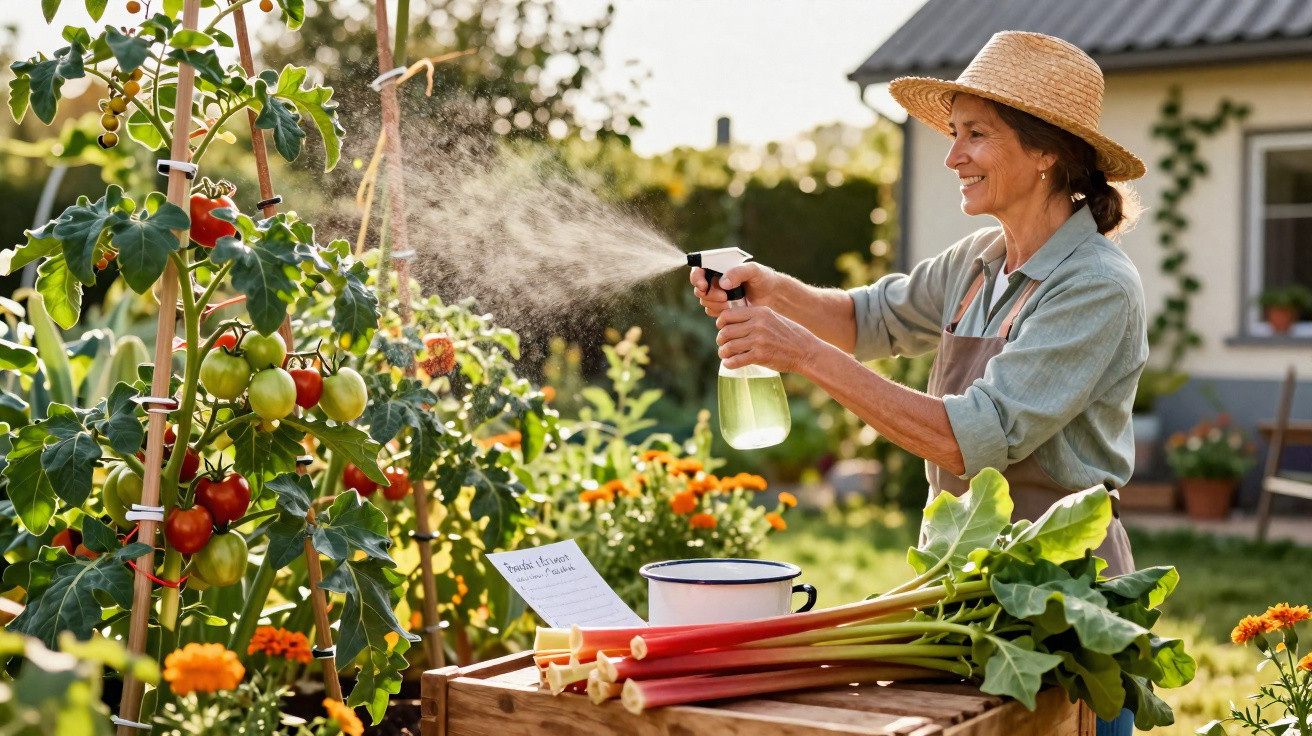
In traditional cottage and farm gardens, it used to be a standard bit of kit-then it quietly disappeared: a plant tonic made from rhubarb leaves that helps protect tomatoes from fungal diseases and pests. Now this simple remedy is making a comeback, driven by fed-up tomato growers who have had enough of brown leaves, failed harvests and toxic sprays.
Why tomatoes so often fail in the garden
Tomatoes have a reputation for being the divas of the veg patch. They crave warmth, can’t stand wet leaves, and they’re highly prone to fungal problems such as late blight and brown rot. On top of that, aphids, mites and beetles can weaken plants further.
- Late blight and brown rot can wipe out entire plants in just a few days.
- Aphids feed on young shoots and can spread disease.
- Spider mites and small beetles leave chew marks and spotting.
- Damp summers make every one of these issues dramatically worse.
Plenty of gardeners respond by trying one homemade cure after another: nettle feed, garlic water, milk, bicarbonate of soda. The problem is that not all of these work reliably. That’s exactly where an old tip-one many people no longer even know-starts to resurface.
The forgotten remedy from Grandma’s garden
In the past, many gardens had a barrel somewhere with fermenting plant liquid. It wasn’t just nettles that went in-there was something that hardly anyone uses today: the leaves of the rhubarb plant.
“Rhubarb leaves are poisonous to humans – but for tomatoes they make a surprisingly good shield.”
The secret lies in what’s inside them. Rhubarb leaves contain plenty of oxalic acid and certain plant compounds that can inhibit fungi and deter many pests. When prepared correctly, this is not a fertiliser but more of a protective plant tonic that helps tomatoes stay robust and keeps disease under control.
Why rhubarb protects tomatoes so well
Experienced gardeners say that after a few applications of rhubarb tonic, tomato plants look visibly stronger. Leaves stay healthy for longer, new shoots develop more evenly, and brown patches appear later-or not at all.
The tonic tends to do two jobs at once:
- It supports the plant’s natural defences, making it harder for fungi to spread.
- It creates conditions on the leaf surface that many pathogens and pests dislike.
Unlike many other home recipes, this brew can be useful both as a preventative measure and when the first warning signs have already appeared. If you act as soon as suspicious leaf spots show up, you can often stop the outbreak-or at least slow it down considerably.
How to make rhubarb tonic properly
The basic recipe is straightforward, but it does require a bit of discipline during preparation. It’s a classic fermented plant tonic made from leaves.
Step-by-step instructions
- Roughly chop about 1 kilogram of fresh rhubarb leaves.
- Put them in a bucket or tub with a capacity of at least 10 litres.
- Top up with 10 litres of rainwater (tap water will do at a pinch).
- Leave for 3 to 5 days in a shaded spot.
- Stir vigorously once a day so fermentation happens evenly.
- As soon as the mixture is clearly fermenting but not strongly foul-smelling, strain it through a sieve.
The liquid should smell lightly fermented, not “gone off”. Then decant into canisters or bottles and store somewhere cool and dark. The tonic will keep for several days without trouble, but for the best effect it’s worth using it as fresh as possible.
Using it correctly on tomatoes
Used neat, the brew is too strong. In day-to-day use, a dilution of roughly 10% has proved effective.
| Amount of concentrate | Amount of water | Use |
|---|---|---|
| 1 litre | 9 litres | Foliar spray for tomatoes and other vegetables |
| 0.5 litre | 4.5 litres | Small spray bottle or balcony planters |
Pour the diluted solution into a pressure sprayer or hand sprayer and apply directly to leaves and stems. Early morning or evening is best, when the sun is no longer intense. Leaves should be thoroughly wetted, but they don’t need to be dripping.
“In damp summer weeks, one treatment a week is often enough to keep tomato plants stable.”
How often to spray - and when it’s better not to
In an average gardening year, spraying every 7 to 10 days is enough once your tomatoes have been planted out and are growing strongly. During spells of prolonged rain or very muggy, warm weather, it can pay to tighten the schedule.
A practical plan might look like this:
- first spray about one week after planting out
- then regularly every 7 days
- in strongly fungus-friendly weather, every 5 days
- don’t apply during baking midday heat
If the first signs of brown rot appear, you can spray a little more frequently. Any heavily affected foliage should be removed beforehand and not put on the compost heap.
Rhubarb tonic isn’t a substitute for good gardening
As effective as the brew can be, it’s not a free pass for poor growing conditions. If tomatoes are crammed together and left unprotected in constant rain, rhubarb won’t save the day.
You’ll see the best results when several basics work together:
- Leave enough spacing so air can circulate.
- Water at the base, not over the leaves.
- Provide rain cover or a roof in very wet locations.
- Add a mulch layer to reduce splashback and buffer temperature swings.
- Rotate the growing area from year to year.
Within that kind of overall approach, rhubarb tonic acts like a form of insurance. It won’t completely cancel out mistakes, but it can noticeably reduce the damage.
Smart combinations with other plant brews
Many gardeners already rely on nettle feed or horsetail brew, and both have their place. Nettle feed supplies plants with nutrients, while horsetail supports cell walls thanks to its silica content.
Rhubarb works alongside these rather than replacing them. One possible routine:
- Growth phase: nettle for nutrient boosts.
- Before wet periods: rhubarb for protection against fungi.
- In difficult years: slot in horsetail to help keep leaf structure resilient.
That way you end up with a kind of “home pharmacy” for the veg garden-without synthetic sprays.
How safe is it - and what should you watch out for?
Rhubarb leaves are considered poisonous because larger amounts of oxalic acid can harm people. However, the tonic is used heavily diluted and goes onto tomato foliage, not into a saucepan. If you follow a few sensible rules, you can use it safely:
- Wear gloves while preparing it.
- Don’t drink it, and don’t store it where children could access it.
- Wash fruit before eating, as you would with any home treatment.
- Don’t pour leftovers into ponds or aquariums; let them soak into soil instead.
Based on current experience, the residue is noticeably less harmful to beneficial insects such as ladybirds and bees than many chemical products-particularly because it doesn’t persist on the plant long-term.
Why this tip is taking off again right now
Many hobby growers want to protect their tomatoes naturally, but they also don’t want to lose half their crop every year. Off-the-shelf products are increasingly criticised-whether because of residues or their impact on beneficial insects.
At the same time, gardeners now share advice far more intensively than they used to: in forums, messaging groups and on video platforms. You can already find plenty of first-hand reports, photos of healthy tomato plants, and simple step-by-step guides. In this way, knowledge that once belonged to rural farm gardens is moving into modern city balconies and allotment sites.
“What used to be passed along at the garden gate now spreads by smartphone – and brings forgotten recipes back to the beds.”
If you already grow rhubarb, it’s well worth trying. The leaves often end up unused on the compost, even though they can provide a free layer of protection for the most sensitive crop in many vegetable plots.
Particularly interesting is that it doesn’t only work on tomatoes. Many gardeners also report good results with potatoes, cabbage, pumpkin and courgette. That makes the plant tonic a versatile tool that’s easy to integrate into any eco-minded gardening strategy.


Comments
No comments yet. Be the first to comment!
Leave a Comment