
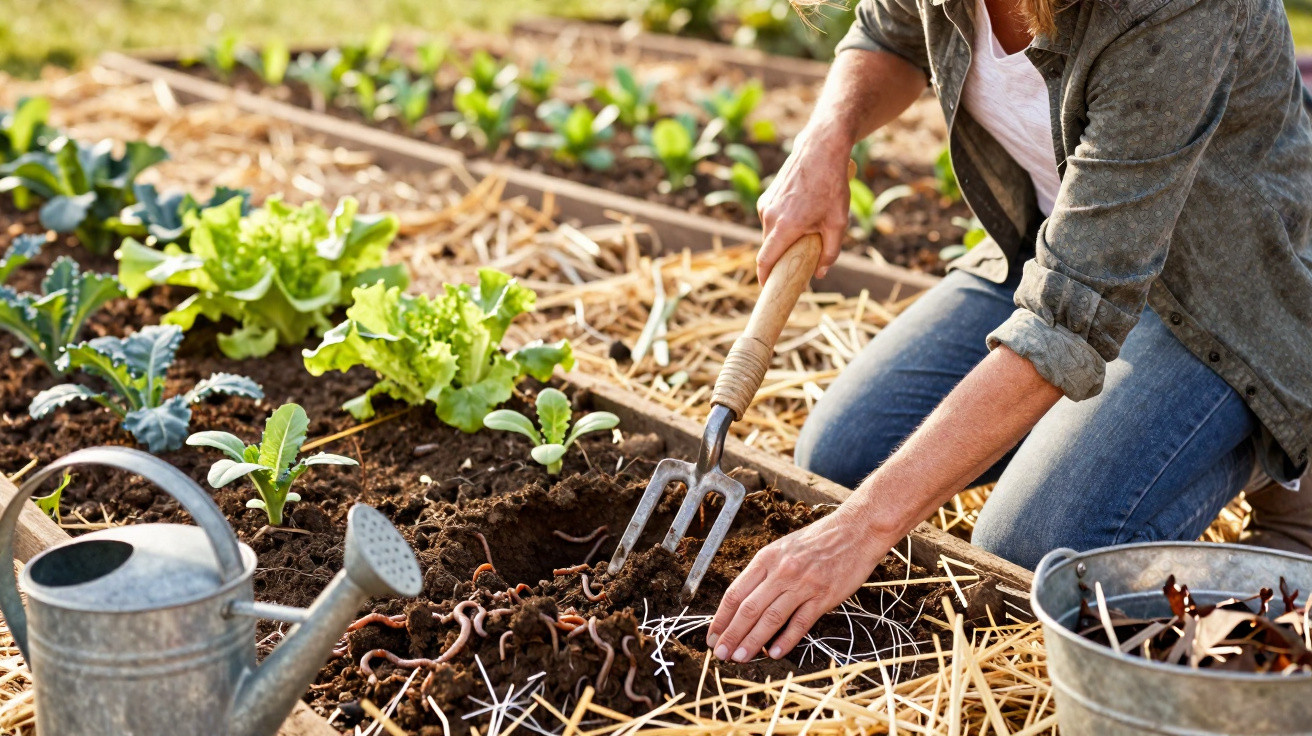
Winter has barely loosened its grip before the sun reappears and the same scene plays out in countless gardens: soil gets turned over, beds are “nicely loosened”, and everything is made ready for the new season. It feels productive and sensible - yet modern soil science suggests this traditional spring ritual comes at a steep cost, and can slow many vegetable gardens down rather than help them.
Soil isn’t dead matter - it’s a living system
Just beneath the surface, in the top 20 centimetres, there is far more activity than most people realise. In a single gram of healthy soil, estimates suggest there may be anywhere from 100 million to one billion bacteria. Alongside them are fungi, nematodes, tiny arthropods and, of course, earthworms.
These organisms don’t simply coexist by chance. They form a highly intricate web that keeps nutrients available, holds onto water, and supports plants in building strong, resilient root systems. Each zone in the soil - close to the air, deeper down, drier or wetter - has its own specialist residents.
"If you completely turn the soil over, you throw this finely tuned system into chaos - often with noticeable consequences for yield and plant health."
A great many microorganisms live without oxygen. When digging brings them up to the surface, they die off. At the same time, organisms that need air are pushed down into deeper, oxygen-poor layers. The soil community crashes - at exactly the moment you’re about to plant.
How spade work weakens fungal networks and roots
Another frequently overlooked issue involves fungi - specifically mycorrhizal fungi. They create fine threads that spread through the soil like an extra set of roots. This network allows plants to access water and nutrients that their own roots could not reach.
When a spade slices through the ground roughly, these fungal threads are cut again and again. Plants then have to keep rebuilding their connections instead of putting energy into growth and fruiting. Many gardeners interpret the resulting sluggishness as “poor soil” and add fertiliser - even though they have already damaged the most valuable fertiliser of all: living soil.
Loosen gently instead of turning brutally: the double digging fork
A kinder option is a specialist tool that has long been standard in many organic gardens: a multi-tined digging fork, often sold as a double digging fork or “soil fork”. The method is straightforward: push the metal tines vertically into the soil, then pull back slightly so the ground is lifted and loosened - but not fully inverted.
Most soil layers remain broadly where they are. Air and water can move in more easily, compaction is relieved, and the habitats of soil organisms are largely left intact.
"If you work your vegetable garden with this kind of fork, you work with the soil - not against it."
A more back-friendly way to garden for longer
This approach has another major benefit, especially for older gardeners: the familiar shovel-and-lever motion of a spade can put heavy strain on the back and shoulders. Using a double digging fork is more like a controlled rocking movement. You work with your body weight rather than fighting it, making longer sessions possible without needing painkillers in the evening.
The fork works best when the soil is slightly moist: not bone dry, but not sludge-like either. A day after a good spring downpour is often ideal. The tines slide in more easily, and you avoid creating big, hard clods.
Mulch: a protective blanket for stable, fertile soil
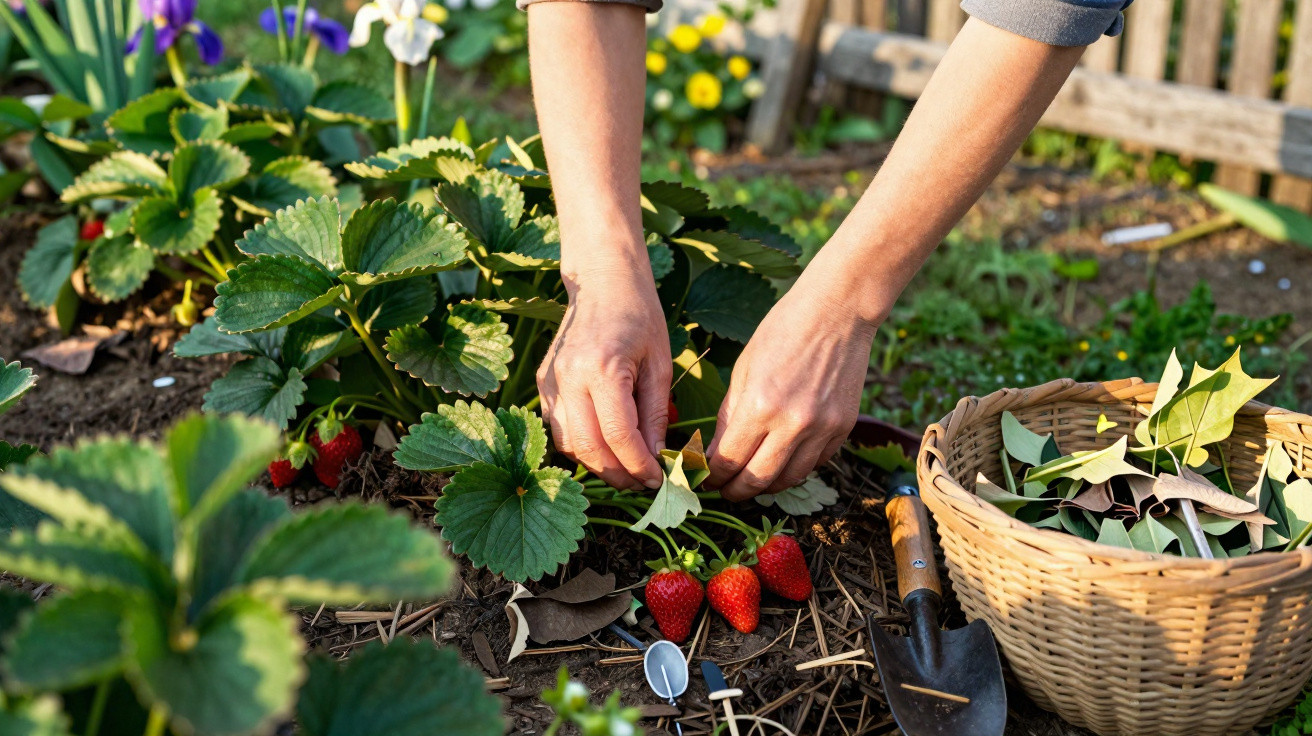
If you dig less, you need a dependable ally: mulch. This simply means any organic layer that covers the soil - straw, shredded leaves, dried grass clippings, or chipped wood.
In nature, soil is rarely left bare. Forest floors are continuously covered with leaves, needles and dead plant material. You can copy that pattern in the vegetable garden.
- Mulch conserves moisture and, depending on the weather, can cut watering by up to half.
- Soil temperature fluctuates less, which helps keep fungi and bacteria stable.
- During heavy rain the surface is less likely to cap over, so water infiltrates more readily.
- As mulch breaks down, it continually creates new humus - free fertiliser produced on site.
At the same time, weed pressure drops noticeably. If you keep beds consistently mulched, you’ll need to hoe or weed far less often. For anyone with limited mobility, this can be a real advantage - it’s “work that the mulch does for them”.
What really drives strong plants below ground
Current research shows plants are not passive recipients of nutrients. Through their roots they actively release substances that attract specific bacteria and fungi. Those partners then help organise the supply of nitrogen, phosphorus and trace elements.
Nitrogen-fixing bacteria capture nitrogen from the air and convert it into forms plants can use. Mycorrhizal fungi multiply the effective root surface area many times over. Earthworms pull organic material down into deeper layers and leave behind castings that are extremely nutrient-rich.
"If you disturb the soil as little as possible, you encourage exactly these processes - and usually end up with sturdier plants and fewer losses."
Many gardeners notice after one or two years of reduced spade work and increased mulching that the soil becomes more crumbly, smells pleasantly earthy, and can even be loosened by hand. That’s a clear sign the soil life is actively doing its job.
Step by step away from annual digging
No one has to overhaul their whole system in a single season. A gentle transition is often enough to feel just how much the garden can change. One possible plan:
- Thoroughly loosen only heavily compacted or newly created beds once.
- After that, replace the spade with a double digging fork.
- In spring, spread 3–5 centimetres of mature compost over any bare ground.
- After planting or sowing, cover beds evenly with mulch material.
- Refresh the mulch layer through the year whenever soil starts to show again.
With each year, the structure improves. Water soaks in more effectively, waterlogging becomes less common, and hard lumps are rarer. Once you’ve seen “concrete soil” suddenly turn loose and workable, you’ll reach for the spade far less willingly.
What about heavy clay or extremely compacted ground?
In new-build areas in particular, the subsoil is often badly compacted. In that situation, a one-off deeper intervention can make sense to improve the starting conditions. The key is to treat it as an exception - not something to repeat every year.
Even in the first year, follow up with strong organic cover. Coarser mulch, supported by compost, helps fill cracks, improves how water moves through the soil, and encourages microorganisms that gradually break compaction from the inside out.
Common mistakes when you stop digging
When people switch away from the classic spade routine, the same beginner errors show up again and again. Three are especially common:
| Mistake | Result | Better solution |
|---|---|---|
| Mulch layer too thin | Weeds keep growing, soil dries out | Apply at least 5–7 cm of mulch |
| Laying fresh grass clippings on thickly | The layer rots, smells strong, attracts slugs | Let clippings dry first, then apply in thin layers |
| Walking heavily on the beds | New compaction despite gentle cultivation | Create fixed paths; don’t step on the beds |
Practical tips for a healthy spring start in the vegetable garden
If you want to begin differently this year, a few simple rules of thumb help. Don’t work the soil when it smears and can be rolled into a shiny “sausage” - that’s a sign it’s too wet. In that condition, every footstep compacts the ground. Slightly moist and crumbly is ideal.
Before planting, go through the bed once with the double digging fork, crumble any large clods gently by hand or with a rake, and then apply a thin layer of compost straight away. Only then should you plant or sow. Once seedlings have established, spread mulch between rows or around young plants.
If you’re unsure how active your soil life is, try a simple test: bury a piece of unprinted cotton fabric, or an old cotton sock, at about 15 centimetres depth and dig it up again after six weeks. If it’s badly eaten away, bacteria and fungi are working at full speed. If it’s mostly intact, the soil needs more organic material - and more peace and quiet.
Well-cared-for soil rewards gardeners with reliable harvests, fewer diseases, and far less physical slog. Grabbing the spade may feel like you’re taking action, but in the long run the real work is done by an invisible army of helpers - if you allow it.
Comments
No comments yet. Be the first to comment!
Leave a Comment