
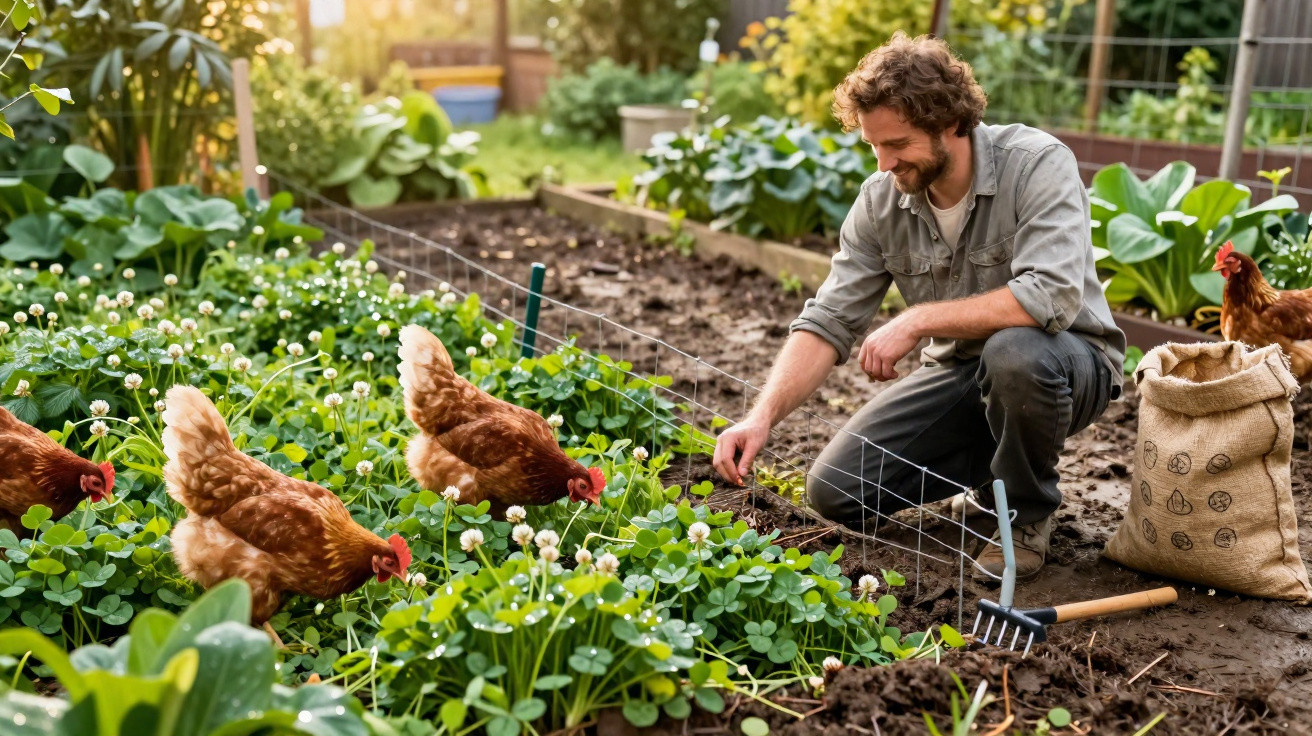
Many backyard keepers look out in late winter and can’t believe the sorry state of the garden: a brown, trampled run, barely a green leaf in sight, plus puddles and sticky mud. Yet this is exactly the moment-before spring properly gets going-when that trouble spot can be turned, with a few simple actions, into a green feed source and a healthier environment for the hens.
Why the chicken run looks so disastrous after winter
Months of wet weather, cold temperatures and constant scratching compact the soil. Grass and delicate plants disappear completely. What’s left is a dense, waterlogged surface that squelches underfoot-perfect for germs, and hard on claws and joints.
If you wait until spring is in full swing, you make the job unnecessarily difficult. Then the plants you actually want have to compete with weeds, and the ground dries out faster. Seed establishes more poorly, young plants shrivel, or they’re simply scratched straight back out.
"Late winter and the first days of spring are the best time to bring the chicken run back to life-while the soil is still moist and not bone-dry."
The aim is for tough, persistent plants to root through the ground, provide nutrients and still cope with the hens’ constant scratching. That way you don’t just get a nicer run-you create a small, stable ecosystem in a very limited space.
The ideal mix: which plants chickens genuinely love
Rather than sowing standard lawn grass-which usually vanishes again after a few weeks-experienced poultry keepers rely on a deliberate blend of perennial herbs and forage plants. Three species, in particular, have proved their worth.
White clover – the protein boost in the chicken garden
White clover is seen by many as a “weed” in lawns, but for chickens it’s a real powerhouse. It fixes nitrogen in the soil, improves the ground and provides plenty of plant-based protein.
- encourages laying activity
- stays low, branches well and covers the soil
- is happily nibbled fresh by hens
After a long winter of feeding lots of grain, white clover adds variety and extra nutrients to the daily diet.
Ribwort plantain – a natural medicine cabinet in the chicken run
Ribwort plantain grows along paths and in meadows-and it fits perfectly into the run. This unassuming plant has been valued as a medicinal herb for centuries.
- supports digestion and the respiratory system
- develops deep roots and copes better with trampling damage
- offers firm, textured leaves that hens like to tug at
If you’d rather not reach for medication at every minor issue, you’ll appreciate these “plant-based helpers” that are available all the time.
Wild chicory – a soil improver with extra minerals
The wild form of chicory does something that a compacted run badly needs: it loosens the soil deeply with strong taproots, while bringing minerals up from lower layers.
- provides lots of minerals and trace elements
- can support appetite and liver function
- improves soil structure over time, making it looser and better drained
"White clover, ribwort plantain and chicory together form a kind of 'living supplementary feed'-right outside the hen house."
This mix takes pressure off the grain ration, adds more vitamins to the birds’ everyday intake, and can reduce the need for costly supplements from specialist retailers over the long term.
How to get seed established despite scratching hens
The biggest enemy of any sowing in a chicken run isn’t slugs or the weather-it’s the chickens themselves. They peck up the seed long before anything has a chance to germinate. If you scatter seed openly, disappointment is the usual outcome.
Protective frames instead of an open patch
A straightforward solution works almost anywhere: temporarily make small sections inaccessible. Low wooden frames covered with fine mesh wire are enough; place them directly on the soil.
The steps at a glance:
- Loosen the soil slightly and remove large clods.
- Spread the white clover, ribwort plantain and chicory seed mix thinly.
- Lightly rake it in so the seed has contact with the soil.
- Lay the wooden frame with wire mesh over the area and secure it.
- Keep it damp without waterlogging it.
Once the plants have reached a few centimetres tall, leaves grow up through the mesh and the hens can nibble from the top. Crucially, the main shoots and roots remain protected, so the plant survives even persistent pecking.
"Some keepers call it a 'salad buffet on permanent rotation'-the hens eat without destroying the plants completely."
From a muddy wasteland to a green carpet: what changes in the run
A thick cover of plants doesn’t just look better-it noticeably improves the conditions in the run. Roots stabilise the ground, absorb water and stop fresh muddy hollows forming every time it rains.
That has immediate effects on health:
- drier ground lowers the risk of footpad and leg problems
- less standing water means fewer parasites and disease organisms
- dense growth buffers droppings and reduces smells
Just as important is the effect on behaviour. Chickens with something to search for are calmer. They spend more time pecking, scratching and tugging at leaves, rather than bothering each other.
Less boredom often also means: far less feather pecking and aggression in many flocks. A structured, green run is therefore a practical, everyday contribution to animal welfare.
How feed costs can be reduced significantly
A small packet of seed is usually priced in the single-digit euro range. Even a larger run can be worked on without difficulty. These plants are perennial and, with the right care, come back year after year.
| Item | Conventional | With forage plants |
|---|---|---|
| Grain feed requirement | high, year-round | noticeably reduced during the green season |
| Supplements / vitamins | regular purchases | often unnecessary or needed less often |
| Seed cost | none | low, only occasionally |
If you sow in late winter, you can often see the first effects by April: the hens eat more greens and the daily grain amount drops automatically. Many keepers report that the investment pays for itself after just one season.
Practical tips for getting started and possible pitfalls
Beginners are best off starting with a small test area-around 1 square metre-to get a feel for sowing rate, germination time and watering. If all goes well, you can create further zones in the run bit by bit.
Key points to keep in mind:
- don’t sow into ground that’s already trampled rock-hard-loosen it first
- in prolonged rain, avoid waterlogging; if needed, make a slight raised area
- only remove the wire protection once plants are properly rooted
- rotate seed areas so the entire run is never blocked off at the same time
If you have children at home, they can be involved easily: sowing seed, watering, watching things grow-and later seeing how the hens take to the new plants. It builds understanding of animal keeping and natural cycles.
Getting more value from the chicken garden
A green run can be improved even further. Low shrubs or perennials work well around the edges, providing shade and places to retreat. The soil beneath them stays moist for longer, which also benefits the new growth.
If you already have some experience, you can try additional forage plants, such as lucerne or certain grasses. The underlying principle remains the same: robust, perennial species that can handle trampling and aren’t toxic.
"With a few simple actions, a bleak chicken paddock becomes a livelier, healthier habitat-and a natural feed source that returns year after year."
That turns a problem-the muddy winter run-into a genuine opportunity to improve welfare, your budget and garden ecology at the same time.

Comments
No comments yet. Be the first to comment!
Leave a Comment