
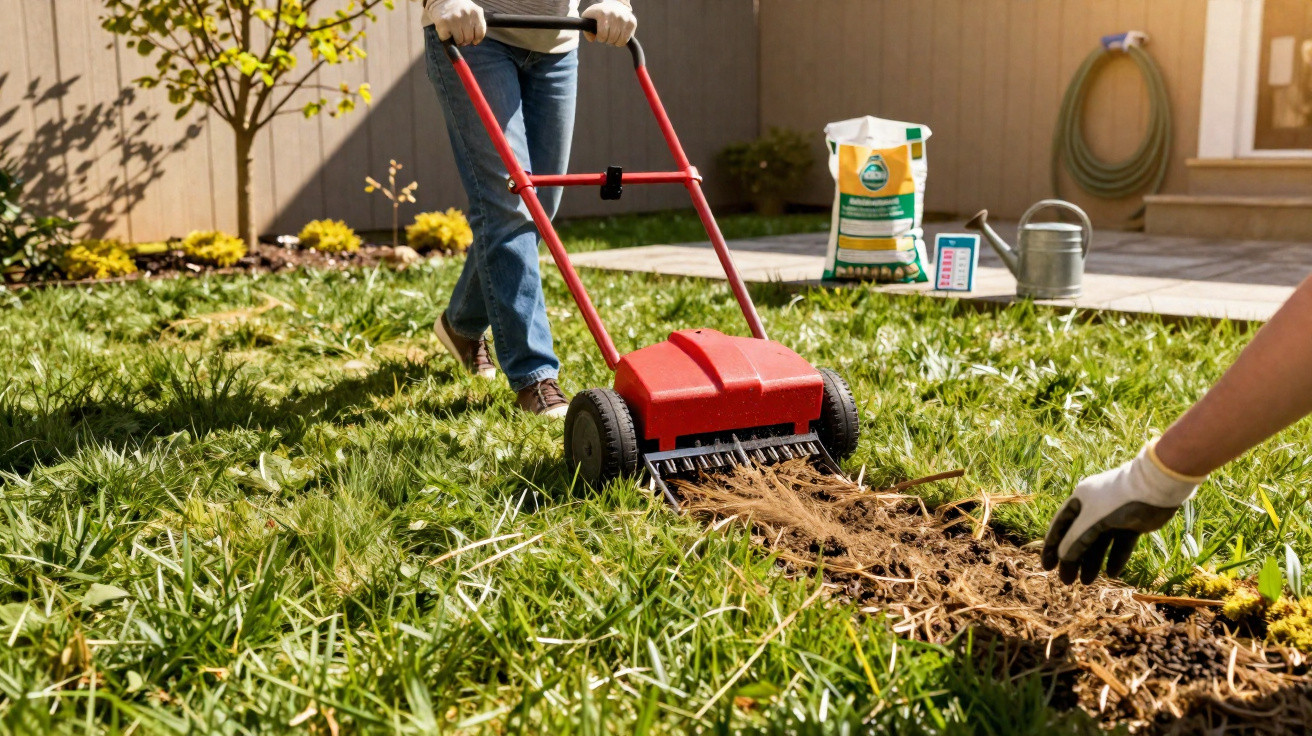
If you do nothing now, you’ll pay for it in midsummer with a brown, scorched lawn.
There’s still a small window of time to prevent that.
Many gardeners only start thinking about the lawn once the first hot spell arrives - and then wonder why yellow patches and burnt areas appear. The make-or-break moment comes much earlier: late winter and March. What happens in that period largely determines whether your lawn stays richly green in July or collapses at the first peak of heat.
Why late March decides the fate of your lawn
After winter, the turf often looks tired and slightly yellow. Beneath that unremarkable surface, a layer builds up from moss, dead roots and plant debris. Professionals refer to this as thatch - a mat that sits over the soil like a lid.
“This 1 to 2 centimetre-thick layer acts like a seal: water and air stay on top, and the roots underneath effectively suffocate.”
The result is that the grass roots stop growing downwards and instead remain close to the surface. That’s exactly where the soil dries out fastest. When the first heatwave hits, the lawn can scorch in record time - even if you believe you are watering “enough”.
The best time to correct course can be read from a soil thermometer: as soon as the soil settles consistently at around 10 to 12 °C, grass begins growing strongly again. In many areas that happens in March, often before 31 March; in cooler locations it may not arrive until early April. During this window, the lawn tolerates intervention particularly well and recovers quickly.
The decisive step: scarify the lawn thoroughly in March
The key weapon against burnt patches in summer is straightforward but disciplined scarifying. It removes thatch, opens up the soil surface and encourages roots to push into deeper layers.
Preparation: how to set the right starting conditions
Before you start with a scarifier, give the lawn a short pre-routine:
- Mow short: cut the grass back to roughly 2 to 3 centimetres.
- Check the soil: it should be slightly moist, but definitely not wet or muddy.
- Watch the forecast: no overnight frosts expected and no heatwave on the horizon.
If the ground is too wet it will tear; if the turf is frozen it will be damaged; and if a dry spell is imminent the grasses will struggle to bounce back.
Scarify properly: depth, direction, frequency
Adjust the scarifier so the blades only lightly score the surface. A working depth of about 2 to 4 millimetres is entirely sufficient. The blades are meant to lift out the thatch, not rip out roots.
Work in two passes:
- Drive once lengthways across the area.
- Then scarify a second time at right angles to the first pass.
This approach catches as much moss and thatch as possible. Afterward, the lawn will usually look battered - that is normal and not a reason to panic.
“What matters is removing every loosened piece of plant material carefully; otherwise the next layer of thatch forms again in no time.”
Use a lawn rake or the collection box on your mower. Anything left behind in the grass will clog the surface again.
After scarifying: build the soil rather than just clearing it
This is the ideal moment to do something beneficial for the soil. The surface is open, so each follow-up step is twice as effective.
A fine top-dressing: compost, lawn topsoil and sand
Three measures have proven effective for a resilient lawn:
- A thin layer of compost: spread about 1 centimetre of well-sieved compost or a specialist lawn topsoil over the area. This supports soil life and improves water absorption.
- On heavy soils: on clay or loam, work in a little washed sand. It drops into the slits and reduces the risk of compaction returning.
- Overseed if needed: fill gaps with a high-quality overseeding mix, press in lightly and water gently.
Even after this treatment the lawn may still look thin, but the groundwork for deeper roots is in place. As temperatures rise, growth visibly picks up.
Why this one action makes the difference in summer
Once the thatch is gone, rainfall no longer runs off the surface so easily; it penetrates far more deeply. Nutrients also reach the level where roots can actually use them. At the same time, the grasses are effectively “forced” to follow the water down.
“The deeper the roots, the longer the lawn stays green - even in heat and with reduced watering.”
For example, on a sunny south-facing area, heavy rain on an unmaintained lawn often simply flows away. If you scarify thoroughly in March, the soil can store April rainfall like a sponge. In July, the lawn can then draw on those deeper reserves instead of “begging” for watering on every hot day.
To maintain this effect, regular aeration of the area is worthwhile. Between spring and autumn, you can punch holes into the soil roughly every 4 to 6 weeks using a fork, a hand aerator roller or a dedicated machine. This reduces compaction, gets oxygen to the roots and saves water in the long run.
What if 31 March has already passed?
If you miss the ideal date by a little, you do not have to give up on the lawn. As long as the soil temperature is in the 10 to 12 °C range and no prolonged dry period is approaching, early April can still work well.
In that case, proceed a little more cautiously:
- Keep the working depth towards the lower end.
- Treat particularly weakened areas only very lightly.
- Overseed immediately afterwards and water with a fine spray.
Right before an extended dry spell, it is better to postpone scarifying. Otherwise the already-stressed grasses will suffer even more. For newly laid lawns, a thorough clean-up and light aeration are usually sufficient in the first few years.
Trouble spot: shaded lawns - moss, wetness and acidic soil
In heavily shaded or consistently damp gardens, moss spreads especially readily. In these spots, soil chemistry matters as well as thatch: a pH value below 6 encourages moss.
In such areas, the lawn needs a tailored routine:
- Scarify only gently, so you do not weaken the grasses further.
- Aerate the soil regularly with a fork or an aeration tool.
- Trim shrubs and trees moderately so more light reaches the lawn.
- Sow suitable shade-lawn mixtures, not just any standard grass seed.
After gentle scarifying, a light spring shower or careful watering helps speed up recovery. The aim is the same everywhere: a more open turf so water can soak in and be stored in the soil.
Common mistakes - and how to avoid them easily
Many lawns fail not because of missing care, but due to small errors repeated over and over. Typical pitfalls include:
- Set too deep: the blades tear out roots and leave bare patches.
- The wrong timing: scarifying during heat, drought or frost stress.
- No raking afterwards: lifted thatch is left behind and becomes the next problem area.
- Cutting too short straight after: the lawn needs some leaf area to recover after the treatment.
Avoid these traps and you will often see a thicker, tougher lawn in the very same summer.
One more look at watering, mowing and nutrients
Scarifying is the starting point, not the finish line. For steady green growth, three factors work together: water, mowing height and nutrient supply.
- Water: water less often but more deeply, rather than a little every day. This encourages deeper roots.
- Mowing height: gradually raise the cutting height in summer. Longer blades shade the soil and reduce evaporation.
- Feeding: a suitable lawn fertiliser in spring, and possibly again in early summer, strengthens the grasses against heat.
When you combine these points with timely scarifying, you gradually create a lawn that does not change colour with every hot day.
One technical note: a basic soil thermometer costing only a few pounds is enough to catch the right moment. Push it 5 to 10 centimetres into the ground and measure in the morning. If the reading stays in the region of 10 to 12 °C for several consecutive days, it’s time to begin the spring work.
With heatwaves becoming more common, this small effort is well worth it. Instead of desperately trying to water your way out of yellow patches every summer, make one short, targeted intervention in March - and your lawn will cope far better with dry conditions.




Comments
No comments yet. Be the first to comment!
Leave a Comment