
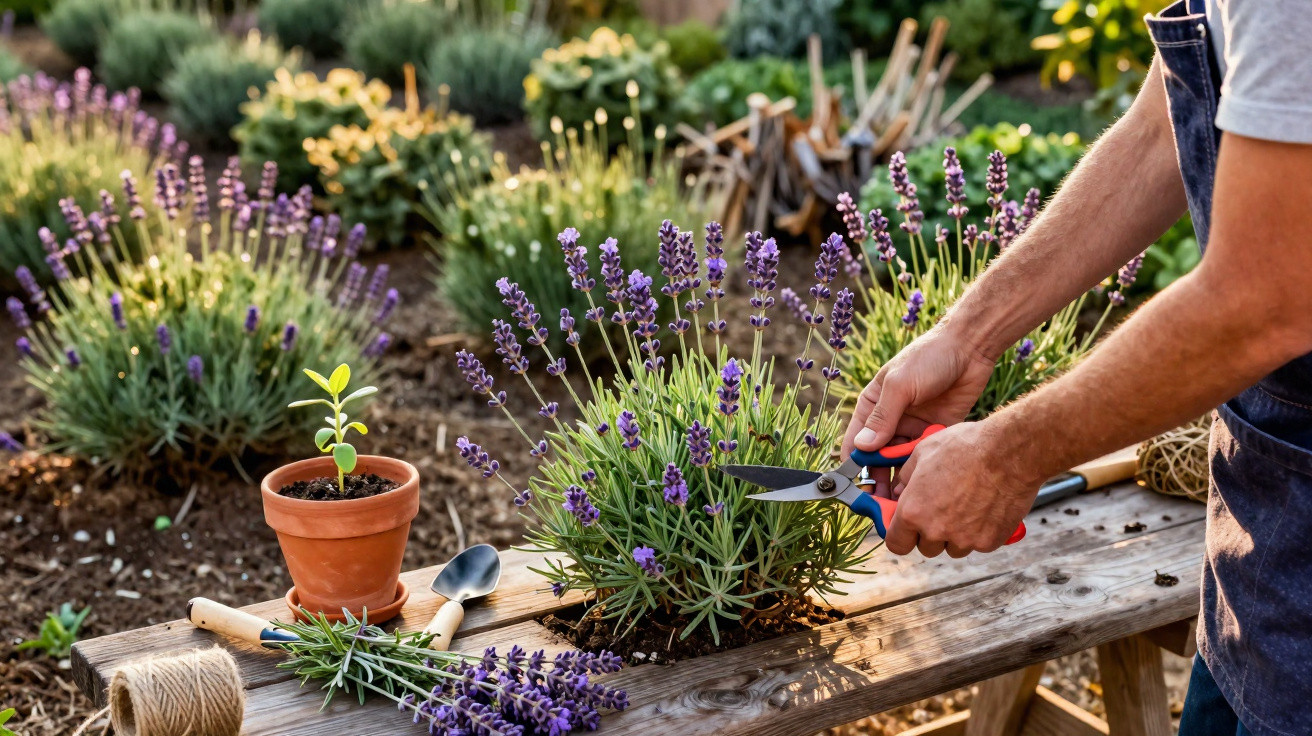
Plenty of amateur gardeners have noticed the same thing: a few years ago, their lavender formed a neat violet cushion; now there’s a scruffy broom of brown stems sitting in the border. The weather gets blamed, then the soil, then the plant’s age. In reality, the deciding factor is a small, easily overlooked pruning habit that largely determines how long this fragrant favourite lasts - and it can almost double its lifespan.
Why unpruned lavender ages so quickly
Lavender isn’t a typical herbaceous border perennial; it’s a subshrub. In practice, that means the base turns woody fast, becoming brown and hard. In that “old wood” there are hardly any dormant buds left that can reliably sprout again.
If you simply let the plant grow year after year, a predictable pattern follows: the outer shoots keep lengthening, the plant opens out, and the centre thins. The scented cushion turns into a messy bush with a bare middle. If you then panic and cut hard back into the old wood, lavender often “takes offence” - plenty of stems stay lifeless and the plant may not recover.
"If you never prune lavender, or prune it incorrectly, you often lose it in under ten years - even though it’s capable of double that."
Keep this aromatic subshrub consistently within its green growth, and it stays vigorous and keeps its shape. Gardeners who prune lavender correctly every year regularly report plants reaching 15 to 20 years, flowering reliably for decades.
The ideal timing: when pruning genuinely helps lavender
Many lavender owners stand with secateurs in hand and hesitate: too early, too late, too much? The calendar offers a rough guide, but what matters more is what the plant itself is doing.
Two dates that have proved reliable
- Major maintenance prune after flowering: from late August to late September, once the main flush of flowers has largely finished.
- Shape and correction prune at the end of winter: between February and March, before sap flow builds strongly in the woody parts.
With shifting seasons and lavender starting into growth earlier in some areas, it’s worth checking buds and shoots closely. A rigid calendar paired with “automatic” cutting doesn’t match today’s weather swings.
Differences between mild and cold regions
Depending on local conditions, the approach changes slightly:
- Milder spots (sheltered gardens, many urban areas): carry out the full maintenance prune straight after flowering. A light correction is often possible from late February, as long as buds are still tight to the stems and there aren’t long, soft new shoots.
- Colder or more exposed areas (northern regions, higher ground, frost pockets): in autumn, shorten only the spent stems roughly so nothing snaps in winter winds. The proper, stronger shaping prune then happens in March on a frost-free, dry day.
"The best timing is always determined by the lavender itself: bud stage, shoot length, risk of frost - not just the date on the calendar."
The one cut that almost doubles lifespan
The real “secret weapon” isn’t a complicated expert technique but a clear rule you must not break: only cut in the green, leafy growth. Leave the old, brown wood alone.
In practical terms, pause before you start and look closely at the plant. Mentally mark an inner boundary where the last green leaves sit. That boundary is lavender’s personal “safe zone”.
"Never cut lower than just above the last leaf clusters - that imaginary line decides between staying youthful or needing constant remedial care."
If you reduce lavender to this level once or twice a year, you continually push it to branch from young growth. The plant stays compact, dense and flower-happy. Let it bolt and stretch instead, and you inevitably create a lot of unproductive old wood.
The absolute no-go when pruning lavender
One mistake repeats itself in gardens every year: a drastic chop back into brown wood. People who are late to prune or who try to “rescue” an ageing plant often resort to extreme measures.
- Heavy cutting deep into brown, bare wood
- Pruning in spring when sap flow is at its peak
- Doing both mistakes on the same day
The result: stems dry out, fail to reshoot, and entire sections die back. With very old plants, the damage is often difficult to reverse. At that point, the best option is to take cuttings from the nicest shoots in good time and replace the plant with your own young plants.
How gardeners prune, step by step
Before you begin, check your tools. Sharp, clean secateurs reduce stress on the plant and noticeably lower the risk of fungal infection.
The three basic steps for a vigorous lavender bush
- Remove spent flower spikes: cut off all dried flower stems just above the first leaf cluster. This encourages fresh side shoots.
- Shorten the green growth: trim the leafy part by around one third; for young plants, up to half. Stay strictly within green growth.
- Shape the plant: form an even, gently domed cushion. This allows air into the centre and sunlight to reach all sides.
"Lavender shaped like a rounded cushion stays green inside and flowers as a solid ring on the outside - which helps prevent bald holes."
With young plants, you can be noticeably bolder. Consistent cutting in the first few years forces lots of side branches and builds a dense, sturdy mound. With older specimens, a moderate reduction is enough - as long as you still leave 3 to 5 centimetres of leafy stem.
Young plant, veteran, Lavandin: how needs differ
Not all lavender behaves the same in the garden. There’s the classic true lavender, the often taller-growing Lavandin, and the French lavender type with the distinctive “flags” on the flower heads.
| Lavender type | Tolerance of pruning | Note |
|---|---|---|
| True lavender | tolerates pruning well | ideal for sunny, fairly dry positions |
| Lavandin | vigorous, needs shaping | often taller; can be trained into a bush well |
| French lavender | slightly more sensitive | in cold winters, keep it better protected |
Very old lavender plants whose base is completely woody and grey inside should only be renovated gently. Each year, remove a few of the oldest, least productive branches, cutting just above a younger side shoot. Where there’s no green growth returning at the bottom, you can replace the plant without guilt with a well-grown successor.
Common mistakes - and how to avoid them
If you’re new to lavender, it’s easy to fall into the same traps. Once you recognise them, they’re simple to sidestep.
- Pruning too timidly: out of fear of cutting “too much”, only the tips are clipped. Growth then keeps shifting outwards and the centre turns woody even faster.
- Pruning only every few years: a major clean-up after a long break overwhelms the plant. Smaller, regular cuts are far better.
- Cutting in wet weather: damp wounds are an easy entry point for fungi. Dry conditions - ideally with a light breeze - are much better.
- Forgetting winter protection: in harsh sites, a light cover of brushwood helps protect the base from winter desiccation, particularly after a stronger autumn cut.
How care, location and soil work together with pruning
Even the best pruning can’t fully make up for a completely unsuitable position. Lavender originates from sparse, sunny regions. Waterlogging and constant shade make it prone to fungal problems and rot.
Free-draining, relatively lean soil, plenty of sun and restrained watering all amplify the benefits of correct pruning. Soil that’s too rich, or frequent feeding, produces soft, unstable growth - shoots flop over and the plant becomes woody unevenly.
"A sunny site, lean soil and cutting within the green growth - that’s the trio that keeps lavender young for many years."
If you also want lavender as an insect draw, leave some flowers standing longer and prune in stages. That way, bees and butterflies can find nectar for weeks, while the plant still keeps its shape.
There’s another practical bonus too: every cut produces fragrant material. Dried lavender bunches in a wardrobe help deter moths, and a few flower heads in a jar bring a summer scent to a balcony - so even the trimmings from routine care have their use.


Comments
No comments yet. Be the first to comment!
Leave a Comment