
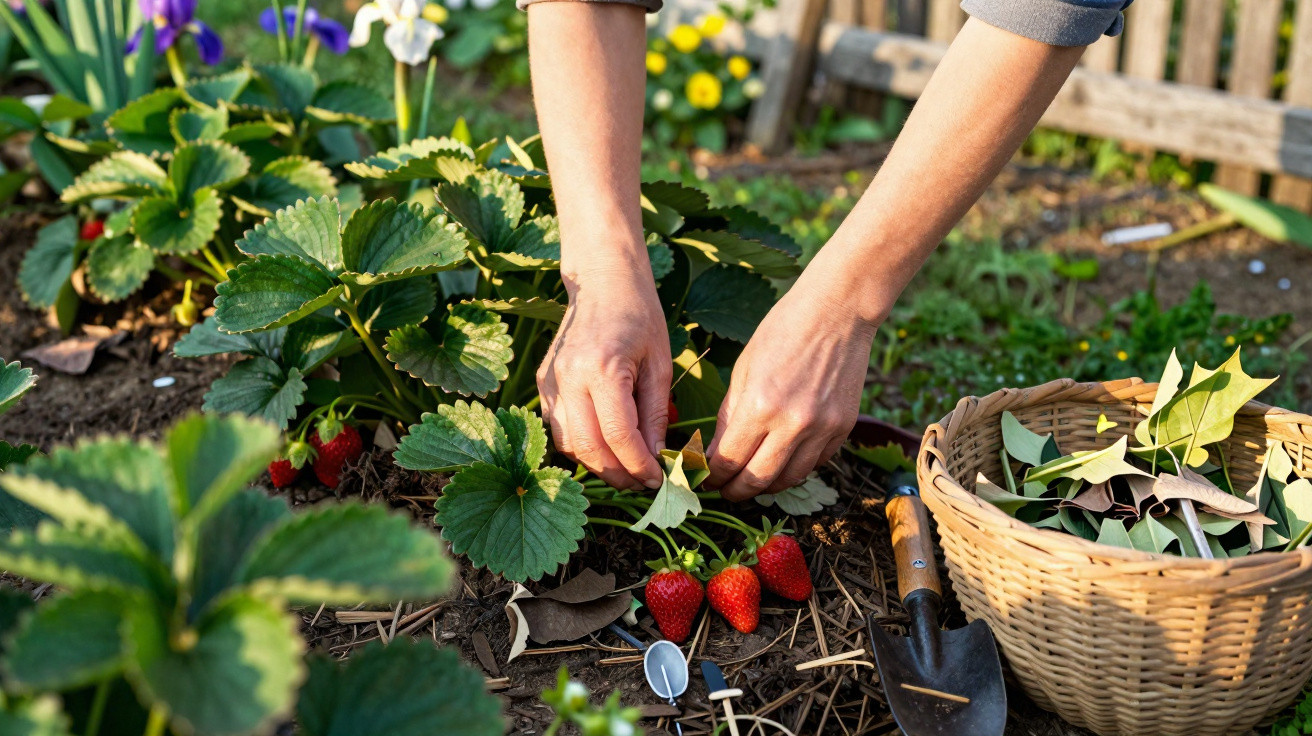
Across the country, keen gardeners are now pulling dead leaves from borders, cutting back spring flowers and lugging bags of garden waste to the local green-waste site. Very few realise that some of what looks like rubbish is actually a free turbo-boost for a strawberry bed - bringing extra warmth, better protection from disease and a noticeably earlier crop.
Why spring “tidying” in the bed can be a hidden mistake
Dried iris and tulip leaves are not rubbish
Once they’ve finished flowering, irises, tulips, daffodils and other bulbs can look rather miserable. The foliage flops over, turns brown and rustles like paper. That’s usually the moment many people cut everything down hard and dump the whole pile in the garden-waste bin or on the compost.
In doing so, a genuinely useful raw material gets thrown away. Those long, fibrous leaves that have fully dried out over winter are ideal for something that’s worth its weight in gold in a veg patch or soft-fruit bed: a protective, warming cover laid directly on the soil.
"What looks like a pointless leftover is actually a tailor-made specialist plant material for your strawberries."
Unlike fresh grass clippings - which can rot quickly, clump together and smell - these dry leaves stay airy, springy and easy to shape. That combination makes them excellent as a light, breathable mulching material.
The distinctive structure is what matters
Dry leaves from irises, tulips and similar plants have several key qualities:
- fibrous and flexible - easy to weave and interlock
- lightweight and breathable - the soil can “breathe”
- water-conducting - rain filters through rather than pooling on top
- reasonably durable - they break down more slowly than softer materials
If you’re aiming for a more sustainable garden, you’ll likely want to keep as many nutrients and usable materials as possible within your own garden cycle. This is exactly where these leaves fit: they move straight from a faded ornamental border into the strawberry bed - no shopping trip, no packaging and no cost.
How strawberries benefit from this “waste” in practice
A natural hot-water bottle for sensitive strawberry roots
Strawberry plants like warmth, but they don’t cope well with sharp temperature swings. Spring is notorious for this: sunshine during the day, then nights that can drop well into single figures. When the soil cools rapidly, growth and flowering can stall.
Spread a thin layer of these dry leaves around the plants and you create a simple, natural heat buffer:
- During the day the pale, dry material absorbs warmth from the sun and releases it gradually downwards.
- At night the layer insulates the topsoil, reducing rapid heat loss.
The result is that strawberries behave as though spring is a little further along. Plants tend to get going sooner, produce blossoms earlier and start setting fruit earlier.
Red fruit sooner - often up to five days earlier
Findings from organic growing systems and observations from trial gardens repeatedly point to the same effect: mulching can slightly raise soil temperature and, more importantly, keep it steadier. With strawberries, that can mean the first berries ripen on average up to five days earlier than they do on bare soil.
"For home gardeners, that head start feels like an eternity - the first homegrown strawberry of the season is something special."
When you apply this approach consistently, the difference soon becomes clear: plants grow more evenly, take cold snaps in their stride and are less thrown by a wet May.
A protective barrier against rot and disease
No direct contact between fruit and wet soil
The second big advantage of this leaf layer is strawberry health. One of the main spring problems is damp ground and splashback. Every heavy shower can flick soil up onto developing fruit, carrying fungal spores onto the delicate skin.
On bare ground, many strawberries end up resting directly on wet soil - perfect conditions for rot, especially the notorious grey mould. A dry mulch layer helps prevent this:
- Fruit sits on a dry, clean “bed”.
- Muddy splashback is trapped in the mulch.
- The amount of fruit surface that ever touches soil drops significantly.
Trials using organic mulch layers have shown a clear reduction in the proportion of rotten fruit. Less direct contact with the ground generally means a lower risk of fungal infection.
Research support: organic mulch can reduce sprays
Specialist institutes focused on agroecology have recommended organic mulches in berry production for years. The logic is straightforward: mulches reduce moisture sitting on the fruit surface, help beds dry faster after rain and make it harder for fungi to spread.
"If you mulch deliberately, you can often skip part of the usual fungicide programme - a win for the environment, your wallet and the beneficial life in the soil."
Fibrous bulb foliage is particularly well suited because it lets rain pass through quickly. Little water remains sitting on top, and after a shower the surface usually dries again in a short time.
How to prepare the material properly
Use only fully dry, healthy leaves
When you’re clearing up spring borders, it pays to look closely. Not every plant leftover is equally suitable. When gathering, check the following:
- Leaves should be completely dry, more like hay than leathery foliage.
- They should bend without snapping immediately.
- Long, flat straps (such as iris leaves) are best.
- Avoid anything with visible spots, coatings or signs of mould.
A practical method is to work with two containers: one bucket for anything destined for the compost, and a second tub for the selected mulch material for strawberries. That way you separate as you cut, rather than sorting later.
Ruthlessly discard problem material
What should definitely not go into the strawberry bed:
- leaves with dark spots or a grey, white or green coating
- very hard, thick stems that hardly bend
- any pieces with obvious damage from fungi or bacteria
Thicker, almost woody bits can take a very long time to rot down. They’re awkward to spread, leave gaps in the mulch layer and can scratch tender shoots. It’s better to shred those and put them on a long-term compost heap.
The right technique in the strawberry bed
Apply a thin layer - don’t smother the plants
Success depends on getting the quantity right. Many people mulch too heavily and effectively wrap the plants up. With strawberries, however, the rule is: less is more.
Proceed like this:
- Clear old leaves and obvious weeds from around the plants.
- Take a small handful of the dry leaves.
- Spread them loosely around each plant without packing them down.
- Finish by pressing very lightly so the material doesn’t blow away.
The recommended depth is only 1–2 cm. That thin layer is enough to act as a heat buffer and a clean resting place for fruit. A thicker covering increases the risk of waterlogging and poor airflow in the top layer of soil.
Keep the plant’s crown clear
This is crucial: the centre of the strawberry plant - the “crown” - must stay uncovered. New leaves and flowers emerge from this point. If it stays damp and is buried, it can rot.
"Leave a small ring of bare soil around the crown of each plant - about the size of a £2 coin."
That tiny gap keeps the most sensitive part of the plant well ventilated. It also allows rain or watering to soak in directly, rather than sitting in the mulch.
Saves money and conserves resources
No need for expensive mulch from the garden centre
Anyone who has covered a larger strawberry patch with bought-in mulch will know the cost adds up quickly: bags of hemp shiv, flax straw or coconut fibre aren’t cheap - and they come with plastic packaging and long transport miles.
By using your own garden leftovers, you avoid all of that. Your mulch is produced almost automatically during routine spring clearing. And every trip you don’t make to the green-waste site saves time, fuel and hassle.
Three key effects at a glance
| Effect | Impact in the strawberry bed |
|---|---|
| Warmth | more stable soil temperature, quicker start, earlier ripening |
| Hygiene | less contact with wet soil, lower risk of rot |
| Resources | less waste, no purchases, reduced use of crop protection |
Practical tips and everyday combinations
Combine with other simple measures
Dry-leaf mulching works best alongside a few other straightforward habits:
- Lay out rows to maximise sun exposure.
- Water only in the morning so leaves and fruit dry quickly.
- Remove large, old leaves regularly to improve airflow.
- Replace strawberry plants every three to four years to reduce disease pressure.
If you garden in a very rainy area, you can also add small rain covers made from transparent material. Paired with the dry mulch layer, this creates an especially robust setup.
Possible risks - and how to avoid them easily
A few points are worth watching:
- Mulch applied too thickly can provide hiding places for slugs.
- Material that isn’t fully dry can turn mouldy more quickly.
- If mulch is pressed right up against the stems, the plant neck can rot.
All of this is easy to prevent by keeping layers thin, choosing leaves carefully and taking a quick look through the bed regularly.
Once you’ve tried this simple, near-zero-cost method, dried iris and tulip leaves stop looking like dead weight and start looking like a useful resource. It’s a small but effective loop within your own garden - and the strawberries reward it with earlier, cleaner and more abundant harvests.
Comments
No comments yet. Be the first to comment!
Leave a Comment