
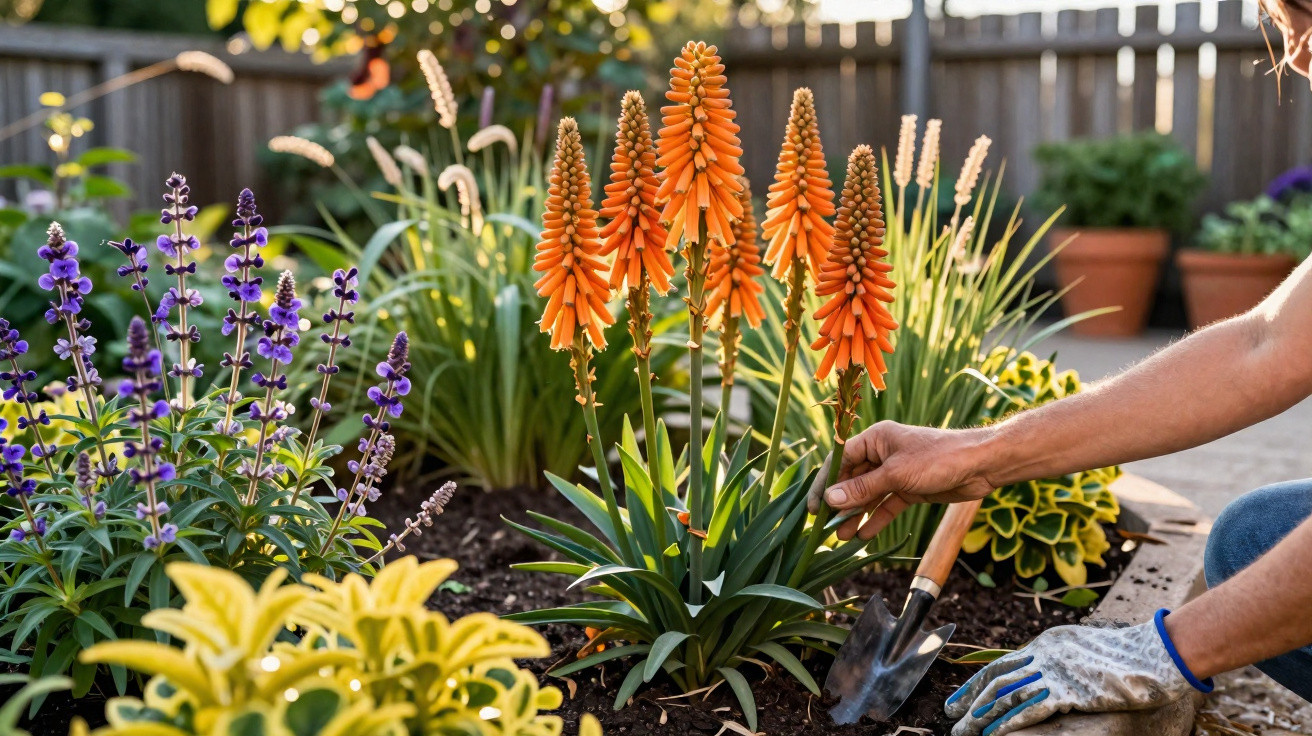
Plenty of gardens look pleasant in summer, yet few feel truly show-stopping. That’s where a still-under-the-radar perennial can step in and turn an ordinary flower border into a stage in a single season: Leonotis leonurus, also known as lion’s ear. Native to South Africa, it thrives in heat and full sun-and in the garden it reads like a blend of flames, a candelabrum and a piece of modern design.
A showpiece like a blazing candelabrum
Leonotis leonurus is one of those plants you don’t forget once you’ve seen it in a bed. It grows in a distinctly upright manner and, in the right conditions, can reach up to 1.80 metres. The stems stay firm-almost like slender rods-standing clearly above neighbouring plants.
The foliage is narrow, elongated and intentionally understated, with an almost graphic look. The real impact comes from the flowers. They form in whorls around the stems, tier by tier, so each level appears as a glowing ring.
"The orange flowers look like stylised flames-like a vertical firework right in the middle of the border."
Each individual bloom is tubular, slightly downy and a strong, vivid orange. When backlit, the colour seems to burn. From a distance, the plant can resemble a contemporary garden sculpture-bringing calm to a busy planting scheme, while adding drama to anything that feels too restrained.
At the height of summer, the rings of flowers open progressively from the bottom upwards. This staggered display keeps the plant looking good for weeks. At the same time, it’s highly attractive to insects: bees and butterflies reliably home in on the bright whorls. In warmer parts of the world, even hummingbirds visit-an indication of just how nectar-rich the flowers are.
Where this perennial works best in the garden
To get the most out of Leonotis, it pays to choose the position with intention. It belongs in full sun. It needs at least six hours of direct sunlight a day to build strong growth and flower generously. In partial shade it stays more spindly and produces noticeably fewer blooms.
The soil can be nutrient-rich, but it must remain loose and free-draining. The plant cannot tolerate waterlogging, especially in winter. A medium garden soil improved with sand or fine gravel is ideal. Once established, Leonotis copes surprisingly well even in dry, lean soils.
A major advantage is its ability to handle longer dry spells. That makes it particularly useful for:
- sunny front gardens without an outdoor tap
- rock gardens or gravel beds with moderate upkeep
- modern city gardens with heat-island conditions
- holiday homes where regular watering isn’t possible
This perennial is considered reasonably hardy down to around –8 °C. In milder areas it can survive in the ground with reliable winter protection. Where winters are harsher, choose a sheltered spot-such as in front of a house wall-and apply a thick mulch over the root zone.
The five most important rules for successful planting
If Leonotis leonurus is to deliver its full showpiece effect, a few straightforward basics make all the difference. They’re easy to follow even without expert gardening knowledge.
Plan for full sun
No shortcuts: this sun-lover needs a genuinely open, bright site. Permanent shade behind the house won’t suit it.Ensure excellent drainage
Before planting, lighten heavy, clay-rich soil by mixing in sand or fine gravel. The aim is simple: water should drain away rather than sit in the ground.Work in organic matter
Well-rotted compost or a high-quality, structure-stable planting mix gives a strong start. It helps the plant develop robust roots quickly and set more flowers.Water-sensibly
Water regularly for the first few weeks after planting, then increase the intervals. Once rooted in, Leonotis is impressively drought-tolerant.Don’t skip winter protection
In frosty areas, cover the root zone thickly with bark mulch, leaves or straw. In pots, insulate the containers or move them somewhere frost-free.
"With just a few simple steps, a supposedly delicate exotic becomes an unexpectedly tough structural plant for hot summers."
Creating a border with unmistakable style
The standout strength of Leonotis is its form. It introduces a clear vertical line to a planting scheme. With the right neighbours, it can act as the unifying element in an otherwise free, mixed border.
It pairs particularly well with plants that either echo the fiery tone or deliberately set it off:
- Ornamental grasses with loose, flowing stems as a soft counterpoint to the rigid uprights
- Echinacea, sage or catmint in blues and violets for strong colour contrast
- Dark-leaved cannas or dahlias for dramatic late-summer combinations
- Silver-leaved perennials such as Perovskia or Artemisia to make the orange appear even brighter
In modern, clean-lined gardens, Leonotis works especially well when repeated in small groups of three to five plants. This creates a rhythmic structure that guides the eye through the bed.
In more naturalistic planting, it can also stand alone among billowing grasses. There it reads like a small flaming candelabrum rising out of a meadow. Placed along the edge of a patio, it brings the spectacle right up to the seating area.
Examples of striking border ideas
| Style | Companion plants | Effect |
|---|---|---|
| Modern city garden | Grasses, purple sage, white gaura | clean, graphic, urban |
| Exotic summer border | Cannas, dahlias, agapanthus | lush, bold, almost tropical |
| Naturalistic garden | Salad burnet, yarrow, ornamental grasses | relaxed, dynamic, insect-friendly |
Care through the year: from planting to pruning
The best time to plant is in spring, once the soil has started to warm up. That gives the perennial a full season to establish roots. If you plant in April or May, you can often expect the first flowers in the very same summer.
During the main growth period, a light feed in early summer with an organic slow-release fertiliser or compost is helpful. Beyond that, the plant usually needs very little. Overfeeding tends to produce soft, unstable shoots and fewer flowers.
You can remove spent tiers for a tidier look, but it isn’t essential. Many gardeners leave the dried flower heads standing well into winter. They add structure in the bare season and provide hiding places for small creatures.
Cut back in late winter or very early spring, once the risk of severe frost has passed. Then trim all stems down close to the ground. Fresh shoots will emerge from the base in spring.
What gardeners should know about risks and quirks
Compared with many tender exotics, Leonotis behaves in a fairly straightforward way. The main problems are winter waterlogging and insufficient light. In very wet soils the roots can rot easily. In persistently gloomy positions, growth stays weak and the plant is more likely to flop.
For containers, a more mineral-based compost is best, with a good proportion of expanded clay pellets or grit to keep drainage reliable. Pots must have drainage holes so excess water can escape. In winter, the container itself needs protecting-such as with bubble wrap or by wrapping it in hessian.
If you have children or pets, it’s worth noting: like many ornamental plants, Leonotis is considered mildly toxic if larger amounts are eaten. It isn’t regarded as highly poisonous, but it still shouldn’t be treated as edible-no more than oleander or angel’s trumpet. A spot where toddlers won’t constantly nibble at the stems is a sensible choice.
Why now is a particularly good time for this perennial
Summers are becoming drier and heatwaves more frequent. Many traditional perennials struggle under these conditions. Leonotis fits this new reality remarkably well: it loves sun, tolerates drought, and still delivers a bold presence.
If you’re rethinking your border for the coming years, this plant offers real character. It doesn’t merely fill gaps-it shapes the whole picture. A single, well-placed clump can turn an otherwise dull perennial bed into something closer to a summer art object.
For gardeners who feel they’ve already tried everything-roses, hydrangeas, lavender-this South African flame perennial is well worth a look. It brings a different silhouette, a different height and a different rhythm into the garden. And that’s exactly what separates a simply nice garden from a border that makes people stop and stare.





Comments
No comments yet. Be the first to comment!
Leave a Comment