
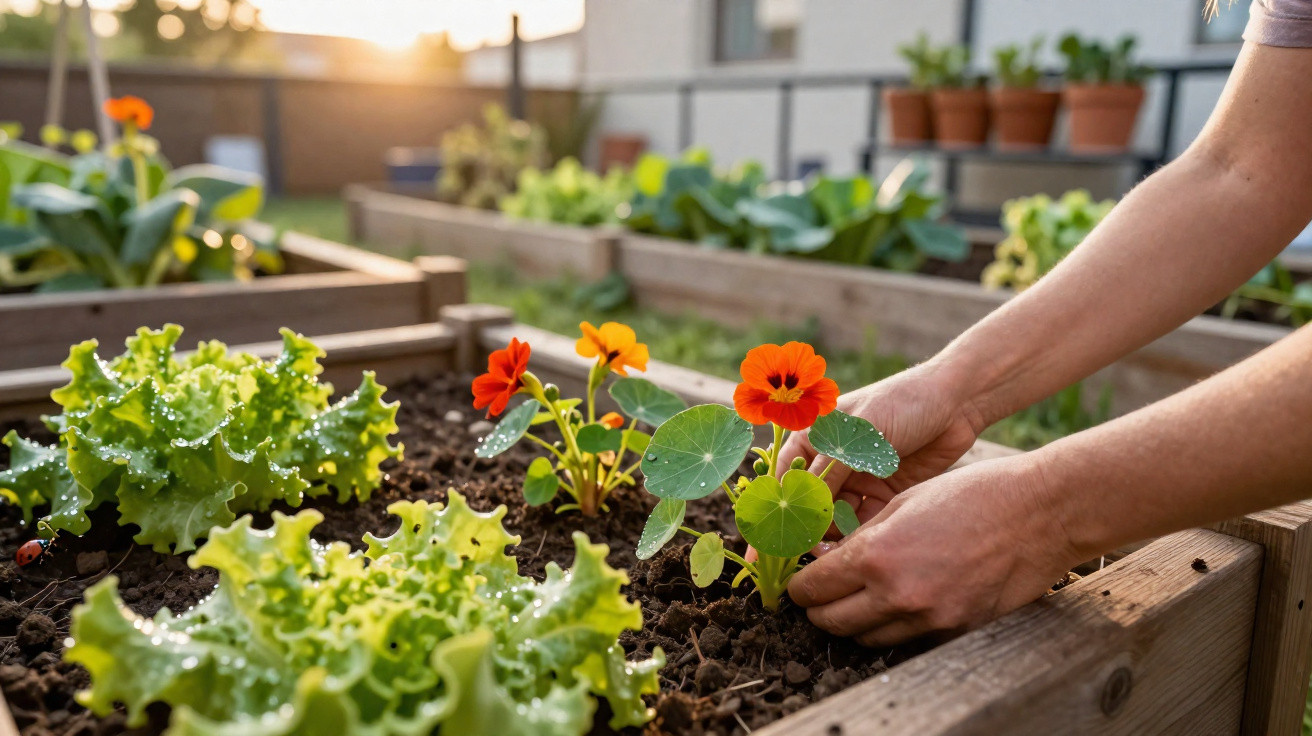
Many amateur gardeners still reach for sprays when things get tough, yet older generations already knew the answer often sits quietly as a modest flower between the vegetable rows. If you sow the right ally in March, you give your bed a double boost - protection from aphids and a better harvest.
Why one simple flower can transform the whole bed
It used to be a staple of almost every cottage and farm garden, and now it is gradually making a comeback: nasturtium. Plenty of people see it only as a bright ornamental plant, but in reality it is a versatile helper among vegetables. It draws pests away, attracts pollinators, and adds a splash of colour to all that green.
As temperatures begin to rise in March, the garden enters its busiest stretch: preparing beds, making the first sowings, and starting young plants. Anyone who factors nasturtium in now is setting up robust, resilient crops for the whole season.
"A handful of seeds in March can do more for your bed than an entire season of spraying."
Nasturtium: gardeners’ old secret weapon
How it saves your vegetables as a “sacrificial plant”
Arguably the most valuable benefit of nasturtium is that it acts like a protective barrier for more delicate vegetables. Its sap is especially irresistible to black aphids. Those same aphids would otherwise happily settle on beans, peas, broad beans, young tomatoes, and many other crops.
Something remarkable happens when vegetables grow alongside nasturtium: the aphids effectively “choose” the nasturtium. They flock to its soft shoots and leaves, while beans, peas, or courgettes can put on growth undisturbed.
- Aphids congregate on the nasturtium.
- Sensitive vegetable plants are attacked far less.
- If needed, you can simply remove infested nasturtium plants.
This creates a kind of buffer zone in the bed. The pest may still be present, but it causes less damage to what you actually want to harvest. The aim is not a sterile, “pest-free” garden - it is a balanced system.
Why it’s often more stable without chemicals
Regular spraying does not only kill aphids; it also wipes out the predators that keep them in check. Nasturtium encourages the opposite effect: heavily infested leaves become a beacon for ladybirds, lacewing larvae, and hoverflies.
These beneficial insects find plenty of food on the aphids feeding on the nasturtium, and they reproduce in the garden. They then move on and help clear up elsewhere, gradually building a steady balance that is far more effective long term than any homemade spray.
"Nasturtium attracts pests - and that is exactly what gets their natural enemies going."
Higher yields: how the flower turns your bed into an insect magnet
A clear signal for bees, bumblebees and more
Nasturtium’s large, open flowers are like a glowing signpost to pollinators. Their strong colours - yellow, orange, and red - stand out immediately among vegetable rows. The nectar is plentiful, easy to access, and valued by many species.
That directly affects your bed: where nasturtium is flowering, bees and bumblebees visit more often and stay longer. They do not just work the showy blooms; they also move on to the less obvious flowers of your food crops.
This particularly benefits:
- Tomatoes (especially outdoors)
- Pumpkins and courgettes
- Cucumbers
- Strawberries
- Fruit trees close to the beds
Ideal companions - from window boxes to large gardens
This effect is not limited to traditional gardens. Even in small spaces - raised beds, containers, or balcony planters - nasturtium can make a real difference. A handful of plants tucked between potted tomatoes or in a planter system on the patio can be enough to draw in more pollinators.
The upside is that more well-pollinated flowers usually means:
- a higher number of fruits,
- better-formed, more even fruits,
- and in many cases slightly earlier ripening.
In built-up areas, where insects are not present in huge numbers, this extra support can be the difference between a thin crop and a truly abundant one.
How to use nasturtium properly in March
Position, soil and spacing: what matters
Nasturtium is surprisingly undemanding. It grows in ordinary garden soil, copes with slightly sandy ground, and does well in raised beds too. Full sun produces the most flowers, though partial shade is usually fine.
If you want a targeted effect in the vegetable bed, placement is worth thinking through:
- Along the bed edges as a colourful “protective belt”
- Dotted between rows of beans, peas, lettuce, or brassicas
- Near tomatoes, peppers, and courgettes to encourage more pollinators
A good rule of thumb: a small cluster of seeds (2–3 seeds) every 30 to 40 centimetres is enough to quickly create a dense network of plants.
Sowing in March: start in pots or sow straight outdoors?
In March you have two routes, depending on your region and the weather:
| Option | Method | Benefit |
|---|---|---|
| Starting in pots | 2–3 seeds per pot, keep warm and bright, plant out after the last frosts | Earlier start, sturdy young plants, fewer losses |
| Direct sowing | Place seeds straight into the prepared bed, 2–3 cm deep, water in well | Fast, simple, no indoor space needed |
In colder, exposed areas, starting in pots is often the better choice so the plants become large enough early on to do their protective job when the first aphids appear.
Watering without hassle: reliable germination
Nasturtium tolerates a lot, but it does not like waterlogging. For strong germination in March:
- Keep the soil evenly, lightly moist.
- Avoid watering over the foliage; water at the root zone instead.
- During dry spells, water less often but more thoroughly.
If you already water your vegetable rows gently with a watering can, you have the ideal routine. Nasturtium simply joins in and gets going reliably.
How to get the most out of it in the bed
The best planting partners for nasturtium
These combinations are especially worthwhile:
- With beans and peas: reduces aphid pressure on the shoot tips.
- With brassicas: encourages more beneficial insects, adds colour, and can mean less feeding damage in some cases.
- With tomatoes: more insect activity, plus an attractive contrast in the bed.
- Along paths and bed edges: a neat visual frame and a barrier effect for pests.
Visually, the pairing pays off too. Instead of a uniform strip of green, you get a lively, colourful garden space. It also makes the bed easier to “read” and encourages you to check in more often to see how everything is developing.
Edible flowers and leaves as a bonus
One point many people overlook: nasturtium is not only useful - it is edible. The leaves and flowers have a mildly peppery flavour, similar to cress, and work brilliantly in:
- salads
- sandwiches
- herby cream cheese
- pesto-style sauces
That turns a purely “functional plant” into a small gourmet ingredient for the kitchen. Even the still-green seeds can be pickled like mock capers.
What to watch for: problems and risks
If aphids explode: what next?
If you are using nasturtium for the first time, dense aphid colonies on the leaves can be alarming. It looks dramatic, but it usually means the approach is working. The pests are sitting where you want them - not on your beans or peas.
Still, if it gets too much, you can respond:
- Cut off heavily infested shoots and dispose of them in the general waste.
- Deliberately leave some aphids so ladybirds and other predators have food.
- Avoid spraying soap solutions if your goal is to support beneficial insects.
Trailing or compact: choosing the right variety
There are two broad types of nasturtium: climbing/trailing forms and more compact, bushy growers. If you want it among low crops such as lettuce, radishes, or carrots, a shorter variety is the better option so it does not smother anything. Along fences, tomato supports, or trellises, vigorous climbing types are ideal.
A tip: seed packets nearly always state whether a variety trails or stays bushy - a quick look can save you having to move plants later.
Why March is the ideal moment to start
Starting in March gives you a head start. The plants establish a strong root system early and develop enough leaf mass before the critical period for many vegetables begins. That means they are ready at just the right time to intercept aphids and attract insects.
If you wait until May, you often lose weeks when aphids can attack young vegetables unchecked. A small sowing session in early spring can make the difference - not only for your stress levels, but for the overall yield.
So, on your next trip to the veg patch in March, it is worth asking one simple question: between the bean row, the tomato stake, and the carrot line - is there still a strip free for a few nasturtium seeds? If there is, you have just sown one of the smartest natural allies you can add.
Comments
No comments yet. Be the first to comment!
Leave a Comment