
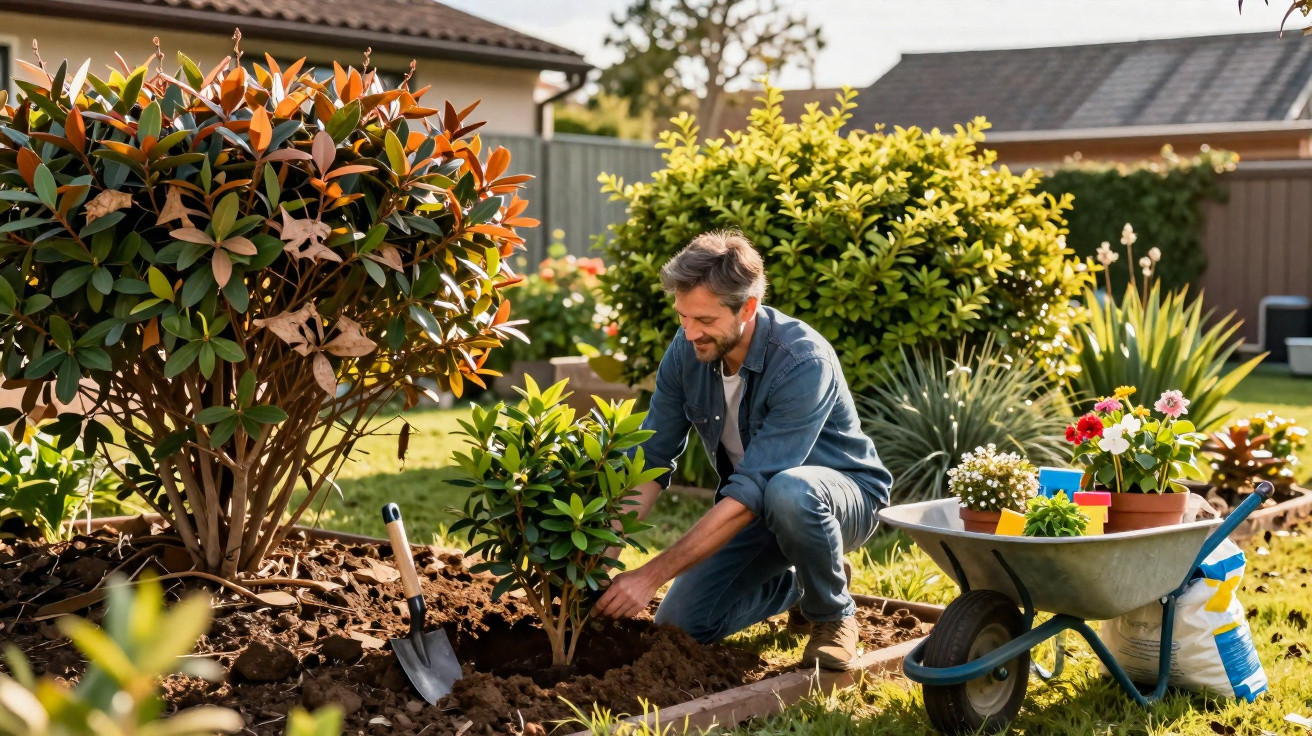
For years, Photinia – often sold for gardens as the “red-leaved glossy star” – was seen as a safe bet: fast growth, evergreen cover, and bright red spring shoots. Now attitudes are shifting. Diseases, bare patches and the sheer hassle of pruning are becoming more common. More and more amateur gardeners are asking the same question: is it still worth persevering, or is it smarter to switch to a different shrub?
From garden favourite to problem hedge
Anyone living on a newer housing estate will recognise the scene: an entire street lined with identical red-tinted hedges. For a long time it worked, at least visually. Photinia raced upwards, filled gaps quickly and, with its red new growth, gave a slightly “designed” look without demanding much effort.
Over time, a less flattering side tends to appear. It starts with more leaf drop than usual, then small holes show up, and eventually the whole hedge looks tired. Many owners say that after a few years they never manage to get back to the original dense privacy screen – no matter how much they prune or feed.
"Instead of reliably screening, the hedge suddenly looks see-through, blotchy and takes more work than it’s worth."
That is often the turning point. Replacing Photinia outright no longer feels extreme; it feels practical. Few people want to spend time and money every year on a plant that no longer delivers on its main job – privacy screening and a tidy, attractive frame for the garden.
Why Photinia is struggling more and more often
It’s not that the plant has suddenly become “worse”. The conditions around it have changed. Milder winters, long damp springs and hedges planted far too tightly create ideal conditions for fungal diseases.
Top of the list is the disease commonly referred to as Entomosporium leaf spot (Entomosporiose). It usually begins with red or brown spotting on the leaves. After that, the foliage dries up and drops. What’s left are bare sections that allow every curious glance from the pavement straight into the garden.
- Leaves develop spots and then dry out
- Foliage drops early and in large quantities
- The hedge becomes holey and uneven
- Infected leaves on the ground keep the disease circulating
A frequent mistake comes next: people replant Photinia in the very same strip. But fungal spores can remain in the soil, in old leaf litter and, in some cases, on neighbouring plants. The “new” hedge effectively starts life carrying the old problems.
Anyone who wants lasting peace and quiet usually needs a genuine change of strategy – including choosing a different plant species.
The quiet successor: Pittosporum as a low-stress privacy screen
In garden centres and among landscape gardeners, one name is being mentioned more and more often when people ask for a Photinia replacement: Pittosporum. This evergreen shrub stays dense year-round without constantly becoming ragged or spreading out of control.
Its biggest strength is its more even, balanced growth. Pittosporum doesn’t shoot up wildly; instead, it forms a compact, steady hedge over time. That makes it particularly suitable for small back gardens, boundaries along patios and neat front gardens.
"Pittosporum provides the privacy screen many people hoped Photinia would deliver – just more stable and with less maintenance."
Colours, forms and the effect in the garden
Pittosporum comes in several types that can be matched to different garden styles:
- Dark green varieties for a classic, understated hedge
- Variegated varieties with pale margins that brighten shadier corners
- Slightly silvery types for modern, clean-lined planting schemes
Even if the trimming isn’t perfectly precise, the overall outline still looks good. In most cases, one or two cuts a year are enough to keep the hedge looking neat and closed. For anyone who doesn’t want to live with hedge trimmers in hand, that’s a compelling advantage.
Moving on from the “green fence board”: mixed hedges are on trend
The era of strictly uniform hedges is clearly fading. The more gardeners are disappointed by single-species planting, the more another approach takes centre stage: the mixed hedge.
The principle is straightforward: instead of planting 25 metres of Photinia alone, you combine multiple species. That spreads the risk. If one plant type struggles or fails in places, the rest remains and largely preserves the overall look.
Pittosporum works extremely well as a backbone in these mixes. It can be paired, for example, with:
- Elaeagnus – exceptionally tough, tolerant of salt, a strong choice for windy spots
- Cornus (dogwood) – coloured stems that add interest through winter
- Hazel – a native feel, valuable for birds and insects
- Other evergreen species that suit the local climate
The result is a hedge that feels more alive and offers more throughout the year. Different flowering periods, leaf colours and textures prevent a dull “green block”. As a bonus, your garden stands out from the standard estate planting.
How to say goodbye to Photinia without regrets
Before reaching for a chainsaw, it’s worth assessing the hedge’s condition carefully. With solid care, you can sometimes get on top of isolated diseased branches. But if, over several metres, you’re left with little more than stems and gaps, it’s usually past the point of recovery.
When removing it, one rule matters: take all diseased material out of the garden completely. Don’t put the leaves on the compost; dispose of them via general waste or your local council recycling and waste site. Any leftovers can infect new plants again.
Prepare the soil instead of simply “sticking new plants in”
If you only rip out the old shrubs and plant new ones straight away, you increase the risk of a poor start. The soil often suffers after years of compaction, waterlogging or one-sided nutrient supply. A short but thorough reset makes a real difference:
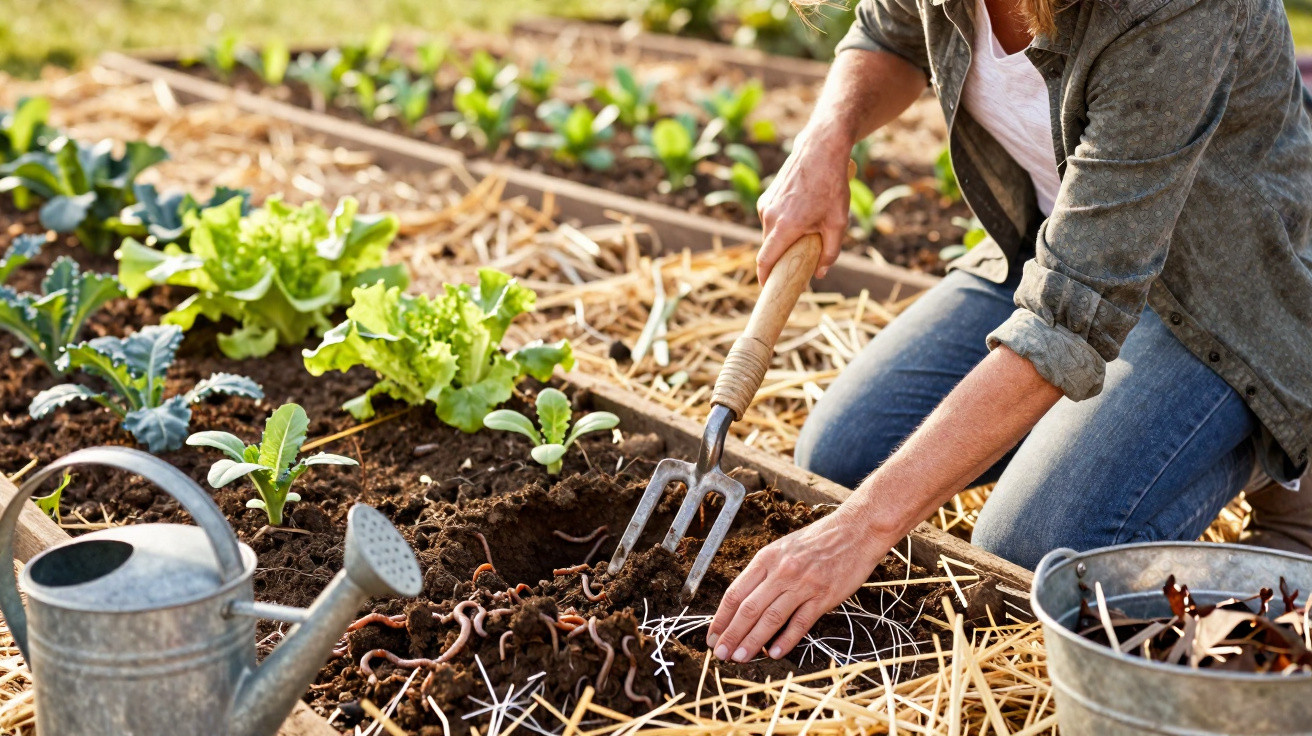
- Loosen the soil deeply – ideally with a garden fork, not by turning it over with a spade
- Work in mature compost or well-rotted manure
- Check drainage, especially on heavy clay soils
- Choose planting distances that are deliberately more generous
A hedge planted too close together may look satisfyingly full at first, but in later years it can suffer from competition, fungal pressure and poor airflow. The outcome is often exactly what people experienced with Photinia: a rapid start followed by an early decline.
What the new hedge should actually be matched to
When planting again, it shouldn’t be about looks alone. Site conditions and day-to-day reality matter just as much. How exposed is the boundary? How much sun reaches it? And how much time is genuinely available for trimming and general care?
In very windy locations, it helps to support young Pittosporum shrubs with a sturdy stake for the first few years. An organic mulch – such as bark compost or woodchip – keeps moisture in the ground for longer, suppresses weeds and maintains a looser soil structure. In dry summers, that gives plants a clear head start.
If you also mix in a few flowering species, you’ll attract more bees, butterflies and birds along the boundary. That way, the line by the neighbour’s fence becomes more than a simple “privacy screen installation” and turns into a living habitat that benefits the whole garden.
In the end, replacing a struggling Photinia hedge becomes less of a punishment and more of a genuine opportunity: for a calmer maintenance routine, greater garden diversity, and a hedge that still does its job reliably in spring 2026 and well beyond.
Comments
No comments yet. Be the first to comment!
Leave a Comment