
The sirens roused us before dawn.
Looking out from our bedroom, we could only make out an odd orange glare washing over the hedge line that separates our place from Tom’s. His shrubs had always been his pride - a dense green screen he’d fuss over each evening after work. By that morning they’d become nothing more than charred stubs, framed by fire engines and dazed neighbours in their slippers.
When the air finally cleared, the damage was obvious: Tom had lost the shrubs, the fence, part of the shed, and had come frighteningly close to losing the kitchen as well.
All because he was trying to “protect” his plants from the cold.
And he did it the way 8 out of 10 gardeners still do.
The silent danger hiding in your shrub protection routine
A week before the fire, Tom had been outside in the garden, grappling with plastic sheeting and old blankets as the temperatures began to fall. He wasn’t reckless or naïve. He’d watched how-to videos, spoken with the bloke at the garden centre, and even ordered new frost fleece online.
Like so many of us, he was anxious about waking up to browned, scorched-looking leaves and lifeless branches. So he wrapped, doubled up and sealed each shrub “nice and tight” in an effort to keep the cold air out.
That instinct is the deadly part.
Reading the fire brigade’s report was nearly as grim as looking at the burned hedge itself.
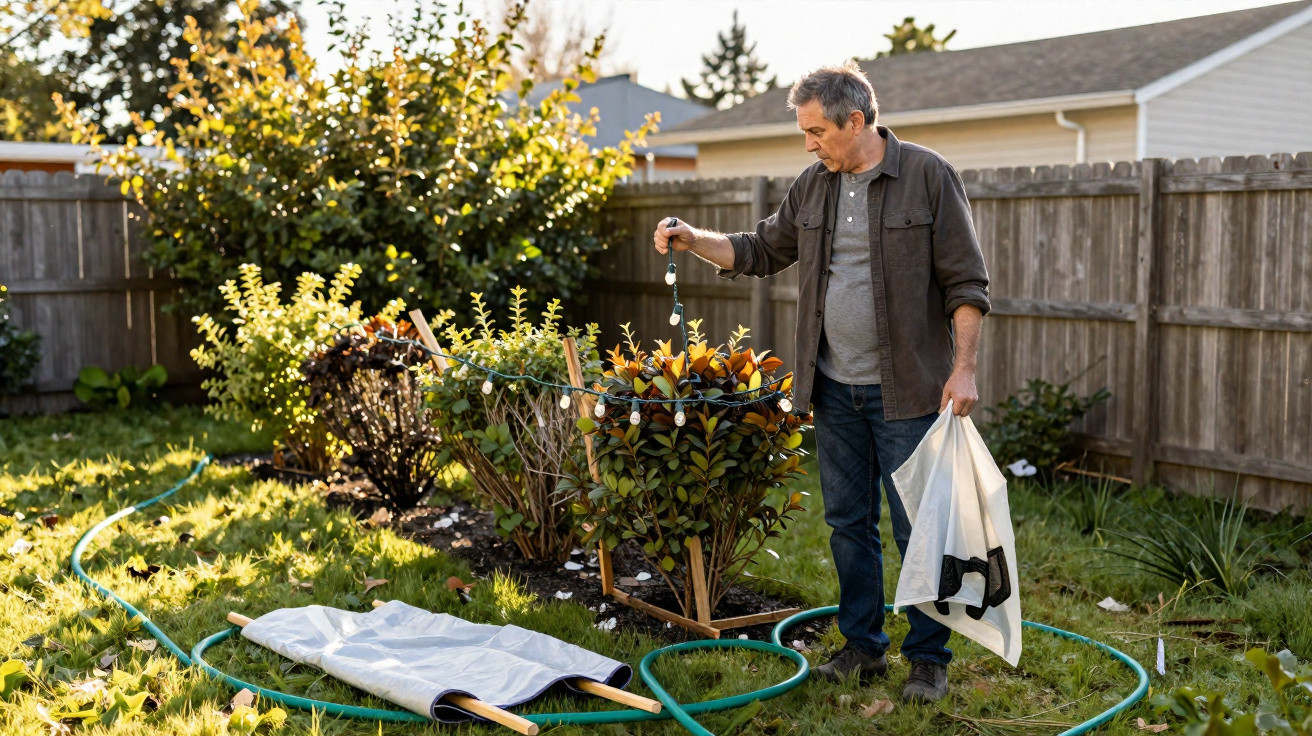
They tracked the source back to a dense clump of shrubs that had been bundled in plastic and fabric and pulled hard up against a set of outdoor lights. One spark, one cable that overheated - and the neat little greenhouse Tom had built for his plants became an oven.
It sounds like an outlier, but firefighters say the combination of flammable coverings, inadequate ventilation and electrics is increasingly a familiar winter-garden incident. Some insurers in Europe quietly flag “improper plant protection” as a seasonal risk that’s on the rise.
Everyone assumes they’re simply being thoughtful.
No one imagines a frost cover could take the whole fence with it.
The bigger issue runs deeper than a single disastrous night.
Many gardeners still treat the aim as total exclusion of cold, as though a garden were a fridge you can seal shut with bubble wrap. In doing so, they trap damp air, block ventilation, and push materials up against bulbs, cables and even vents.
Cold doesn’t worry firefighters as much as heat that can’t escape and dry, combustible fabric.
Shrubs that could cope with a few degrees of frost are suddenly exposed to something worse: stagnant warm air, fungal problems, mould - and, in rare but genuine cases, fire.
The most common error isn’t only what we choose to cover shrubs with.
It’s the way we try to tighten our grip on nature.
The right way to shield shrubs without turning them into a fire hazard
Effective frost protection often looks a little slack and slightly untidy from the outside. The point isn’t to “seal” a shrub; it’s to cut the wind, reduce sharp temperature swings, and keep the plant able to breathe.
Gardeners who actually rest on freezing nights tend to stick to one straightforward principle: cover the plant - not the ground around it, and definitely not any electrics nearby. They keep a gap between leaves and fabric, using stakes or a basic frame so nothing is pressed against foliage or lights.
Treat it less like you’re wrapping a present and more like you’re putting up a tiny tent.
Air has to circulate.
Moisture needs a way out.
And anything that warms up, plugs in or could spark must be kept well clear.
A lot of professionals rely on a method that’s surprisingly simple.
They begin at soil level, spreading a generous layer of organic mulch around the base - fallen leaves, bark chips, straw. This protects the roots, which are often far more vulnerable than the leaves we fixate on. Only then do they add a breathable covering - frost fleece, hessian, or even an old cotton sheet - draped over, not cinched tight.
The dangerous “quick fixes” usually happen when we’re cold, exhausted and in a hurry. Plastic tarpaulins instead of fleece, duct tape instead of proper clips, fairy lights left inside the covers “for a bit of magic”. Most of us know that 10 p.m. moment when the forecast suddenly drops and you’re outside in a hoodie, making do with whatever you can find in the garage.
That’s when small, flammable errors pile up.
“People think the cold kills their shrubs,” a local landscape gardener told me. “But what really ruins them is stress – from the wrong covers, from trapped moisture, and from stuff that was never meant to be near plants in the first place.”
- Use breathable materials only
Natural fabrics or purpose-made frost fleece allow air and moisture through, cutting the risk of rot and overheating. - Keep covers away from power sources
Don’t let fabric touch light strings, extension leads, heaters or outdoor sockets. Leave clear gaps. - Leave space around the foliage
Use bamboo canes or stakes to make a simple frame so the cover doesn’t cling to branches. - Prioritise roots over leaves
Mulch generously at the base; many shrubs will replace top growth if the root zone stays protected. - Remove covers on mild days
Let plants dry and receive light, then cover again overnight if needed. Your shrubs are tougher than you think.
Rethinking what “protecting” a garden really means
Tom now passes his rebuilt fence a touch more slowly than he used to. The replacement shrubs are smaller and less showy, but his approach has changed: less bubble wrap, more mulch. No knotted strings of lights, no last-minute tarpaulins hauled out at midnight.
He’ll tell you - after learning it the hard way - that nature doesn’t require us to control every single degree on the thermometer. It needs us to respect its limits – and the limits of our materials. The line he comes back to is brutally simple: “One evening of panic cost me ten years of growth.”
Plenty of gardeners carry a version of that lesson, even when it didn’t end with flames: branches blackened under plastic, leaves turning mouldy under blankets, shrubs failing not because of frost, but because we were frightened of it.
The real change starts when you stop asking, “How do I wrap everything up?” and begin asking, “How do I work with the cold, not fight it?”
| Key point | Detail | Value for the reader |
|---|---|---|
| Choose breathable protection | Use frost fleece, hessian, or cotton instead of plastic sheets or tarpaulins | Reduces fire risk, rot, and overheating while still softening frost |
| Protect roots first | Apply a thick mulch layer around the base of shrubs | Gives plants a better chance of recovery even if top growth is damaged |
| Separate covers from electrics | Keep fabric away from lights, cords, heaters, and sockets | Prevents the kind of accident that destroyed Tom’s hedge and shed |
FAQ:
- How can I tell if my shrub actually needs frost protection? If it’s a variety rated for your climate zone and has survived past winters, you may only need mulch at the base. Young, recently planted, or borderline-hardy shrubs benefit from light, temporary covers on the coldest nights.
- Is plastic ever safe to use over shrubs? Plastic can trap heat and moisture, and it burns fast. If you have no alternative, keep it loose, never near electrics, and remove it during the day. As a long-term method, it’s a poor choice compared with breathable fabric.
- Can outdoor string lights really start a shrub fire? Yes, especially if older or damaged, or if they’re pressed against dry foliage and flammable covers. LEDs are safer than old incandescent bulbs, but they still shouldn’t be trapped under fabric.
- What’s the safest quick fix on a sudden frost night? Grab old cotton sheets, pillowcases, or hessian sacks, drape them loosely over shrubs, and weigh down the edges with stones. Focus on tender plants and newly planted shrubs rather than trying to cover everything.
- My shrubs look burned after frost. Are they dead? Not necessarily. Wait until spring and scratch the bark lightly; if there’s green underneath, the plant is alive. Prune dead tips once new growth appears and keep the root zone mulched and watered during dry spells.



Comments
No comments yet. Be the first to comment!
Leave a Comment