
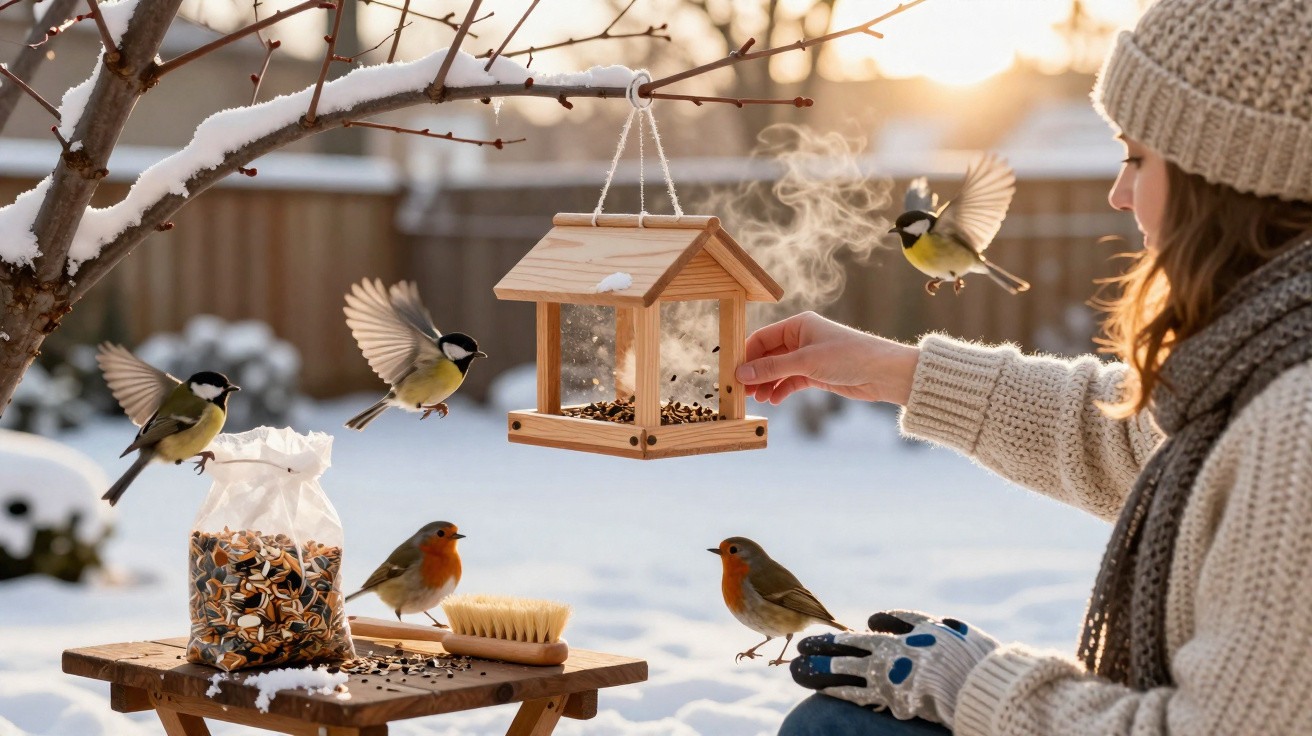
By morning the garden had settled into that peculiar winter hush, as though the cold had muffled every sound. No distant lawnmower, no bees, no children calling out-only the faint crunch beneath your shoes and the pale tracing of leaves you forgot to clear.
By the hedge, a robin flitted anxiously from twig to twig. In summer it would have shot across the lawn with swagger and curiosity; now it hesitated, judging every hop, staring at the hardened soil where worms were once easy pickings. A blue tit dropped in, then vanished almost immediately, as if it had weighed up the odds and decided there simply wasn’t much in it.
You stand there with your hands in your pockets and feel that small prickle of guilt mixed with something gentler. And the thought lands: one modest, inexpensive object could decide whether those birds stay… or quietly slip away.
Why winter is so brutal for garden birds – and how a simple feeder changes everything
For birds, winter isn’t just “a bit colder”. It turns each day into a sprint against fading light and falling temperatures. Insects are scarce, seeds are buried, the ground is frozen, and daylight hours are short. Each hour becomes a calculation: survive until night, then survive through it.
Now imagine an animal that weighs less than a letter. It has to gather enough energy in a few dull, grey hours to keep a tiny heart working through a long, freezing dark. There’s no reserve plan for that heart. It either finds food… or it doesn’t.
This is where a straightforward, low-cost bird feeder becomes quietly enormous. It isn’t a bit of garden décor; it’s a lifeline fixed to a fence.
British conservation groups estimate that, for some garden bird populations, as many as half of individuals rely at least partly on people feeding them in winter. That isn’t a vague “nice extra”-it’s effectively built into their winter survival now.
There’s another figure people don’t often say outright: several million garden birds across Europe die each winter due to cold and food shortages. A prolonged freeze can remove weaker birds within days. And on a hard day, missing a single meal can be the difference between making it and not.
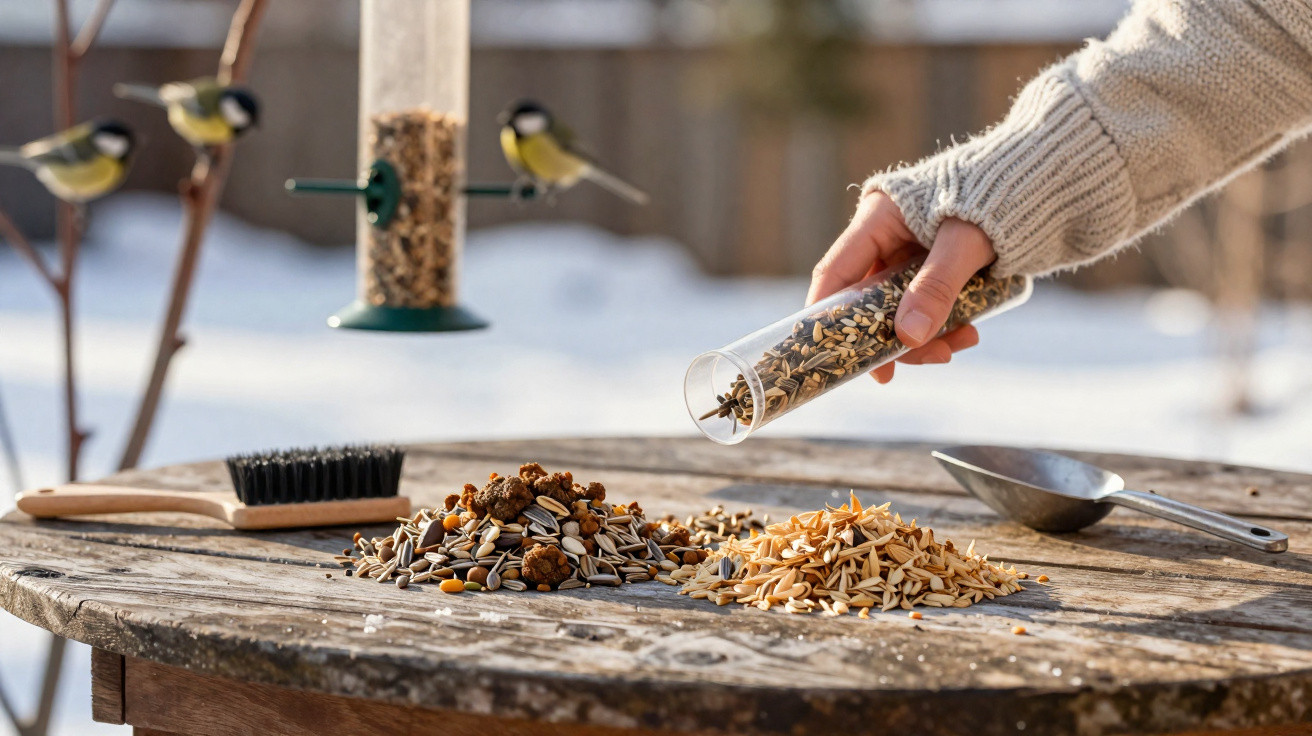
Against that backdrop, the solution can look almost comically simple: a plastic tube or a metal tray suspended from a branch. A cheap multi-port feeder from a supermarket or an online shop, filled with mixed seed or peanuts. It doesn’t look brave or dramatic. Yet the visits add up-ten, twenty, fifty birds in a day.
When researchers compare gardens that are fed regularly with those that aren’t, the differences are hard to ignore. Species richness increases. Birds hold a steadier body weight during cold snaps. And many householders describe the same change in plain language: the garden feels alive again.
It isn’t magic, and it isn’t sentiment. It’s energy. Winter turns food into warmth, and warmth into survival. A feeder is, in effect, a small daily vote that says: “Stay. You belong here.”
The affordable feeder that actually helps – and how to use it without stressing
The most effective winter bird feeder is rarely the fanciest. It’s the one you’ll realistically keep using. A basic tube feeder with several small ports, or a simple hanging tray, can cost less than many people spend on coffee over a week.
Choose a model that opens easily and is simple to clean, with a strong hook or handle. Plastic is perfectly fine if it’s sturdy and UV-resistant. Metal tends to last longer, but it doesn’t need to be a designer item. What matters is that birds can perch securely and reach the food without having to twist themselves into acrobatic shapes.
Stock it with a good mixed seed, or sunflower hearts, rather than relying on bargain wheat alone. You’ll bring in a broader range of species and provide more energy-dense food. The feeder is the stage; the seed is the script.
Here’s the bit plenty of guides glide past: your future self will be busy and tired. You won’t patiently scrub and refill a complicated, fiddly feeder every single winter day. Let’s be honest: nobody truly does that daily.
So pick a feeder that fits the effort you can manage on an ordinary week, not the ideal version of yourself. Large enough that you aren’t topping up constantly, small enough that the food doesn’t sit around and go stale. Something you can unhook, rinse, and hang back up without making it a whole project.
Put it somewhere you’ll actually notice-ideally visible from a window you genuinely use. That small decision changes everything. If you’re watching birds while you make coffee, you’ll spot when the feeder is empty or blocked. Helping wildlife becomes part of the rhythm of your day, rather than another task that triggers guilt.
“When people ask what birds need in winter, I always say: food, shelter… and someone who remembers to top up the feeder,” laughs Emma, a volunteer at a local bird charity. “The cheapest feeder is often the one that ends up saving the most lives, just because it’s there and it works.”
- Pick a simple, robust feeder that’s easy to clean
- Hang it near shrubs or a hedge so birds can dive into cover
- Offer high-energy foods: seeds, peanuts, suet balls
- Refill regularly, particularly during cold snaps
- Allow yourself to aim for “good enough”, not perfect
The quiet reward of helping birds through winter – for them and for you
We don’t often discuss what feeding birds gives back to us. There’s the obvious delight: the flicker of a goldfinch’s wings, the neat poise of a coal tit snatching a seed and disappearing. But there’s something slower and deeper too.
Standing at the window with a mug warming your hands, watching a queue of tiny lives trust your little plastic feeder, can reshape a cold day. The garden stops feeling like a dead, grey rectangle and becomes a moving story. Over time you start to spot “regulars”, almost as if they’re neighbours.
On a rough morning, when everything seems faintly pointless, a sudden flutter of wings can feel like a quiet reply. You filled the feeder. They arrived. Something worked.
That’s the odd power of such an affordable object. A bird feeder doesn’t demand grand gestures; it asks for a bag of seed, five minutes, and a nail in a fence. The return can feel wildly disproportionate: colour, sound, and a sense of sharing the season with other creatures trying to get through the same winter you are.
In strictly practical terms, the more birds that make it through the cold months where you live, the fuller your spring will be-more song, more natural insect control, more young birds learning the routes to gardens that feed them. A cheap feeder can quietly influence the soundtrack of your street for years.
On the human side, feeding birds is one of the rare actions where the cause and effect are visible every day. You pour seed in. Hours later, wings appear. That feedback loop is compelling in the best way-it makes kindness feel concrete rather than abstract.
Most of us know the feeling of looking at the news and feeling powerless in the face of huge crises. A bird feeder doesn’t fix the planet. It simply makes a few square metres of it a little kinder, a little more survivable. And when that happens across millions of gardens, it starts to matter.
| Key point | Detail | Why it matters to you |
|---|---|---|
| Choose a simple feeder | A basic tube or tray that’s easy to open and clean | You’re far more likely to keep using it throughout winter |
| Put the feeder in the right spot | Near natural cover, and visible from a window | More bird visits, plus everyday enjoyment from watching |
| Use energy-rich food | Mixed seeds, sunflower, peanuts, suet | Real support for survival during frosts and cold snaps |
FAQ:
- How much does a good winter bird feeder really cost? Most effective basic feeders cost between £5 and £20. A straightforward tube or tray in that bracket, filled with decent seed, will do far more good than a fancy £60 designer model you rarely use.
- Where should I hang my feeder to help birds the most? Put it a couple of metres from dense shrubs or a hedge, so birds can dash into cover if a cat or hawk appears. Keep it visible from your window so you remember to refill and clean it.
- What food is best for birds in winter? Go for high-energy options: sunflower hearts, quality seed mixes, peanuts (never salted or roasted), and suet balls. These provide fats and calories birds can convert directly into warmth.
- Do I have to feed birds all year if I start in winter? No. Winter is the most critical time, particularly during frost and snow. If you can keep supplies steady through those tough weeks, you’re already making a genuine difference.
- Isn’t feeding birds bad because it makes them dependent? Studies suggest winter feeding supports survival rather than creating total dependence. Birds still forage naturally; your feeder is a reliable extra stop on their route, not their only source.
Comments
No comments yet. Be the first to comment!
Leave a Comment