
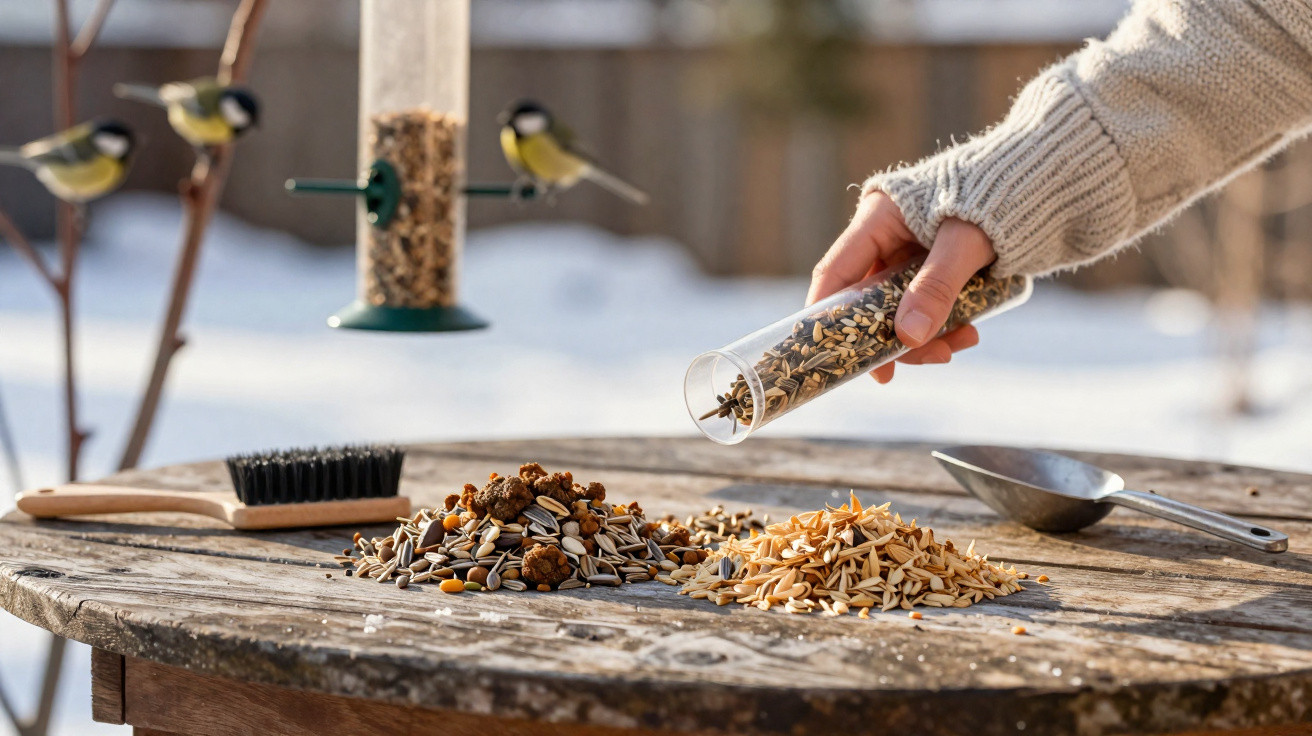
Winter can look deceptively calm: crisp dawns, still gardens, and birds puffed up on the feeder. For wildlife, though, the season is often far harsher than it appears.
In the UK and the US, millions of people put out feeders to help birds through the leanest months. But one easy-to-miss mistake-allowing seed to become wet or to freeze-can turn a well-meant habit into a real threat to the very birds we’re trying to support.
Good intentions, real danger
Providing food in winter genuinely helps small birds. It cuts down the time they must spend hunting for calories and can be the difference between coping and tipping into exhaustion.
Yet winter conditions don’t reward good intentions. Rain, drizzle, wet snow and lingering damp find their way into feeders, and once seed absorbs moisture, deterioration begins quickly.
Wet bird seed stops being nutritious and starts becoming hazardous long before it looks obviously rotten.
A great many garden bird deaths go unseen. When a blue tit or house sparrow stops appearing, it’s easy to assume a cat or a hawk was responsible. In fact, illness associated with feeding stations is a significant-and still under-recognised-issue in both suburban and rural settings.
When moisture turns feeders into petri dishes
Seed that’s damp isn’t merely a little “stale”. It can rapidly become an ideal environment for bacteria and fungi.
Moulds and hidden toxins
As soon as seed is wet, microscopic fungi begin to colonise it. A well-known group, Aspergillus, flourishes in the cool, damp conditions typical of poorly maintained feeders.
These moulds may release spores and toxins that harm birds’ lungs and suppress immune function. Greenfinches, siskins, tits and dunnocks can all be affected-particularly when cold temperatures and short daylight hours already place them under stress.
Clumps of darkened, sticky or claggy seed are a red flag: birds pecking at them are effectively pecking at disease.
From a distance, a neglected feeder may just look untidy. For a bird feeding at close quarters, it can mean breathlessness, loss of strength, and a slow, painful death in a hedge or beneath a shrub.
Bacteria that spread through the flock
Moist, fermenting food can also favour bacteria such as salmonella. At busy feeding spots, transmission is easy: many birds share the same perches and seed ports, while droppings accumulate nearby.
A salmonella infection can trigger serious digestive illness, resulting in weight loss, fluffed feathers, sluggish behaviour and, often, death. Outbreaks linked to garden feeders have already been recorded in Britain and North America.
The sequence is straightforward: too much food is left out, moisture gets in, microbes multiply, birds become weakened, predators pick off the unwell, and local numbers quietly fall.
The freezing trap: when seed turns to stone
Moisture creates another risk that’s easier to spot. Following rain or sleet, a hard frost can lock damp seed into a single solid mass.
For a robin-or a chickadee in North America-a frozen lump of seed mix might as well be a stone. Trying to chip off edible fragments costs valuable energy, which is meant to be saved for staying warm overnight and keeping clear of predators.
Every minute a bird spends fighting with frozen seed is a minute it is not actually eating.
During the coldest spells, small songbirds can lose around 10% of their body weight in a single night. They require quick, accessible calories-not an icy puzzle box.
Choosing feeders that keep food dry
Equipment choice matters more than many people expect. Some feeder types practically invite damp and mould, while others do a far better job of sheltering food.
Better designs for harsh weather
- Tubular “silo” feeders: These keep most seed enclosed, with only small feeding ports exposed, helping to shed a good proportion of rain.
- Roofed feeders: Platforms or trays with a generous overhang provide perching room while keeping direct rainfall off the food.
- Covered hanging feeders: A plastic or metal dome above the feeder can divert rain and snow, which is particularly helpful on balconies and compact patios.
Placement also makes a difference. Positioning a feeder under a roof edge, on the sheltered (lee) side of a shed, or within a thick hedge can provide natural protection from prevailing winds and driving rain.
Think like a soaked bird: is there a feeder nearby where you could land, eat quickly and stay mostly dry?
Daily habits that keep birds safe
Even a well-designed feeder won’t make up for poor day-to-day practice. How you fill and clean feeders determines whether they function as a winter lifeline or a source of illness.
How much, how often, what kind?
A practical guideline is to offer small amounts regularly, rather than piling in large quantities at once.
| Practice | What to do | Why it helps |
|---|---|---|
| Portion size | Offer about a day’s supply at a time, topping up only when needed | Limits leftovers that remain damp overnight |
| Cleaning | Clean feeders at least once a week using hot water and a mild disinfectant | Interrupts disease transmission and clears mould |
| Food choice | In very wet periods, prioritise fat balls, suet blocks and peanuts instead of loose seed | These options cope with moisture better than many mixed grains |
| Drainage | Make sure trays and platforms include drainage holes | Prevents water collecting under seed |
Many specialists also recommend rotating feeding areas: leave one location unused for a week while birds feed elsewhere, allowing droppings and bacteria to break down where activity has paused.
How to spot trouble at your feeder
Brief, frequent checks help you catch issues early-before they spread.
- Check for seed that has formed dark, sticky, slimy clumps.
- Look out for birds staying puffed up for long stretches, appearing drowsy and slow to respond.
- Pay attention if several birds of the same species stop visiting from one week to the next, outside migration periods.
- Notice any sour or musty odour coming from the feeder or your seed storage.
If you see any of these signs, clear the food, scrub the feeder, and let the area rest for a few days.
In especially wet winters, it may be safer to pause seed feeding briefly and rely more on high-quality fat products placed in well-sheltered positions.
Beyond feeders: making winter gardens genuinely bird-friendly
Feeders are only part of winter support. Gardens that provide natural resources are generally more robust than those relying on plastic tubes alone.
Shrubs that hold berries, perennial seed heads left standing, and dense ivy and holly all offer food that stays comparatively protected from the weather. Native plants often retain fruit or seed late into winter, giving birds alternatives when feeders are empty-or unsafe.
Clean water is as important as energy-rich food. A shallow dish refreshed daily offers a dependable drinking spot when ponds and puddles are frozen or polluted. In freezing weather, putting out lukewarm (not hot) water and checking it morning and afternoon can make a meaningful difference.
Key terms and real-life scenarios
Two terms appear regularly in winter feeding guidance:
- Fermentation: the process where microbes break down sugars and starches in wet seed, producing acids and gases and altering the food’s texture and smell.
- Pathogen load: the amount of harmful microbes present in a location such as a feeder; a heavier load increases the infection risk for every visiting bird.
Picture two neighbouring gardens during a stormy week in January. In the first, feeders are washed on Sunday, filled sensibly and checked each morning. Any damp clumps are removed, and birds can also forage on rose hips and ivy berries. In the second, large tube feeders are stuffed full once every fortnight, never cleaned, and left swinging in freezing rain above a bare lawn.
The first garden might attract slightly fewer birds at any one time, but those visitors are more likely to stay healthy, alert and capable of breeding successfully in spring. The second may seem “busy” at first, then become steadily quieter as disease and winter strain take effect.
For anyone who enjoys watching wildlife, that difference is worth considering. A ten-minute routine-discarding old seed, scrubbing with a brush, and refilling modestly-can turn feeding from a feel-good ornament into genuine support for local bird populations when conditions are at their toughest.
Comments
No comments yet. Be the first to comment!
Leave a Comment