
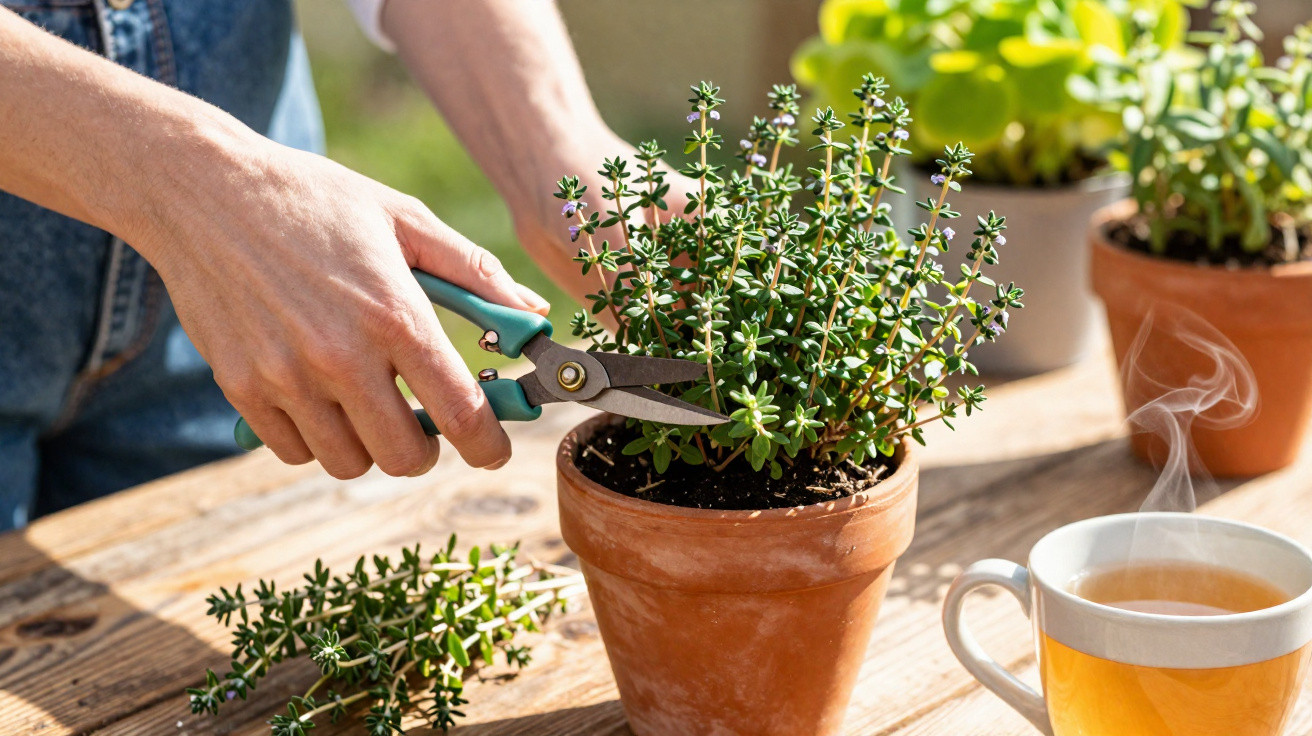
The year’s first properly warm day always feels slightly suspect. The sunshine seems kind, yet the ground is still chilled and the garden looks as though it’s only just stirring after a long, sulky sleep. You step outside with a mug of coffee, jumper still on, and your gaze lands on the thyme by the path. Last summer it was a tidy, scented little mound. Now it’s a dry, woody snarl with a few determined green tips - like bed hair, but as a plant.
You crouch down, test the stems, and hover with secateurs poised. Do you cut it back now? Hold off? Leave it alone and cross your fingers?
That brief moment of indecision - snip or don’t snip - is where most thyme plants are quietly written off.
Why early spring pruning is the secret life support for thyme
Take a walk round almost any neighbourhood in late spring and you’ll notice the same scene: thyme that’s effectively given up. The middle has turned brown and lifeless, while the greenery has retreated into awkward tufts at the very ends of long, woody stems. It looks worn out and overstretched - as if it needs a haircut and a holiday in equal measure.
The problem is that thyme doesn’t fix this on its own. If it’s left untouched, it carries on extending out and up, building more woody framework and shedding leaves from the inside, until there’s more bare structure than herb. That’s when people say, “My thyme just suddenly died.” It didn’t. It declined gradually while nobody was paying attention.
Mention “mysterious” thyme failure to an experienced Mediterranean gardener and you’ll get a puzzled look. For them, cutting thyme back in early spring is as routine as packing away winter clothes. A grower I spoke to in Provence said he times his whole pruning round using one simple sign: when the days feel “soft” but the nights are still cool.
He keeps a low thyme hedge edging a gravel path, clipped every early spring for fifteen years. No holes. No dead sections. Just a dense, aromatic border humming with bees by June. There’s no magic to it - only a habit, sharp scissors, and doing it at exactly the right time.
Thyme is a subshrub: part herb, part woody shrub. Fresh, soft growth forms at the tips, while the base hardens into older stems that rarely produce new leaves once they’ve aged. Without regular cutting, the plant keeps chasing the light, leaving an increasingly bare, leafless centre.
Early spring is the sweet spot: the plant is coming back to life, sap is moving and buds are swelling, but the real heat hasn’t arrived. Prune at that point and you’re telling it, clearly, “Branch from here. Stay low. Keep compact.” Leave it until midsummer and you’re adding shock to a plant that’s already hot, dry and tired. With thyme, timing is what turns a risky haircut into a strong growth cue.
How to cut thyme back in early spring so it stays compact and productive
Aim for a dry, mild day somewhere between late winter and proper spring. The soil shouldn’t be frozen, the risk of hard frost is easing, but much of the garden still looks sparse. That’s your window. Take clean, sharp secateurs (or sturdy kitchen scissors) and get down beside the plant.
Find the soft green or grey‑green ends of each stem, then follow them back until the growth becomes tougher and browner. Make your cut just above a point where you can see tiny leaf buds or where a side shoot branches off. Don’t shave it right down; as a guide, remove about a third of the plant’s height - up to half if it’s very leggy and you can see plenty of new shoots.
This is the bit that makes people wobble. Some barely touch it, snipping a few leaves and calling it done. Others go too far and shear it into old, dead-looking wood. Either way, the result is frustration.
Treat it like trimming hair after a rough winter grow‑out: you’re shaping and neatening, not taking revenge. Stand back and read the overall shape. You’re aiming for a rounded cushion, not a flat pancake or a lopsided mini‑shrub. If your thyme is very old and the middle is mostly woody, be realistic: you might not get a perfect comeback this year. Put your effort into getting the living green sections to branch and fill in as much as they can.
“Early spring is when thyme forgives you,” laughs one allotment gardener I met. “You can cut it, talk to it, move it, and it will still bounce back with fresh leaves. Wait too long, and it remembers everything you did to it.”
- Prune once a year in early spring
A modest annual trim keeps stems youthful and leafy rather than thick, hard and woody. - Never cut right back into bare, dead-looking wood
Older stems seldom reshoot, so keep some leafy growth or visible buds beneath every cut. - Harvest gently again after flowering
A light tidy once the first flush finishes helps extend scent and usable growth through summer. - Use clean, sharp tools
Blunt or dirty blades can crush stems and spread disease instead of making a clean cut. - Observe how your thyme responds within three weeks
Fresh shoots will tell you whether you were too cautious or too heavy-handed - useful guidance for next year.
The quiet power of a five‑minute spring ritual
There’s something surprisingly steadying about kneeling beside a small plant and choosing what to keep and what to remove. It’s a tiny, practical decision at the start of spring - a little control in a world that often feels anything but. Cut back a thyme and that scruffy patch of the garden suddenly looks purposeful again.
And most people recognise the moment when the garden slips from “I’ll deal with it this weekend” into “How did this turn into a jungle?” A quick early‑spring trim of thyme is one of those small routines that prevents that slide. It trades a few minutes now for structure and fragrance for the rest of the season.
| Key point | Detail | Value for the reader |
|---|---|---|
| Prune in early spring | Cut when days are mild and new growth is visible, before summer heat | Encourages branching, prevents woody, leggy plants |
| Cut above new buds | Remove about one-third of the plant, staying in leafy or budded wood | Keeps thyme compact, productive, and long-lived |
| Repeat light trims | Small cuts after flowering, plus annual spring pruning | Steady supply of fresh sprigs for cooking and a tidy, healthy mound |
FAQ:
- Question 1 How far back can I cut my thyme in early spring?
Aim to remove about one-third of the plant’s height, staying in the green or budded parts of the stems. You can go up to half for very overgrown plants, as long as you still leave some living growth below each cut.- Question 2 What happens if I cut into the old woody stems?
Old, bare wood on thyme rarely sprouts new leaves. Cuts made too low into that dead-looking section usually stay lifeless, which can leave you with gaps or dead branches inside the plant.- Question 3 Can I prune thyme in summer instead?
You can lightly trim or harvest in summer, especially after flowering, but avoid heavy pruning then. Summer heat and dryness make recovery harder, and the plant may struggle to regrow strongly.- Question 4 How do I know the right moment in early spring?
Look for a spell of dry, milder days when frost risk is easing and you can see small new shoots or swollen buds on the stems. The soil shouldn’t be frozen, and the plant should look like it’s waking up, not still dormant.- Question 5 Do I really need to do this every year?
Let’s be honest: nobody really does this every single year on the exact same day. Still, building a rough annual habit in early spring, even if you skip a year sometimes, will dramatically extend the life and productivity of your thyme.





Comments
No comments yet. Be the first to comment!
Leave a Comment