
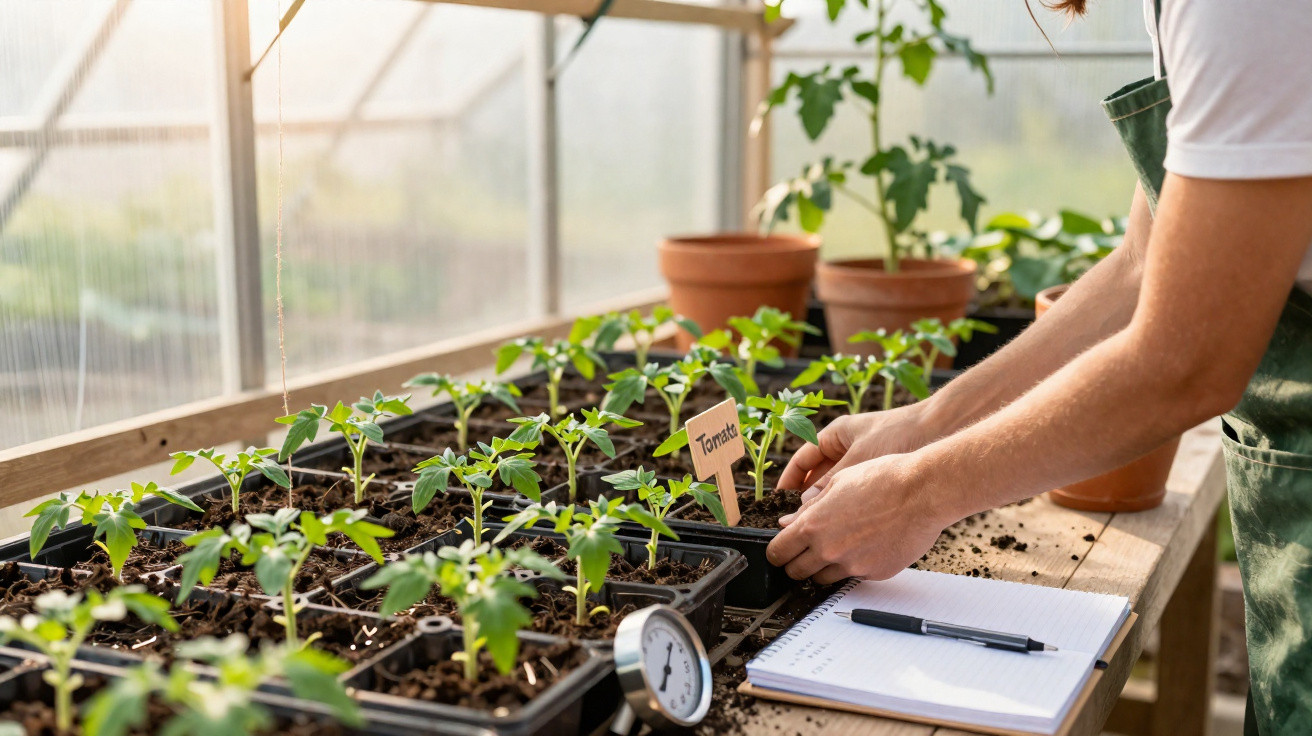
The greenhouse had a gentle kind of clatter that only living plants seem to make: extraction fans droning, slow drips tapping into plastic trays, and the slight crunch of grit beneath wellingtons. At one end, tomato vines clung to strings as they climbed towards the glass, all leaves and determination. At the other, a researcher in a washed-out hoodie was crouched over doing something you rarely see in glossy gardening guides: watching the roots.
A graph line on his laptop shot up, then sagged.
“The plant just hit the brakes,” he murmured, mostly to himself.
Overhead, the canopy still looked industrious and optimistic. Under the compost, though, a quiet exchange had already finished. Somewhere in those pale, branching fibres, a message had been sent: enough.
The signal was already on its way.
The hidden brake pedal under our feet
Walk through a thriving garden in late spring and everything seems to be leaning forwards: taller stems, broader leaves, one more round of flowers before the real heat arrives. From the surface it feels like constant acceleration. Yet beneath that surface, plants are always weighing trade-offs-silently checking water, nutrients and stress before committing to the next push.
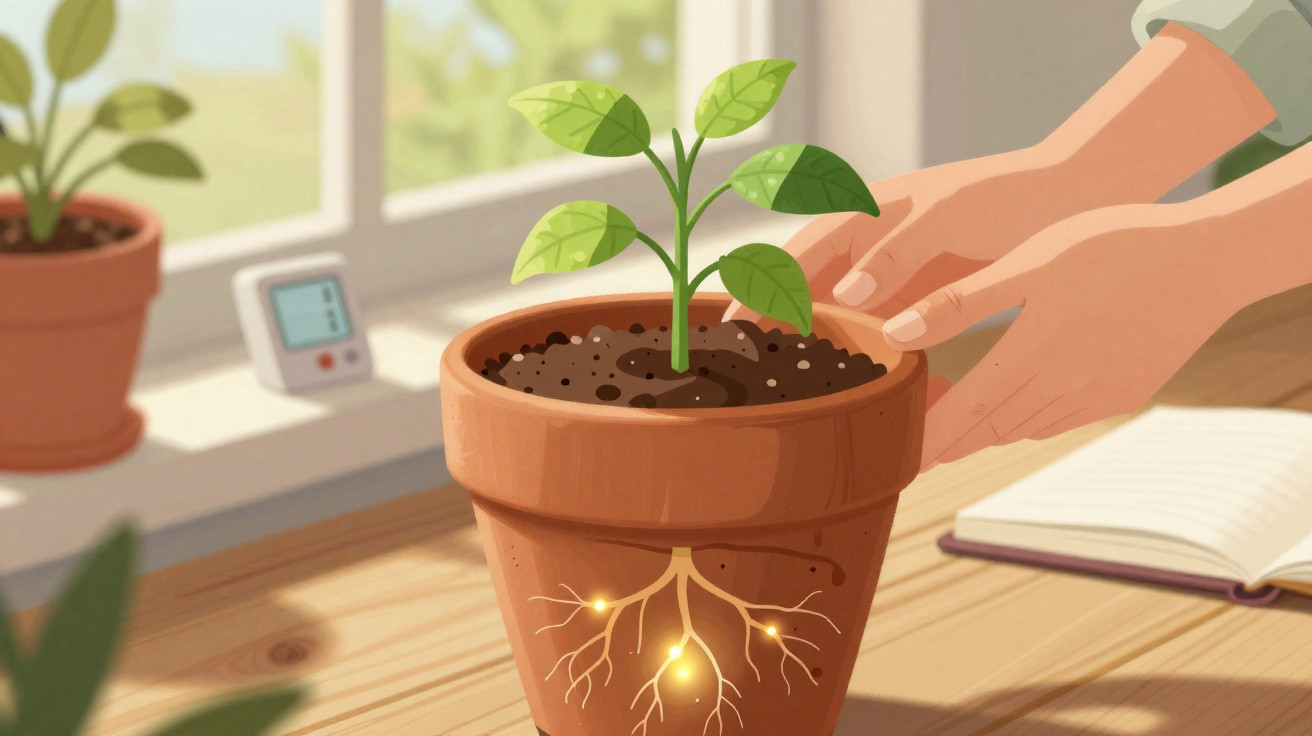
What drives that choice is almost disarmingly straightforward: roots speak first. Well before a leaf curls or a stem sags, roots release chemical cues that effectively say, “Grow” or “Slow down.” Once you begin to think of plants as organisms listening to their own underground signals, even an ordinary patch of soil starts to feel busy and alive.
A vivid illustration comes from drought trials that read as harsh in a protocol. Two rows of identical young maize plants. Same light, same air, same genetic line. The only difference is below ground: one row can reach a deep reserve of water, while the other meets dry soil just a few centimetres down.
From above, both sets look normal at first. Leaves unfurl, stems bulk out, and everything carries on as if conditions are fine. But instruments monitoring the roots reveal a different timeline. In the drier pots, levels of the stress hormone abscisic acid (ABA) begin rising in the roots long before any visible wilting. That ABA travels upwards like an urgent internal memo: stop spending; conserve what remains. The shoots slow their growth days before we would notice a change.
This root warning is a bit like your bank flagging suspicious activity. It doesn’t switch everything off; it forces restraint. Leaf expansion is reduced, fewer buds are initiated, and more energy is held back for survival. Researchers now understand that roots fine-tune ABA in response to soil moisture, salinity, compaction, and even competition from nearby roots.
The reasoning is surprisingly sensible. If the bottom of the plant detects trouble, investing heavily in extra height or fresh leaves becomes a gamble. So the roots take charge and ease off the throttle. Growth slows not because the plant is lazy, but because it’s cautious. And once you view growth as a continual negotiation between roots and shoots, the phrase “a plant that just won’t grow” takes on a very different meaning.
Listening to the roots in your own soil
You don’t need laboratory kit or hormone sensors to work with this natural root signal. The most useful approach is almost comically simple: start paying attention from the ground upwards. When you water, pause. Notice how quickly the soil absorbs it. Rub a little between your fingers. Does it crumble? Cling? Feel like dust? Those textures are immediate clues about what the roots are likely signalling.
If growth has stalled but the top still looks healthy, carefully ease a plant from its pot, or lightly scratch back the top few centimetres in a bed. Fine, white roots usually translate as “I’m actively exploring-keep conditions steady.” Roots that are brown, brittle, sparse, or otherwise unhappy often indicate the slowdown message has already been triggered. That’s the point to tweak watering, open up compacted soil, or ease off fertiliser-rather than chasing taller stems.
This clashes with a common instinct. Plant not growing? We add more: more water, more feed, more sun. Most of us recognise that anxious moment, hovering with a watering can like a concerned parent. But those well-intentioned “boosts” can waterlog or scorch stressed roots, making the plant push its message even harder: slow down.
A calmer, kinder tactic is to treat every pause as a question from the roots rather than a failure in the leaves. Check drainage before blaming the cultivar. Check root space before reaching for a “stronger” feed. And realistically, nobody manages this perfectly every day. Even so, shifting your attention below ground once a week can dramatically change how your plants respond.
Plant physiologist Dr. Léa Martin puts it bluntly: “Shoots are the show, but roots write the script. When roots sense trouble, they don’t ask for permission. They just send the hormone message that says: slow the show down.”
- Watch the watering rhythm
If soil swings from bone-dry to waterlogged, roots produce more stress signals and shoots can end up stuck in a permanent slow gear. - Give roots space before chasing height
Moving up to a slightly larger pot or reducing crowding in a bed often achieves more than any growth tonic. Packed roots behave like commuters on an overcrowded Tube: nobody feels like sprinting. - Loosen, don’t pulverise, your soil
Roots need air spaces. When soil is compressed into a hard slab, the slowdown message can flare even when nutrients are technically present. - Avoid “emergency” overfeeding
Strong, salty fertilisers can shock delicate root tips. The plant responds defensively by cutting back on new leaves and stems. - Read the pauses as strategy, not drama
A lull in mid-summer or mid-winter often means roots are prioritising survival over display-not that you’ve lost your touch.
The strange comfort of plants that know when to stop
Once you understand that this root-driven signal sets the pace, plant growth feels less like a mystery and more like a decision. You notice a houseplant stopping new leaves after you forget to water for a week, then restarting once the compost is gently rehydrated. You see a street tree producing fewer side branches through a dry summer, then surging after a steady, soaking autumn.
There’s a quiet reassurance in that. Plants are not sitting around waiting for flawless care. They are constantly measuring conditions, adjusting their chemistry, and braking when the underground maths no longer works. That soft ABA whisper from root to shoot isn’t weakness-it’s resilience. It’s a built-in “enough” that prevents them from growing into a crisis they cannot endure.
For gardeners, growers, or anyone coaxing along a stubborn ficus on a windowsill, the lesson is oddly familiar. Growth isn’t only about pushing harder; it’s also about having a system that knows when to ease off, recover, and wait for better conditions. When you respect that hidden brake pedal in the roots, your role changes: less a cheerleader for endless more, and more an ally who keeps things steady so that, when the roots are ready, the green parts can press “go” again.
| Key point | Detail | Value for the reader |
|---|---|---|
| Roots send slowdown signals | Under stress, hormones such as abscisic acid (ABA) increase in the roots and travel upward, reducing shoot growth | Helps you understand growth pauses as protective strategies rather than random failures |
| Soil conditions trigger the message | Dryness, compaction, salt and crowding can all prompt roots to “hit the brakes” | Points you towards fixing the below-ground cause instead of overwatering or overfeeding |
| Observation beats constant intervention | Paying attention to soil feel, root colour and growth rhythms shows what the plant is “saying” | Helps you time watering, repotting and feeding in line with the plant’s own signals |
FAQ:
- Question 1 What exactly is the “natural root signal” that slows plant growth?
- Answer 1 It is primarily an increase in stress hormones such as abscisic acid (ABA), made in the roots when they detect drought, salt, or other problems. The hormone moves to the shoots and prompts the plant to slow leaf expansion, produce fewer new buds, and conserve resources.
- Question 2 How can I tell if my plant is slowing growth because of root stress?
- Answer 2 Watch for small changes: new leaves coming in smaller, longer intervals between fresh shoots, normal colour but a “stuck” overall size. If you can check, roots that are brown, mushy, or tightly circling the pot usually indicate the slowdown message is active.
- Question 3 Does watering more cancel this slowdown signal?
- Answer 3 Not necessarily. If roots are damaged or the soil is compacted, extra water may sit around the root zone and worsen the problem. Gentle, consistent moisture plus improved drainage reduces stress far more reliably than a one-off soaking.
- Question 4 Can fertiliser override the roots and restart fast growth?
- Answer 4 Fertiliser supports growth only when roots already feel safe. When roots are stressed, strong feed can increase stress signalling. Light feeding with a healthy root system helps; heavy feeding on a struggling plant often backfires.
- Question 5 Should I worry if my plant takes a “rest” and stops growing for a while?
- Answer 5 Not necessarily. Many plants have natural resting phases linked to seasons or light levels. If foliage remains healthy and roots are firm and white, a pause usually means the plant is managing energy sensibly, guided by root signals.


Comments
No comments yet. Be the first to comment!
Leave a Comment