
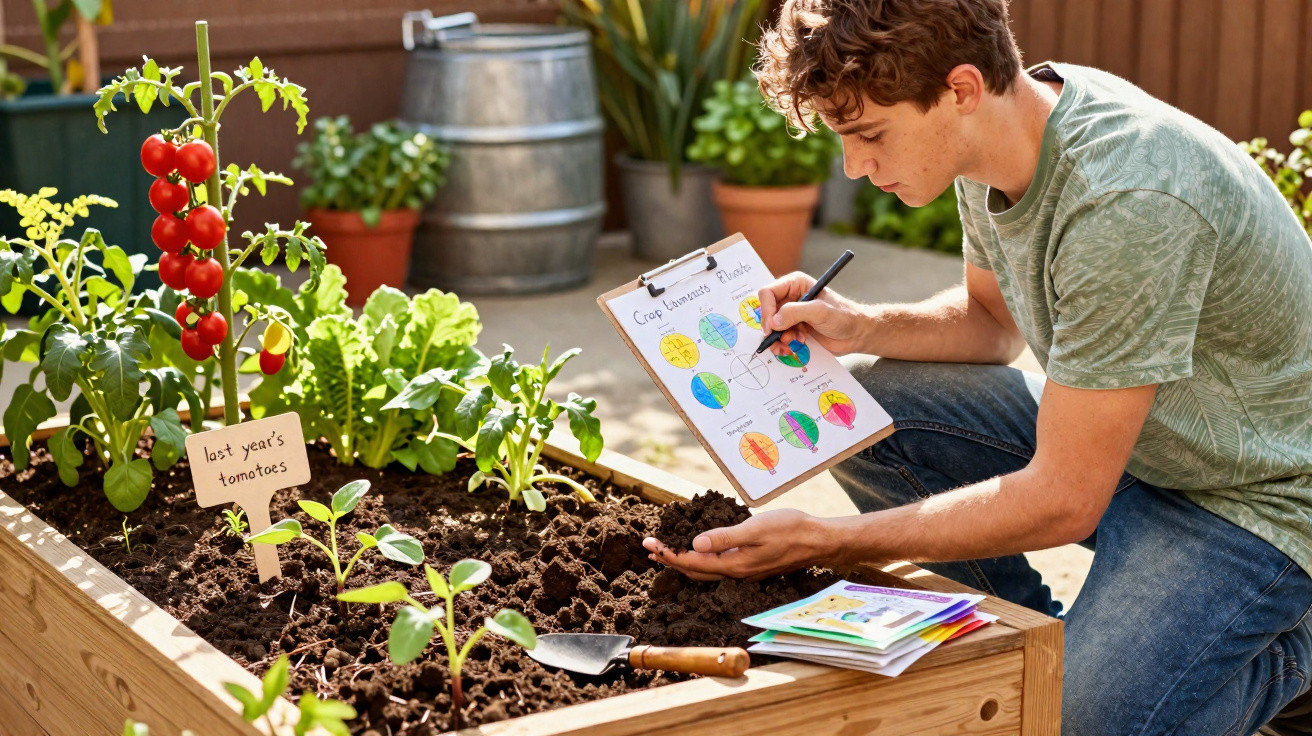
The garden fork slips into the ground with a quiet, weary sigh.
It’s the sound of soil that’s been asked to give and give, season after season. In a small back garden on the outskirts, a gardener stands over a raised bed that once overflowed with tomatoes. This time round, the plants are spindly, the leaves are turning yellow far too soon, and the fruit is undersized and sulking.
The compost is sound. Watering has been steady. The sun has done its bit. Yet something underneath isn’t right. You can almost hear the earth murmuring, “I’m exhausted.” A neighbour over the fence insists it’s blight. Someone on Instagram says it’s the cultivar. The real reason, more often than not, is sitting quietly beneath our boots.
It shows up in the habit of planting the same crop in the same spot, year after year - and in the way soil never forgets.
Why small gardens get tired faster than we do
On a large farm, the impact of repeating a crop can take years to become obvious. In a compact garden, the consequences arrive much sooner. Grow tomatoes in the same 2m² bed every summer and it can feel foolproof at first. The first year is abundant. The second is acceptable. By the third, the bed starts behaving differently - and not in a way you’ll enjoy.
The ground tightens up and becomes more compacted. Water lingers on the surface instead of soaking in. Roots labour. You may notice more slugs, more aphids, and the same diseases reappearing in the very place they cropped up the year before. In a tiny space, nature has less room to quietly correct what we keep repeating.
That small patch of soil becomes a kind of archive: every crop, every pest, every droughty week, every stress. Without crop rotation, you’re effectively making your garden relive the same year on loop - and it gets a little more depleted each time.
Talk to urban growers and the accounts are strikingly similar. A woman in London told me her balcony beans “just gave up” after three summers in the same trough. A family in Austin watched their cucumbers shift from vigorous to limp over four seasons, despite using the same seeds and the same compost blend. In a survey of home growers by a UK allotment association, nearly 60% said their soil “felt weaker” after three years of growing the same crops in the same place.
The pattern repeats: harvests shrink, leaves lose their sparkle, and plants seem to catch problems more readily. Many people blame the weather, or decide gardening simply “isn’t for them”. Often the cause is out of sight: nutrients drifting out of balance, alongside a gradual build-up of pests and pathogens that thrive on a single plant family.
A retired gardener I spoke to showed me his notebook, where he’d tracked eight years of planting across four raised beds. The first three years were a jumble. After that, he settled on a straightforward rotation. “That’s when the problems stopped chasing me,” he said. His notes backed up what his beds were telling him: rotation gave the soil space to recover.
The reasoning is simple. Different plant families draw on the soil in different ways and have their own vulnerabilities. Tomatoes and peppers, for example, are hungry crops, pulling large amounts of nitrogen and potassium. Keep growing them in the same place and you steadily empty the same cupboard shelves, while other nutrients sit unused.
Meanwhile, certain pests and diseases get a foothold. Blight spores, nematodes, root-rotting fungi - they concentrate where their preferred hosts keep returning. Rotation interrupts that cycle. Swap heavy feeders for lighter crops, or for plants that replenish, such as peas and beans, which fix nitrogen through their roots.
And soil isn’t just “dirt”. It’s a living ecosystem. Microbes, fungi, worms and insects all respond to what you plant. Rotate crops and you create a healthier rhythm, allowing different parts of that community to flourish. Grow one thing repeatedly and you train the soil to cater to a single demand - until it quietly pushes back.
Concrete rotation tricks for tiny spaces
Crop rotation can sound like an agricultural strategy shrunk down to back-garden scale, but it performs just as well with two raised beds as it does across two hectares. One easy approach is to rotate by plant family, moving each family on every year. In year one, put tomatoes, peppers or aubergines (the nightshade family) in Bed A. In year two, shift them to Bed B and use Bed A for leafy greens or root crops.
If you’re working with just one raised bed or a couple of pots, picture the space split into zones. This year, Zone 1 might host fruiting crops: tomatoes, cucumbers, beans. Next year, that same area becomes salads or roots. In the third year, give it peas, beans, or a green manure such as clover. Then start again. Think of it as a three-track routine for the soil: fruiting, leafy/root, fixing/repairing.
You don’t need a spreadsheet to make this work. A quick sketch in a notebook - or even a photo taken each season - is often enough. The real benefit comes from variety, not from doing it perfectly.
Rotation isn’t limited to gardens with beds, either. It’s useful on balconies and compact patios. A friend in Paris grows her crops in six large containers. One year, her “tomato pot” became the “spinach pot”, and the spinach pot turned into the “bean pot”. She found the beans climbed more quickly and looked greener after the tomatoes, helped by the leftover fertility and the deeper-rooted structure the previous crop had left behind.
Even on the smallest scale, window boxes respond. Grow basil in a box one summer, then switch to lettuce or radishes the next. You disrupt pest routines. I’ve watched people rescue what they’d labelled “cursed planters” simply by changing the crop family for a season and adding fresh compost.
Some small-space gardeners follow a simple rhythm: Year 1 fruiting crops, Year 2 leafy crops, Year 3 roots and soil-builders. Does it always match the textbook? Not always. But the soil clearly responds when it isn’t forced to repeat the same pattern.
A common pitfall is hunting for quick fixes while keeping planting habits unchanged: more fertiliser, more “miracle” additives, more sprays, and less patience. The result can be soil that’s overloaded in some nutrients and short on others. Rotation is quieter and less dramatic - but it steadily restores balance.
Let’s be honest: hardly anyone keeps this in mind every single day. Nobody heads into the garden each morning thinking, “How is my crop rotation strategy doing today?” Most of us focus on what we want to eat, then squeeze it in wherever there’s room. That’s how we end up with mixed results - and the lingering feeling that the soil is failing us, when it’s really our routines that are worn out.
The encouraging part is that you don’t need guilt - just a bit of curiosity. Pay attention to which patches look “tired”. Next season, give that area a different type of guest. If it always grows tomatoes, try beans or leafy greens instead. If carrots struggled in one corner, put peas there next year and shift the roots elsewhere. Rotation is less about strict rules and more like a gentle push towards diversity.
“Think of crop rotation as a conversation with your soil,” a market gardener told me. “If you keep asking it the same question, don’t be surprised when the answer gets shorter.”
- Stick to a simple 3-year loop: Year 1 fruiting crops (tomatoes, peppers, cucumbers), Year 2 leafy crops (lettuces, kale, cabbage), Year 3 roots and fixers (carrots, beets, peas, beans).
- Use plant families, not only individual crop names. Tomatoes, potatoes and peppers are the same “voice” in a rotation.
- If you remember just one guideline, use this: “Don’t grow the same family in the same spot two years running.” It’s basic - and remarkably effective.
Letting the soil set the pace
At the end of the season, stand in front of your garden and simply observe. Don’t rush to clear everything. Don’t immediately map out a new plan. The weary beds, the thriving corners, and the unexpected survivors all point towards what the soil needs next. It’s a subtle form of feedback, but once you learn to see it, it’s hard to ignore.
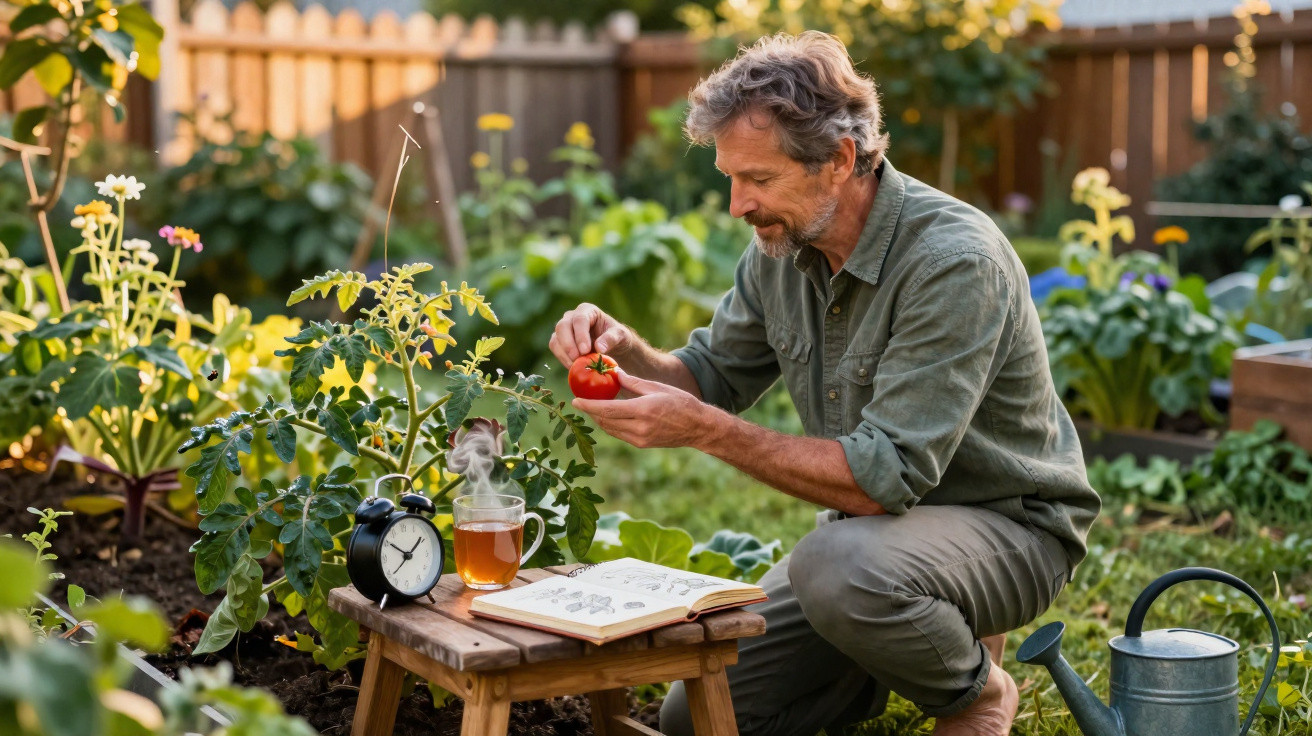
On a wet October afternoon, a small-garden grower in Dublin showed me how she decides her rotations. She walks along her two beds with a mug of tea, gestures to each section, and says aloud what grew there this year. “Potatoes, so next year beans. Salad here, so maybe onions. Peas there, so I can risk tomatoes again.” It sounded almost musical: nothing complicated, just memory turned into action.
Rotation doesn’t have to be strict. Some years you’ll break your own rules because you can’t stop growing cherry tomatoes, or you’re determined to have more basil. The soil will usually manage, provided the story isn’t identical every season. In many ways, rotating crops in a small garden is less about technique and more about respect - a way of telling the ground: “I know you’re alive, and I’ll give you a break.”
Once you start treating beds as living partners rather than empty boxes, your perspective shifts. Setbacks feel less like personal failure and more like information. Good harvests feel deserved rather than accidental. And that small strip of soil - a balcony, a courtyard, a corner behind the shed - becomes a place where cycles matter again.
| Key point | Detail | Why it matters to the reader |
|---|---|---|
| Rotate plant families | Avoid planting the same family (tomatoes, potatoes, peppers, etc.) in the same place two years in a row | Cuts repeat diseases and prevents targeted nutrient depletion |
| Think in 3-year cycles | Year 1: fruiting crops; Year 2: leafy crops; Year 3: roots + legumes | Gives you a simple framework, even in a small garden or a handful of containers |
| Watch for “tired zones” | Identify where plants struggled and plan a restorative crop there the following year | Helps you respond to the soil, correct imbalances and protect future harvests |
FAQ:
- How often should I rotate crops in a small garden? Aim to change things every year. Even with limited space, avoid growing the same plant family in the same spot for two seasons running. Following a simple 3-year loop makes a noticeable difference.
- What if I only have one raised bed? Split it in your head into two or three zones. Each year, swap what’s grown in each zone: one for fruiting crops, one for leafy crops, and one for roots and legumes.
- Can I still rotate if I mostly grow tomatoes? You can, but you’ll need alternative crops. In that position, alternate tomatoes with beans, peas, leafy greens or root vegetables. You may grow fewer tomatoes in one spot, but they should be stronger.
- Does container gardening really need rotation? It’s very helpful. Pots intensify pest pressure and nutrient issues. Move plant families between containers, refresh some of the compost, and avoid replanting the same crop in the same pot each year.
- Is crop rotation enough to keep my soil healthy? Rotation is a strong foundation, and it works best alongside compost, mulch and minimal soil disturbance. Together, these approaches build richer, more resilient soil over time.
Comments
No comments yet. Be the first to comment!
Leave a Comment