
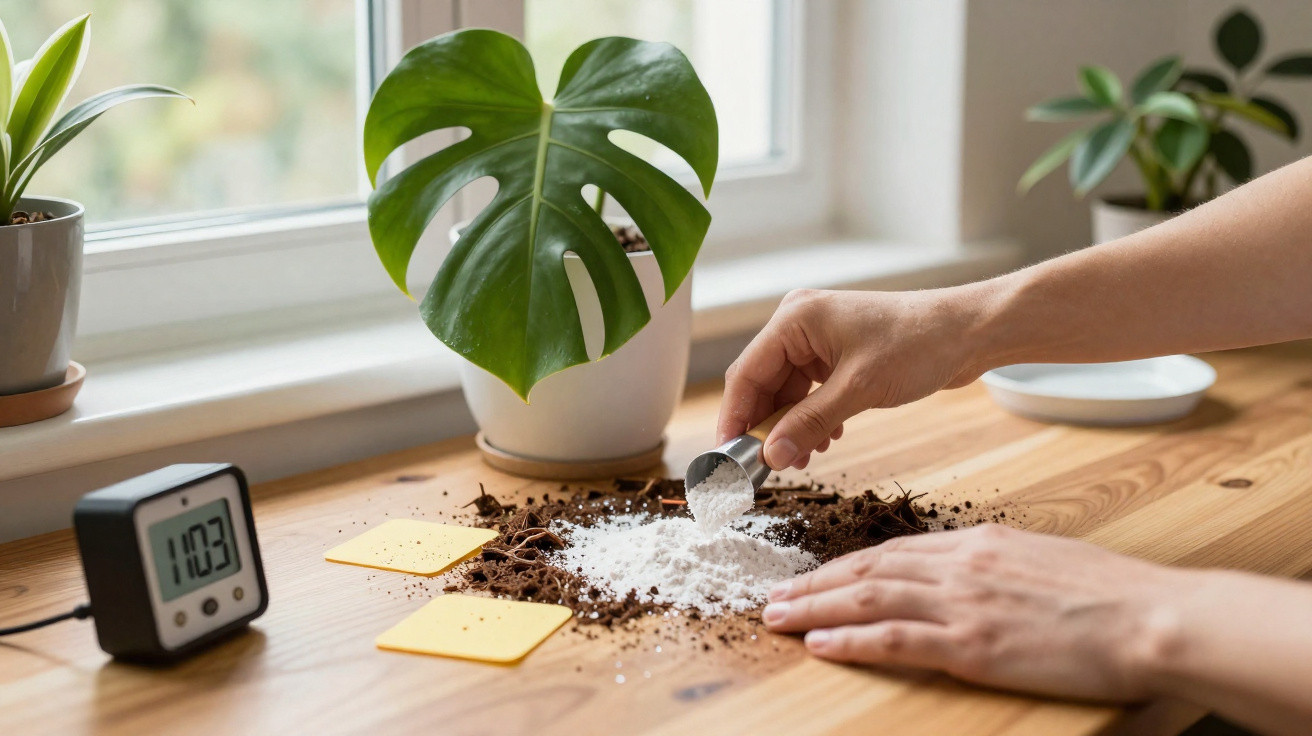
Across homes in both the UK and the US, indoor growers are increasingly dealing with the same persistent nuisance: sciarid flies, more commonly known as fungus gnats. These tiny dark flies love damp compost, they drift around the room when you are trying to relax, and their larvae can harm fine, tender roots. A straightforward, low-tech pairing - a sand topping plus sticky traps - is quickly becoming the preferred option for anyone wanting results without turning the lounge into a chemistry set.
What sciarid flies are really doing in your pots
Sciarid flies are more than “just irritating”. The adults you see hovering are only part of the story; the main problem is happening out of sight. Females deposit eggs in moist potting compost, and once hatched the larvae feed on decaying organic matter as well as delicate feeder roots.
Sciarid fly problems start in wet compost. Control the moisture and surface, and you choke off the population where it begins.
Most healthy, established houseplants can tolerate a small amount of larval feeding around the root zone. Seedlings, fresh cuttings and plants already under stress are much less resilient. Indoor growers commonly notice:
- wilting or sluggish growth in young plants even though they are watered regularly
- seedlings toppling or collapsing at compost level
- yellowing leaves on plants kept continually damp
- bursts of tiny flies appearing after each watering
Overwatering and nutrient-rich, peat-heavy composts create ideal conditions for sciarid flies. Warm indoor temperatures, winter radiator heat, and decorative cache pots with poor drainage can compound the issue. For that reason, any effective approach needs to address what is happening both above the compost and beneath the surface.
Why the sand and sticky trap combo is trending
Houseplant communities have tried countless DIY fixes over the years, from vinegar traps to pushing garlic cloves into pots. The methods that consistently resurface are the use of sharp sand and yellow sticky traps in tandem.
Sand targets the larvae where they live; sticky traps quietly thin out the adult flyers that keep the cycle going.
Each technique can help by itself, but used together they tackle two points in the pest’s life cycle. Growers favour this combination because it is:
- inexpensive - a bag of horticultural sand and a pack of traps can last for months
- low-odour and suitable for homes with families
- tidy enough for living rooms and workplaces
- in keeping with many organic and low-input growing preferences
How the sand topping works
A sand topping is not only cosmetic. By altering the conditions at the compost surface, it makes it harder for both larvae and adults to thrive.
Step-by-step setup
- Choose the right sand: Opt for washed horticultural sand or coarse sharp sand. Avoid builders’ sand (which may contain salts or additives) and steer clear of very fine play sand that can compact.
- Let the pot dry slightly: Wait until the top few centimetres of compost feel dry. Sciarid flies depend on moisture; a drier surface reduces egg survival and disrupts larvae.
- Remove the top layer: Lift off about 1–2 cm of old compost from the surface to reduce the number of eggs and larvae close to the top.
- Add the sand layer: Spread sand evenly to a depth of roughly 1.5–2.5 cm, taking care not to cover the stem, crown or base of the plant.
- Water correctly: Water gently so moisture passes through the sand into the compost below, and do not allow water to sit pooled on the surface.
Because the grains are coarse, the top dries out quickly, creating a gritty surface that soft-bodied larvae struggle with. Adult flies also find it more difficult to get through the sand to lay eggs in the compost underneath.
A dry, gritty surface breaks the “easy nursery” sciarid flies rely on, forcing them to look elsewhere to lay their eggs.
Common mistakes with sand toppings
Problems often come down to selecting the wrong material or applying it poorly. Common errors include:
- sand too fine: creates a hard crust that reduces airflow and interferes with watering, which can stress roots
- layer too thin: anything under about 1 cm does very little to slow egg laying
- burying the stem: heaping sand against stems can hold moisture and encourage rot
- ignoring drainage: sand cannot compensate for pots left standing in waterlogged saucers
A simple weekly check - either with a finger or by using a moisture meter through the drainage hole - helps keep watering aligned with what the plant actually needs under that neat sandy layer.
Sticky traps: quiet workhorses for flying adults
Yellow sticky traps may look basic, but they rely on a dependable principle: many small flying pests use colour and contrast for orientation. Bright yellow attracts sciarid flies (as well as whitefly and other minor pests), and the adhesive holds them fast.
Where and how to use sticky traps
For indoor plants, small pot-insert traps tend to be far more practical than large commercial sheets. Placement usually matters more than sheer numbers.
- Place traps at soil level in affected pots to catch adults emerging from the compost.
- Angle some traps vertically between plants to intercept flies moving through the room.
- Replace traps once they are dotted with insects or coated in dust - typically every two to four weeks.
- Keep traps away from pets that might chew them; the adhesive is difficult to remove from fur.
Sticky traps don’t solve the problem alone, but they show you how bad it is and how fast it is improving.
Many growers value this monitoring effect. A handful of flies on a trap confirms an active population. A trap that becomes heavily covered within a week points to a more serious infestation or compost that is staying very wet. If, over several weeks, the catch steadily drops while sand is in place and watering is adjusted, it is a good sign the plan is working.
Moisture management: the third, silent pillar
Sand and traps are markedly more effective when watering habits change as well. Compost kept constantly wet offers larvae a comfortable, low-oxygen environment and plenty of decaying material.
| Practice | Effect on sciarid flies | Effect on plants |
|---|---|---|
| Watering on a strict schedule | Often keeps compost too wet | Risk of root rot and poor aeration |
| Watering when the top 2.5 cm is dry | Interrupts larval development | Better match to root needs for most species |
| Bottom watering only | Less attraction at surface | Encourages deeper root growth if not overdone |
| Good drainage and empty saucers | Reduces soggy zones larvae favour | Limits fungal problems and stagnation |
Some growers pair sand toppings with a move towards chunkier, better-aerated compost blends for tropical houseplants, adding materials such as bark, perlite or pumice. These mixes tend to drain more quickly while still holding enough moisture for roots - but they leave less stagnant wetness for gnats.
Adding biological and household back-ups
When infestations are more severe, the sand-and-trap approach can form the core of a slightly broader routine. Two additional options are frequently mentioned by experienced indoor growers.
Biological control with nematodes
Beneficial nematodes (often sold as Steinernema species) are a targeted biological control. Mixed into water and applied to the compost, these microscopic worms actively seek out sciarid larvae and kill them.
Think of nematodes as an invisible clean-up crew that roams the potting mix, picking off larvae the sand hasn’t stopped.
Because nematodes need moisture in the compost to move, they work well with sand that keeps the surface drier while the compost underneath remains slightly damp. They will not appear on sticky traps, so progress is usually judged by a reduction in adult fly numbers over a period of weeks.
Hydrogen peroxide as a one-off flush
Some indoor gardeners reach for a weak hydrogen peroxide drench as a quick, one-time intervention - commonly 3% hydrogen peroxide diluted with water at roughly 1:3. When poured over the compost, it fizzes on contact and then breaks down into oxygen and water.
This can reduce larvae rapidly, but it is generally not something to repeat weekly. Delicate roots - particularly on orchids or plants with very fine root systems - may react poorly to repeated use. If you choose this method, many growers advise doing it once and then relying on sand, sticky traps and improved watering for the long term.
When the flies are not flies at all
Not every tiny black insect near your plants is a sciarid fly, and misidentification is a common reason people feel nothing works. A closer look - or a quick zoomed-in photo - often clarifies what you are dealing with.
- Sciarid flies: long-legged and mosquito-like; drawn to damp compost; often run across the surface before taking off.
- Fruit flies: smaller and rounder; tend to gather around fruit bowls, bins and bottles rather than potting compost.
- Thrips: extremely slender; more likely spotted on leaves than on the compost; cause silvery streaking and leave black specks of frass.
If, after adding sand and reducing moisture, you are still seeing insects - and the traps are filling with pests that seem to originate from shelves, bins or elsewhere rather than from pots - the source may not be plant-related at all.
What this trend says about indoor gardening now
The popularity of the sand-and-sticky-trap combination reflects a broader change in modern indoor plant care. Houseplant owners are increasingly willing to borrow ideas from commercial horticulture, while adapting them to everyday life in rented flats and busy family homes.
The goal has moved from “no insects at all” to “healthy plants with a manageable, low-impact way to keep pests in check”.
Sand toppings mirror techniques used in glasshouses and container nurseries, where surface coverings can limit evaporation and reduce fungus gnat problems. Sticky traps have long been used above professional growing benches as discreet sentinels, revealing pest build-up before it becomes severe. Thanks to online sharing, these methods now move quickly from commercial settings to kitchen windowsills.
This trend also encourages people to pay closer attention to what is happening inside the pot. When growers change how they water, lift pots to inspect drainage holes, and compare trap catches week by week, they develop a sharper understanding of each plant’s needs. That attentiveness often carries into other routines too: choosing lighter composts, spacing plants for airflow, or isolating new purchases from the garden centre.
For anyone building a houseplant collection, it can help to treat sciarid flies as an early learning moment rather than a catastrophe. Sand and sticky traps provide a clear, repeatable routine: adjust the surface, let the compost dry a bit more, and keep an eye on the traps. The payoff is not only fewer insects in the living room, but also a calmer confidence that your indoor jungle can handle the next challenge with less panic and more planning.
Comments
No comments yet. Be the first to comment!
Leave a Comment