
Heavy black bin bags thud onto the pavement, wheelie-bin lids snap shut, and a faint mix of coffee and vegetable peelings lingers in the air. Inside that rubbish is something your plants would love - and most of us don’t give it a second glance.
One neighbour chucks out a full coffee filter of used grounds. Someone else drops in orange peel and eggshells as if they have no value at all. Up on a third-floor balcony, a basil plant sags in parched, lifeless compost, while what could have helped it has just been binned downstairs.
We’re surrounded by hidden plant food, and we treat it like dirt. Quite literally.
From trash to treasure: what your plants are secretly craving
The first time you actually pay attention to what’s in a kitchen bin, it can be surprisingly jarring. Used coffee grounds, tea bags, banana skins, crushed eggshells, carrot tops, limp salad leaves - the very things soil thrives on - all sealed up and hauled away as something to get rid of.
And often, right beside that bin, there’s a struggling houseplant: a thirsty monstera sitting in washed-out, tired compost on a windowsill or balcony. It stretches towards the light. It gets watered when you remember. Then you wonder why the leaves never look properly vibrant. Meanwhile, the clue is sitting in yesterday’s filter coffee.
We keep paying for neat bottles of fertiliser, while throwing away the free version every day.
One statistic reframes the whole picture: in many households, roughly 30 to 40% of the rubbish is organic. Food scraps. Peelings. Coffee. The things that, outdoors, would naturally land on the ground, break down, and feed the next round of growth.
In some places, community gardens genuinely compete for bags of coffee grounds from local cafés. Gardeners understand those dark crumbs contain nitrogen and trace minerals plants appreciate. A barista tips out the tray, shrugs, and is glad someone is willing to take away what they call “brown sludge”.
Now picture your own miniature version of that on a balcony. A mug of grounds a day, a banana peel each week, a handful of eggshells across a month - quietly turning flat, dusty potting compost into something closer to a living woodland floor.
Plants aren’t impressed by branding or labels. What matters is soil structure, moisture, and nutrients - and organic kitchen scraps are full of all three. Coffee grounds can help compost retain water a little longer and encourage microbes that make nutrients easier for roots to access. Crushed eggshells release calcium slowly, which can help avoid weak growth and blossom issues in tomatoes and peppers.
Orange and lemon peel don’t “magically repel all pests”, as social media loves to claim, but they do contribute small amounts of potassium and can gently acidify soil when composted. Leftover tea - cooled and diluted - can offer a tiny lift and may soften hard tap water. None of this is a miracle cure. It’s simply quiet, steady support that your bin gets to first.
Once you spot the pattern, tipping it all into the rubbish starts to feel slightly ridiculous.
How to turn everyday scraps into “plant gold” (without becoming a compost monk)
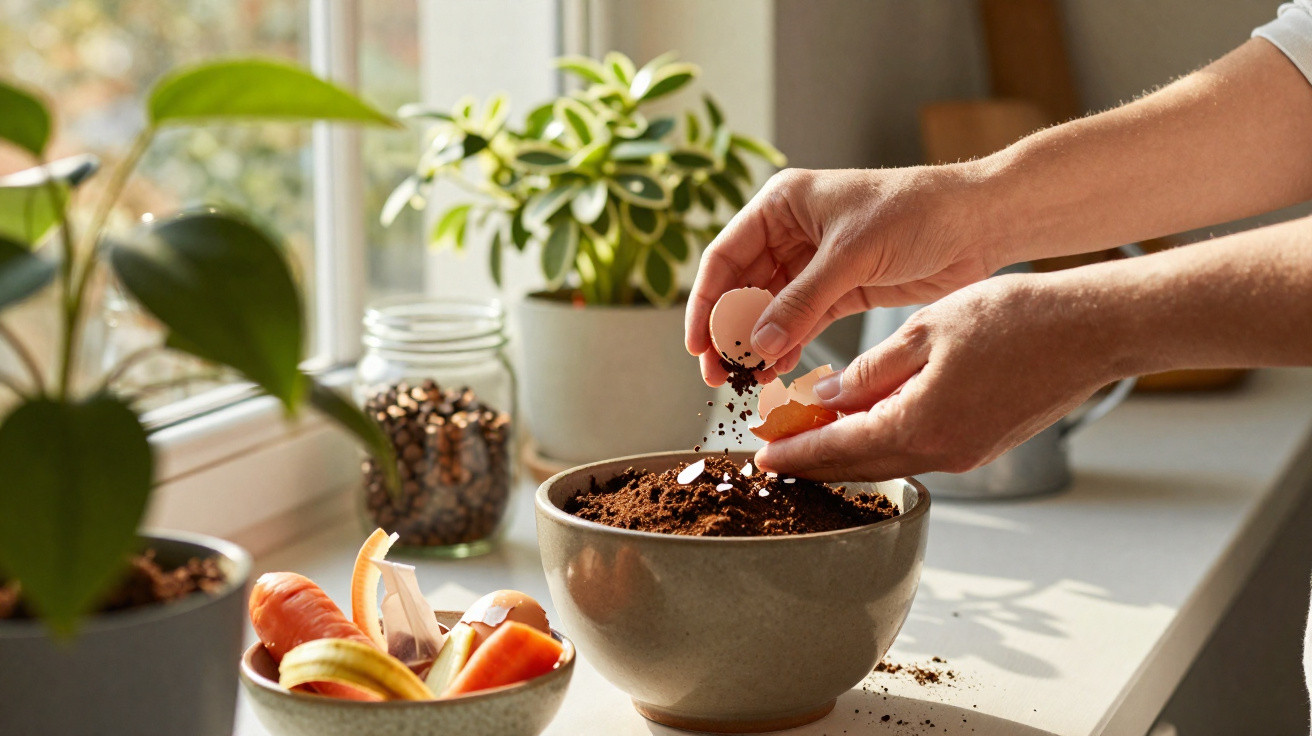
The simplest entry point is coffee. If you drink it, you already have a small fertiliser factory in your kitchen. Let the used grounds dry a little in the filter, then dust a thin layer over the compost every week or two. Gently work it into the top 1 cm with a spoon or your fingers, and you’re done.
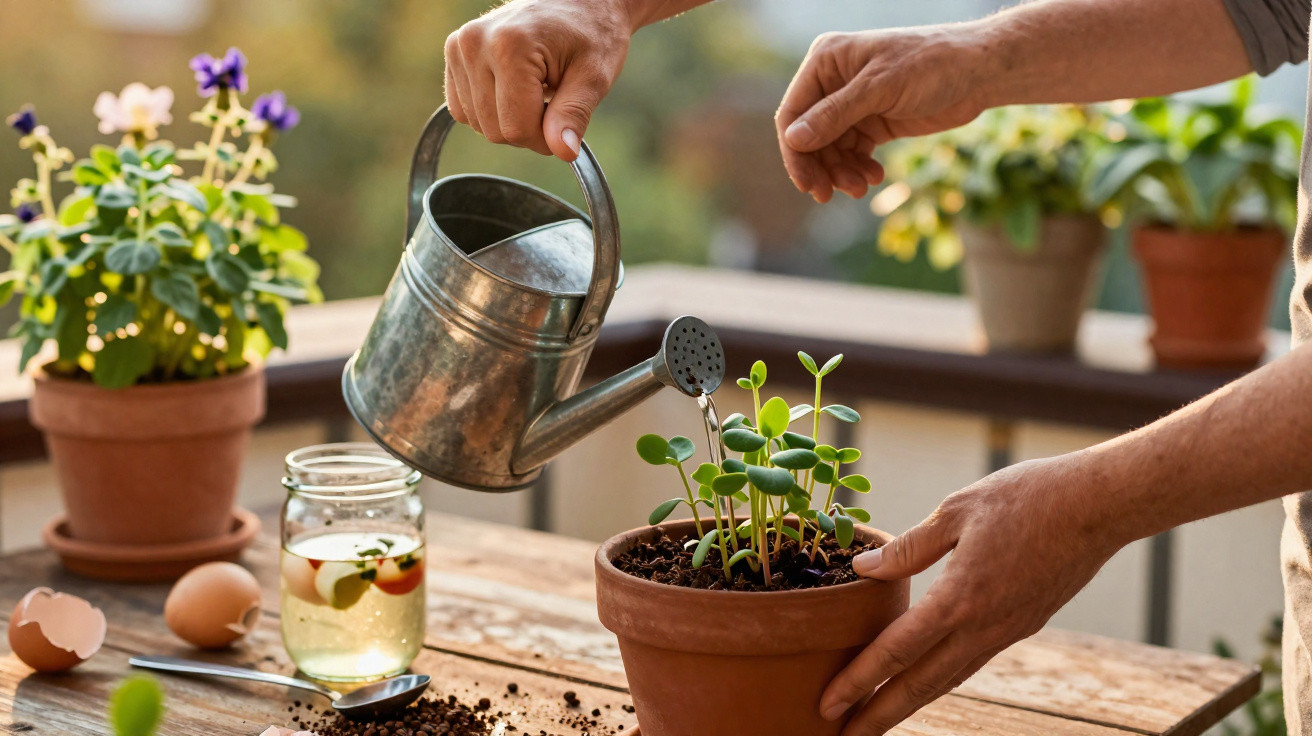
Eggshells are straightforward too: rinse them, leave them to dry on the side, then crush them as finely as you can - in your hands, or with a rolling pin inside a bag. The finer the pieces, the better. Once a month, add a small pinch around heavy feeders such as tomatoes, peppers, or roses. For banana peels, chop them into small bits and dry them in the sun or near a radiator, then tuck a little under the compost in larger pots so they can break down slowly.
You’re not trying to run a smallholding. You’re simply letting nature back into the pot.
A few common missteps can turn “plant gold” into a nuisance, and they catch out plenty of beginners. The first: dumping fresh coffee grounds on in thick, wet layers. That can form a dense crust that water struggles to penetrate. Think a light dusting, not a heavy topping - a little is plenty.
Another easy mistake is leaving large chunks of fresh peel on the surface and forgetting about them. Indoors, in small spaces, that can invite mould and fruit flies. Keep pieces small, bury them slightly, or dry them first. And don’t overdo citrus around plants that prefer neutral conditions (which includes many houseplants). A modest amount goes a long way.
Let’s be honest: nobody truly does this every single day. The aim isn’t perfection - it’s simply to send a bit less goodness to the bin.
There’s also the part you can’t see: the living community inside your compost. When you add scraps, you’re feeding the microbes first - bacteria, fungi, and tiny organisms you’ll never notice. They’re the ones that transform banana peel into something roots can actually use. A gardener I met on a community plot in London told me, with muddy hands and a grin:
“I don’t feed my plants. I feed the soil, and the soil feeds the plants. It’s a three-way deal - me, the worms and the tomatoes.”
Once you start thinking that way, every peel and shell looks different. Here’s a quick cheat sheet to keep things easy:
- Coffee grounds – use them dried, sprinkle lightly, and mix into the top layer.
- Eggshells – crush very finely, add monthly, particularly for fruiting plants.
- Banana peels – chop small, dry if you can, and bury in deeper pots.
- Tea bags and leaves – remove any plastic, then scatter the leaves once cooled.
- Soft veg scraps – compost them, or bury them in a dedicated “scrap corner” of a large planter.
What changes when you stop throwing “plant food” away
After a few weeks of this low-key experiment, the difference tends to show up in small ways. The compost in your pots looks darker and more crumbly, and less like pale dust poured from a plastic bag. Water soaks in more evenly rather than streaming down the sides. Leaves often stay greener for longer between feeds.
You may also notice fewer dramatic ups and downs. Miss one watering and plants cope better, because improved soil holds moisture longer. Seedlings establish with less fuss. An orchid that used to sulk might suddenly push out a new root. Nothing is spectacular overnight, but it adds up to a steady sense that things are simply more alive.
And without making a grand plan, you’ve created a tiny regenerative loop in the middle of your kitchen.
There’s a mental shift as well - harder to quantify, but very real. Food scraps stop feeling like “waste” and start looking like ingredients. The bin becomes a little less automatic. Standing at the sink with half a lemon in your hand, you catch yourself thinking, “Who should get this?” - the rubbish bag, or the chilli plant on the balcony.
On a personal level, that subtly changes how you relate to what you eat, what you discard, and what you grow. On a wider level, if millions of people did even a fraction of this, it would mean fewer lorries loaded with soggy, rotting food waste rumbling through our streets.
Most of us know the feeling: a plant you nearly forgot about suddenly flowers, and you feel oddly proud, as though you both made it through something together. Using your “rubbish” as its food doesn’t just reduce spend on fertiliser. It quietly connects your breakfast, your hands, and that stubborn green life by the window.
So the next time you swap out a coffee filter or crack an egg, you might pause for a second. Not to feel bad about the bin - simply to remember that, for your plants, what you’re holding isn’t rubbish at all.
| Key point | Detail | Benefit for the reader |
|---|---|---|
| Coffee grounds as fertiliser | Lightly sprinkled and mixed into compost, they add nitrogen and improve structure. | A simple routine that supports plant health at no cost. |
| Eggshells and banana peels | Finely crushed shells provide calcium; dried peel pieces add potassium when buried. | Cuts waste while encouraging stronger leaves and better flowering. |
| Soil life first, plants second | Scraps feed microbes, which then nourish roots gradually. | Helps explain why pots become richer and more resilient over time. |
FAQ:
- Can I put fresh coffee grounds directly on all my plants? Use them dried and in thin layers, and avoid smothering small seedlings or very sensitive houseplants.
- Will banana peels on the soil attract bugs? If left whole on the surface, yes; chop them small, dry or bury them lightly to deter fruit flies.
- Are eggshells really useful, or is it a myth? They help when crushed very finely, releasing calcium slowly over months, especially in larger pots or garden beds.
- Can I use citrus peels for all plants? Be cautious; composted or well-buried small pieces are fine, but avoid heavy use around plants that dislike acidic conditions.
- Do I still need commercial fertiliser if I use kitchen scraps? For demanding plants, an occasional balanced fertiliser can still help; scraps act as steady background support rather than a total replacement in every case.
Comments
No comments yet. Be the first to comment!
Leave a Comment