
In the depths of winter, a near-invisible detail on the garden floor can determine what happens to your flowers, vegetables and entire shrubs.
For years, many hobby gardeners have followed the same cold-season routine: rake everything up, bag it, take it to collection and hope the plants survive the frost. Yet that idea of a “perfect tidy-up” often hides a quiet mistake-one that weakens the soil and leaves roots exposed to freezing conditions. The shift begins when what looked like rubbish is treated as protection and nourishment.
From bin bag to garden lifesaver
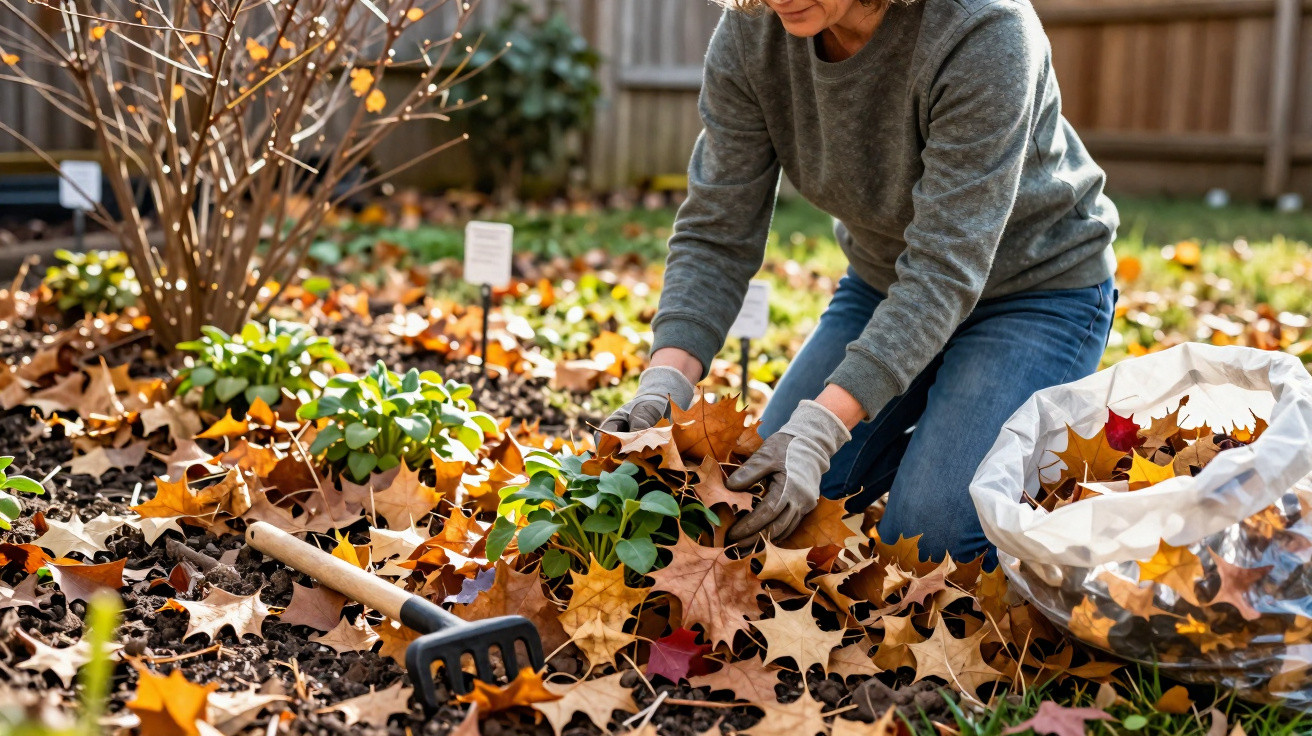
In the familiar autumn scene, lawns disappear under dry leaves. Neighbours grab the rake, fill sacks and pack car boots-anything to keep the garden looking “neat”. What most people miss is that they are removing the very material that can protect plants in January, when temperatures plunge.
“What we call ‘green waste’ works, in practice, as a thermal blanket, a shield against the wind and, as a bonus, a slow-release organic fertiliser.”
Nature doesn’t operate with the concept of waste. In woodlands, nobody turns up to collect leaves. They settle on the ground, build up, break down and become a soft, fertile layer teeming with microscopic life. When a gardener exports everything to the council truck, that cycle is interrupted.
Bare soil, vulnerable plants
A bed that looks completely “clean” may appear well kept, but agronomically it is a problem. With no cover, soil is exposed straight to heavy rain that washes nutrients away, and to hard cold that penetrates deeply and freezes the water between soil particles.
That internal freezing forms ice crystals that can tear fine roots and injure the plant’s crown-the sensitive transition zone between root and stem. In more delicate crops, the outcome can be sudden yellowing, loss of vigour and dieback by the end of winter.
Leaves as a “puffer jacket”: the garden’s cold-weather coat
The turning point comes when dry leaves stop being treated as mess and start being used like a thick coat over the soil.
Trapped air, steadier temperatures
Spread a layer of dry leaves and you create a springy mat filled with tiny pockets of air. Air is an excellent thermal insulator, so the layer works in much the same way as the filling in a down jacket.
While the outside air can drop below zero overnight, the temperature beneath plant cover fluctuates far less. That reduces the thermal shocks that stress roots and lowers the risk of deep freezing.
“Gardeners who adopt the ‘leaf blanket’ report fewer losses of sensitive plants and more vigorous growth the following spring.”
Protection from drying winds
Cold isn’t winter’s only threat. Strong winds-especially dry ones-pull moisture from the soil surface and from above-ground growth. Often, a plant keeps losing water through its leaves, but roots trapped in frozen ground cannot replace what is being lost.
This imbalance is known as “physiological drought”: the plant wilts in the middle of winter even when the soil looks damp. A leaf layer acts like a breathable lid. It cuts direct evaporation, holds moisture close to the roots and still allows the soil to exchange gases with the air.
Free fertiliser on a slow timer
As it protects, a leaf carpet quietly runs like a miniature soil-making plant. Under the dry layer, life carries on even during cold spells.
From leftovers to humus
Fungi, bacteria, small soil insects and earthworms gradually shred and digest the organic matter. What you get is humus-a dark, stable fraction of soil that agronomists and farmers prize.
Humus improves soil structure, helps hold water like a sponge and stores nutrients that are released gradually. It underpins the fertility of forest soils, and the same process can be encouraged in ornamental beds and home vegetable plots.
Fewer trips to the garden centre
Leaves are, in effect, a “concentrated extract” of the site itself. As trees grow, they draw minerals up from deeper layers and store them in leaf tissue. When those leaves return to the ground and decompose, those nutrients cycle back into the system.
- Potassium: supports flowering, fruiting and cold tolerance.
- Calcium: strengthens cell walls and roots.
- Magnesium: the central component of chlorophyll, directly tied to photosynthesis.
With this natural recycling, many gardeners can cut back on manufactured fertilisers, spend less on bags of ready-made compost and notice a gradual improvement in soil texture.
How to lay a “blanket” without smothering the garden
The principle is straightforward: cover the soil. The key is how you apply the material and how thick you make the layer.
Thickness by bed type
| Area | Suggested thickness | Notes |
|---|---|---|
| Flower and shrub beds | 5 to 10 cm | Keep the plant crown visible and clear |
| Resting vegetable plot | 15 to 20 cm | Best for beds not currently in use |
| Large pots and planters | 3 to 5 cm | Helps retain moisture and protect roots |
For small plants with foliage close to the ground, it’s wise to pull the material slightly back from the base to prevent constant dampness, which can encourage fungal problems.
How to stop the wind taking it all away
A common complaint is doing the job only to watch it blow into the neighbour’s garden the next day. A few tactics greatly reduce that risk:
- Run a lawnmower over the leaves to chop them before use.
- Mix dry leaves with a little fresh grass clippings or finer prunings.
- Lightly water the layer after spreading so it settles into more stable mats.
- Lay thin twigs over the top like a loose grid to “hold” everything in place.
What should never go on the bed
Not every leaf is suitable for direct mulching. Some carry disease and, used carelessly, can spread trouble throughout the garden.
Diseased debris: a hidden risk
Rose leaves with dark spots, fallen fruit with rot, and tomato plants that suffered fungal wilts all need separate handling. If this material is laid straight onto the soil without hot composting, spores can survive winter and reinfect plants in spring.
“Practical rule: anything showing spots, mould, a strong smell or a clearly abnormal appearance should not be used as mulch on healthy beds.”
In those cases, the best approach is a well-managed compost that reaches high temperatures, or municipal disposal-depending on local green-waste guidance.
Common mistakes-and what changes when the habit becomes routine
Beginners tend to make two errors: applying a layer that is too thin to buffer the cold, or creating heaps that are so compact they block airflow. With experience, it becomes easier to judge the right amount and adapt the method to each area.
In trials and practical comparisons reported by agronomists and nursery growers, covered beds hold more even temperature and moisture levels and bounce back faster after severe cold snaps. In places with frequent frosts, some professionals blend leaves with other materials such as straw and chipped bark, building layers with slightly different roles: insulation, suppression of self-seeding weeds and a tidier finish.
For anyone growing in small spaces-balconies and urban back gardens-the logic is identical. Large pots of citrus, hydrangeas or perennial herbs benefit from just a few centimetres of organic cover. Water lasts longer, roots suffer less from temperature swings and the growing medium is less likely to set hard.
There’s also a useful cumulative effect. Year after year, as leaves break down into humus, the fertile top layer deepens. Beds that used to crack in summer start holding moisture better. Plants that once demanded frequent feeding begin to do well with lighter inputs. And the heavy work of raking, bagging and hauling away “waste” steadily declines-replaced by a routine of observation and on-site management of the garden’s own organic matter.


Comments
No comments yet. Be the first to comment!
Leave a Comment