
Many amateur gardeners sense that March matters, yet few can say with confidence which shrubs, perennials and trees should actually be pruned now-or how hard you can cut without doing damage. This guide sets out exactly what to tackle in March so that roses, hydrangeas and the rest don’t disappoint when summer arrives.
Why March is such an important month for pruning
In many areas, the harshest frosts ease off during March. Plants begin to wake from winter dormancy, but most haven’t fully burst into growth. In this in-between window, they generally cope particularly well with pruning and often respond with strong, fresh shoots.
“If you prune deliberately in March, you channel a plant’s energy into young, vigorous growth and encourage abundant flowering rather than weak, drawn-out shoots on old wood.”
Another advantage: leaves are usually not fully developed yet. That makes the framework easier to see, so you can remove old, diseased or poorly placed shoots cleanly and with confidence.
Bringing trained plants and espalier trees back into shape
In many front gardens, espalier trees and trained climbers are used as a living screen. March is the time to give them their formative or maintenance trim.
Pruning espalier limes, plane trees and similar
With young espalier trees, the priority is building the basic framework. That means you typically don’t shorten the main structural branches-you secure and train them instead.
- Don’t cut off new shoots; tie them in to the support using suitable ties.
- Remove loose shoots, those growing across the framework, or any pointing inwards.
- Only reduce old, thick branches if they spoil the intended shape.
If your espalier trees have been established for two or three years (or longer), you can take a different approach. Two common strategies are:
- Cut back to old wood: Shorten all young shoots significantly so the underlying structure is clearly visible. This suits classic espalier limes in particular.
- Hedge-style trimming: Clip the plant into a neat, green “block”. This is especially practical with plane trees and evergreen espaliers such as cherry laurel.
Evergreen espalier trees (including certain cherry laurel varieties) stay dense through winter. A careful block trim in March keeps them compact and helps prevent them spreading too far sideways.
Roses: prune boldly and you’ll be rewarded
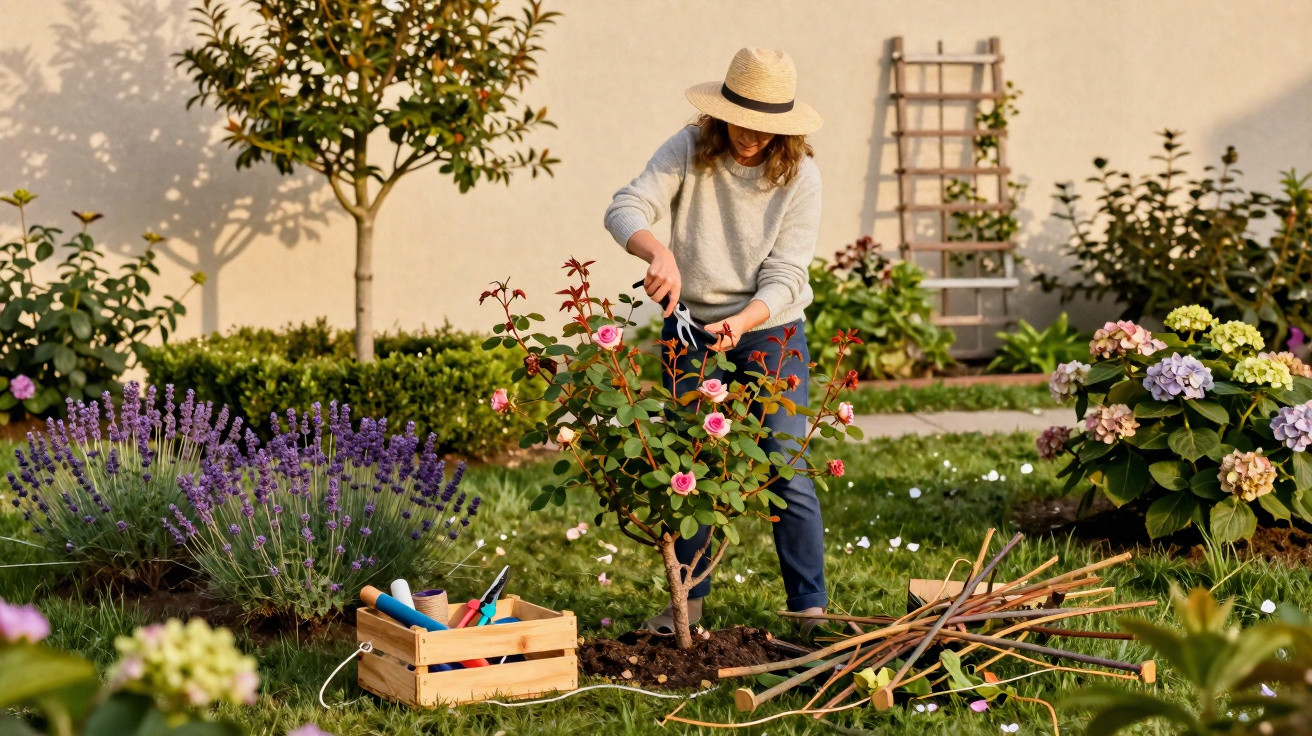
Roses can look delicate, but they’re surprisingly tough when pruned-provided you stick to a few basics. March is the key moment for the main annual prune.
Bedding roses, shrub roses and standard roses
Old, woody canes sap a rose’s strength. Cut these back to just above an outward-facing bud. The bud is the small swelling from which the next shoot will grow.
- Reduce brown, thick, older shoots hard.
- Cut back to the second outward-facing bud.
- Remove any stems growing inwards or rubbing/crossing.
It can feel severe, but this is often exactly what the plant needs. Those short stubs produce strong new growth, which then carries plenty of flowers in summer.
Training climbing roses correctly
Climbing roses follow slightly different rules. Their best flowering usually comes from side shoots produced along a few strong main framework stems.
How to do it:
- Choose three to four robust main stems and secure them to a trellis or wall.
- Shorten laterals along these main stems back to just a few buds.
- Remove dry, frost-damaged or dead stems completely.
“If you train climbing roses outwards-fixing stems more horizontally-you’ll get noticeably more flowers than with strict upright growth.”
Summer fragrance later on: pruning lavender and heather
Keeping lavender compact
Without routine pruning, lavender becomes woody and bare in the centre. March is the time for a firm cut back.
Recommendation:
- Cut all shoots back to around 15 cm above the ground.
- Never cut right into completely old, brown wood where no green growth is visible.
- Prune consistently every year to keep the plant dense and bushy.
This applies equally to “standard” lavender varieties and the distinctive French lavender type with its decorative flower bracts.
Heather-choose the method by type
Heather is low-maintenance and brings colour to borders even when little else is happening. It still stays attractive only if it’s cut regularly.
| Heather type | Pruning time | Cutting height |
|---|---|---|
| Summer heather (Calluna) | March | approx. 8–12 cm above the ground |
| Winter heather (Erica) | Summer | also just above the old wood |
As a rule, don’t cut back into bare, brown, leafless wood. Always leave some green tissue so the plant can reshoot.
Hydrangeas: know the variety and avoid mistakes
Few shrubs deliver such lavish summer flower heads as hydrangeas. Most types can be pruned in March-but not all in the same way.
Bigleaf hydrangea and lacecap hydrangea
These often set their flower buds the previous year. If you cut too hard, you can remove the entire season’s bloom.
- Remove only a portion of the oldest, thickest stems (around one fifth) right at the base.
- Snip off spent flower heads just above the first strong pair of buds.
- Never cut back into old wood with no buds.
“If you remove the old flower heads too low on bigleaf hydrangeas, you risk a completely flowerless season.”
Panicle, smooth and oakleaf hydrangeas
Panicle hydrangeas, with their cone-shaped flower clusters, tolerate a much stronger cut. They flower mainly on new wood.
- Generally reduce panicle hydrangeas to around 40 cm high.
- White smooth hydrangeas such as “Annabelle” can be cut back to about 10 cm.
- Oakleaf hydrangeas should only be reduced moderately-roughly 10–20 cm above the ground-unless they are used as a specimen shrub.
For prominent specimen shrubs, keep more height and focus mainly on removing awkward or dried-out stems. Climbing hydrangeas, by contrast, form their buds before winter and are pruned only after flowering.
Butterfly bush (Buddleja): a hard cut for a firework of flowers
The much-loved butterfly magnet, Buddleja, thrives on a strong prune. Left uncut, it becomes leggy and ageing, growing tall and flowering mainly at the top.
- In March, cut large shrubs back to around 30–50 cm.
- Dwarf varieties can be cut back even harder, to about 15 cm.
- Always cut just above small new shoots or buds.
From those shortened stems, vigorous new branches grow in spring and carry dense flower spikes through summer.
Keeping a vigorous climber in check: ivy
Ivy grows for most of the year, only slowing down in winter. A thorough check-and-trim in March is well worth doing.
What to look out for:
- Remove any stems that have come loose from their support or are hanging freely.
- Cut away shoots that are anchoring into timber cladding, gutters or window frames.
- Shorten ground-level runners so ivy doesn’t quietly take over borders and paths.
One year without pruning is enough for ivy to spread several metres. If you rein it in properly once in March, you’ll save yourself a great deal of work later.
Caring for St John’s wort, olive trees and oleander in March
Keeping St John’s wort compact
The bright yellow-flowering St John’s wort (Hypericum) can become bare at the base if it’s never pruned. Cutting back in March helps keep the shrub dense.
Guideline: shorten all stems to about 20 cm high. This encourages stronger branching, keeping the plant low and bushy.
Thinning an olive tree
Olive trees are now a familiar sight on patios and in gardens, and they generally take pruning remarkably well.
- Remove all dead, thin and inward-growing twigs.
- Thin out crossing branches so more light reaches the centre of the crown.
- Shape it to taste-olives usually reshoot readily.
Maintaining an open, airy canopy reduces the risk of fungal issues and supports more even growth.
Cutting back oleander-firmly, but carefully
Oleander is seen as a Mediterranean flowering shrub, yet it’s tougher than many expect. After frost, it often shows brown, soft shoots-these should be removed.
- Cut damaged or frost-killed parts back into healthy wood.
- If necessary, reduce the plant by up to 50 percent.
- Ensure a sunny position and regular watering.
“Oleander sap is poisonous-always wear gloves when pruning and keep the shrub out of reach of children and pets.”
If you grow oleander in a container, you can position it slightly elevated or behind a barrier after pruning, to reduce the chance of curious children or animals coming into contact with the leaves.
Common pruning mistakes-and how to avoid them
Many plants will tolerate a lot, but certain errors reliably lead to disappointment in summer.
- Pruning too early: If you cut during hard frost, cuts can be damaged by cold and shoots may die back.
- Cutting too hard on plants that flower on last year’s wood: Especially with bigleaf hydrangeas, some roses and certain climbers, this removes the coming flowers.
- Blunt tools: These crush instead of slicing, creating an easy entry point for disease.
- No clear framework: If you hack away without identifying the main structure, you strip a plant of its shape.
Sharp, clean tools-plus a quick look at the plant’s growth habit before making the first cut-prevent most problems.
Practical extras for the March garden
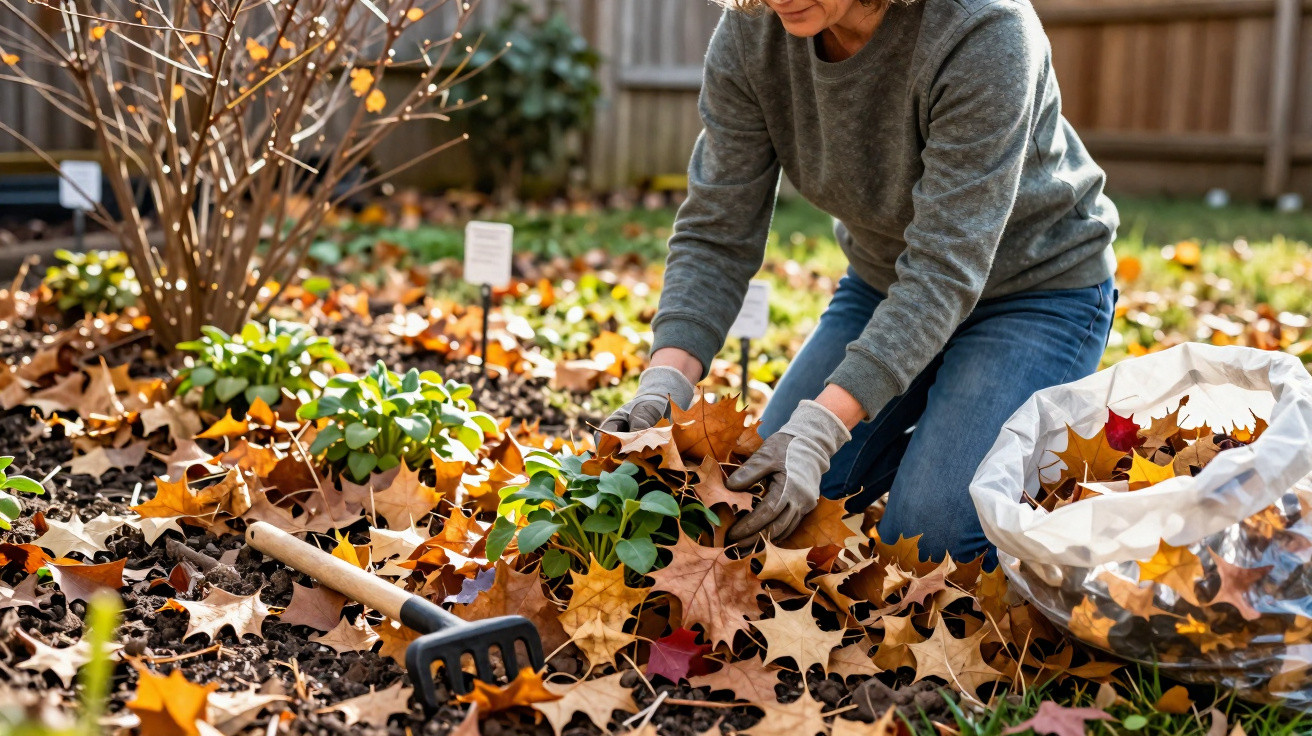
After pruning, it helps to lightly loosen the soil around plants and clear away dead leaves. This improves airflow to the roots and gives fungal spores fewer opportunities. A thin layer of well-rotted compost acts like a gentle starter feed for the new season.
If you’re already thinking about insects, leave some early-flowering shrubs a little wilder and trim only what’s necessary. Butterfly bushes, lavender, heather and free-flowering shrub roses become valuable food sources for bees, bumblebees and butterflies later on-provided you shaped them correctly in March.


Comments
No comments yet. Be the first to comment!
Leave a Comment