
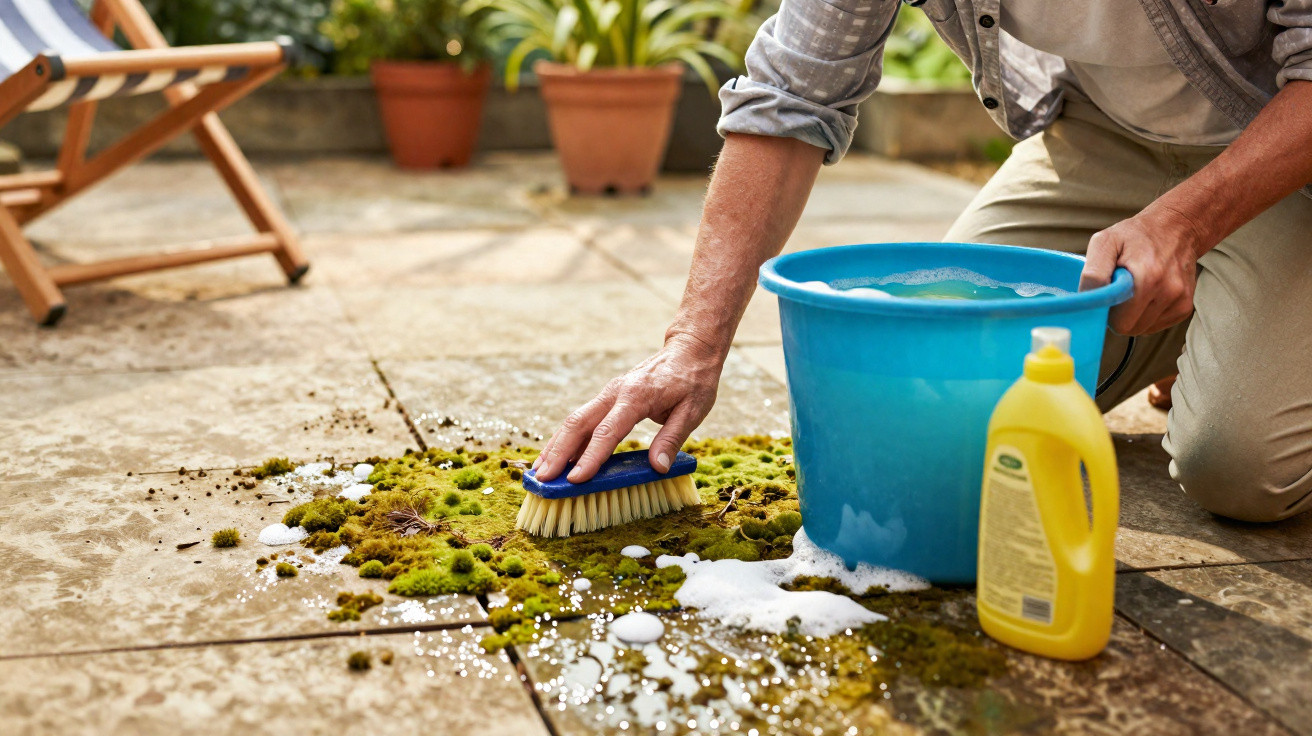
Many homeowners don’t realise this: you don’t need a pressure washer or harsh chemicals to get rid of that slippery green layer. Gardening professionals often recommend a straightforward kitchen staple that tackles moss and algae right at the root - and helps keep them away for months.
Why terraces keep turning green with algae
Moss and algae thrive where it’s shady, cool and consistently damp. Those conditions are common on many terraces: north-facing areas, paving that never properly dries, and puddles left behind after every shower. After a wet winter in particular, the surface can quickly turn into a green skating rink.
This isn’t just about appearances. Anyone slipping on slick steps risks bruising or broken bones. There’s also the issue of wear to the surface: moss holds moisture like a sponge right against the paving. Over time, concrete and natural stone can develop fine cracks, and timber can start to rot if it never dries out properly.
That’s why many homeowners instinctively reach for a pressure washer - only to find the next green film appearing again a few weeks later.
Why a pressure washer often does more harm than good
Garden designers have been warning for years about using too much pressure on patio and terrace surfaces. The jet may remove what you can see, but it can also scour the top layer of the material. With concrete paving and softer natural stones, this creates rough micro-textures where fresh dirt can cling even more easily.
The second problem is the joints. The most resilient moss and algae spores sit exactly there. The spray typically cleans the centre of the slabs, while the green growth remains along the edges - precisely where moisture lingers longest. The result is a familiar look: pale centres with dark borders.
For that reason, many people turn to specialist moss and algae cleaners. However, these often contain biocides that can harm aquatic organisms and soil life. Label warnings about wearing protective gloves and keeping the product away from drains are a reminder of what you’re dealing with. On a surface where children play and pets run around, that can feel far from reassuring.
"A gentler route: washing-up liquid in the right mixing ratio loosens the layer, reaches spores in the joints, and protects both the stone and the garden at the same time."
The washing-up liquid trick: how the method works
The idea hinges on the chemistry of washing-up liquid. It contains surfactants, which break down the protective, waxy coating of moss and algae. Once that barrier is compromised, the growth loses water, dries out and dies. At the same time, the soapy solution seeps into tiny cracks and joints where spores hide.
For terraces, choose a mild, biodegradable washing-up liquid with no bleach, no ammonia and no harsh fragrances. This allows you to treat the slabs without unnecessarily affecting nearby beds, lawns or the life in the soil.
Many amateur gardeners also rely on vinegar or bicarbonate of soda. These can work in specific spots, but they come with drawbacks:
- Vinegar can etch calcareous natural stone (for example limestone) and leave permanent discolouration.
- Bicarbonate of soda and soda crystals often leave white residue and require plenty of water to rinse away.
- Washing-up liquid dissolves more readily, works across larger areas, and can be brushed away and rinsed off with minimal effort.
Step by step: tackling the green with a bucket
You only need a few basic items - most of which are usually already at home.
What to have ready
- Bucket with about 4 litres of warm water
- 3 tablespoons of mild, biodegradable washing-up liquid
- A sturdy outdoor brush or stiff broom with plastic or natural bristles
- Work gloves
- Optional: a watering can or garden sprayer for large areas
How terrace owners should do it in practice
- Dry clean first: sweep away leaves, soil and loose debris. This is the only way the solution can reach the surface properly.
- Mix the solution: pour warm water into the bucket and stir in the washing-up liquid until evenly combined.
- Wet the surface: spread the mixture evenly using a watering can or bucket, paying special attention to joints and shaded corners.
- Allow time to work: pick a spell of dry weather for several hours. During this period the green film loosens, and moss turns brown and crumbly.
- Brush thoroughly: scrub firmly across the slabs, sweep up the loosened residue, and dispose of it.
- Rinse lightly: rinse with clean water or hose down gently so that soapy puddles don’t run into beds or on to the lawn.
If some areas are particularly stubborn, repeat the process in a targeted way after a few days. The second pass usually lifts ingrained edges much more easily.
How to keep the terrace cleaner for longer
Even the best clean won’t last if the surface stays wet all the time. To slow moss and algae long term, it helps to make a few simple changes around the terrace.
Common weak points and quick fixes
| Problem | Simple approach |
|---|---|
| Standing water after rain | Check the guttering, confirm the fall, and if possible add an extra drainage channel or a gravel strip |
| Constant shade | Cut back overhanging branches and thin hedges so more air and light reach the surface |
| Lots of leaves and soil collecting in the joints | Do a rough sweep at least once a month, and more often after storms or in autumn |
| First green haze in spring | Go over it immediately with a diluted soapy solution before a thick layer builds up |
"If you do small, regular touch-ups, you avoid the big scrub - moss and algae then never get the chance to build up in layers."
What to consider with pets, children and sensitive plants
Compared with many specialist cleaners, a mild soapy mix is noticeably kinder. Even so, it’s worth keeping a few precautions in mind.
- Pets: animals shouldn’t drink puddles of concentrated solution. Treat the area while the dog or cat stays indoors, and only let them back out once the surface is largely dry.
- Young children: during the dwell time, it’s better not to let little ones run barefoot across the terrace. After rinsing, there’s no particular hazard.
- Plants: avoid letting strong soapy water flow directly into pots or vegetable beds. Rinse the edges with clean water if needed.
When other methods may make more sense
If a surface is extremely algae-covered and weathered, a bucket mix may not be enough on its own. In that case, a combined approach can help: first, give it a basic clean with clear water and a brush, then apply the soapy solution to target the spores. With very porous stone, it’s sensible to check the manufacturer’s data sheet before committing to any method as a regular routine.
Anyone planning a new terrace can also factor this in from the start: a slight fall away from the house, permeable joints, lighter rather than very dark paving, and avoiding dense planting right along the edge. The faster water drains and the better the air can circulate, the fewer opportunities moss and algae have to take hold.
In the end, keeping a terrace surface safe and presentable doesn’t require a chemical onslaught or hours of pressure-washer noise. A bucket of warm water, a little washing-up liquid, a sturdy brush and a few smart habits are enough to keep the slabs drier, less slippery and visually tidy for months.

Comments
No comments yet. Be the first to comment!
Leave a Comment