
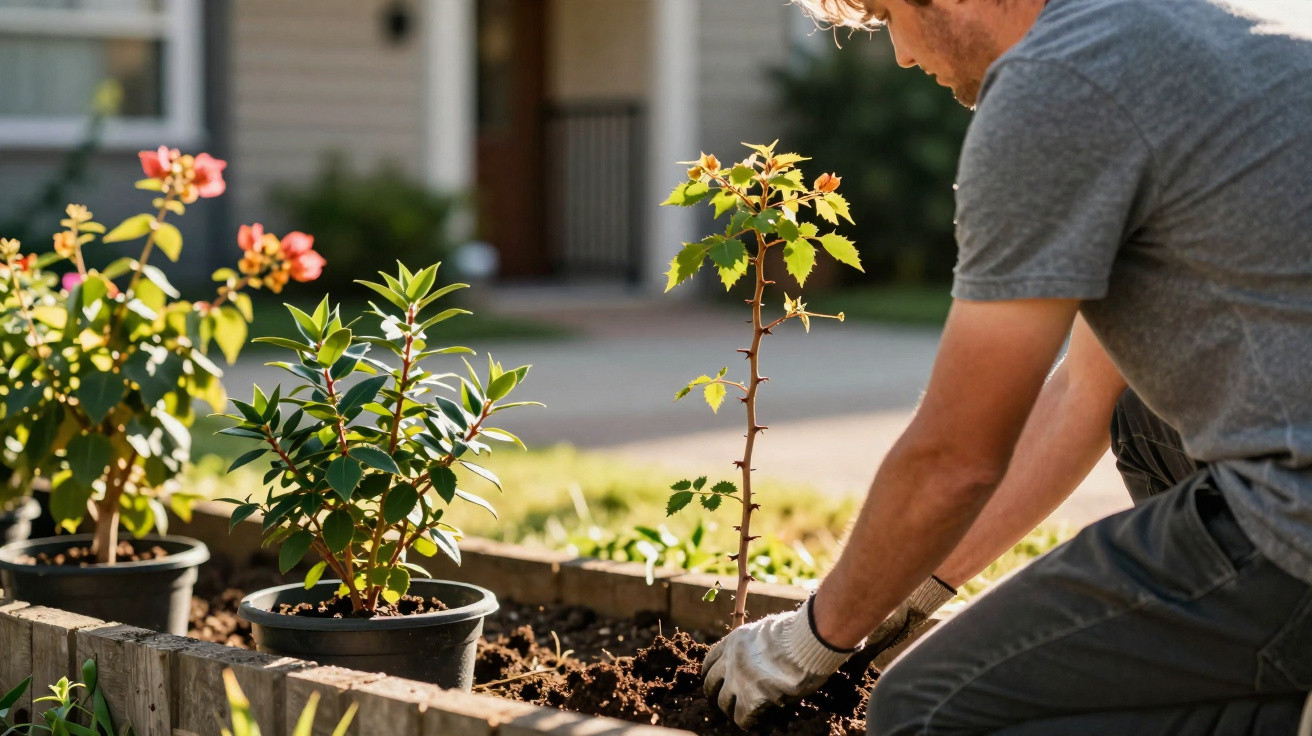
With break-ins increasing and many homes left unattended at weekends and during holidays, more people are starting to treat the garden as more than a decorative extra. Without making your place look like a fortress, the right planting choices can make a property feel like too much effort for opportunistic burglars - encouraging them to look for an easier option.
Why thorny plants genuinely put burglars off
Most burglars want an entry that is quick, quiet and low-risk. Anything that adds delay, causes pain or creates noise undermines that plan. Strong locks, solid doors and an alarm certainly help, but the route up to the house can be just as important.
A dense, spiky hedge over gravel can turn a quick shortcut into a noisy, painful obstacle course for intruders.
Security professionals often describe the idea of “defensible space”: good sightlines, minimal places to conceal themselves, and clear signals that the home has been thought through from a protection point of view. Planting can support this by adding both physical discomfort and psychological pressure - few people will willingly force themselves through razor-sharp branches when a sensor light could come on at any moment.
There’s also the issue of traces left behind. Gravel is loud underfoot and can show footprints clearly. Broken stems, crushed growth and snapped twigs make it obvious where someone attempted to pass - something burglars generally want to avoid. Alongside lighting and robust locks, a properly planned hedge can make your home a far less appealing target.
However, planting can backfire if it is allowed to get out of control. Thick, untended shrubs close to doors and windows can become ready-made hiding places. A safer set-up keeps entrances and routes visible from the street and from neighbours’ properties, using thorny planting as a barrier rather than creating a blind spot.
The four key plants for a natural anti-burglary barrier
There are plenty of prickly shrubs to choose from, but four options are particularly effective because they combine deterrence with practicality and a dependable structure across the year.
Pyracantha: the classic “don’t even try” hedge
Pyracantha - widely known as firethorn - is notorious for aggressive spines and vivid berries. When planted close together it creates a thick hedge that is extremely difficult to push through.
- Best use: beside fences, beneath low windows, or along side passages.
- Spacing: about 50–70 cm between plants for a tight hedge.
- Height: typically 1.5–2 m, enough to restrict access without becoming a solid wall.
The thorns are long and exceptionally sharp, making climbing through or over it a very unpleasant experience. The berries also attract birds, which adds a welcome wildlife benefit, although it’s sensible to check toxicity if children or pets are likely to chew plants.
Berberis: compact but brutally spiky
Berberis (barberry) can look fairly mild from a distance, thanks to its small leaves and often striking autumn colour. At close range, it’s packed with short, needle-like spines.
Placed along narrow side paths, berberis turns sneaky shortcuts into painful dead ends.
It works well in smaller gardens because many varieties remain compact while still forming a dense, defensive barrier. Use it to prevent sideways movement towards the rear of the house, or under windows that sit only just above ground level.
Rosa rugosa: beautiful, fragrant and unfriendly to intruders
Rosa rugosa is a hardy, bushy rose with thick, arching stems and a remarkable number of thorns. It produces masses of flowers in summer, followed by large rose hips in autumn.
- Best use: beneath ground-floor windows and around vulnerable terraces.
- Bonus: flowers for pollinators and hips that can be used in jams or jellies.
Unlike more delicate hybrid roses, it tolerates poorer soils and stands up well to coastal winds. As a protective planting line, it is particularly effective in a raised bed under accessible windows, where an intruder would have to climb straight through the thorns.
Cherry laurel: the privacy screen that hides your valuables
Cherry laurel is far less thorny than the other three, but it deserves a place for a different reason: it is dense, evergreen and quick to establish. Used correctly, it reduces views into the home so passers-by and would-be burglars cannot easily “window shop”.
A tall laurel hedge in front of large windows stops burglars spotting laptops, TVs or holiday suitcases stacked by the door.
Place cherry laurel where the garden is overlooked from the road or a public footpath. Prune it regularly so it stays as a neat, opaque screen rather than turning into a large, dark block of growth.
How to arrange these plants without ruining your garden
A security-minded garden doesn’t need to look harsh. The aim is to make the obvious route to the front door easy and pleasant, while making every other approach awkward, noisy or scratchy.
| Area | Recommended plants | Main effect |
|---|---|---|
| Front boundary | Cherry laurel, with gravel at the base | Blocks prying eyes and amplifies footstep noise |
| Side passages | Pyracantha or berberis | Stops easy access to the back garden |
| Under windows | Rosa rugosa, lower pyracantha | Makes climbing in physically painful |
| Main path | Decorative plants, but on gravel | Guides guests, alerts you to movement |
Keep the main front path open, easy to walk and well lit so visitors and delivery drivers naturally stick to it. Save the most hostile thorns for places no-one should need to walk: beneath windows, along fence lines and behind sheds.
Before you plant, look up local rules around boundaries and hedge heights, particularly if you’re considering anything above 2 m close to a property line. If your hedge could shade a neighbour’s garden, it’s wise to discuss it with them in advance.
Smart maintenance to keep plants on your side
Defensive shrubs only help if they are managed. Without pruning, pyracantha and cherry laurel can swell into oversized masses that block views from inside - and that extra cover can benefit burglars.
- Trim at least once a year to keep hedge height manageable.
- Remove dead wood and clear fallen leaves so there are fewer hiding spots.
- Re-check sightlines from the street so doors and key windows remain partly visible.
- Combine planting with motion-sensor lights aimed at approach routes.
Try viewing your property like an intruder would: if you could wait near a back door for several minutes without being seen, the layout needs adjusting.
Safety, families and the legal angle
Thorny planting comes with compromises. Children playing in the garden, pets that roam, or older relatives with reduced mobility all need to be taken into account.
Avoid the most aggressive spikes near play areas, garden seating and paths used after dark.
Create a small buffer zone - lawn, paving or softer plants - between spiky hedges and the areas where the household spends time. Let visitors (and parents of visiting children) know which beds are off-limits. When pruning, gloves and long sleeves are essential.
Legally, using standard garden plants as a deterrent is usually fine, but booby traps are not. You remain responsible for obvious hazards on your land, particularly near shared boundaries. When in doubt, use familiar hedging species and avoid concealing metal spikes or wire within shrubs.
When plants meet tech: building layered security
The garden is most effective as one part of a broader, layered approach. A straightforward combination could include:
- Thorny hedges at vulnerable access points.
- Gravel paths leading to all doors and side gates.
- Motion-activated lights covering the garden and driveway.
- Visible locks and a basic alarm system.
Picture coming home from a holiday and noticing broken branches in the pyracantha beneath a window, while the window itself remains untouched. The noise and discomfort may have been enough to make someone abandon the attempt before testing the glass. That’s the quiet power of these plants: they work long before you even realise there was a risk.
For many homeowners, this approach also changes how they view the plot. The garden becomes more than a spot for flowers and barbecues - it becomes a living barrier that operates day and night, particularly when the house is empty and dark while you’re miles away on a beach.



Comments
No comments yet. Be the first to comment!
Leave a Comment