
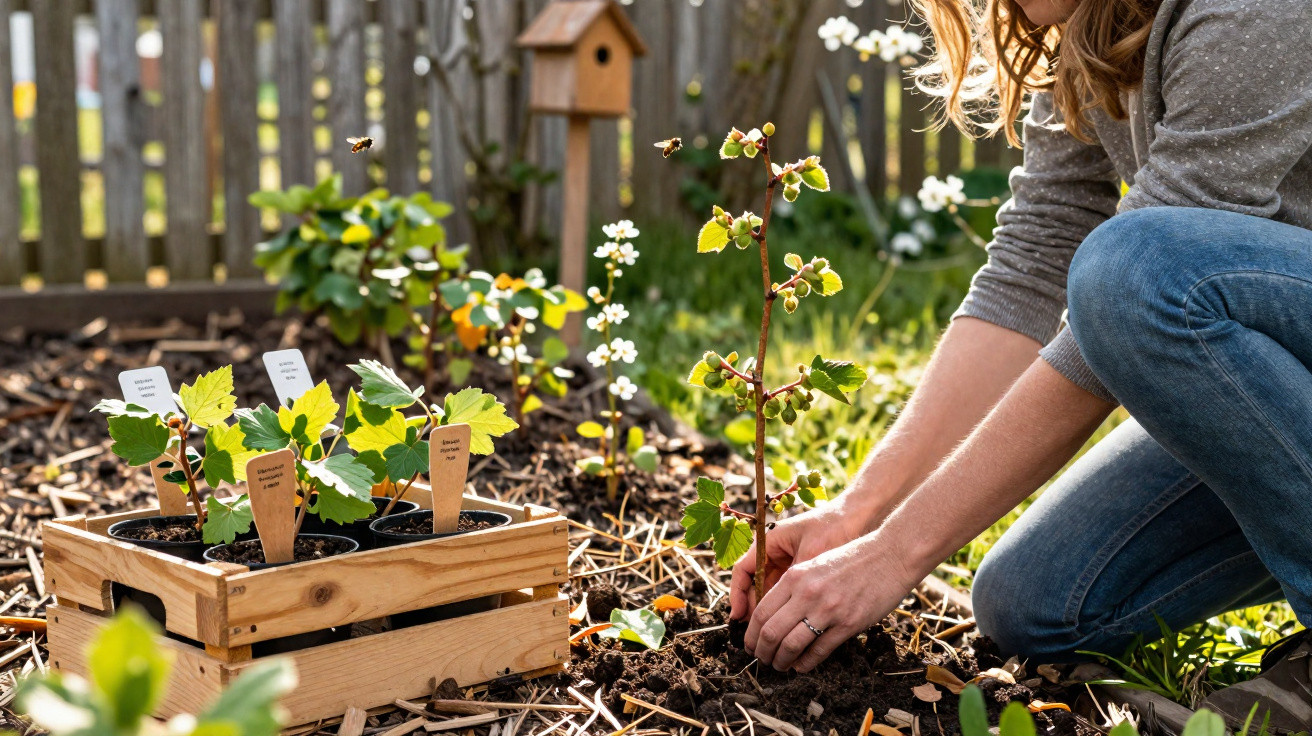
Cold light, damp ground and subdued birdsong can make early spring feel oddly hollow, even as gardens begin to stir.
Across large parts of Europe and North America, March usually delivers longer daylight, gentler temperatures and the unmistakable sense that winter is easing off. And yet plenty of gardeners spot the same gap each year: fewer birds, fewer insects and less visible activity. That lull is also the ideal opening for a straightforward upgrade that can turn a bare boundary into a thriving, edible hedge-one that feeds you as well as the wildlife you share your space with.
Why early spring is the perfect moment to rethink your boundaries
In gardening, timing is often the difference between plants merely coping and properly thriving. By late winter and the very start of spring, the ground has typically defrosted while still retaining plenty of moisture. That combination lets roots settle and spread without having to compete with intense sun or a long, dry spell.
For wildlife, the same window is all about preparation. Birds are actively claiming territories, assessing potential nesting spots and searching out dependable feeding areas. They are not only after somewhere to sit-they need structure, protection and a place where insects and fruit will be on offer when their chicks arrive.
Planting a diverse, berry-rich hedge in early spring sends a clear signal to wildlife: food and shelter will be here when you need them.
If you leave it until late April or May, that first round of breeding birds may already have chosen other sites. Planting early gives your hedge time to establish roots, produce fresh growth and begin drawing in insects just as the first broods hatch.
From sterile fence to “edible corridor” for birds and humans
A lot of suburban and countryside plots rely on a single-species hedge-or, worse, a plain run of fencing or wall. Those boundaries may define a space, but they contribute very little to local nature. An edible hedge turns that idea on its head. It still frames the garden and marks the edge, but it also does far more than block a view:
- Supplies nectar for early-season pollinators
- Creates thick cover and nesting opportunities for smaller birds
- Delivers fruit for your kitchen as well as for wildlife
- Forms a ground-level microhabitat through leaf litter and mulch
In short, you are aiming for a living strip that functions like a buffet and a safe hostel, instead of a dead barrier.
The fruiting trio that turns a hedge into a wildlife magnet
You can build an elaborate mixed hedge with many species, but a compact trio can already make a striking difference: blackcurrant, gooseberry and serviceberry. All three suit cooler climates, stay relatively manageable in size, and offer generous blossom followed by useful crops.
Blackcurrant: dense foliage and insect factory
Blackcurrant (Ribes nigrum) quickly develops into a thick, bushy shrub over a few seasons. It tends to do best where the soil stays cool and moist, and the leaves release a strong scent when rubbed or crushed. In spring, its understated flowers appear right as the first pollinators begin to get moving.
Those plain little flowers become a critical protein source: they draw in early insects, which in turn feed nesting birds and their chicks.
For the gardener, blackcurrants provide sharp, vitamin C-rich berries that are perfect for jams and cordials. For wildlife, the plant offers sheltered cover, plenty of foraging and protection from wind and predators.
Gooseberry: natural barbed wire for nesting birds
Gooseberries are too often overlooked. Yes, their prickly stems can make pruning awkward, but those same spines create a superb defensive thicket. For a blackbird or robin trying to avoid domestic cats or opportunistic magpies, a gooseberry bush can be an ideal place to nest.
The fruit follows in early to mid-summer. If you pick a portion and deliberately leave some berries to fully soften on the plant, you effectively share the harvest at the very point birds are busy feeding hungry fledglings.
Serviceberry: early blossom, beloved berries
Serviceberry (often Amelanchier canadensis or a close relative) is still unfamiliar to many home gardeners, particularly where space is tight in UK or US gardens. That is shifting quickly-and with good reason.
It throws up masses of white flowers very early on, sometimes while other shrubs still look dormant. Bees and hoverflies crowd those blooms. After that, it forms small, dark berries with a flavour many people describe as somewhere between blueberry and almond.
Serviceberry is one of those rare shrubs that looks ornamental, tastes superb and feeds blackbirds, thrushes and waxwings in a single season.
How to design a productive hedge that actually works for wildlife
Choosing suitable shrubs is only part of the picture. Where you place the hedge, and how you handle the soil, will decide whether it merely survives or becomes a boundary that truly teems with life.
Orientation: why a north–south line helps
Where possible, lay out the hedge so it runs roughly north–south. With that orientation, each side receives some direct sunlight as the sun moves across the sky. The result is more even ripening, stronger growth and fuller leaf cover throughout.
That thickness matters for nesting. Many small birds avoid thin, gappy shrubs that predators can easily see through. Better light generally promotes denser growth, which in turn provides safer hiding places.
Planting distances that keep peace in the hedge
In a modest garden, you can interweave the three species along the same run. One easy repeating layout is:
| Shrub | Approx. spacing | Main benefits |
|---|---|---|
| Blackcurrant | 1.2–1.5 m apart | Dense cover, early insects, vitamin-rich fruit |
| Gooseberry | 1–1.2 m apart | Spiny protection, mid-summer fruit |
| Serviceberry | 1.5–2 m apart | Early blossom, ornamental value, bird-favourite berries |
Rather than setting plants in a perfectly straight row, offset them slightly. That small change adds visual character and builds more layered cover for wildlife.
Mulch: the quiet engine at the base of an edible hedge
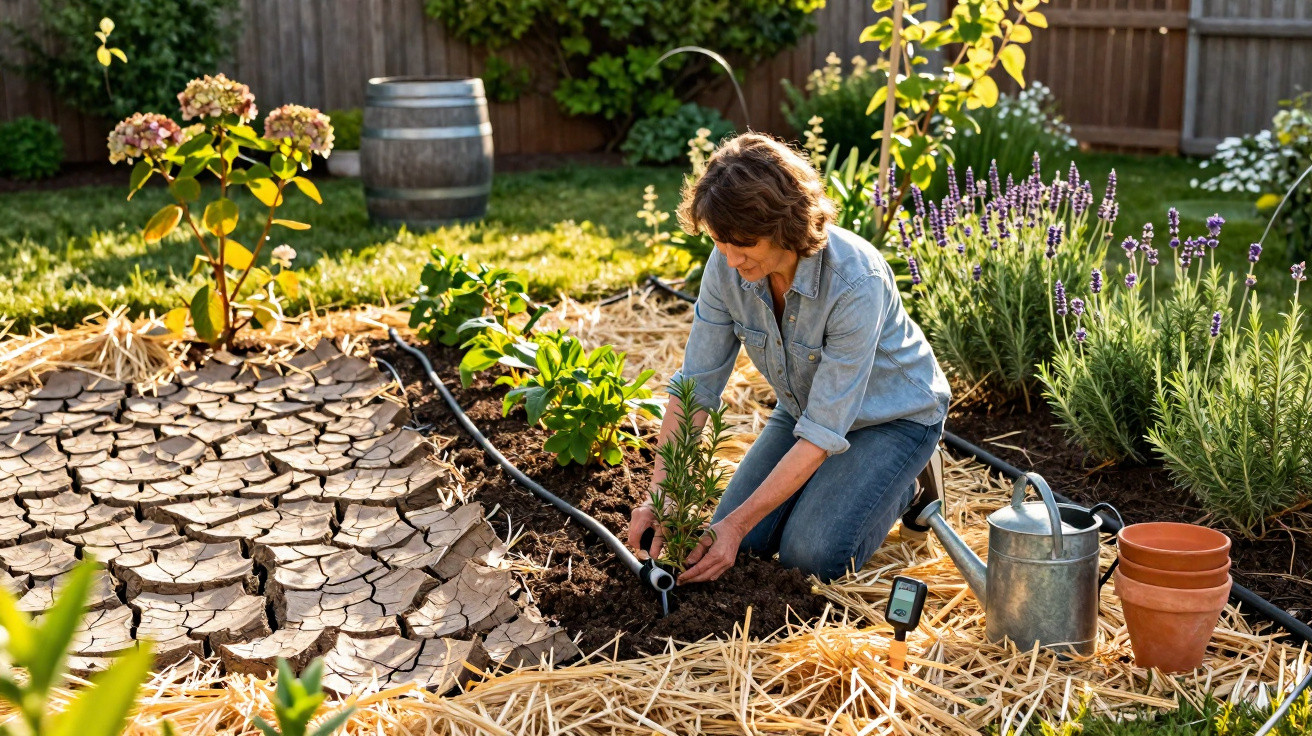
After planting, one of the most damaging choices is to leave the soil exposed beneath the shrubs. Bare ground dries quickly, overheats in summer and supports far fewer soil organisms. A deep mulch layer is a simple fix that improves almost everything.
Use materials you can source locally: wood chips, straw, shredded prunings, or a thick blanket of fallen leaves. Apply a 5–10 cm layer around each plant, but keep a small clear ring around the stems to reduce the risk of rot.
A living hedge starts underground: mulch keeps moisture in, feeds soil life and turns the base of your hedge into an open-air restaurant for birds.
Cool, damp mulch becomes ideal habitat for worms, beetles and other invertebrates. Blackbirds, robins and thrushes soon learn to rummage through it for food. Meanwhile, you will find you need to water less, the soil structure improves and the roots push deeper.
What does not fit with this kind of hedge is routine use of synthetic chemicals. When the aim is to feed wildlife and supply your own kitchen, herbicides and insecticides are hard to justify. A poisoned aphid or slug can still be eaten by a bird, and the chance of passing contamination up the food chain is real-even with “low dose” products.
What you can expect by late spring and summer
In its first year, a newly planted hedge will not resemble an established thicket, but the knock-on effects can still show up quickly. Only a few weeks after planting, you may start noticing:
- Bees and hoverflies working blackcurrant and serviceberry blossom
- Ladybirds and lacewings chasing aphids across the fresh shoots
- Robins and wrens investigating the mulch for invertebrates
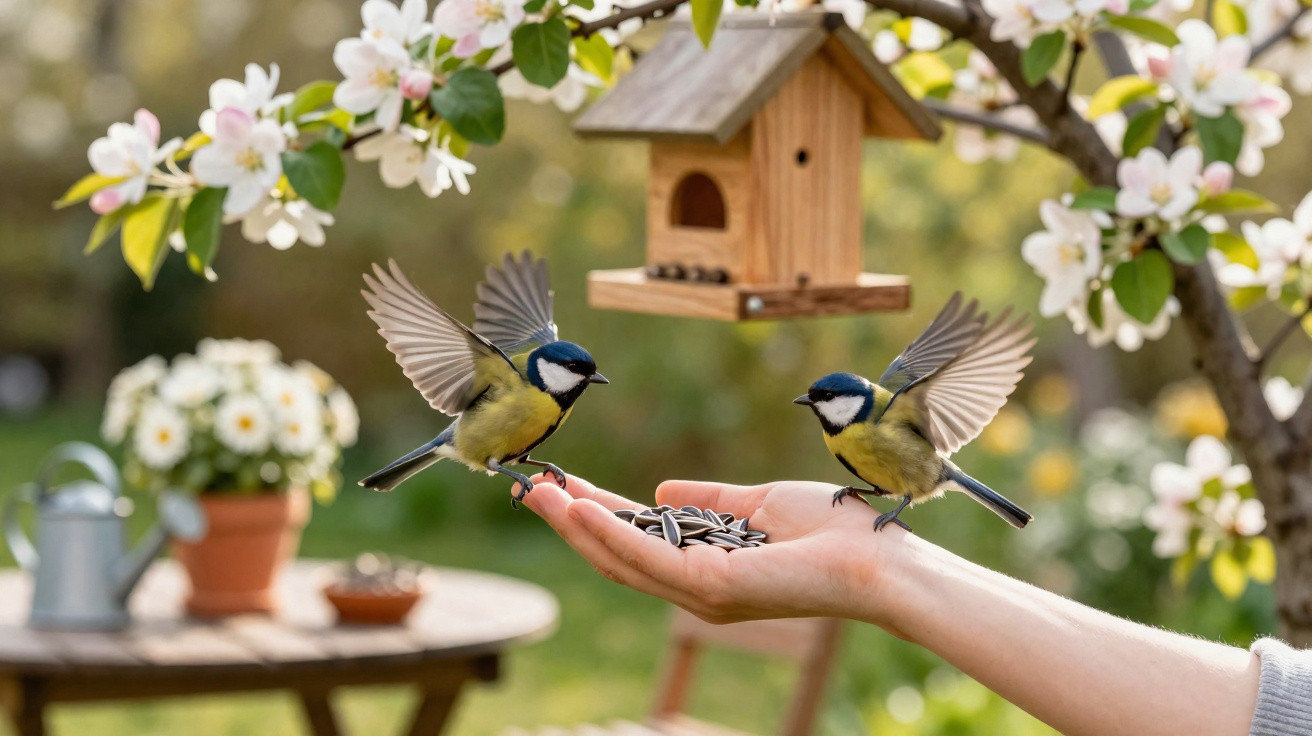
- Sparrows and tits feeding among the stems and branches
When summer arrives, blackcurrants and gooseberries often produce their first small harvests. Serviceberry commonly fruits in early summer too, attracting blackbirds and starlings. As it fills out, the hedge begins to function like a corridor, linking your garden to neighbouring trees, hedges and untidy corners.
A simple line of three shrub species can restore part of the local food chain, especially in gardens surrounded by lawns and hard surfaces.
Practical tips, small risks and simple ways to go further
As with any garden project, there are compromises. Birds will eat some of “your” fruit. In practice, that usually means a handful of pecked berries, or the last very ripe ones disappearing from the top of a bush.
If you would like to keep a fair portion for yourself, you can:
- Add one extra shrub of each species and treat it as the birds’ allocation
- Net one section during peak ripening, then take nets down promptly once you have harvested
- Pick earlier for cooking, while leaving fully ripe fruit for wildlife
On the other hand, swapping lawn for shrubs and cutting back on chemical inputs often reduces work over time. Once the plants are established, a mixed hedge usually only needs light pruning plus a fresh mulch topping every year or two.
If you are new to gardening, two words crop up frequently here. “Biodiversity” simply means a wide variety of living things-plants, insects, fungi, birds and mammals-sharing the same area. A hedge that supports biodiversity contains more different species, not merely more individuals of one kind. “Microfauna” describes the tiny animals living in soil and mulch, such as springtails, mites and microscopic worms, which break down dead material and keep nutrients cycling.
If you want to expand the idea, it is easy to add more layers. Put native hawthorn or hazel at either end for extra blossom and nuts. Allow a wild rose to weave through for winter hips. Underplant with wild garlic or comfrey to create a second tier of forage. Each added layer strengthens the living boundary you are building.
Imagine a crisp March weekend: a bundle of bare-root shrubs, a mound of wood chips, a spade and a flask of tea. By the time that weekend comes back around next year, the same stretch of quiet fencing can have become a lively ribbon of growth-buzzing, fluttering and steadily feeding both you and the local wildlife.

Comments
No comments yet. Be the first to comment!
Leave a Comment