
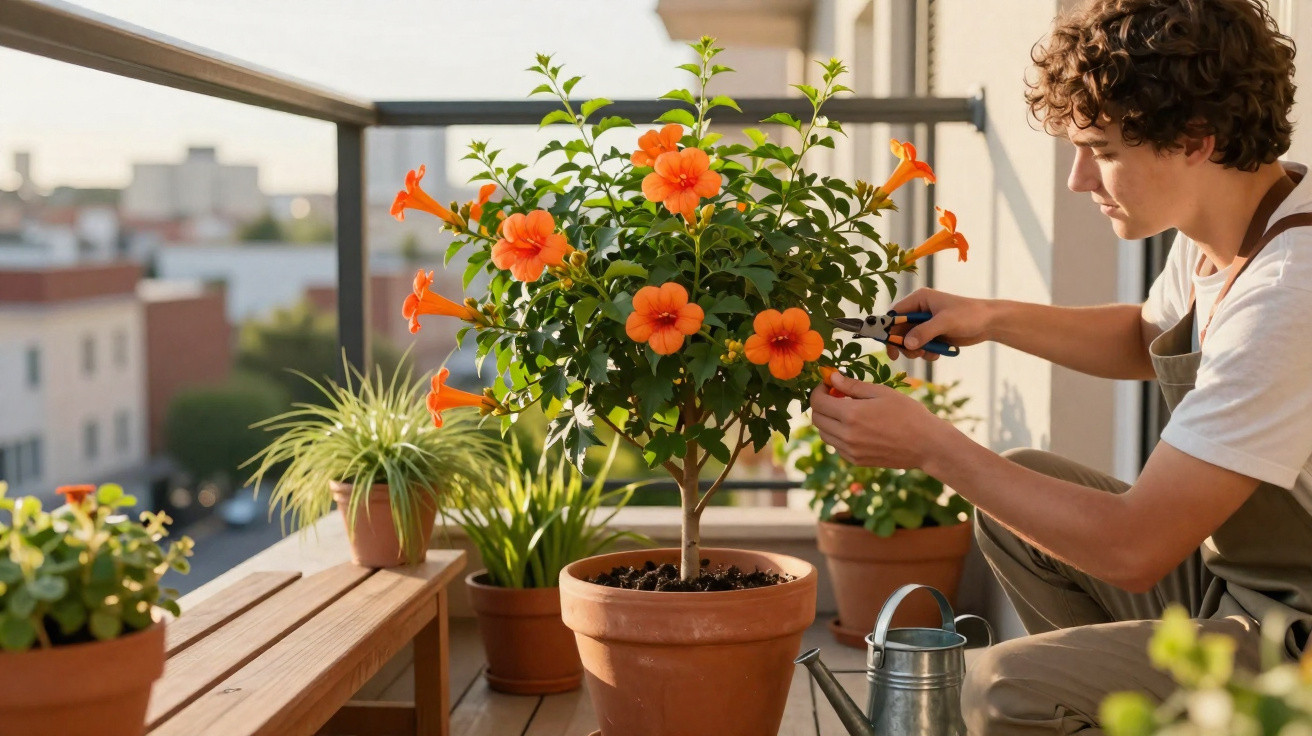
A compact, repeat-flowering shrub in vivid orange proves that you do not need much space to enjoy months of colour.
Anyone with a small garden, courtyard or terrace will recognise the dilemma: you want a shrub that makes an impact, but you worry about ending up with an oversized beast that eventually swallows everything. So you settle for a few low perennials and a handful of seasonal plants in boxes - and by high summer the whole scene can look tired. One particular compact, perennial shrub with bright orange flowers can solve that problem in a surprisingly elegant way.
Why this compact shrub makes small gardens feel bigger
Sold in shops and nurseries under the name Tecomaria „Cape Town Orange“, this is a smaller-growing form of Cape honeysuckle (botanically Tecomaria capensis). Unlike the species, which can easily reach 2 metres or more, this selection stays far more manageable.
"At around 1.50 metres tall and about 1.80 metres wide, the shrub fits perfectly into small gardens, terraced-house backyards and city terraces."
Its habit is dense and bushy. After a few years, it develops into a compact, rounded “cushion shrub” that visually anchors a border or neatly frames the edge of a patio. It neither feels bulky nor sparse - exactly the balance that is so hard to achieve in tight spaces.
The real selling point, however, is the flowering. Trumpet-shaped blooms in an intense orange sit in clusters and keep coming from late spring right through to autumn. In very mild areas, the display can even continue into winter.
Colour turbo from May to autumn: how long Tecomaria flowers
Many ornamental shrubs deliver a brief show for two or three weeks and then offer nothing but green for months. Tecomaria plays in a different league: its flowering period stretches across the whole gardening season.
- Start: from around May, depending on region and weather
- Peak: summer months with continuous flowering
- Late flush: continuing into autumn
- In very mild areas: flowering sometimes carries on into winter
The long, narrow flower tubes are rich in nectar. Wherever the shrub is planted, it attracts honeybees, solitary bees and butterflies. So if you want a small garden that is not only attractive but also insect-friendly, you get a double benefit.
Its foliage stays fresh green throughout the season and keeps things looking tidy even during short pauses in bloom. The shrub is also considered unattractive to deer, which can be a genuine advantage in rural locations.
Site, climate and soil: where the shrub thrives
Tecomaria comes from warmer regions and, botanically speaking, is best thought of as a more tropical, perennial outdoor plant. In German-speaking countries it is used differently depending on location - and the same logic applies elsewhere:
| Region / climate | Use | Notes |
|---|---|---|
| Very mild wine-growing and coastal locations | Outdoors all year | Usually feasible long-term with winter protection |
| Typical locations in Germany, Austria, Switzerland | In-ground with winter protection or a large container | Shoots may die back in frost; the plant re-sprouts from the base |
| Cool upland areas | Better as a container plant | Frost-free overwintering, e.g. in a bright conservatory |
A sunny position is ideal. In full sun, the shrub produces the most flowers and maintains the tightest growth. In very hot regions, a spot with a few hours of partial shade is welcome so the leaves do not scorch.
When it comes to soil, Tecomaria is surprisingly forgiving. It will cope with sandy, loamy or humus-rich ground; what matters are two things: good drainage and consistent moisture in the first few years. The plant dislikes waterlogging because the roots can rot.
How much water does the shrub need?
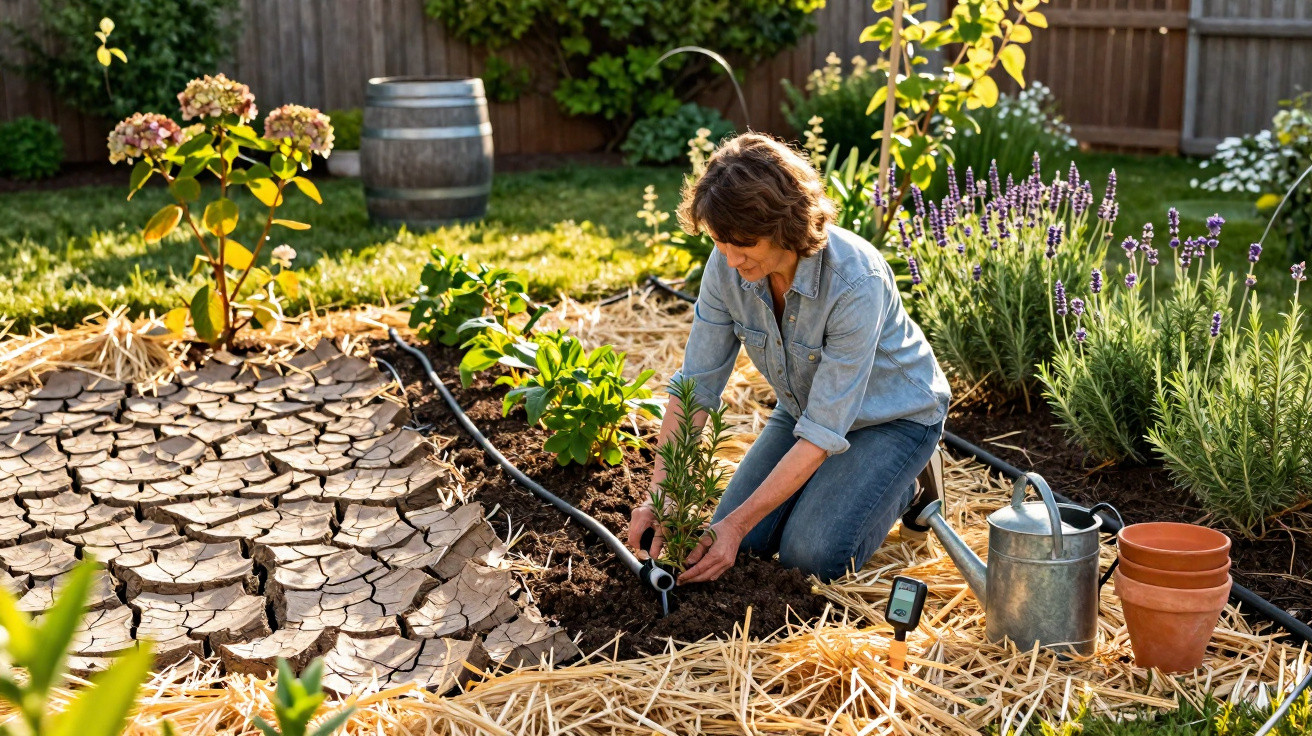
After planting, the soil should not be allowed to dry out. As a rule, a thorough watering once a week is sufficient, and more often during heatwaves. Once the shrub is established, it manages with significantly less water.
"Once established, Tecomaria is considered surprisingly drought-tolerant - a real advantage in increasingly hot summers."
Gardeners report that the plant continues to flower reliably even in low-rainfall periods, as long as the soil is not bone-dry for weeks on end. An organic mulch helps keep moisture in the ground for longer and cuts down on watering.
Planting step by step: getting off to a strong start
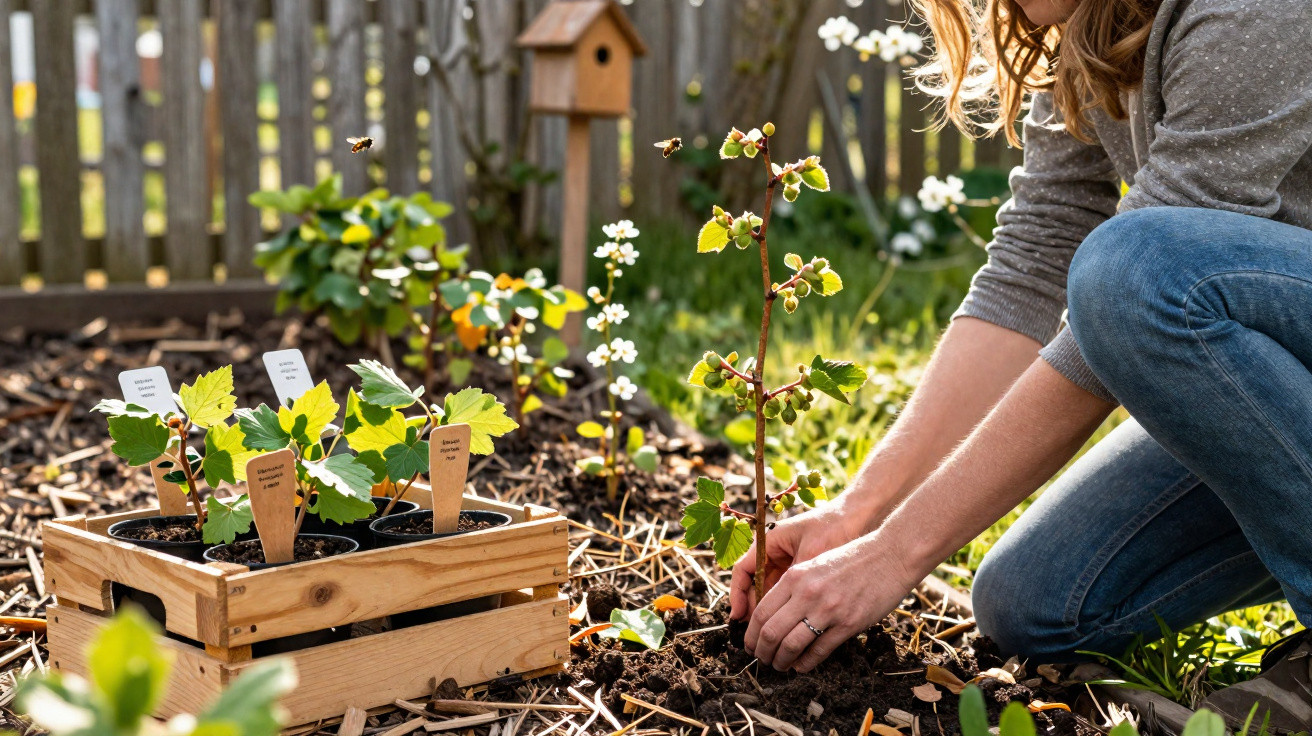
Spring is the best time to plant, once the risk of severe frost has passed. That gives the shrub a full season to build roots.
- Soak the pot thoroughly until the root ball has fully absorbed water.
- Dig a planting hole about twice as wide as the root ball.
- Loosen the soil in the hole, breaking up stony layers or any compacted ground.
- Set the shrub in place so the root collar sits level with the surrounding soil.
- Backfill with the excavated soil and a little compost, then firm gently.
- Water in thoroughly so no air pockets remain.
- Apply a 5–8 centimetre layer of mulch, keeping it off the stems.
Especially in small gardens, it pays to plan for the final size: ultimately the shrub needs around 2 square metres of space. If it is planted too close to paths or walls, you will be pruning more often.
Care and pruning: keeping it compact and free-flowering
Ongoing maintenance is straightforward. Once a year - ideally in spring - Tecomaria benefits from an application of organic feed or a slow-release fertiliser for flowering shrubs. This supports bud formation.
Pruning is best timed around the main flush of flowers. A sensible moment is straight after the strongest flowering wave in summer or early autumn. Proceed as follows:
- Remove any dead or frost-damaged shoots.
- Lightly shorten branches that stick out too far.
- Cut back overly long shoots to a strong outward-facing bud.
A piece of advice originally given for a Mahonia shrub fits surprisingly well here: if the plant becomes too tall, you can cut it back firmly after flowering to just above a lower pair of leaves. New side shoots then develop, making the shrub denser and more balanced.
Winter protection: helping the plant through cold nights
In areas with hard winters, the above-ground growth often dies back. That does not automatically mean the plant is finished. If you protect the base, there is a good chance it will re-sprout in spring.
Useful measures include:
- a thick layer of leaves or bark mulch around the root area
- horticultural fleece wrapped around the shrub during forecast cold snaps
- moving pot-grown plants close to a sheltered wall and insulating the pot
If the plant starts into growth again in spring, you can remove frost-killed stems close to the ground. In most cases, the vigorous new growth quickly makes up for the losses.
Where the shrub looks best: practical ideas for small spaces
To get the most from this shrub, it helps to place it deliberately within your design. In small gardens, these positions have proved particularly effective:
- as a standalone focal point by the patio
- at the end of a narrow path as a colourful destination
- in a mixed border with ornamental grasses and perennials
- in a large pot on a balcony, paired with trailing plants
It looks especially harmonious alongside purple- or blue-flowering perennials such as salvias or blue rue. Against those tones, Tecomaria’s strong orange reads almost like a textbook colour contrast.
What hobby gardeners should know before buying
In DIY stores, garden centres and specialist nurseries, this shrub can still be something of a hidden gem. Asking specifically for the ‘Cape Town Orange’ selection improves your chances of finding it. Plants from well-rooted containers tend to establish more reliably than very young, weak stock.
One important point: in exposed, colder locations, it is worth accepting that the plant may behave more like a dense, free-flowering subshrub that repeatedly regrows from the base. If you can live with that, you gain a striking, low-maintenance structural plant in an unusual colour - ideal for giving a small garden a clear sense of character.
Comments
No comments yet. Be the first to comment!
Leave a Comment