
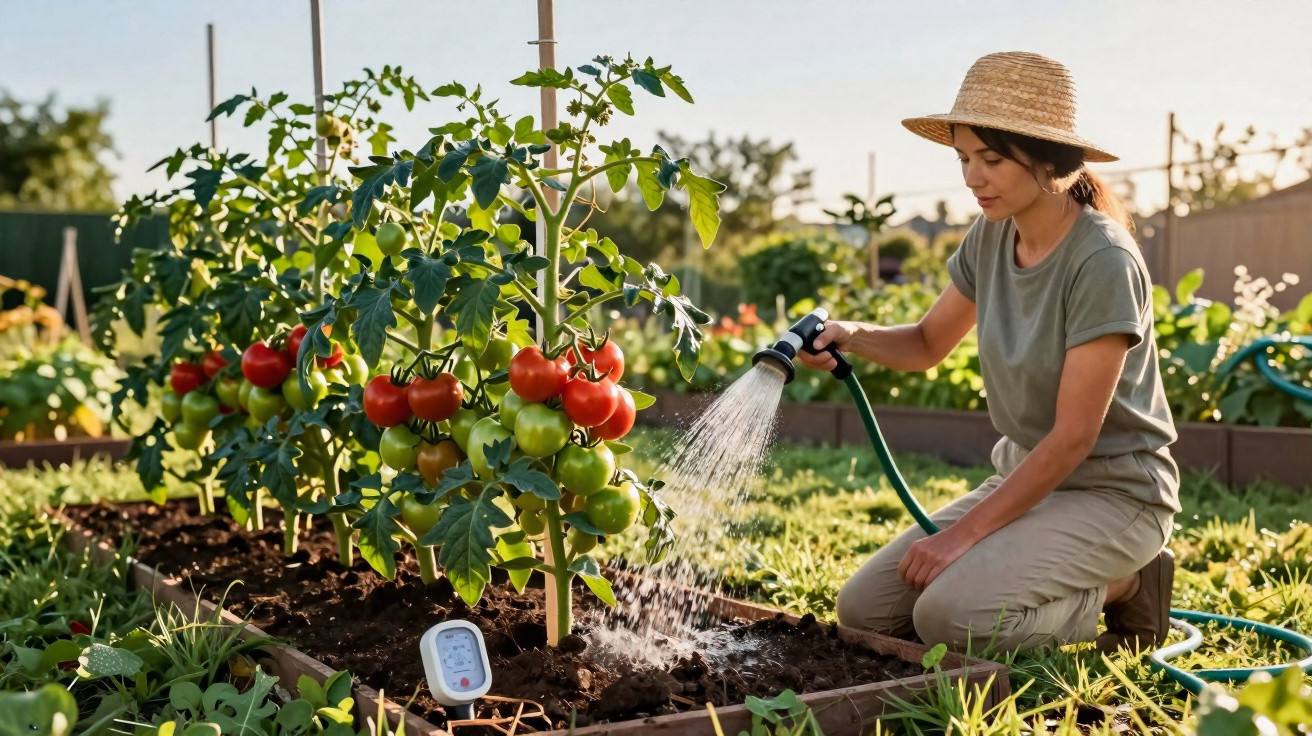
A light sprinkle at lunchtime over a bed of lush foliage can seem like a kindness. In the middle of a heatwave it can even feel heroic. But it’s the classic summer habit that leaves roots underfed, encourages disease, and has tomato plants drooping again by teatime. It’s not a dramatic blunder - it quietly builds with every rushed splash.
I once watched a neighbour lift the hose so it arced overhead, sending a sparkling shower over his tomatoes like a drive-through wash. The leaves gleamed, the compost barely changed colour, and the air carried that faint, metallic scent - hot pennies mixed with optimism. By evening, the same plants sagged, as if ashamed of how thirsty they still were.
Not long after, dark specks crept up from the lowest leaves, and two tomatoes split down their sides like plums left too long. Nothing else had changed: no new compost, no different feed, no moved planting spot. He simply carried on with what felt sensible - little-and-often from above. The cause was right there all along.
The culprit was the hose.
The silent tomato killer: shallow, overhead watering
On the surface it looks harmless: a quick spray during a hot afternoon, droplets shining on the leaves, and the top layer of soil looking slightly damp. Underneath, the roots end up hovering near the surface because they’ve never had a reason to grow down. Then a warm breeze arrives and strips that surface moisture within minutes. By early evening the plants take on that weary, grey-green cast that quietly says: we’re thirsty again.
Ask anyone on a UK allotment in July and you’ll hear a familiar refrain. “They were fine Tuesday; by Thursday they drooped,” someone says, holding up a photo of curled leaves and a few stems marked with black spots. It often follows the same triggers: a spike in heat, a few days away, or a rushed routine. Tomatoes can be “watered daily” and still crash. It isn’t laziness - it’s care applied in the wrong way.
What’s happening is straightforward. Water sprayed from above can disappear into the air before it ever reaches the root zone, leaving only the top centimetre moist while the soil beneath stays powder-dry. Wet foliage also creates a humid layer where blight and leaf spot are more likely to take hold. Roots adapt to that shallow pattern, so when conditions turn hot and windy they have nowhere deeper to tap into. At the same time, nutrient movement - particularly calcium - becomes erratic, and fruits can develop those dreaded black, sunken ends. Tomatoes don’t follow our timetables; they react to moisture in the soil.
Do this instead: deep, targeted, morning soaks
Change the routine to a slow, thorough soak at the base of each plant, ideally first thing in the morning. Aim for water to reach 20–30cm down, not just dampen the surface. For tomatoes in the ground in peak summer, it helps to think in weekly volume: around 10–15 litres per plant in total, delivered in two or three deep waterings rather than seven quick spritzes. For containers, judge it by feel and weight - water until there’s just a hint of runoff, then stop and allow the compost to draw it down.
Put the water onto the soil rather than the leaves, and lay a mulch layer 5–8cm thick to keep moisture where it belongs. A simple check beats guessing: push a finger or trowel in to the second knuckle. If it’s dry at that depth, water. We’ve all had days where the afternoon runs away and the hose comes out at 3 p.m.; it happens. Just don’t let that become the default. Let’s be honest: nobody manages that perfectly every day.
To keep watering focused, form a small soil ring around each plant to hold water in place, or sink a bottomless bottle beside the stem to act like a funnel. Drip irrigation or even a basic soaker hose makes consistency almost dull - which is exactly what tomatoes prefer. Deep, not often. Water the roots, not the leaves. Finish by topping the base with compost or straw so that hard-won moisture doesn’t drift straight back into the air.
“Think like a root,” an old grower told me. “Slow drinks, same time, same place. Make it easy for the plant to find water, and it’ll do the rest.”
- Water early morning; target 20–30cm depth.
- Two to three deep sessions per week in heat; more often in pots.
- Mulch 5–8cm to lock in moisture and calm soil temperature.
- Keep leaves dry to reduce blight and leaf spot.
- Adjust after rain or cool spells-don’t water by habit alone.
Rethink summer, save your crop
The real change isn’t a new gadget - it’s where you put your attention. Judge what’s happening below the surface rather than admiring the sparkle on wet leaves. When the forecast swings from drizzle to heat, shift your rhythm with it. If there’s a hosepipe ban, turn to stored rainwater and a watering can, and count it out slowly: three full pours per plant, let each one soak in, then add one more for luck.
You’ll know when you’ve got it right. Leaves stay flat and slightly matte through midday. Fresh growth looks compact rather than stretched and leggy. Tomatoes swell without splitting. Morning wins. And that panicked sprinkle at noon? Keep it for cooling your feet. Tomatoes don’t benefit from kindness that evaporates by lunchtime - they need depth, calm, and a routine that holds up when a heatwave hits.
Next time you reach for the hose, picture where that water needs to go underground. Imagine roots reaching down rather than spreading out just beneath the surface. Imagine evening arriving with nothing slumping. It’s a simple adjustment, and the reward tastes like August.
| Key point | Detail | Benefit for the reader |
|---|---|---|
| Water the roots, not the leaves | Direct the flow at soil level with a slow trickle or drip | Fewer leaf diseases, water reaches where it’s needed |
| Deep, not often | 10–15 litres per plant weekly in summer, split into 2–3 soaks | Stronger roots, steadier growth, less wilting and splitting |
| Morning timing + mulch | Water early; add 5–8cm mulch to hold moisture and calm soil | Better uptake, cooler roots, fewer emergency waterings |
FAQ:
- What’s the single biggest watering mistake with tomatoes? Little-and-often, overhead watering. It wets leaves, barely touches the root zone, and trains shallow roots that fail in hot, windy weather.
- How much water do my tomatoes actually need? In the ground during peak summer: around 10–15 litres per plant per week, split into two or three deep sessions. Containers often need more frequent watering-go by depth and pot weight, not the calendar.
- When’s the best time to water tomatoes? Early morning. Plants drink as the day warms, leaves stay dry, and you lose less to evaporation. Evening is second-best if mornings are impossible.
- How can I tell if I’m overwatering or underwatering? Overwatering: persistently soggy soil, yellowing leaves, limp but not dry. Underwatering: dry soil 5cm down, dull grey-green leaves, midday droop that doesn’t recover at dusk. Probe the soil before you decide.
- Does inconsistent watering cause blossom end rot? Yes. Fluctuating moisture disrupts calcium movement, leading to those black, sunken fruit ends. Keep soil evenly moist with deep soaks and mulch to steady the supply.
Comments
No comments yet. Be the first to comment!
Leave a Comment