
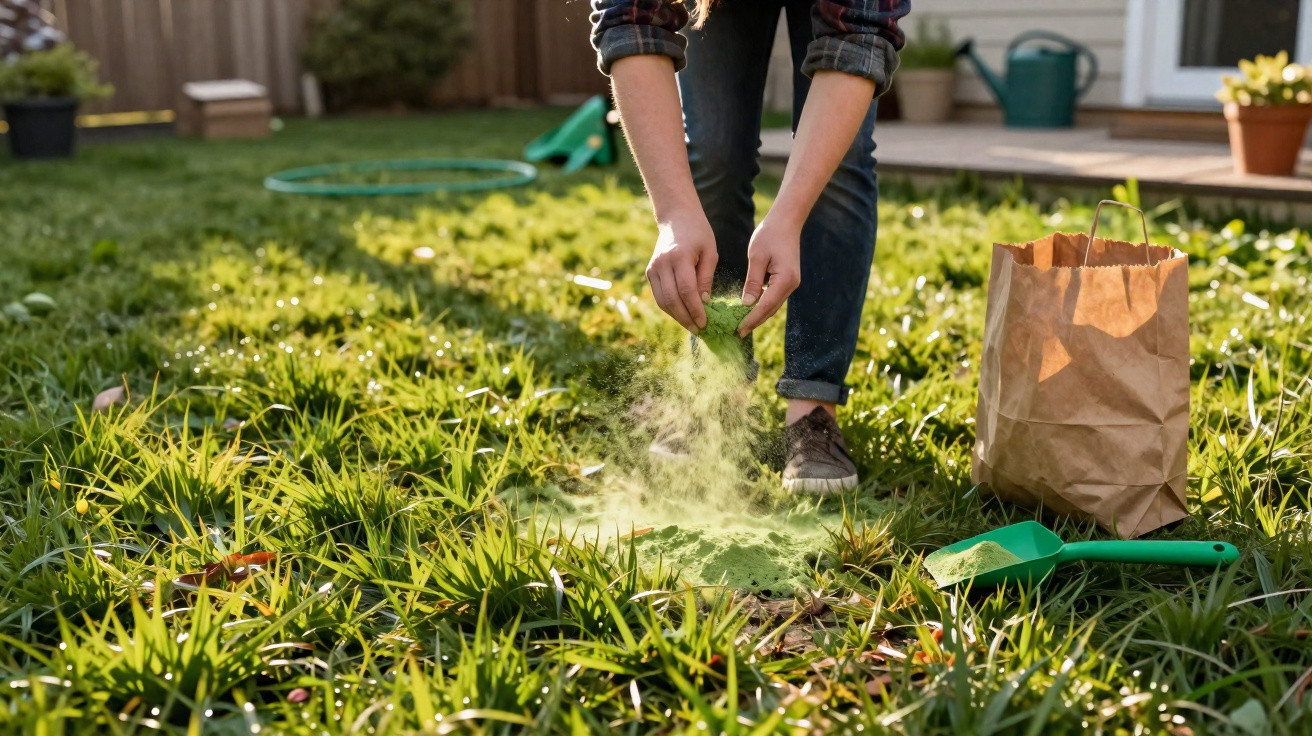
In March, there’s an unassuming powder that can change everything.
When spring arrives, many hobby gardeners think first of the lawnmower or a generous dose of fertiliser. Professionals often reach for something else: a low-key mineral powder mix that can kill moss within days and give grass a noticeably deeper green. Used correctly in March, it helps you begin the season with a far stronger lawn.
Why the lawn looks so battered after winter
For months, the lawn gets little sunshine, but constant damp and frost. The blades lose vigour, and the root system ticks over at a minimum. At the same time, the soil becomes compacted: rain, snow and foot traffic squeeze the structure tight, so air and water reach the roots less easily.
Those are exactly the conditions moss thrives on. It spreads between the grass blades and robs the lawn of light, space and nutrients. By spring you’re often left with a patchy surface: bare spots in one place, thick moss cushions in another, and pale, yellowish grass in between.
As March begins, things slowly start to shift. Days lengthen, temperatures rise, and root growth starts up again. The grass tries to push on-yet the moss is already settled in and blocking the show. That’s why a targeted intervention is especially worthwhile at this stage.
"Early March is the moment when you can push back moss and kick-start grass growth with a single task."
The key powder treatment: Eisen(II)-sulfat to stop moss and deepen green
In this situation, gardening professionals frequently use Eisen(II)-sulfat, most commonly sold as an iron fertiliser or a lawn moss killer. It’s a pale, crystalline powder that’s applied either dissolved in water or as granules.
How the powder treatment works against moss
Eisen(II)-sulfat hits moss hard. After application, moss typically turns dark brown to black within hours to a few days and then dies off. The moss pads dry out and can later be brushed away or pulled out of the turf with a scarifier.
The crucial point is that grass tolerates the treatment far better than moss. With the correct dosage, you barely harm the lawn plants, while taking away the moss’s ability to survive.
Why the grass becomes much greener
A second effect happens directly in the blades. Iron is a key building block for producing chlorophyll-the green pigment plants use to turn sunlight into energy. When the soil receives iron in the right amount, grass can quickly produce more chlorophyll, resulting in a visibly richer green.
"Many gardeners report that their lawn looks noticeably fuller, stronger and ‘fresher’ just a few days after treatment."
On top of that, Eisen(II)-sulfat is relatively inexpensive compared with many specialist fertilisers and is widely available. For larger lawns, that cost advantage matters.
The right timing in March: wait until the soil is ‘awake’
This powder treatment makes sense once the lawn is starting to grow again, but the moss is still in control. The best window is early to mid-March, when:
- daytime highs are usually above 8–10 °C
- prolonged frost is no longer likely
- the soil is slightly damp, but not waterlogged
If the ground is frozen or very wet, the product can act unevenly. And during extended dry spells, there isn’t enough moisture in the soil to distribute the active ingredient properly.
How to apply Eisen(II)-sulfat correctly
Liquid application: even coverage and easy control
Many manufacturers advise dissolving the powder in water and applying it with a watering can or pressure sprayer. A commonly stated mix is around 20 to 30 grams of powder per litre of water-always follow the instructions on the pack.
- Weigh out the amount; don’t dose “by feel”
- Dissolve the powder fully in water and avoid lumps
- Spread it evenly across the whole area, rather than only treating patches
A practical tip: mentally mark out lanes (or use simple markers) and work methodically strip by strip. This helps prevent overlaps and missed sections.
Protecting yourself and the surrounding area
Although Eisen(II)-sulfat isn’t considered a classic poison, it can irritate skin and eyes. Basic precautions protect you and your surroundings:
- Wear gloves, and ideally wellington boots too
- If there’s spray mist, use simple safety glasses
- Keep pets and children off the lawn during application
Take extra care around stone surfaces: if the solution splashes onto patio slabs, paving, or pool edging, it can leave stubborn rust marks. The safest approach is to cover paths and hard surfaces before you start, or deliberately leave a generous margin around edges.
"Iron stains on stoneware often take a great deal of effort to remove-or may never come out completely."
Weather window: plan for a dry spell
After application, it should stay dry for at least 24 hours. Heavy rain can wash the active ingredient away before it has reacted sufficiently. Light morning dew isn’t an issue; strong downpours are.
What happens after treatment-and what you should do next
In the days following application, parts of the lawn may look slightly darker or a bit blotchy at first. That settles once the dead moss is removed and the grass grows on.
Two weeks later: remove the moss and let the lawn breathe
After about 10 to 14 days, the moss is usually fully dead and dry. Then it’s time for the next step:
- Work over the area with a scarifier or a sharp lawn rake
- Comb out the blackened moss remains thoroughly
- Remove and dispose of dead material-don’t leave it sitting on the lawn
This opens up the turf so air and water can reach deeper into the soil again. At the same time, it creates germination space for grass seed.
Overseeding and fertiliser: a chance for a thicker lawn
A de-mossed, roughened surface is ideal for overseeding. In thin areas, apply a suitable grass seed mix, ideally matched to the site (shade lawn, hard-wearing family lawn, or ornamental lawn). Then work it in lightly and roll it in, or firm it down underfoot.
If you wish, add an organic lawn fertiliser with a moderate nitrogen content. That supports both new and established blades and helps achieve more even growth through the season.
Risks, limits and alternatives to the powder treatment
Eisen(II)-sulfat is powerful-and like any strong product, it has limits and side effects. Overdosing can scorch the tips of grass blades, especially in very warm weather. The result can be light patches or brownish edging.
Dosage also matters for environmental reasons. If larger amounts reach flower beds or drift onto a neighbouring plot, it can stress more sensitive plants there. Careful, precise application-and respect for areas around the lawn-pays off.
If you’d rather avoid a mineral approach, moss can also be reduced through a combination of scarifying, topdressing with sand, and improving the soil. These methods take more time and effort, but they’re gentler.
Why using it in March means less work later
A dense, healthy lawn steadily removes moss’s long-term advantage. Treating early in the year gives grass a head start: it fills gaps faster, casts more shade onto the soil, and keeps moisture moving rather than stagnating. In that way, a single powder treatment in March can set up a lower-maintenance lawn for summer.
Finally, it helps to address the root causes. Moss often benefits from waterlogging, shade and a lack of nutrients. If you adjust those factors after treatment-such as improving drainage, mowing appropriately and fertilising in measured doses-you’ll need to repeat the powder treatment far less often.



Comments
No comments yet. Be the first to comment!
Leave a Comment