
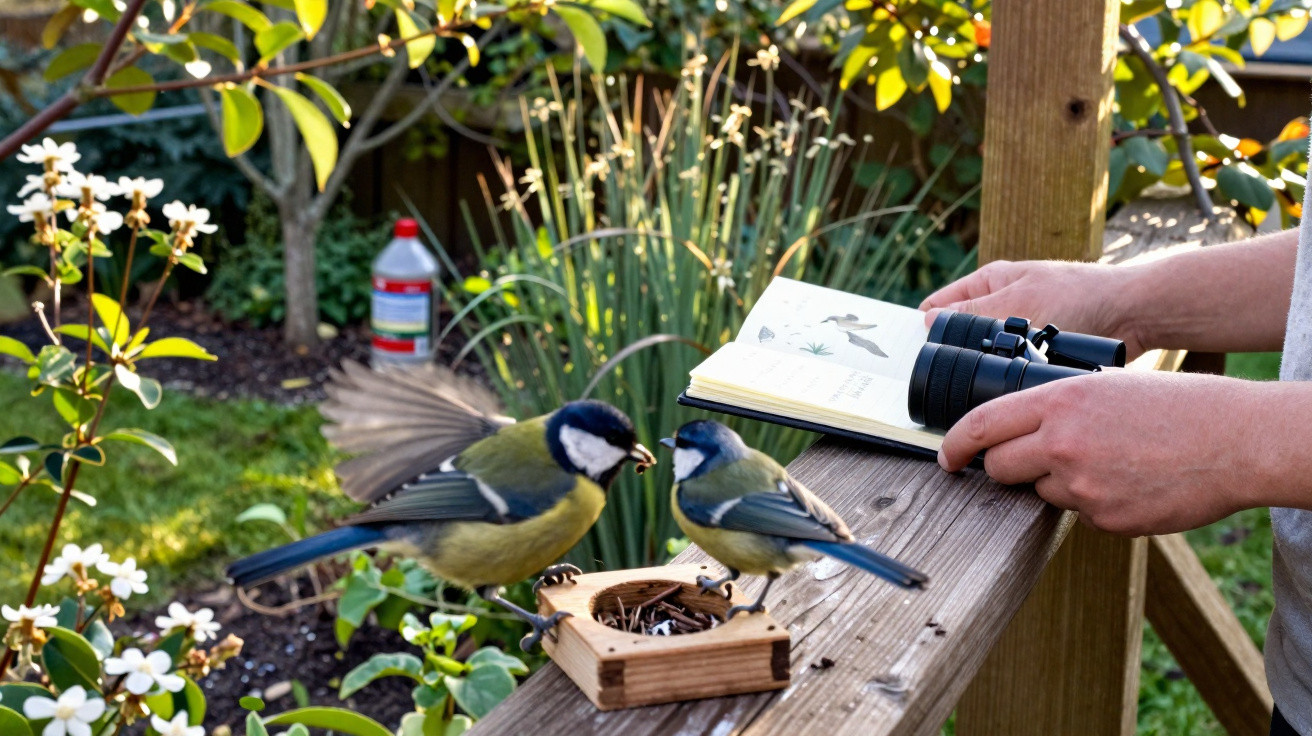
A tit that settles into your garden and returns day after day is doing far more than providing a pleasant soundtrack. Its routines, headcounts and breeding outcomes can offer remarkably clear signals about the condition of the environment right around your home.
Why this small garden bird tells a bigger story
Throughout Europe, tits - including great tits, blue tits and crested tits - are among the most familiar birds at garden feeders. Although they are protected and still fairly widespread, long-term monitoring points to steep declines across many small bird species. Ornithologists estimate that around a quarter of Europe’s birds have vanished over the past four decades, with the most severe drops in areas dominated by intensive agriculture.
Against that backdrop, the tit on your feeder is more than a cheerful visitor. Because these birds respond quickly to pollution, changes in habitat and fluctuations in insect numbers, they can function as a living barometer for what is happening in your own back garden.
Tits are like tiny inspectors, constantly sampling insects, seeds and nesting sites, and reflecting the true state of your local ecosystem.
What the presence of tits says about your garden
A sign of food diversity
For much of the year, tits feed primarily on invertebrates. When they are raising young, adults give their chicks an almost entirely animal-based diet: caterpillars, spiders and small larvae. Outside the breeding period, they broaden the menu to include seeds, berries and nuts.
If you regularly watch tits searching through shrubs and trees, it generally indicates your garden is producing a healthy range of invertebrate prey. If they suddenly vanish in spring, however, it can suggest that insect life has crashed - often following pesticide use or heavy-handed pruning.
- Regular visits in spring: good availability of caterpillars and other insects.
- Only brief feeder visits in winter: limited natural food in nearby vegetation.
- Almost no sightings year-round: habitat too uniform, paved or heavily treated with chemicals.
An indicator of chemical pressure
Tits are particularly vulnerable to pesticides and other chemicals because, as insect-eaters, they sit relatively high in the insect food web. Repeated spraying in gardens, fields or orchards can wipe out insect populations, while residues may build up through the chain. As a result, small birds can struggle to find sufficient food, and chicks may be underfed or exposed to toxins.
A garden where tits breed successfully, year after year, is usually a space where chemical inputs are limited and insects are allowed to return.
Many gardeners who give up insecticides notice a clear shift within two or three seasons: first, more spiders and caterpillars appear on foliage; soon after, more tits turn up at dawn and dusk.
Clues from nesting behaviour
Tits nest in cavities. They seek out holes in mature trees, gaps in walls or suitable nest boxes. Where they choose to nest - and whether they succeed - can reveal a great deal about the immediate area.
| Observation | What it can indicate |
|---|---|
| Tits inspect nest boxes but do not settle | Disturbance nearby, presence of predators, or unsuitable orientation of the box |
| Repeated nesting failures (abandoned eggs or dead chicks) | Lack of food, cold spells, or possible chemical exposure in the wider area |
| Stable pairs returning each spring | Relatively balanced ecosystem and continuity of shelter and food |
What different species of tit can tell you
Great tit: the generalist sentinel
With its black head and bright yellow belly, the great tit copes with a wide variety of settings, from urban parks to woodland. Seeing one usually means there are at least some established trees or shrubs close by, alongside a reasonably mixed supply of insects.
Because the species is adaptable, a sudden fall in great tit numbers can point to a significant environmental change - hedges removed, trees felled, or widespread pesticide use in nearby streets and fields.
Blue tit: a fan of structured vegetation
Blue tits are smaller, quicker birds that depend strongly on dense shrubs, hedges and finer branches, where they pick insects from leaves and buds. In spring, they are especially associated with oaks and fruit trees.
If blue tits are busy in your apple trees in April, chances are your garden supports a rich community of leaf-eating insects - and needs no chemical “correction”.
Gardens with layered planting - ground cover, shrubs, smaller trees and a few taller ones - tend to support robust blue tit numbers. By contrast, large, closely mown lawns paired with decorative gravel and sparse planting usually deter them.
Crested tit and other specialists
The crested tit, found mainly in conifer woodland, may occasionally appear in gardens near forests in certain regions. When specialist species like this turn up, it often indicates your garden is linked to larger, wilder habitats. Keeping that connection intact - for instance by avoiding tall, solid fencing and retaining native trees - helps preserve an ecological corridor.
How your actions change this living barometer
Gardening choices that favour tits
Making your garden a dependable haven for tits does not mean letting it become overgrown. A handful of practical steps can make a noticeable difference.
- Plant native trees and mixed hedges instead of uniform fences.
- Leave some dead wood or old branches where safe, to create natural cavities.
- Install nest boxes at different heights, facing east or north-east to avoid overheating.
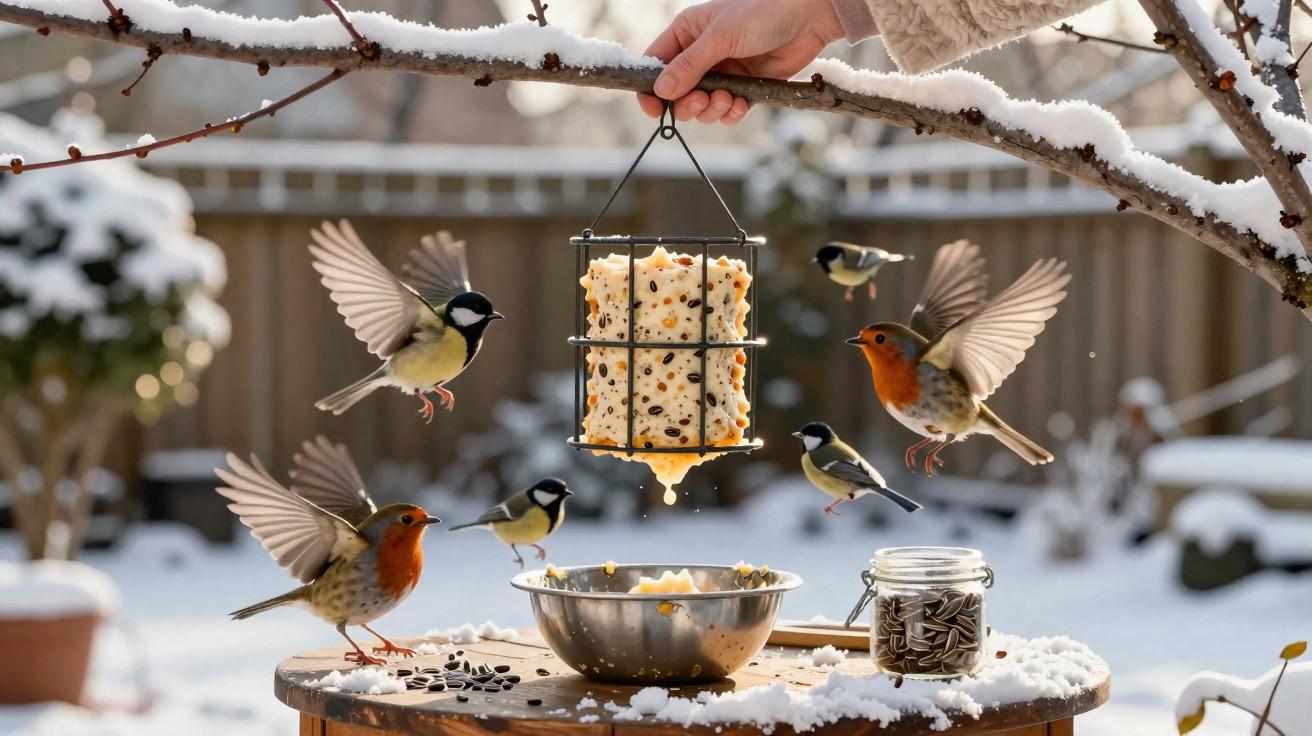
- Offer seed and fat balls in winter, while keeping feeders clean.
- Stop using insecticides, slug pellets and weed killers that affect the entire food chain.
Together, these decisions raise the likelihood that tits will feed, pause and breed in your garden. Over the course of a few years, their growing regularity can become a way to track improvement.
What a quiet garden might be saying
A lack of sound - particularly on spring mornings - is information too. If tit calls are rare and feeders stay quiet, your garden may be affected by broader pressures such as urban densification, the loss of hedgerows, or nearby large-scale farming.
Even so, small changes remain worthwhile. A single wildlife-friendly garden can act as a stepping stone, helping birds move between larger green spaces such as parks and woodlands.
Going further: using tits as everyday field guides
For many families, tits are the first birds children learn to recognise. Their inquisitive nature and comfort around people make them ideal everyday “field guides”. Watching what they do can turn ordinary routines into an informal nature survey.
Across one year, you could note a few simple observations:
- Dates of first songs in late winter.
- First day you see chicks begging at the feeder.
- Periods when numbers seem to drop.
Comparing these notes over time builds a local record of shifting seasons and habitats. Milder winters, for example, can trigger earlier singing and earlier broods, which may or may not coincide with the peak abundance of caterpillars.
Some useful terms explained
When ecologists describe a species as a “bioindicator”, they mean that its presence, absence or condition mirrors particular environmental factors. Tits act as bioindicators for insect availability, tree structure and chemical use.
You may also come across the phrase “trophic chains”. This describes how energy passes from plants to herbivores and on to predators. Tits sit in the middle: they eat insects that have fed on plants, and they can in turn be prey for larger birds or mammals. If any link breaks - such as insect populations collapsing after pesticide use - their breeding results often show it quickly.
A scenario: reading your garden like a report
Picture two neighbouring gardens. In the first, the lawn is kept very short, shrubs are swapped for gravel, and weeds are regularly treated. In the second, a mixed hedge is allowed to develop, leaves are left beneath trees, and nest boxes are fixed to trunks. After a few springs, the contrast is clear: the first garden sees only occasional great tit visits to the feeder, while the second is filled with blue tit calls and consistent nesting activity.
Both households sit under the same sky in the same town. The “report” delivered by tits shows that everyday decisions at ground level still influence biodiversity. For anyone willing to pay attention, these energetic little birds are already describing what is happening.


Comments
No comments yet. Be the first to comment!
Leave a Comment