
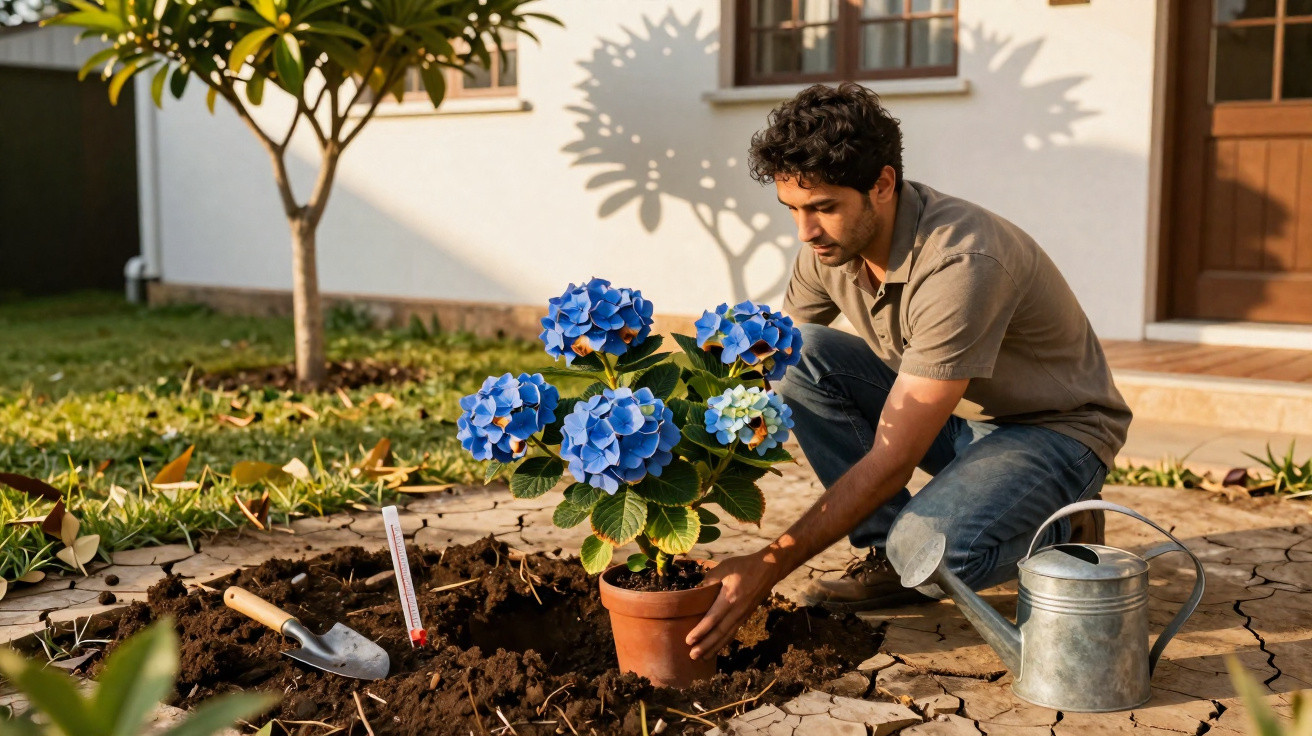
The scene on the postcard is familiar: a white house front, perfectly round hydrangea heads out front, clearly visible from the street right beside the patio. At first it looks idyllic-then, after one or two hot summers, it starts to unravel. Leaves droop, blooms turn brown, and the watering can is in constant use. The problem is hardly ever the variety; it’s almost always the location.
Why the favourite spot at the front of the house becomes a death zone
Many people plant hydrangeas in the sunniest part of the garden: in front of a south- or west-facing wall, right in the afternoon sun. That’s where the trouble begins. Render and brickwork heat up and radiate warmth back out, the soil dries out at speed, and patio slabs or gravel act like an extra radiator.
The warning signs are easy to spot:
- By lunchtime the leaves are already hanging limp, even though everything looked fine in the morning.
- Flower heads go brown and papery, and the flowering period becomes much shorter.
- Just two days after watering, the ground cracks like concrete.
- Leaf edges scorch during the first hot days in June.
It’s even more severe in a pot on a fully paved patio. Not only does the air warm up, the compost in the container does too. Water evaporates quickly and the root ball can effectively overheat. Often the pot is also close to a large tree whose roots draw up moisture before the hydrangea gets any real chance.
"The sunny forecourt by the house that we humans love is one of the worst possible locations for classic hydrangeas."
What hydrangeas really need: light yes, blazing sun no
Hydrangeas originally come from moist, lightly wooded habitats. Their ideal position isn’t deep shade-it’s a bright spot without harsh midday sun. Gardeners call this partial shade: gentle sun in the morning, then protection from direct sunlight from late morning onwards.
A good planting position is one that:
- is bright, but not in full sun from roughly 11:00 to 17:00,
- is sheltered from strong winds so the large leaves don’t dry out,
- has soil that never dries out completely, yet isn’t waterlogged.
They prefer humus-rich soil, slightly acidic, and consistently moist. In many places, the north or north-east side of the house works well: there’s enough light, while heat build-up and direct midday sun are limited. In very warm areas with temperatures above 35°C, the plant is even happier in bright, filtered light all day long-for example beneath a lightly leafed tree.
Which hydrangea varieties can cope with more sun
Not all hydrangeas react the same way. Some types handle stronger sun better than others:
| Hydrangea type | Tolerance of sun | Suitable location |
|---|---|---|
| Bigleaf hydrangea (Hydrangea macrophylla) | very sensitive | partial shade, sheltered north or north-east aspect |
| Mountain hydrangea (Hydrangea serrata) | sensitive | bright and airy, but on the shadier side |
| Panicle hydrangea (Hydrangea paniculata) | relatively robust | morning sun, afternoon protection; also suits slightly drier gardens |
| Smooth hydrangea (Hydrangea arborescens) | moderately robust | bright partial shade; tolerates more sun if moisture is sufficient |
So if your garden is particularly sunny and dry, panicle hydrangeas or smooth hydrangeas tend to perform far better than the classic bigleaf hydrangea.
The most important step: correct the wrong location
The encouraging news is that a hydrangea isn’t automatically a lost cause just because it has been planted in the wrong place. In many cases, moving it just a few metres is enough. What matters most is timing and preparation.
When moving a hydrangea is worth it
Relocating is almost always a good idea if you notice any of the following:
- The plant repeatedly wilts at midday even though you water generously.
- Blooms turn brown in high summer and look scorched.
- The soil around it dries out completely within two days.
- Upper leaves develop pale, burnt edges while lower leaves still look healthy.
If you ignore these signs and simply water more often, you only delay the issue slightly. Over time, watering alone won’t compensate when sun and heat are relentless in the wrong position.
How to transplant successfully with minimal stress
The best time to move a hydrangea is in autumn after leaf drop, or in late winter as long as there’s no frost. At that stage the plant is more focused on rooting than on leaves and flowers.
- Choose the new spot: bright, sheltered from wind, partial shade, with loose, humus-rich soil.
- Dig a generous planting hole-ideally about twice the width of the root ball.
- Water the plant thoroughly, then lift it with as much soil around the roots as possible.
- Set the hydrangea into its new position, backfill, and firm the soil gently.
- Water heavily again, then mulch with leaves or bark material.
"Mulch around the hydrangea works like a natural heat shield: it keeps moisture in the soil and significantly reduces how much watering is needed."
Common mistakes that ruin hydrangeas over summer
In many gardens, the same missteps crop up again and again. Once you know them, they’re straightforward to avoid.
- Right against a hot house wall: South- and west-facing walls reflect and store a lot of heat. Without shade and mulch, leaves and flowers scorch.
- A pot that’s too small and dark: Small, dark containers heat up intensely. Better options are larger, light-coloured pots with drainage and consistent watering.
- Under thirsty mature trees: Maple, birch, or oak will pull water from the soil. The hydrangea is left with what’s left over.
- Wet feet instead of evenly moist soil: Out of fear of drought, people overwater. Standing water is just as unwelcome as dust-dry ground.
Practical tips for healthy hydrangeas in a changing climate
With hotter, longer summers, traditional garden plants are under growing pressure. Hydrangeas are particularly sensitive to drought stress, but a few simple adjustments can carry them through the season.
- Check the soil regularly: Push a finger a few centimetres into the ground. If it feels dry, water. If it feels cool and moist, wait.
- Use rainwater where possible: Hydrangeas prefer slightly acidic water. Hard, chalky tap water can cause issues over time.
- Water early in the morning: Less moisture evaporates, and the plant starts the day properly supplied.
- Keep an eye on leaf growth: A moderate prune in late winter improves airflow and helps plants stay sturdier.
If you’re planting from scratch, take a moment to watch how the sun moves around your home: where does the afternoon sun beat down on the wall and soil, and where does it remain comfortable even in high summer? Half an hour of observation can save hours of watering later-and prevent disappointment when those dream flower balls suddenly slump in July.
For balcony gardeners, it’s worth using plant caddies with wheels. That way, in June you can shift a container out of full sun into a more sheltered spot without disturbing the roots. If you also shade the plant from midday sun with a light-coloured cloth or a parasol, you can noticeably extend the flowering period.
In the end, the hydrangea’s location shapes its future more than any bag of fertiliser. If it sits in a brutal hot spot, neither daily watering nor expensive specialist compost will fix things for long. Put the same plant in a cooler, bright corner, and it shows what it can really do: big, strong leaves and flower heads that last all summer-without the drama in front of the house.


Comments
No comments yet. Be the first to comment!
Leave a Comment