
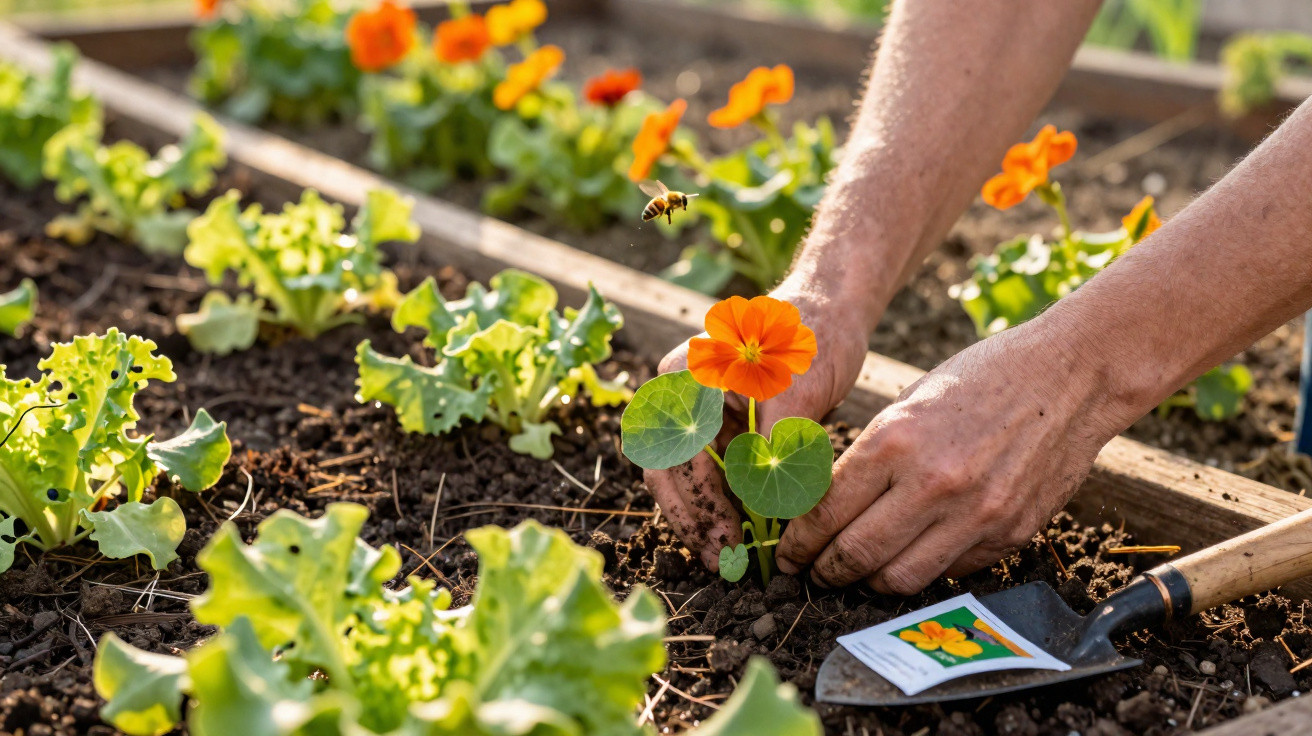
Many hobby gardeners leap straight into spring with tomatoes, courgettes and beans. Seeds go into the ground, beds are readied, and visions of brimming harvest baskets start to take shape. Yet one crucial piece is often missing: a particular flower that distracts pests, draws in beneficial insects and, as a bonus, brightens up the plot. If you sow it in good time, you set up the foundation for a resilient, chemical-free vegetable garden.
The understated heroine: why a simple flower protects your vegetables
We’re talking about nasturtiums. Many people know them only as salad garnish or as a pretty trailing plant for the balcony. In the vegetable patch, though, they play a much bigger part. They’re a classic “bed companion” that supports your crops rather than competing with them.
"Nasturtiums act like a living protective umbrella: they attract pests, shield young vegetables and at the same time feed bees and bumblebees."
If you’ve only been sowing vegetables up to now, you’ve been leaving a lot of potential unused. Among lettuces, beans, tomatoes and squash, nasturtiums help create a healthy balance – entirely without sprays.
Why getting started in March sets everything up
From March onwards, the soil begins to warm, the days lengthen, and sunny spells become more frequent. That’s exactly when it pays to reach for a packet of nasturtium seeds.
Early start, ideal timing
Sown early, nasturtiums will be in flower just as your vegetables enter their most delicate stage: soft new shoots, fresh leaves and the first buds. This is when aphids are especially quick to strike.
With an early “flower belt” of nasturtiums, you create a buffer in spring that takes the pressure off your young plants. Seeds are available in virtually every garden centre and DIY store, usually cheaply and in plenty of mixed colours.
Natural shield: how nasturtiums lure aphids away from your vegetables
The perfect distraction for hungry pests
For many aphids, nasturtiums are so tempting that they make your vegetables almost “invisible”. Black aphids in particular gather in large numbers on their leaves and shoots.
Instead of sucking on young beans, tomatoes or courgettes, the pests pile onto the tender foliage of the nasturtium. You’re deliberately using the plant as a sacrificial crop – it intercepts the attack.
Targeted control rather than the chemical sledgehammer
Because most aphids end up concentrated on just a few plants, it becomes far easier to act:
- cut off heavily infested shoots and dispose of them
- remove entire plants if the infestation is severe
- limit the problem with a jet of water or by hand
Your vegetables can then grow undisturbed, lose less energy to drained leaves, and stay noticeably more vigorous. This works just as well in a small city garden as it does in a large country plot.
"If you place nasturtiums cleverly, you turn your bed into a kind of security zone: pests stay out, vegetables stay stable within."
Magnet for bees: how this flower pushes your yields upwards
Early bloomer with a clear signal
Nasturtiums bring vivid yellows, oranges and reds into the bed – and that’s exactly what attracts helpful insects. Bees and bumblebees can access nectar here easily early in the year.
The more of these pollinators are active in your garden, the more often they’ll also visit your fruit and vegetable plants. That has a direct impact on the harvest:
- more pollinated courgette and squash flowers
- better-developed tomato fruit
- higher apple and pear yields in nearby fruit areas
Pollination as a yield booster
Every extra visit from a pollinating insect increases the chance of a fully ripened, well-shaped fruit set. Anyone who plants nasturtiums near fruit trees, berry bushes or cucurbits often sees a visible improvement in fruiting.
"A few rows of nasturtiums can turn an ‘okay’ year into a genuinely high-yield harvest year."
The right spot: between rows and along the bed edge
A flowering protective wall around the bed
One particularly effective approach is a ring of flowers around the vegetable plot. Simply sow a continuous row of nasturtiums along the bed borders.
Benefits of this strategy:
- aphids often get held up at the edge before moving into the bed
- the garden immediately looks more colourful and tidy
- the boundary between lawn and bed is clearly defined
Nasturtiums right in the middle of the vegetable bed
The method is even more effective if you bring the flower directly into the bed. Scatter small groups of seeds between vegetable types that are often troubled by aphids, such as:
| Vegetable plant | A good pairing with nasturtiums |
|---|---|
| Tomatoes | More variety in the planting pattern, less aphid pressure on the shoots |
| Beans | Protection from black aphids on young shoots |
| Courgettes / squash | More pollinators thanks to additional blooms in the area |
| Lettuce | Light shade, less soil drying out |
The large, round leaves provide a bit of shade over the soil. As a result, the ground doesn’t dry out as quickly and stays loose for longer.
How to sow nasturtiums correctly
Simple steps for a strong bed
Nasturtiums are among the easiest plants to grow. A basic bit of preparation is entirely enough:
- Loosen the soil lightly and remove larger stones and leftover roots.
- Push seeds 2–3 cm deep into the soil.
- Keep roughly 20–30 cm between plants.
- Water in and keep slightly moist for the first few days.
Germination is usually quick, often within one to two weeks depending on temperature. After that, the plant grows fast, fills gaps in the bed and soon starts to flower.
"Little effort, short waiting time, noticeable impact: nasturtiums are ideal for gardeners with limited time but high standards for their beds."
Added value that goes far beyond protection
As well as serving as a protective plant, nasturtiums offer other benefits that are often underestimated. The leaves and flowers are edible and have a gently peppery taste, similar to cress. They lift salads, herb butter or open sandwiches and add colour to the plate.
Later in the year, the lush leaf growth can be used as mulch or as a base for compost. As it breaks down, it improves soil structure, adds organic matter and supports soil life.
Knowing the risks and limits
Despite all the advantages, it’s worth keeping a few points in mind:
- With extremely heavy aphid pressure, remove affected plants in good time so the population doesn’t spread explosively.
- In very nutrient-rich soils, nasturtiums can grow vigorously and crowd out weaker plants – so cut them back regularly.
- In cool, wet locations, the plant gets going more slowly; a sheltered position or starting off in pots can help.
If you take these factors into account, you’ll end up with a robust, lively bed that remains stable under its own steam. Nasturtiums show how powerful well-chosen plant combinations can be – a simple, low-cost step with a clear impact on yield, appearance and environmental balance.
Comments
No comments yet. Be the first to comment!
Leave a Comment