
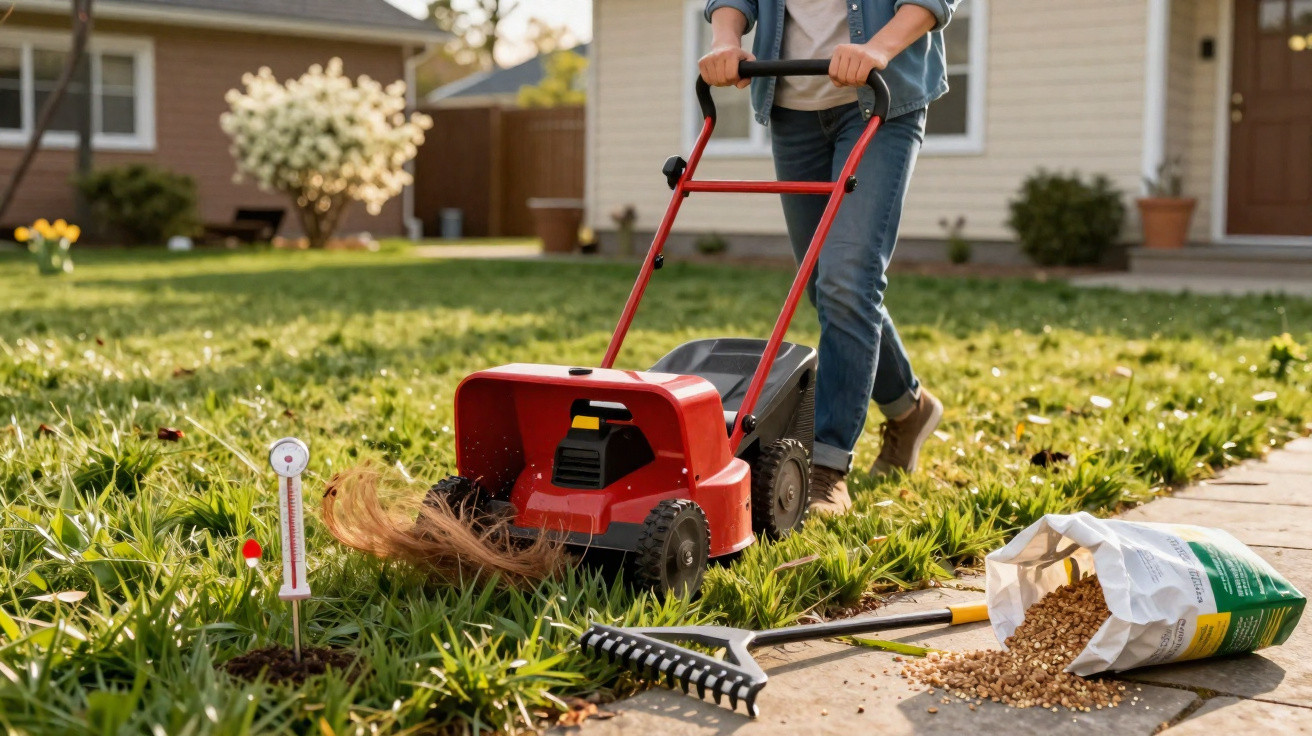
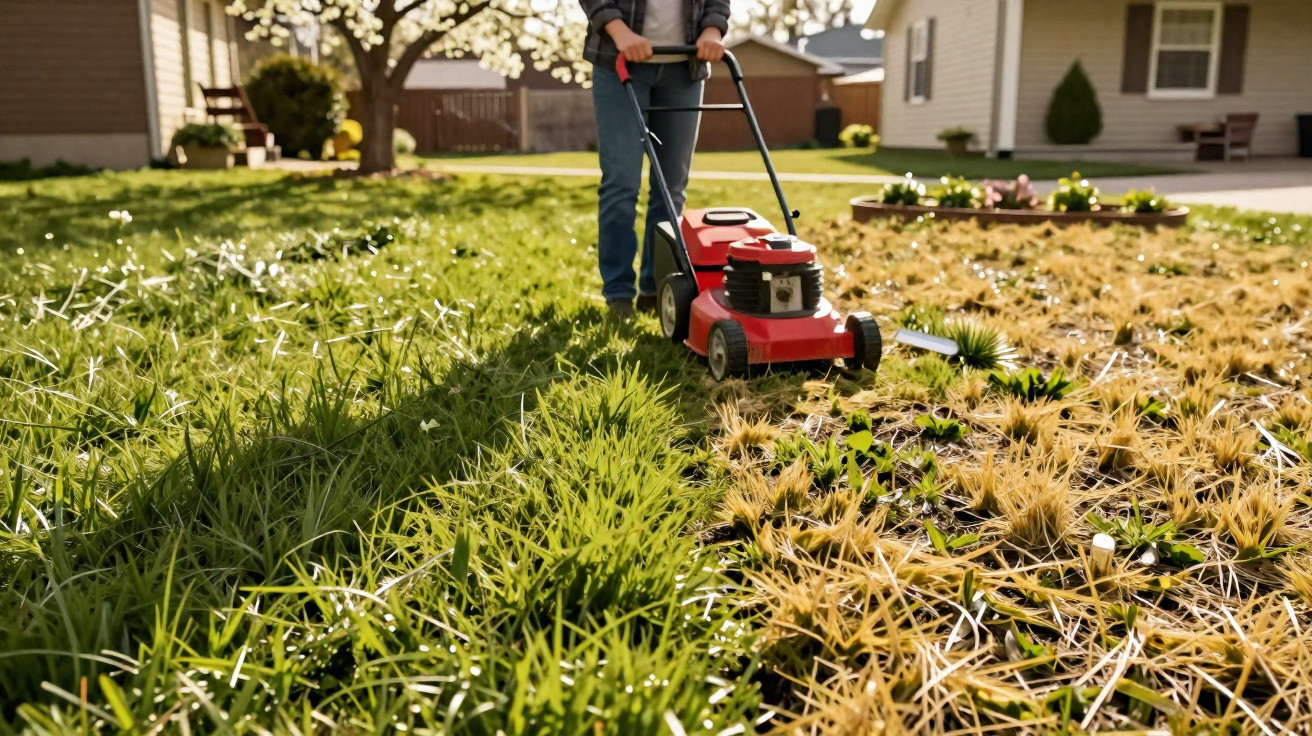
By the end of winter, a lawn often looks tired: pale, yellowed and patchy. Many people accept it and assume that warmth and rain will mean it “bounces back on its own”. That’s exactly the mistake. The point that decides whether your lawn is still lush and green in July-or turns dry and straw-like-often falls in March. If you act correctly in that window, you give your garden real protection against heat.
Why lawns scorch so quickly after winter
What sits beneath that yellowish winter grass is a problem you can hardly see: a compact layer of moss, dead roots and decaying plant material. Gardeners call it thatch-a thin, carpet-like mat over the soil.
"This layer is usually only 1 to 2 centimetres thick, but it acts like an invisible barrier to water and air."
The outcomes are predictable:
- Rainwater tends to run off or bead on the surface instead of soaking down.
- Roots stay close to the top.
- The upper soil dries out fastest.
- The first longer warm spell is often enough to turn the lawn yellow.
So the real issue is less about what you can see in the green growth and more about the boundary between grass and soil. Remove this barrier in good time and you push the lawn to develop deeper roots-and that deeper rooting is exactly what it needs for summer.
The right timing: how to read the thermometer for your lawn
The calendar is only a rough guide. What matters more is soil temperature. Once the soil reaches around 10 to 12 °C, grass starts growing actively. At that point, it can cope with intervention without lasting harm.
In many parts of the UK, this window lands in March, though in some areas it can shift into the first week of April. If you wait much longer, young roots are put under pressure sooner when the first genuinely warm days arrive in May.
"Rule of thumb: by the end of March at the latest, the lawn should have had a thorough chance to ‘breathe’."
If you’re unsure, use a simple soil thermometer-or take cues from nature. When forsythia is flowering and nights are no longer frosty, the starting signal is usually close.
Scarifying in March: how the rescue plan works
The key job is scarifying the lawn. There’s nothing mysterious about it, but doing it in the right order makes a difference.
Step 1: Mow to the correct height
Before you start, cut the lawn short to roughly 2 to 3 centimetres. This lets the scarifier’s blades bite properly and reach the thatch layer.
Step 2: Wait for the right level of moisture
The ground should be slightly damp-neither dusty-dry nor waterlogged. Typically, the sweet spot is after rain followed by a dry day. Never scarify on frozen ground.
Step 3: Set the machine and work the area
Whether you use a hand tool, an electric model or a petrol machine, the crucial point is depth. The blades should just scratch into the surface, not rip out half the lawn.
- Set the depth to around 2 to 4 millimetres
- Make the first pass lengthways
- Then work across it a second time
Afterwards, it can look alarmingly bare-and that’s normal. The turf may appear scraped and uneven. The rule here is: worse in the short term, clearly better in the long term.
Step 4: Remove debris and replenish the soil
All the pulled-out moss and thatch must be taken away completely. Use a rake, or collect it with the mower’s grass box. Then comes the second step that’s often overlooked: putting suitable material back.
"If you use the exposed soil now, you lay the foundations for a deep-rooted, resilient lawn."
Helpful actions include:
- Spread about 1 centimetre of fine compost or a specialist lawn topsoil in a thin layer
- On heavy clay soils, work in some washed sand as well
- Reseed thin areas and bare patches
Compost and lawn topsoil improve soil structure so water can penetrate more effectively. Sand loosens clay-heavy ground and helps prevent it compacting again too quickly.
How deeper roots protect against heat and prolonged rain
Once the thatch is removed, water can finally move down into the soil again. Nutrients reach the zone where roots should be developing. In response, grasses start building roots vertically downwards.
A lawn with deeper roots brings several benefits:
- It copes with longer dry spells without immediately turning pale.
- It stays green for noticeably longer in strong sunshine.
- It absorbs short, heavy showers better instead of letting water run across the surface.
The difference is especially obvious in sunny areas. A lawn treated in March can hold onto spring rainfall like a sponge. Weeks later-when you’d rather not be dragging out the hose-it can still be living off that stored reserve.
Aerate the lawn regularly: small effort, big impact
To make the improvement last beyond a single year, regular lawn aeration is worth doing. It often sounds more involved than it really is.
From spring to autumn, it’s usually enough to “punch holes” into the soil every four to six weeks. You can do this with a simple garden fork, spiked sandals, a hand roller aerator, or a machine you hire.
"Every opening in the soil acts like a tiny channel for air, water and nutrients-and takes pressure off the roots."
If you also raise the mowing height gradually in summer, you add another layer of protection. Longer grass blades shade the ground, reduce evaporation, and make scorching less likely.
What if you’ve already missed the end-of-March window?
If you only realise in April that nothing has been done yet, you don’t have to give up. As long as soil temperature is still around 10 to 12 °C and no early heat spell is forecast, you can still intervene.
In that situation, the approach should be gentler:
- Set the machine shallower than you would in March
- Avoid repeated passes over the same spot
- Reseed bare areas straight away and keep them lightly moist
However, working right before a prolonged dry period is risky. Stressed grasses recover poorly then. Newly laid lawns are particularly sensitive; in the first year, a careful tidy with a rake and light aeration is usually sufficient.
Problem areas: shaded lawns and damp gardens
In heavily shaded or persistently damp spots, moss spreads far more aggressively. The cause is often a combination of low light, compacted soil and a pH that’s too low.
Useful steps in these locations:
- Scarify lightly and at a shallow setting, so the turf isn’t over-stressed
- Aerate regularly so excess water can drain away faster
- Prune shrubs and branches to let more light reach the grass
- Overseed with specialist lawn seed mixes for shade
A soil test is worthwhile in such areas. If the pH is well below 6, moss tends to thrive. Applying lime in a targeted way-based on professional guidance-can help shift the balance back towards grass.
Practical examples and common spring-start mistakes
In day-to-day gardening, the same missteps come back year after year. Avoid them and you’re already well ahead:
- Working in frost or straight after heavy rain-soil smears, and roots suffer.
- Setting the machine too deep-the lawn looks “ploughed” and takes much longer to recover.
- Leaving the debris behind-it forms new thatch layers and encourages fungal problems.
- Skipping reseeding-gaps remain open, and weeds take advantage.
Worth remembering: the lawn does not need to look perfect immediately after the work. The most important changes are happening below the surface. Give the grass two to three weeks and, in dry weather, use a watering can now and again-you’ll see thicker, fresher green growth.
This approach is particularly helpful for busy hobby gardeners. One focused session in spring-scarifying, clearing up and improving the soil-cuts summer work significantly. Less watering, fewer rescue attempts, and far less frustration with brown patches.
If you start marking March as “lawn month” in your diary, you’ll be working with the grasses’ natural growth rhythm. The soil supports you in the background-and the lawn will handle heatwaves far more calmly than you might expect at first glance.




Comments
No comments yet. Be the first to comment!
Leave a Comment