
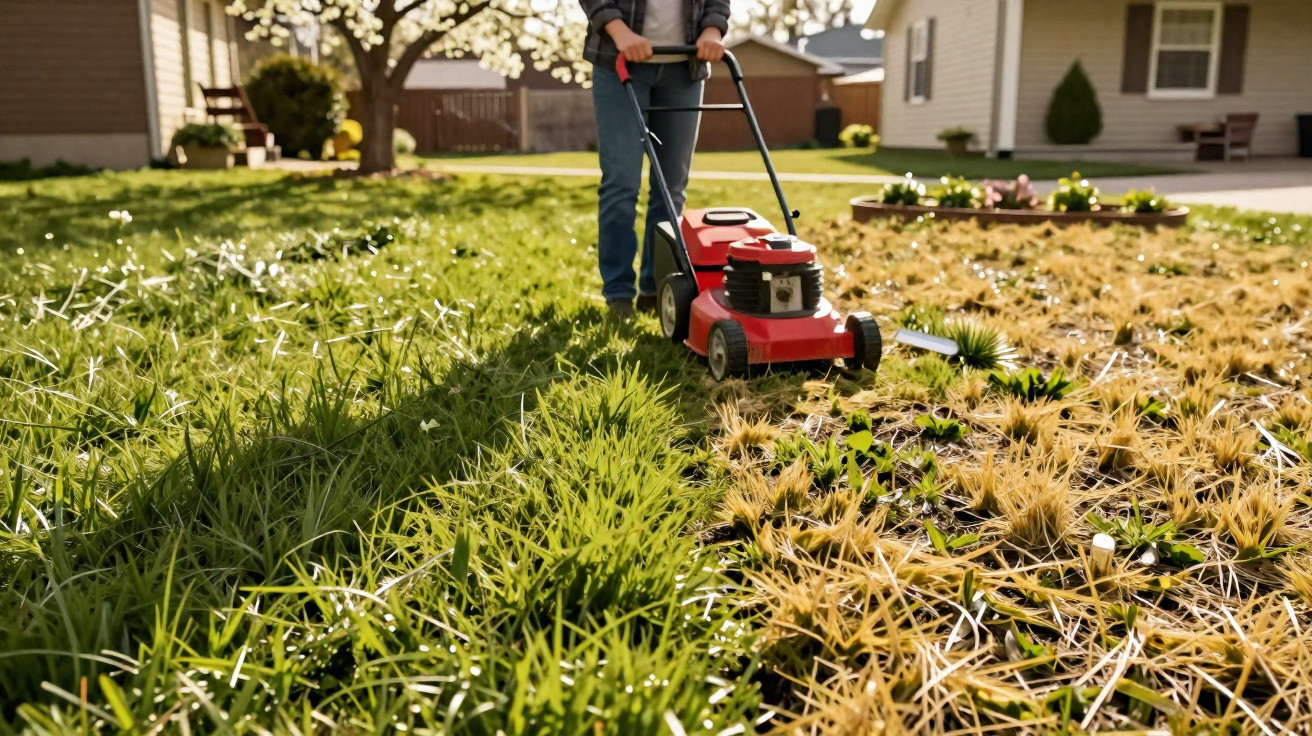
Winter has finally eased, the sun is showing itself more often, and a glance out of the window lands on a slightly shaggy, pale-green lawn. That is exactly when many gardens spring into action and the mower comes out. But a well‑meant start can do lasting harm: if you mow too early and cut it too short, you strip the grass of the strength it needs to form a dense, rich green carpet.
Why the first lawn cut in spring is so important
Over winter, a lawn behaves as though it is in hibernation. Grass growth almost stops entirely. The leaves act as an energy store, helping the roots cope with frost and persistent damp. When spring arrives, the lawn needs those reserves urgently to get going again.
As temperatures slowly rise, the grass pushes new shoots, builds root mass and thickens up. That only works reliably if enough leaf remains standing. If you “shave” almost everything off at this stage, you remove the lawn’s solar panels-the leaf area it uses to produce energy.
“The first mow in spring often decides whether the lawn becomes dense and strong – or ends up patchy, vulnerable and full of moss.”
There is another key factor: how active the roots are depends on soil temperature. Proper growth only really begins once the soil is around 6 to 7 °C and daytime temperatures are roughly 10 °C. Before that, the lawn is still living off its reserves. A severe cut before this point hits it like a punch.
The most common mistake: mowing too early and far too short
The same pattern plays out in many gardens year after year: as soon as the lawn looks a little taller, it is treated as if it is midsummer. The mower is set low, the ground is still wet or clammy-and the damage begins.
Problem 1: The ground is still too cold or too wet
If the surface is still frozen, muddy or spongy, the weight of the mower compresses the soil. The turf suffers, the ground becomes compacted, and air and water struggle to reach the roots.
Typical consequences include:
- yellowish, crushed blades
- bare patches where moss takes hold
- pressed-in wheel tracks from the mower
- waterlogging and poorer soil aeration
These issues can look minor at first, but they tend to cause trouble throughout the season. Compacted soil dries out faster in summer and forms thatch more easily.
Problem 2: The cut is too aggressive
The second major error is trimming the lawn down to “carpet” height. Many people set the mower the way they would in high summer-short, as neat as possible.
Professionals instead recommend the one‑third rule: remove no more than a third of the current height each time you mow. If the grass measures about 9 centimetres, it should still be around 6 centimetres after mowing-not 3.
“A healthy spring lawn stays at least 5 to 7 centimetres high. Any shorter does more harm than good.”
Cutting too low leads to:
- stressed grass with fewer energy reserves
- shallower roots that suffer more quickly in dry weather
- stronger warming and drying of the soil surface
- more opportunity for weeds because the ground is not shaded densely
The right preparation: when the lawn is truly ready for the first cut
Rather than following a calendar date, it is better to rely on clear signs. Only when several factors line up is it worth reaching for the mower.
The key signals to start the first lawn cut
| Criterion | Guideline |
|---|---|
| Daytime temperature | several days in a row above 10 °C |
| Soil condition | not frozen, not muddy, firm underfoot |
| Weather forecast | no night frost expected in the next few days |
| Lawn colour | noticeably greener, hardly any grey or brown blades |
| Growth height | around 8 to 10 centimetres |
Checking these points helps avoid impatient mistakes. In cooler areas it often pays to wait until late March or even April, while milder spots may allow an earlier first mow.
How to set up your lawnmower for the first spring mow
Even perfect timing will not help much if the mower is set up badly. Many mowers run for years with blunt blades and an overly low cutting height. The result is frayed grass tips and a lawn dotted with brown patches.
Height, sharpness, pace – the three settings that matter
- Cutting height: For the first cut, set the mower to a high position. Aim to leave at least 5 to 7 centimetres.
- Sharpen the blade: Blunt blades tear the grass rather than cutting cleanly. The tips then turn brown and become more prone to disease.
- Mowing speed: Walk more slowly and do not rush. A steady pace produces a more even cut, especially if the ground is slightly damp.
“A clean cut with sharp blades makes the lawn look noticeably healthier and more lush – even after the first mow.”
If you are unsure, check the result after the first few metres: are the blade tips smooth or ragged? Does the surface look even, or does it seem torn in places? If in doubt, stop, raise the cutting height and try again.
Typical spring routine: what to do before the first mow
Before the mower goes to work, a quick inspection of the lawn is worthwhile. A few small steps beforehand noticeably improve the outcome.
These steps help the lawn get going
- Remove leaves and branches: Use a rake to pull off loose leaves, twigs and dead plant material so the grass gets air and light.
- Mark mossy areas: Note dense moss patches so you can scarify or top-dress with sand later, more precisely.
- Fill holes and dips: Level uneven areas with a little soil so the mower does not scalp the surface and injure the turf.
- Plan a starter feed: Depending on your soil, a first modest fertiliser application after the first or second cut can be useful.
Doing this prep work gives the lawn a head start. Growth becomes more even, and the risk of yellow patches drops.
How a well-managed spring lawn pays off in summer
A gentle first cut, enough height, and soil that is not compacted work like an investment for summer. The lawn develops deeper roots, draws water from lower layers and copes better with dry spells.
A thick, healthy lawn brings another benefit too: weeds and moss get less light and less space. If you are patient in spring, you often save yourself hours later with the scarifier, overseeding and watering can.
For many hobby gardeners, it feels odd to leave the lawn a little longer on purpose. Those who stick with it usually notice the difference within a few weeks: the area looks fuller, stands up better to foot traffic and stays green for longer in summer-even during heatwaves.
One more thing people often underestimate: different lawn types react very differently. Ornamental lawns with fine blades tolerate drastic cuts even less than a tougher family or play lawn. So if you keep a particularly neat green in front of the house, take extra care with the first cut and, if in doubt, mow a second time a bit later rather than going “short and sharp” straight away.
If your lawn doubles as a play area for children and pets, a gentle start helps here as well: strong, well‑rooted grass handles footsteps, rough-and-tumble and garden furniture far better than a spring‑stressed, closely shorn surface. That way, the gardening season starts on a solid foundation-and the view from the window stays satisfying all summer long.



Comments
No comments yet. Be the first to comment!
Leave a Comment