
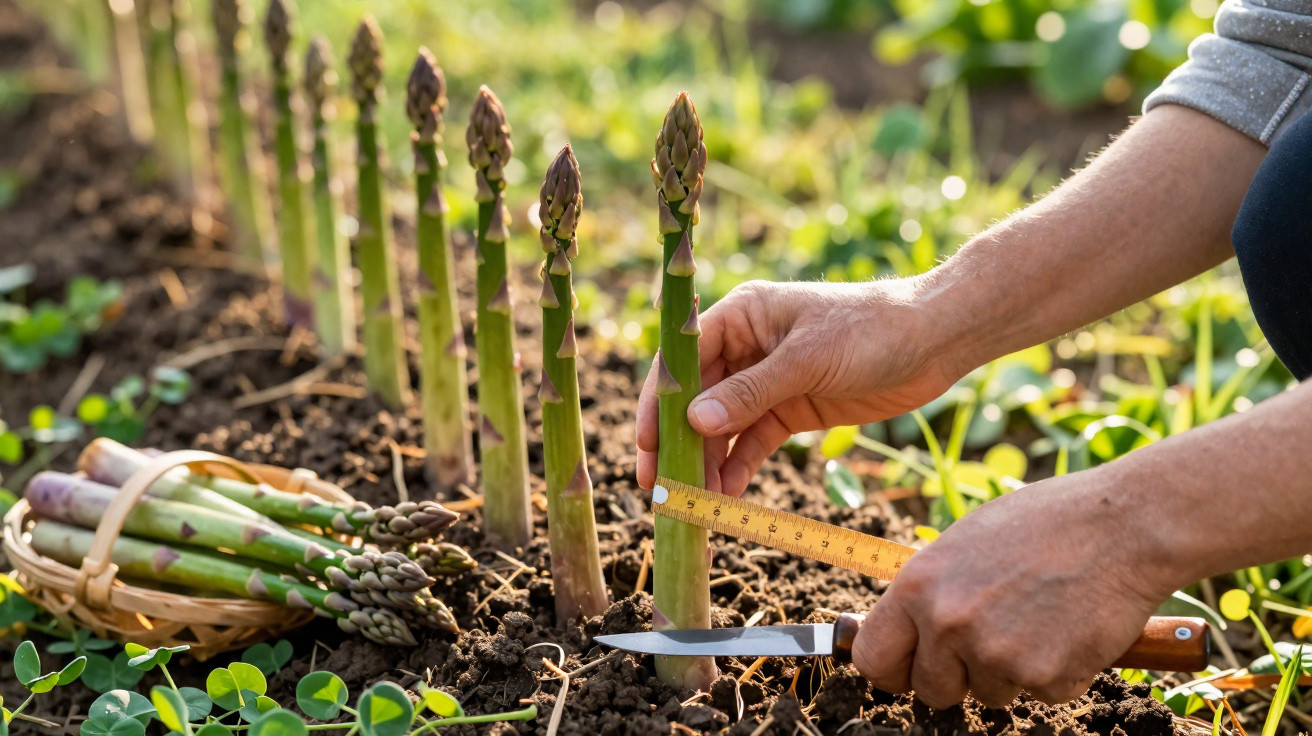
Growing asparagus in your own garden is a special kind of anticipation: those tender shoots push up a little more each day, and it’s tempting to think, “Leave it one more day and it’ll look even more impressive.” It sounds sensible-yet that is exactly when many people end up spoiling their asparagus season. A short delay can change the plant’s character entirely.
Why waiting to harvest asparagus becomes a flavour trap
The seductive idea of “more yield”
Asparagus can feel like a small miracle in the veg patch. On warm spring days, the spears seem to lengthen almost before your eyes. That speed often feeds a bit of greed: a few extra hours of sun, an extra day of growth, and you start picturing baskets filled with huge spears.
In reality, this mindset quickly leads to disappointment. The plant cannot keep pouring energy into tender, juicy flesh indefinitely. After a certain point, the balance shifts: asparagus starts prioritising strength and support rather than delicacy.
“Anyone who harvests asparagus by length alone is only punishing themselves: the spears look impressive, but they taste tough and bitter.”
What actually happens inside the spear
Every additional centimetre increases the strain on the plant. To avoid toppling in the wind, asparagus begins to become woody. It does this by producing more lignin-a substance that gives plants stability, but turns a tender vegetable into something fibrous.
Many people recognise the day-to-day effects without knowing the cause:
- tough fibres in the mouth
- thick, woody ends that need cutting back generously
- long cooking times without the spear ever properly softening
What could have been a refined delicacy becomes a frustrating vegetable that often ends up half discarded into the food waste bin.
The few centimetres that decide everything
The magic mark of around 20 cm
Seasoned gardeners stick to a simple rule: harvest asparagus at roughly 20 cm in length. Not by guesswork and not by appearance, but quite precisely by measurement. If you want to, use a ruler or a tape measure-there’s nothing silly about it; it’s simply thorough.
“At around 20 centimetres is where flavour, tenderness and yield meet in the best proportion.”
At this point the spear is still plump, the cell walls are thin, and the water content is high. The plant has not yet started to become noticeably woody. In warm weather, waiting just one more day can add several centimetres-while the quality inside may already be dropping sharply.
The tip tells you when it’s too late
Alongside length, there is a second dependable sign: the asparagus tip. It should be:
- tightly closed
- compact and firm
- showing no opened scales or protruding “little flaps”
As soon as the tip begins to loosen or individual scales start to lift, asparagus switches into “flowering mode”. The plant is preparing to shoot up and form foliage and flowers. For the gardener, that means the tender edible spear is steadily turning into a rigid framework-and, in culinary terms, a problem.
When asparagus loses its flavour
How spring aroma turns into bitterness
Young asparagus has its characteristic delicate flavour: slightly buttery, with a hint of nuttiness, sometimes almost like damp woodland soil. Those nuances are fragile. If the plant is left growing for too long, the very flavours you want begin to fade.
The reason is straightforward: the plant burns through its own sugar reserves to fund rapid growth. What remains in the bed is a watery structure with more bitter compounds. On the plate, that tends to taste:
- noticeably more bitter
- watery rather than aromatic
- flat, with little depth or sweetness
Even rich sauces can only disguise this to a point. Anyone who has eaten perfectly harvested young asparagus will notice the difference immediately.
The right harvesting technique – gentle down to the root
Why the “how” matters just as much as the “when”
Perfect timing helps little if the harvest damages the plant. Asparagus grows from so-called crowns-thickened rootstocks meant to produce for many years. If you yank or twist roughly, you can ruin future harvests.
A dedicated asparagus knife or a narrow gouge is ideal. Method:
- Carefully move the soil away from the spear.
- Slide the blade into the ground close to the spear.
- Cut cleanly at the base, without levering against the crown.
- Gently firm the soil back down so the bed doesn’t dry out.
“A sudden twist or pulling the spear out can damage the crown-and cost you years of yield.”
Keeping spears in top condition after cutting
Harvesting isn’t the end of the job. Asparagus reacts immediately to air, warmth and sunlight. The cell structure begins to age, moisture is lost, and the stalk tissue becomes limp.
The most important immediate steps:
- wrap asparagus straight away in a damp cloth
- place it somewhere cool and shaded
- don’t leave it in the sun, not even briefly during harvesting
- cook it the same day if possible
If you need to keep it longer, stand it upright in the fridge and wrap it in a damp cloth. Even then, after two or three days the peak of flavour has passed.
Discipline instead of size obsession in the vegetable garden
Why holding back leads to better harvests
Gardening often means knowing when to say “no”. The urge to show off especially long asparagus spears is understandable-particularly when you’re proud of your own patch. In the kitchen, though, that display doesn’t pay off.
If you consistently harvest at around 20 cm, you gain several advantages at once:
- even cooking times
- tender texture from tip to end
- less waste when peeling
- reliably good flavour throughout the season
Seemingly smaller spears usually deliver more usable quality overall than impressive but half-inedible “clubs”.
When timing makes the difference on the plate
Once you get it right, the improvement is immediate: asparagus harvested at the right moment doesn’t need much dressing up. Briefly cooked in salted water or steamed, with a little butter or a thin drizzle of olive oil, perhaps a light hollandaise-nothing more is required.
That tender texture, the fine aroma, the gentle bite: it all comes down to a few hours’ difference in the bed. Many people only realise after an experience like this how much quality they’d been denying themselves for years, simply because they wanted to wait “just a little longer”.
Practical guidance for day-to-day checks in the bed
Quick checklist for your next asparagus round
If you walk through the garden daily in spring, a simple checklist helps:
| Criterion | Optimal | Warning sign |
|---|---|---|
| Length | approx. 20 cm | clearly longer, especially after warm days |
| Tip | closed, compact | tip opening, scales spreading |
| Stem | smooth, slightly glossy | cracked, dull, noticeably thickened |
| Bite test | cuts cleanly, barely any fibres | ragged cut, clearly fibrous |
| Taste | mild, lightly sweet | bitter, watery, flat |
If you stick to these points, you no longer need to agonise over whether “one more day” makes sense. The answer is almost always: no-today is the better moment.
More enjoyment of asparagus with a bit of background knowledge
Many asparagus problems seem mysterious, but they make immediate sense once you see the plant as a perennial endurance athlete. Each season is hard labour for the crown. Letting spears grow too long weakens it, because huge amounts of energy go into height and woody structure. Frequent, timely harvesting can even ease the burden-because the plant doesn’t have to run the full flowering programme.
So, on your next walk around the garden, if you catch yourself wondering whether you should “wait a bit”, ask a different question instead: do you want impressive photos, or perfect vegetables on the plate? If it’s the latter, cut earlier, protect the crown, and bring real spring quality straight into the kitchen.
Comments
No comments yet. Be the first to comment!
Leave a Comment