
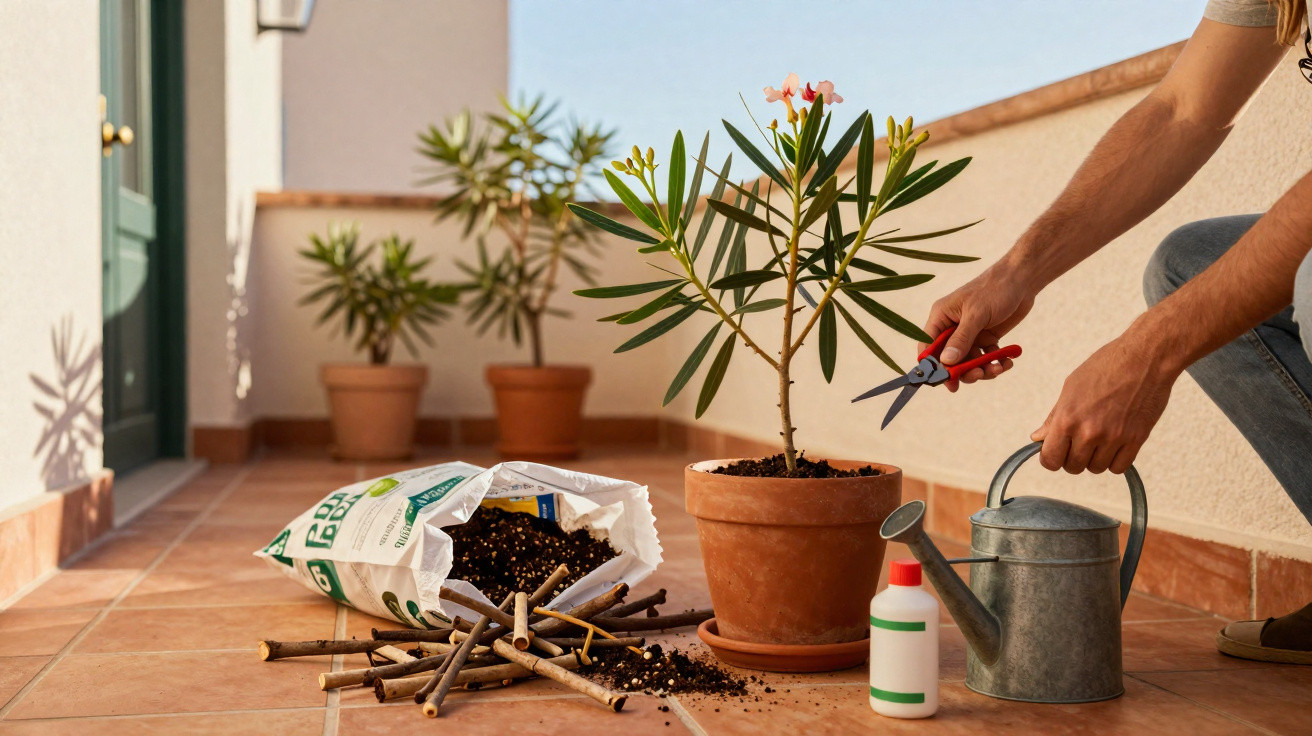
Many amateur gardeners know that sinking springtime moment: the oleander sits forlorn in its pot or border, leaves scorched, shoots browned, almost bare. This is the plant people associate with holidays, sunshine and weeks of flowers. The encouraging news is that, in most cases, there is still enough life in the shrub to get it back into shape within a few weeks for a generous summer display.
First check whether the oleander is actually still alive
Before you reach for secateurs, fertiliser and watering can, take a clear-eyed look at what you are working with. Plenty of plants appear dead when they are not.
The key test is simple: lightly score the bark. If a greenish, moist layer shows underneath, that shoot is alive. If it stays brown and dry, that section has died back. Work from the tips down towards the main stems.
Pay particularly close attention to the base of the shrub, as this is the most sheltered part. Small swollen buds or a hint of fresh green are signs the plant is preparing to reshoot.
"Living shoots with green beneath the bark and small buds at the base are the best sign: the oleander still has plenty of reserve strength."
The right time to restart
Oleander comes from warmer climates and is sensitive to late frosts. Moving it outdoors too early can cause further damage.
- In a pot: wait until there is no longer any risk of ночт frosts and nights are consistently above about 10 °C.
- In the ground: remove protection gradually and keep an eye on the forecast.
- In colder regions: aim closer to mid-April; in very mild areas, sometimes as early as late March.
For container plants, a short acclimatisation period pays off: start with a few hours per day in partial shade, then move it step by step into full sun. This reduces the risk of sun scorch on already weakened foliage.
Encourage new growth with the secateurs
Once the danger of frost has passed, a confident prune helps the shrub regain momentum. The aim is to stimulate strong, fresh wood-because flowers form on young shoots.
Typical pruning steps include:
- Cut all completely blackened or dried shoots back to healthy, green wood.
- Remove stems that cross or grow inwards, so more light reaches the centre.
- Shorten very long, weak branches by around one third to two thirds.
If the shrub has been badly damaged, the only option can be a drastic cut back to roughly 40 centimetres. It looks severe, but often prompts vigorous regrowth from the base-although flowering may be weaker this year.
Clean tools, clean cuts
Sharp, clean secateurs prevent crushing and reduce the risk of disease. Cut surfaces should be smooth rather than ragged. For very thick branches, you may need a pruning saw.
Fresh pot, open compost: how a root refresh helps
Oleanders in containers, in particular, often suffer over time from lack of space. A root ball that has filled the pot takes up water and nutrients poorly. Spring is a good time to put that right.
Signs a pot is overcrowded:
- Roots are growing out of the drainage holes.
- Water runs straight down the sides and barely soaks in.
- The root ball feels hard and dense, almost like concrete.
In that case, move the plant into a new container that is only slightly larger. Use a free-draining, relatively coarse growing medium, for example:
- a high-quality compost for flowering plants,
- mixed with coarse sand or expanded clay,
- plus a little well-rotted compost.
If the existing container is already large and heavy, a partial refresh is often enough: remove about 5 centimetres of old compost from the top, replace it with fresh, nutrient-rich mix, then fertilise in a targeted way.
Feeding: without potassium, no cloud of flowers
Oleander is a hungry feeder. After a winter with little light and usually limited nutrients, the shrub needs a fresh “refuel”.
"From March to September, a regular, potassium-rich feed supports sturdy growth and abundant flower formation."
A practical routine for potted plants:
- add liquid fertiliser to the watering can every one to two weeks,
- or use a slow-release fertiliser stick at the start of the season and top up later if needed.
Important: never feed into bone-dry compost. Strong fertiliser on dry substrate can scorch the roots. Water lightly first, then fertilise.
Watering properly: between waterlogging and drought
A weakened oleander needs moisture-but in the right amount. Both excess and shortage can stress the plant.
Watering rules for pots
- Let the top layer of compost dry slightly between waterings.
- Water slowly and directly at the root area, keeping the leaves as dry as possible.
- Empty the saucer after a few minutes so water is not left standing.
In the ground, adjust to the weather. In hot summer weeks, two deep soakings per week are often sensible. Loose, well-drained soil helps prevent roots sitting wet for long periods. A thin mulch layer can help retain moisture and buffer temperature swings.
Light and position decide the summer show
For genuinely impressive flowering, oleander needs plenty of light. Partial shade almost always means disappointing numbers of blooms.
An ideal spot is:
- several hours of direct sun each day,
- ideally in front of a warm wall facing south or south-west,
- sheltered from cold winds.
Especially after wintering indoors, the move from a dim garage to harsh midday sun should not be sudden. Otherwise the already stressed leaves can burn. Gradual adjustment over a few days works like gentle training for the plant.
Common mistakes that stop flowering altogether
Many oleander problems are caused by our own care. Avoid these pitfalls and your chances of months of flowers rise sharply.
- Moving it outside too early and suffering late frost damage.
- A sudden jump from a sheltered veranda straight into blazing sun with no transition.
- Keeping the compost constantly wet out of fear it will dry out.
- Applying high doses of fertiliser to a dried-out root ball.
- Leaving the saucer permanently full of standing water.
"If you manage light, water and nutrients properly and avoid major care mistakes, you can turn even a badly battered oleander back into a dense ball of blooms."
A toxic plant with holiday vibes: what many people don’t realise
However much you enjoy the flowers, one point should never be overlooked: oleander is highly poisonous. All parts of the plant contain substances that can be harmful to health even in small amounts.
Practical everyday tips:
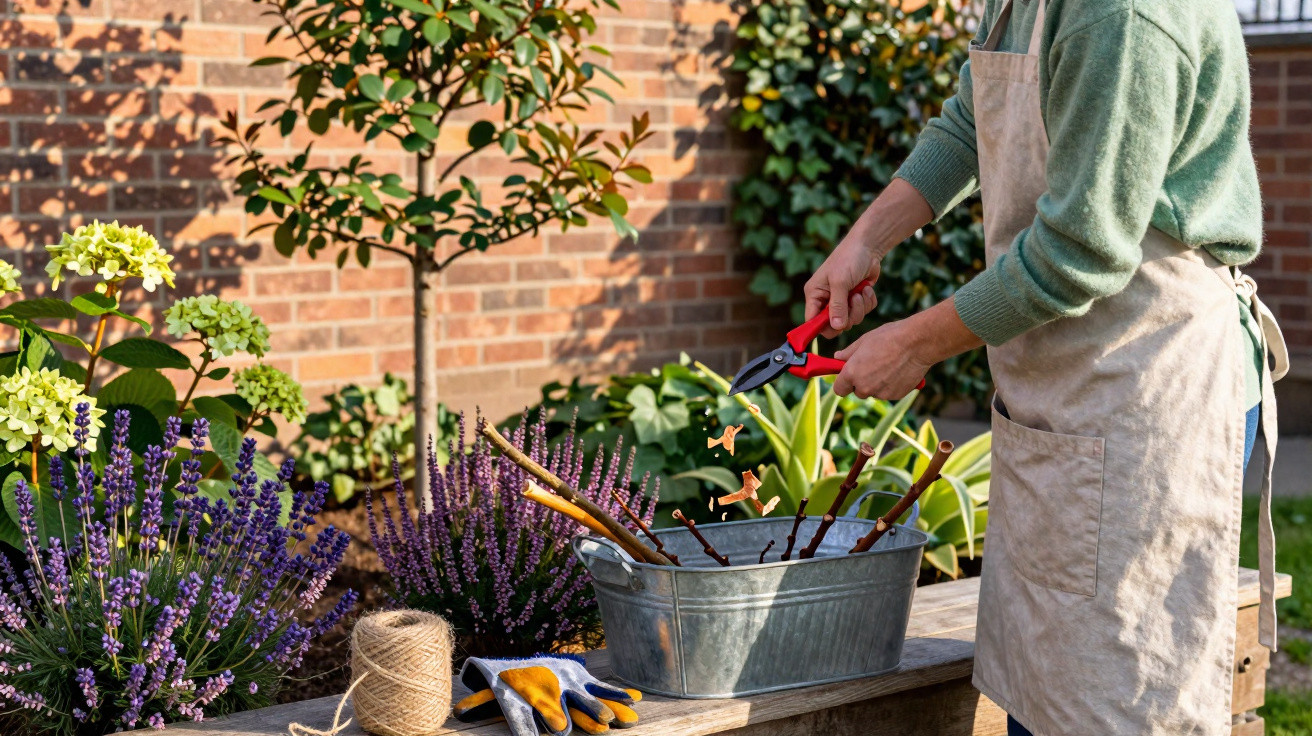
- Wear gloves when pruning and wash your hands thoroughly afterwards.
- Do not put prunings on the compost heap; dispose of them separately in your household waste.
- Do not allow children or pets to chew leaves or twigs.
Despite these risks, it remains one of the most rewarding flowering shrubs for balconies and patios: with warmth, light, regular pruning and a considered care routine, it delivers masses of blooms for years-even when, after a harsh winter, it initially looks beyond saving.

Comments
No comments yet. Be the first to comment!
Leave a Comment