
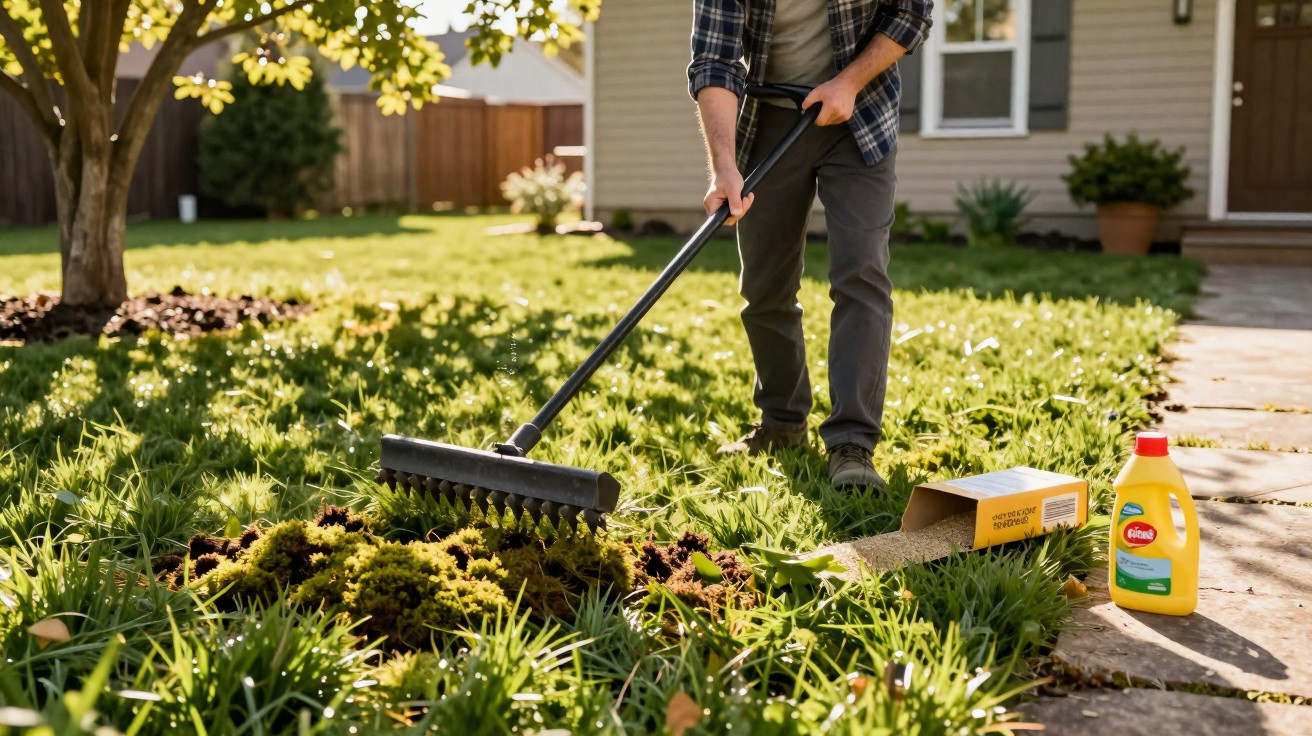
After the first mild days of the year, the lawn quickly becomes centre stage again. And just when you are hoping for a rich green surface, you may instead find a patchy, dark-green carpet of moss. Online, a simple household “trick” does the rounds, claiming to fix it straight away. Professionals warn that this knee-jerk response often makes the situation worse, not better.
Why moss appears all over the lawn after winter
In reality, the same pattern tends to repeat itself each year. Winter is wet and gloomy, and the soil stays heavy. During that period the grass barely grows, becomes stressed, and thins out. At the same time, other plants enjoy ideal conditions - especially moss.
Certain classic trouble spots in the garden are hit particularly hard:
- under trees with a dense canopy
- alongside hedges and walls
- in dips where water collects
- on heavily walked areas where the ground has become compacted
Soil and turf-care specialists point out that moss is not proof of a “neglected” garden - it is a symptom. It indicates that conditions are poor for grass, while being perfect for moss. Compacted, poorly aerated soils, a lack of nutrients and limited light hold grass back, whereas moss copes extremely well.
“Moss isn’t the real enemy. It shows that the lawn is weakened - and that’s exactly where you need to start.”
This becomes especially obvious in spring if the area received little attention in autumn: if you rarely scarify, or never loosen the soil, moss will simply move into the gaps the grass has left behind.
The popular washing-up liquid idea - and why it harms the lawn
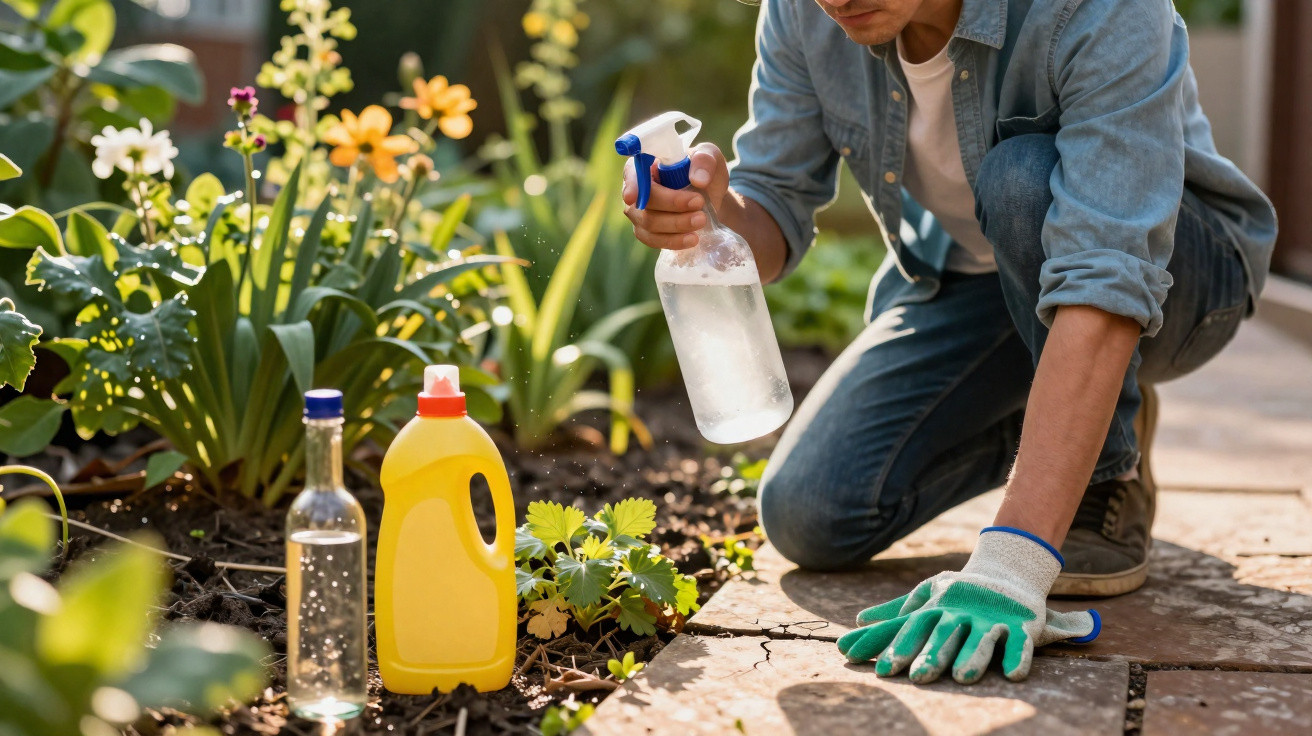
As frustration builds, so does the temptation to try “secret tips” from the internet. Near the top of the list: mix washing-up liquid with water, pour it over the affected patches, and wait for the moss to die. It sounds cheap, easy and quick - and it is precisely the wrong approach.
The problem is straightforward: washing-up liquid is designed to break down grease and grime on pans, plates and glasses. Those surfactants do not belong in soil or around plant roots. They can irritate or damage the grass’s fine root hairs and may also disrupt soil structure.
Repeatedly experimenting with these kinds of household remedies can trigger several knock-on effects:
- grass roots are weakened or harmed
- vital soil organisms die off or retreat
- the soil’s crumb structure deteriorates, leaving the ground even more compacted
- residues can leach into deeper layers and potentially into groundwater
Landscape gardeners and environmental authorities repeatedly caution against using “everyday chemicals in the garden”. You may see a short-term cosmetic change, but you undermine the very stability a healthy lawn needs.
“If you use washing-up liquid against moss, you’re not tackling the cause - you’re gradually ruining your soil.”
The likely outcome is a thinner sward, poorer soil, and moss returning even faster. What feels like a clever money-saving fix turns into an ongoing problem.
The simple professional method: mow, rake, scarify, overseed
The good news is that building a hard-wearing, low-moss lawn does not require magic or aggressive products. Gardeners and greenkeepers tend to follow a straightforward routine - the key is doing it properly and consistently.
Step 1: Mow the lawn short
At the start of spring, give the lawn one relatively short cut. This lets air reach the base of the plants and exposes the moss pads. Depending on the type of turf, a cutting height of around 3 to 4 centimetres is typical.
Step 2: Rake vigorously
Next, reach for a rake. With a sturdy leaf rake or lawn rake, you can comb out surprising amounts of moss and dead plant material. This first “clean-out” removes the dense thatch, creating space for young grasses.
Step 3: Scarify if the infestation is heavier
Where a real blanket of moss has formed, raking alone will not be enough. That is when a scarifier (verticutter) is needed - a hand tool for small areas, or a powered machine for larger gardens.
Its blades or tines lightly score the surface by a few millimetres, pulling out moss, thatch and old grass while loosening the top layer at the same time. Immediately after scarifying, the lawn can look dreadful: brown areas, bare patches, and heaps of moss and thatch.
“Many gardeners are shocked after scarifying - but that ‘shock moment’ is the starting point for a much denser lawn.”
In the weeks that follow, grass typically responds to the improved aeration with stronger growth, while water and nutrients can reach the roots more effectively.
Step 4: Overseed to rebuild a dense sward
Wherever holes have opened up, fresh seed should go in. An overseeding or renovation mix is well suited to hard-used areas. Scatter the seed thinly, lightly rake it in, and - crucially - keep it evenly moist throughout the first weeks.
Only once the sward closes again does moss have fewer long-term opportunities to return.
If moss is already dominant: what still helps
In some gardens, moss has had free rein for years. The surface feels sponge-like, and grass is only visible here and there. In that situation, scarifying alone is sometimes not enough.
A traditional option is iron(II) sulphate (often sold as a moss killer). It causes moss to darken and die within a few days. Afterwards, you can usually remove it fairly easily with a rake.
Even so, experts advise using these products sparingly. Excessive doses can alter the soil in a one-sided way and shift pH values. And the same rule applies here: without soil preparation and overseeding, the result is largely cosmetic and short-lived.
You will also come across “more natural” suggestions such as wood ash or bicarbonate of soda. In certain cases they can work, but results depend heavily on the existing soil: what helps in one garden can make conditions worse in another.
How to prevent new moss growth effectively
Over the long term, a healthy, dense lawn is the best defence against moss returning. If you adjust a few habits, you will have to deal with the problem far less often.
Loosen the soil and avoid waterlogging
Heavy, clay-rich or badly compacted soils are magnets for moss. Helpful measures include:
- regular aeration (punching holes, for example with spiked shoes or hollow tines)
- working in sand to improve permeability
- improving drainage and levelling low spots
- creating paths or laying stepping stones to take pressure off heavily used areas
Feed correctly and mow properly
Grass needs nutrients to form a closed, resilient cover. If you never fertilise, you are effectively depleting the soil rather than building it up. A spring fertiliser with nitrogen provides a boost, while a later application with potassium helps strengthen the plants ahead of winter.
When mowing, the principle is: frequent and moderate beats occasional and drastic. Keeping a lawn extremely short all the time weakens the grasses and opens new gaps for moss.
Rethink permanently shady areas
Some corners will never become a picture-perfect show lawn. Under very dense trees or deep hedges, simply too little light reaches the ground. In those areas, a Plan B can be more sensible:
- sow a specialist grass seed mix for shade
- use ground-cover plants such as ivy, sweet woodruff or barrenwort
- use bark mulch and design the area as a path or a quiet sitting zone
Accepting that not every spot can become an “English lawn” can save a lot of frustration - and a lot of chemicals.
What many people do not realise: moss is not only the enemy
As irritating as it looks in a lawn, moss itself is not a poison. It retains moisture, provides habitat for tiny organisms, and can even prevent erosion in awkward places. In paving joints, on old walls or in a wildlife-friendly garden, it can be left alone where it is not in the way.
It mainly becomes a problem where you want a firm, hard-wearing surface for play and foot traffic. In that context, every square centimetre of healthy grass matters. Families with children or dog owners in particular benefit from a stable lawn that withstands running and rough play without immediately turning into bare patches.
If you avoid harsh household remedies and instead aerate, mow and feed regularly - and scarify with intent in spring - you build that buffer step by step. The work is spread across the year, and in return the lawn stays robust not only in March, but throughout the whole season.
A practical tip to finish: keep a simple garden diary. Note when you scarified, fertilised and overseeded, what the weather was like, and how severe the moss looked. After two or three years, you will be able to see clearly which measures genuinely help your soil - and the myth of the washing-up liquid trick will disappear from your toolkit for good.




Comments
No comments yet. Be the first to comment!
Leave a Comment