
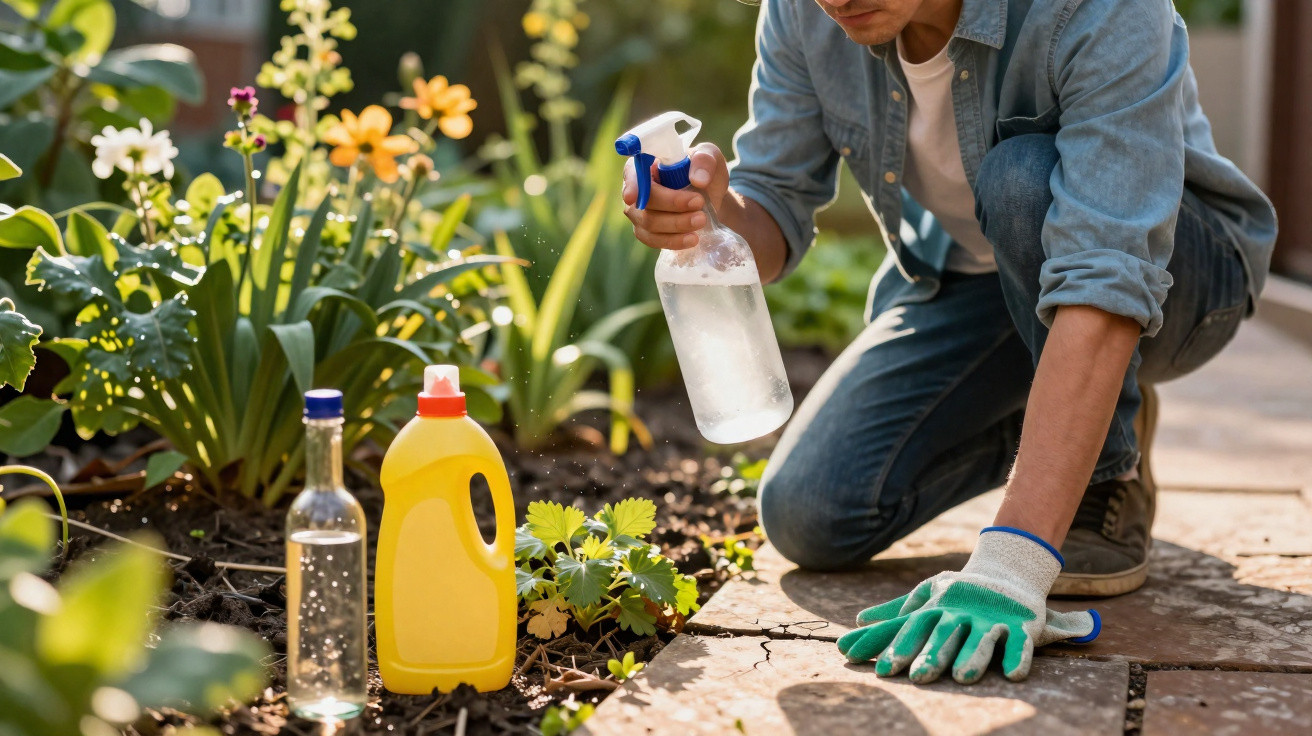
A tip is currently doing the rounds online and in gardening forums that sounds almost too good to be true: a squirt of washing-up liquid in your watering can or spray bottle is said to dry out stubborn weeds in no time. Many people mix it with vinegar and claim they can see results within just a few hours. But what’s really going on here - and at what point does it start harming soil, plants and the wider environment?
Why so many people are disappointed with vinegar
For a long time, vinegar was seen as a “natural” alternative to chemical weedkillers. The logic seems convincing at first glance: the acid attacks the leaves, they turn yellow, wilt and collapse. Visually, the area can look tidy very quickly.
That is exactly where the catch lies. In most cases, the roots in the ground are left largely untouched. The plant often regrows after a short time - and can even come back stronger than before. If you keep spraying again and again, you not only end up stuck in a never-ending garden chore, you also pour more and more acid onto the same patches.
Specialist gardening publications have been pointing out for years that vinegar mainly damages the parts of the plant above ground and rarely causes lasting harm to deep-rooted species. With persistent grass clumps or dandelions pushing up between paving stones, the same weeds often return in a “loop”, over and over.
"Vinegar makes weeds disappear visually, but usually doesn’t tackle the cause in the soil."
Washing-up liquid in the garden: what’s the idea?
This is where washing-up liquid comes in. Many hobby gardeners add a splash to their vinegar mix or even plain water. The thinking is borrowed from agriculture, where so-called wetting agents are used to help spray solutions stick to leaves more effectively.
Washing-up liquid contains surfactants. These substances reduce the surface tension of water. You’ll recognise the effect from everyday life: with washing-up liquid, water doesn’t bead up and roll off greasy plates as easily - it spreads into a thin film instead. The same thing happens on plant leaves.
In gardening terms, the claimed benefits are:
- The spray solution clings to the leaves for longer.
- It spreads more evenly across the surface.
- The affected foliage dries out more quickly.
- The short-term effect of vinegar or salt is intensified.
Even so, washing-up liquid is not a weedkiller in its own right. It mainly supports other ingredients and only has a limited direct impact on a plant’s metabolism. In practice, it acts more like a behind-the-scenes booster.
Typical “recipes” with washing-up liquid - and where they go wrong
Across many gardens, home-made mixes are now being shared almost like secret potions. A common version looks roughly like this:
- 1 litre of water
- 1 cup of vinegar
- 1 tablespoon of washing-up liquid
Some people replace the water partly or entirely with vinegar. Others add salt to push the effect further. The mixture is then sprayed on warm, dry days directly onto the plants, mainly targeting the leaves.
The immediate impact is hard to deny: many plants show signs within a few hours. Leaves lose their firmness, develop blotches, then turn brown and brittle. In paving joints and on gravel paths, the surface can look “cleaned” very quickly.
"That quick wow effect can easily hide the long-term damage the mixture may cause."
Where washing-up liquid mixes cause problems in the garden
Washing-up liquid and vinegar sound harmless because both come from the kitchen. Yet in a garden setting they can do more harm than many people realise:
- Strain on soil life: Surfactants and high acidity can stress earthworms, fungi and bacteria that are essential for fertile soil.
- Damage to ornamental plants: Even a light mist drifting over can scorch the leaves of roses, perennials or young plants.
- Corrosion: High concentrations of vinegar can attack metals, such as on fences or edging.
- Salting from added salt: Salt in these mixes damages soil structure over time and can leave areas effectively “hostile” to plant growth.
For that reason, many gardening experts advise: if you use it at all, keep it strictly to purely mineral surfaces - for example paved driveways, gravel paths or patio joints. Flower beds, lawns and areas near ornamental planting should remain off-limits.
Legal and environmental grey area
One point many hobby gardeners don’t consider: vinegar and other household products are not approved as plant protection products or weedkillers in many countries. They are intended for cleaning and cooking - not for widespread outdoor use.
In Germany and elsewhere, there are strict rules for substances used specifically to control unwanted plants in gardens. Approval processes assess effectiveness, risks and environmental impacts. Home-made mixes based on vinegar, washing-up liquid and salt do not go through those checks.
"Just because a product comes from the kitchen doesn’t automatically mean it’s harmless for soil, water and small wildlife."
Which alternatives really keep weeds under control
If you want fewer weeds over the long term, it’s difficult to avoid the classic approaches. They can be more labour-intensive, but they are far more sustainable and much easier to control.
Mechanical methods
Traditional tools do more than many people expect:
- Joint scraper: Ideal for patios and paving; it reaches roots close to the surface.
- Hoe or draw hoe: Suitable for beds and paths, cutting weeds just below the soil surface.
- Hand pulling: Very effective on young plants, especially when the soil is slightly damp.
Working little and often - rather than doing one big clear-out per season - reduces the amount of seed in the soil and noticeably lowers weed pressure the following year.
Thermal methods
Weed burners or infrared devices heat plant cells quickly and intensely so they burst. The plants then wither. On paved areas this can be a sensible option, provided you pay close attention to fire safety and consideration for neighbours.
Suppressing weeds with ground cover
In beds, weed growth slows dramatically when the soil isn’t left bare. Common options include:
- organic mulches such as bark chips, shredded material or straw
- ground-cover plants that close gaps
- weed-control membrane under gravel or timber decking
Less light reaching the soil means fewer seeds germinate. If you are planning a new layout, it also helps to design paths and bed edges so they are easy to keep clean.
How to use washing-up liquid mixes more safely - if you still want to try
Despite the concerns, many gardeners will still test the trick in small spots. If you do, a few basic rules can help limit damage:
- Only treat small, clearly defined areas made of stone, gravel or concrete.
- Use low concentrations: less vinegar and washing-up liquid, more water.
- Do not add any salt.
- Avoid spraying in windy conditions to prevent drift onto beds.
- Ideally apply on sunny, dry days in the late morning.
If you notice unwanted effects - such as discolouration on neighbouring plants or strongly smelling puddles - stop immediately and switch to other methods going forward.
Why patience is often the best weed strategy
A lot of frustration in the garden has less to do with a single clump of weeds and more to do with the expectation that everything should stay perfectly spotless forever. In practice, paving joints, gravel areas and bed edges are rarely completely “weed-free”.
If you accept that a few rounds each year with a joint scraper, hoe or burner are part of normal maintenance, you stay in control of what ends up in the soil - and how healthy your garden remains over time. Washing-up liquid from the kitchen may work as a short-term “secret weapon”, but in the long run it is still an additive with side effects that should only be used deliberately and sparingly.

Comments
No comments yet. Be the first to comment!
Leave a Comment