
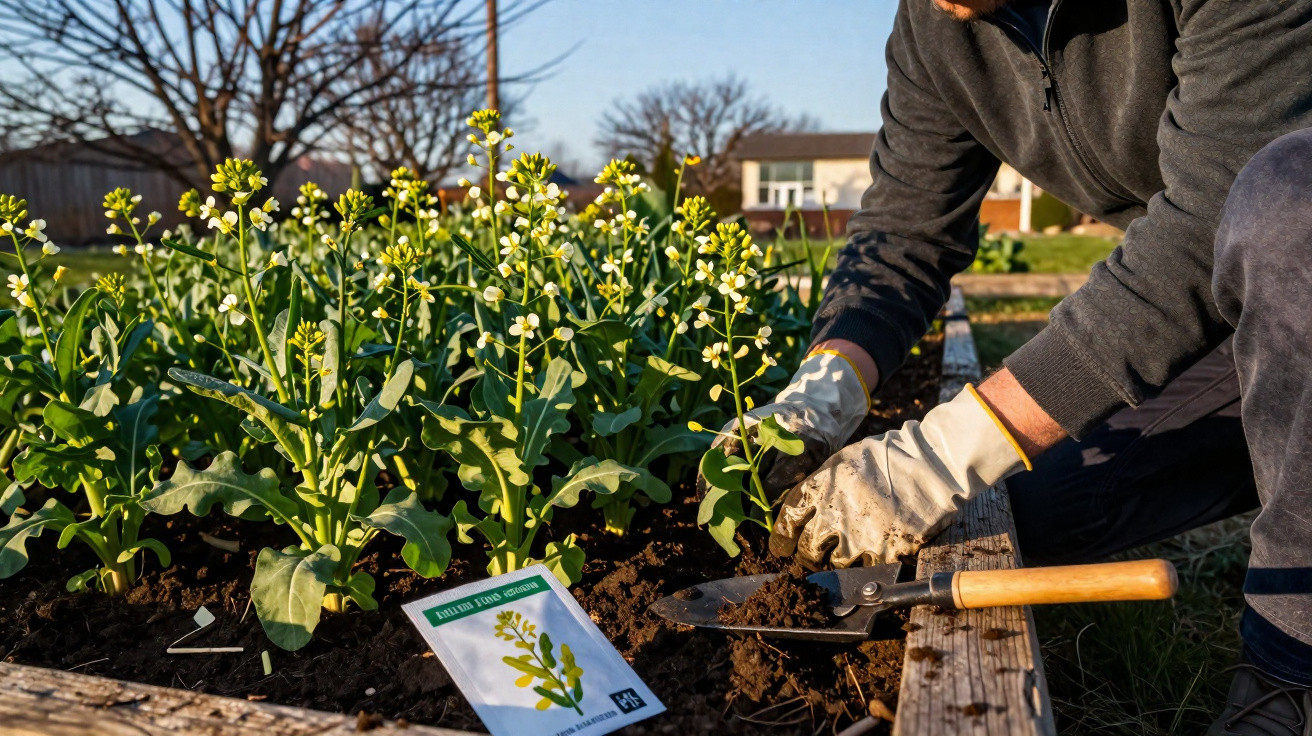
If, in late winter, you are looking at bare beds and assuming nothing is happening in the vegetable garden yet, you are leaving a huge opportunity on the table. Uncovered soil takes a beating: it is pelted by rain, freezes, then dries out again - and in the process it loses structure and nutrients. Yet there is a remarkably simple way to get the ground into top condition as early as February: a plant hardly anyone uses deliberately, even though it loosens the soil, stocks it with nutrients and gives your spring sowings a real head start.
The cold-window trick: one seed that gets going at 5°C
Most vegetable crops simply won’t cooperate when it is cold. Below about 8–10°C, very little happens - seeds mostly sit there and wait. That is exactly where the white mustard species Sinapis alba comes in, commonly referred to in gardens as white mustard or mustard used for green manure.
It will germinate once the soil is around 5°C. In many areas that threshold is reached in February, sometimes even earlier. While tomatoes, peppers or courgettes should not be anywhere near an outdoor bed at that point, mustard gets moving, taking advantage of the last of the soil’s warmth along with winter moisture.
"If you sow mustard in February, you start the gardening season in the soil - weeks before the real vegetables move in."
That early lead is what makes it so useful: it occupies the space before anything else, wakes up soil life, and conditions the beds for more sensitive crops that follow later - such as tomatoes, pumpkin, cucumbers, beans or salads.
A green carpet in ten days that holds weeds back
The second major strength is speed. Mustard grown as green manure is exceptionally quick. After sowing into lightly loosened soil, ten days is often enough for a visible, dense green fuzz to spread across the bed.
That living cover acts like a working carpet with several jobs at once:
- it deprives weeds of light and space
- it takes up nutrients before they can be washed out
- it shields the soil from heavy rain and erosion
- it keeps the surface open rather than sealed, compacted and hard
If a bed is left bare as winter tails off, it is usually weeds that exploit the first mild spell and start germinating. Mustard pushes in and wins that race, because it forms a closed cover much faster than many wild plants.
Six-week countdown: the perfect time to cut it down
To turn that green carpet into a genuine fertiliser boost, timing matters most with mustard. Around six weeks after sowing, the plants are just before flowering or are beginning to show soft yellow blooms. At this stage, the bulk of the nutrients are held in the stems and leaves.
"The golden rule: cut mustard before it really flowers and sets seed - then it works like a natural turbo fertiliser."
Leave it standing too long and the stems become woody. The plant then pours energy into seed production and draws nutrients up for that purpose - the opposite of what gardeners want.
A good routine looks like this:
- Broadcast-sow mustard when the soil has suitable moisture.
- Let it grow for about six weeks, until the first flowers appear.
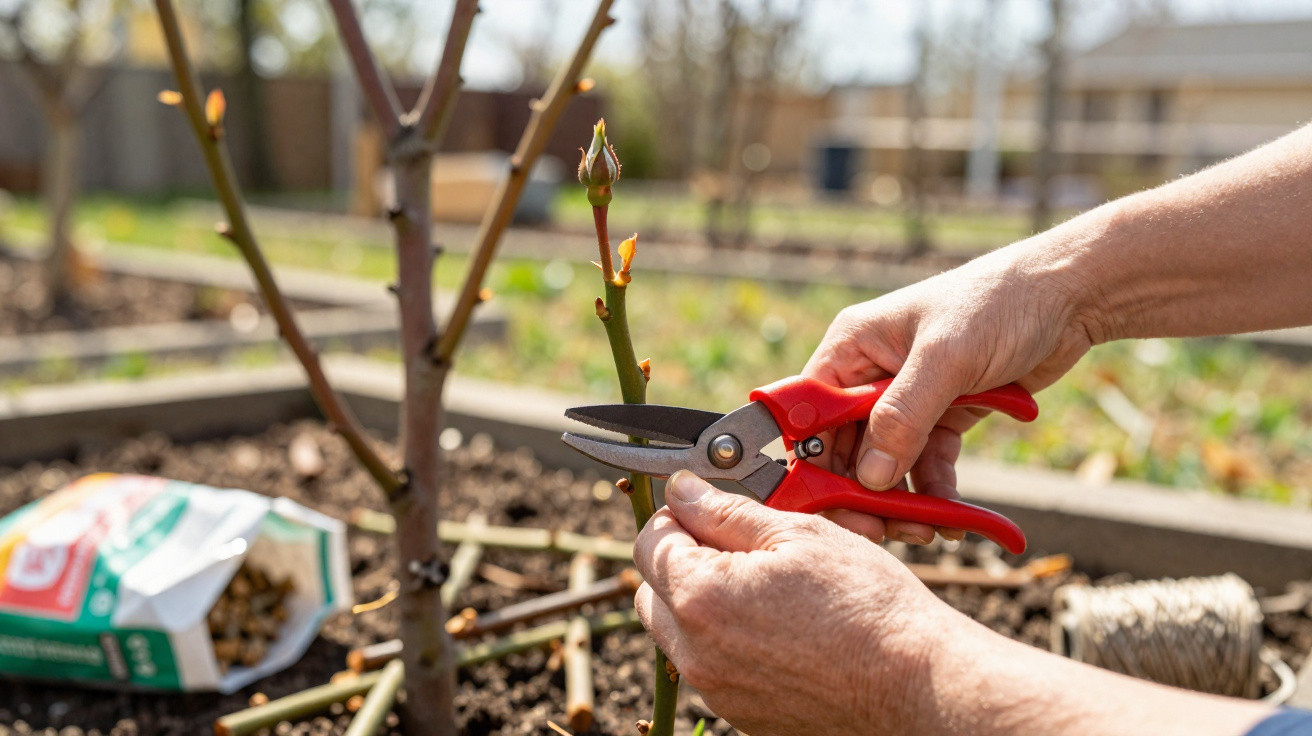
- Cut it down just above soil level using a scythe, sickle or grass trimmer.
- Work the cuttings in shallowly or leave them as a mulch layer.
When the material is incorporated near the surface, the still-soft plant matter breaks down quickly. Soil micro-organisms process it and release nitrogen gradually - right when the first vegetable plants in spring begin their hungry growth.
More air, more life: how mustard drills into your soil
Alongside the nutrient effect, mustard offers another benefit that is often underestimated. Its roots act like a free soil aerator. The main root drives downwards, branches out and leaves many small channels through the ground.
You notice the results immediately when digging in spring:
- the soil crumbles rather than breaking into heavy lumps
- watering soaks in quickly instead of sitting on the surface
- roots of tomatoes, cabbages and other crops find an easier path down
- oxygen reaches deeper - important for earthworms and soil bacteria
Anyone who has had to work heavy soil that has compacted over winter knows how hard that can be. If you used mustard as a green manure beforehand, bed preparation in March becomes noticeably easier - the spade and fork slide through with far less effort.
How much do yields really improve?
Trials on practical growing plots between 2018 and 2022 show that when mustard is sown as a winter green manure and incorporated before flowering, yields of following crops rise by an average of around 18 percent. That is not a minor change; it is clearly measurable - particularly with heavy feeders such as cabbages, tomatoes or pumpkin.
"A few handfuls of mustard seed in February can decide whether there is noticeably more veg on the plate in summer."
That uplift comes from several factors working together: more nitrogen in the soil, improved structure, less competition from weeds, and a more active soil ecosystem.
Step by step: how to use mustard effectively in a home garden
For domestic gardens, you only need a modest amount of seed - often 100 to 200 grams is enough for a standard bed. The exact weight matters less than spreading it evenly.
| Step | What to do |
|---|---|
| 1. Prepare the soil | Loosen the surface lightly, break up large clods, remove stones |
| 2. Sow | Broadcast the mustard seed as evenly as possible, not too thickly |
| 3. Cover in | Rake in briefly or cover lightly with soil, then firm down |
| 4. Keep moisture in | Water if it is dry; otherwise winter moisture is usually enough |
| 5. Watch the growth | Over the next weeks, check germination and the developing carpet |
| 6. Cut down | Mow before full bloom and work in shallowly or use as mulch |
Important notes: where mustard doesn’t fit, and what you can combine it with
As practical as it is, there are a few points home gardeners should keep in mind. Mustard belongs to the brassica family - the same group as cabbages, radishes, rocket and kohlrabi. If you regularly battle clubroot or other brassica diseases, avoid using mustard on plots where brassicas will be grown soon afterwards.
As a rule of thumb: use mustard ahead of tomatoes, cucumbers, pumpkin, beans, peas or salad crops, and less so ahead of brassicas. That approach helps break disease cycles and supports a sensible crop rotation.
It can also be effective to pair mustard with other green manures, for example:
- with phacelia for extra early-season forage for bees
- with winter rye for strong rooting in deeper soil layers
- with clover species that additionally fix nitrogen from the air
These mixes stimulate the soil even more and combine different root and nutrient strategies. In a home garden, a simple blend of mustard plus one other species is often enough to produce visible results.
Why this “invisible” helper in February makes such a difference
At heart, mustard green manuring is about a shift in mindset: the garden does not truly stop in winter - it carries on working out of sight. If you let the months slip by until March or April, you effectively start from zero each year. If you reach for mustard in February, you are quite literally building ahead.
The plant does the soil work that would otherwise take time by hand or require heavy tools. It replaces some of the fertiliser that would later come from a bag. And it ensures the first young vegetable plants are not set into exhausted, waterlogged or compacted ground, but into a living, crumbly soil with a useful reserve of nutrients.
Especially now, when many home gardeners want to use fewer chemicals and grow more sustainably, mustard as a winter starter fits perfectly: tiny seed, little effort, clear benefit. Once you try it properly on a bed, you notice the difference when planting, when watering - and ultimately in the harvest.
Comments
No comments yet. Be the first to comment!
Leave a Comment