
Some plants are content to fade into the background.
Others turn up like a spotlight on a dark stage, and suddenly the whole scene changes.
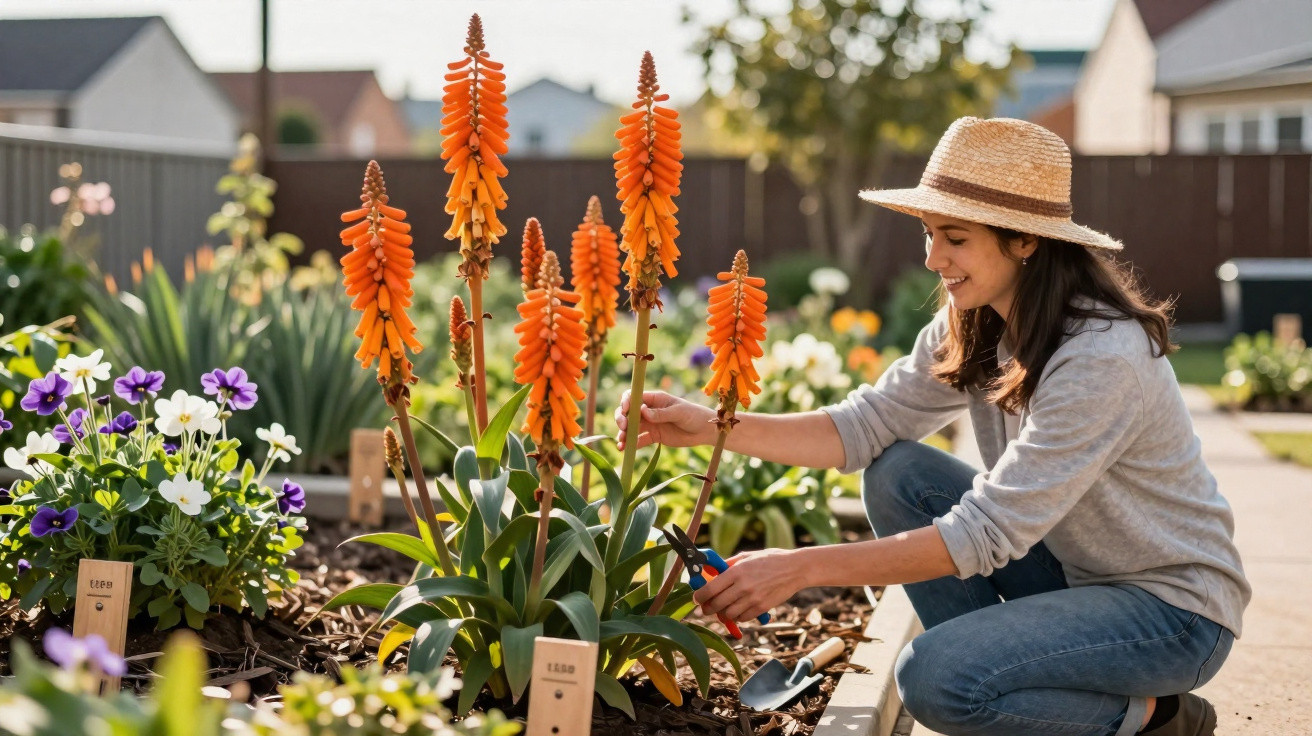
This spring, one blazing perennial is beginning to attract attention from garden designers, even though many home gardeners still don’t realise it exists. Tall, sculptural and topped with vivid orange “flames”, Leonotis leonurus can take a tired border and make it look as though it’s been composed by a landscape architect, not put in on a quiet Sunday.
Leonotis leonurus, the plant that draws lines in the air
Often known as lion’s tail, Leonotis leonurus hails from South Africa and feels less like a cottage-garden bloom and more like living structure. Given the right position, it typically grows to about 1.5 to 1.8 metres, sending up sturdy, straight stems that rise cleanly through lower planting.
Its leaves are slim and slightly rough to the touch, delivering a strong, graphic effect even before any flowers show. The real performance begins once the blooms arrive in rings around the stems. These are not soft, fluffy heads: they form tight, sculptural whorls of tubular, velvety flowers in intense orange, spaced up the stem like a run of small crowns.
Imagine a vertical candelabra, each tier ringed with glowing orange sparks, rising above a sea of grasses or low perennials.
From further away, those stacked tiers can look almost unreal-like a piece of modern art placed inside a traditional border. Up close, their function is clear: a nectar stop for wildlife. Bees work their way through the flowers, butterflies flick in and out, and in warmer climates hummingbirds line up for their turn.
Why it transforms a border, not just decorates it
Most perennials spread to fill space sideways. Leonotis does the reverse, drawing the eye upward. That vertical pull is what can make a planting feel intentional rather than random. Put it behind softer plants and it becomes a background; position it mid-border and it acts as a hinge, with the rest of the scheme seeming to arrange itself around it.
Because its stems are firm, it holds its shape well, even when the wind picks up. That crisp outline sits beautifully against airy grasses and looser, billowing perennials. The repeated rings of flowers create rhythm-structure from base to tip-which is why designers often use it as a “framework” plant rather than simply another hit of colour.
Leonotis doesn’t just add orange; it adds a strong silhouette and a sense of architecture that reshapes the whole bed.
Where and how to plant leonotis leonurus this spring
Leonotis has one firm requirement: full sun. Offer it at least six hours of direct light and you’ll be rewarded with colour for months. In shade, stems become weaker and flowering drops dramatically.
At root level, it prefers soil that is fertile yet free-draining. Aim for a light, enriched mix: garden soil improved with compost, plus a little grit or coarse sand. It copes with the odd missed watering far better than it tolerates waterlogged ground.
Leonotis is well suited to dry gardens, gravel borders and south-facing city plots where more delicate plants give up by July.
Once it has settled in, its drought tolerance is notably good. With summers getting hotter, that places it alongside many Mediterranean shrubs in terms of resilience. In colder areas, the top growth can be knocked back by frost, but the plant may come through brief drops to roughly –8 °C provided the base is insulated with a thick mulch of leaves or straw.
Where winters are severe, many gardeners prefer to grow leonotis in large containers. Pots can be moved to a sheltered position or into a bright, cool greenhouse as temperatures fall. The priority is keeping the root ball from freezing solid and avoiding compost that remains saturated.
Five golden rules for successful leonotis planting
- Choose a sun‑drenched spot: aim for at least six hours of direct sunlight for strong stems and heavy flowering.
- Ensure sharp drainage: mix in gravel, pumice or sand where water tends to linger, especially in clay soils.
- Feed the soil, not the plant: add mature compost or enriched potting soil at planting to encourage vigorous growth.
- Water with restraint: keep the soil lightly moist just after planting, then reduce watering as roots spread.
- Mulch in colder areas: apply a generous layer around the base in late autumn if winter lows drop below –5 °C.
Companion planting: turning a plain bed into a living artwork
Leonotis’ orange towers look their best when matched with the right neighbours. The aim is contrast-of height, texture and colour.
| Partner plant type | Examples | Effect with leonotis |
|---|---|---|
| Ornamental grasses | Stipa tenuissima, Pennisetum, Miscanthus | Soft, moving “mist” around the rigid orange spikes |
| Cool‑coloured perennials | Blue or purple salvias, Russian sage, catmint | Colour contrast that makes the orange glow even brighter |
| Dark‑foliage drama plants | Bronze cannas, dark dahlias, purple basil | Deep background that makes the structure feel more sculptural |
| Late‑season stars | Verbena bonariensis, rudbeckias, asters | Extends interest into autumn once leonotis peaks |
In a contemporary border, you could set leonotis in a line as upright accents behind a sweep of low grasses and blue salvias. In a more naturalistic planting, scatter them more irregularly among taller perennials so the orange rings appear as surprises, drawing the eye across the bed.
Think of leonotis as the exclamation mark in a sentence of plants: not used everywhere, but unforgettable where it appears.
Urban gardens, coastal plots and dry slopes
Thanks to its ability to cope with heat and relatively lean soils, leonotis is particularly useful in city gardens where warmth reflected from walls and paving can overwhelm more traditional perennials. Its upright form also means it occupies little ground, which suits narrow borders along fences.
In coastal gardens-where wind and salt spray can flatten softer growth-the robust stems stand up well. On a sunny slope with free-draining soil, it can be used almost as a small shrub, bringing coherence to mixed planting without the need for constant pruning.
From seedling to statement piece: what to expect
It’s common for gardeners to underrate leonotis when they first see it as a young plant in spring. Early growth can look restrained, even slightly disappointing. Then warmer weather arrives and it changes pace, pushing up those straight, square stems and gaining height quickly.
By mid to late summer, the earliest flower whorls begin to open. New tiers continue to develop above, creating a long display that can last well into autumn in milder areas. Deadheading is optional: some people keep the spent heads because they add structure in winter and may also provide food for birds.
Depending on climate, leonotis may act as a short-lived perennial or a woody subshrub. In colder places, many treat it much like a half-hardy perennial-replacing it, or relying on regrowth from a protected base each year-while still getting a bold impact from comparatively small plants.
Practical scenarios for small and large gardens
In a small town garden, planting two or three leonotis behind a low hedge of lavender can shift the entire feel of the space. The lavender softens the front edge, while the orange crowns lift the gaze and make the garden seem taller and more layered.
In a larger garden, a relaxed drift of five to seven plants threaded through grasses and late-flowering perennials can form a sunny-border “spine”. Even if surrounding plants flop or are cut back, the orange columns keep the composition intact right up until frost.
Risks, benefits and a few terms decoded
For leonotis, the biggest danger is the combination of winter cold and wet. In heavy, saturated soil during freezing weather, the crown can rot. If you garden on clay, lower the risk by planting on a slight mound, incorporating grit, and only mulching once the soil has cooled and drained in autumn.
On the positive side, it is seldom bothered by pests, and its rougher foliage is usually left alone by slugs and rabbits. For pollinators, the tubular flowers offer a dependable nectar source during high summer, after some spring-flowering shrubs have already finished.
Two common gardening phrases used with leonotis are worth explaining. “Well‑drained soil” simply means water doesn’t sit around the roots for days; after watering, a squeezed handful should fall apart rather than clump into a sticky ball. “Mulch” means a protective layer-bark, compost, leaves or straw-spread over the soil to reduce temperature swings, hold moisture and protect roots from frost.
Used with care, Leonotis leonurus offers more than a flash of colour. It changes how a bed reads from the house, the terrace, and even the street. This spring, adding this South African original to your planting plan could be the small choice that delivers your garden’s strongest summer statement.

Comments
No comments yet. Be the first to comment!
Leave a Comment