
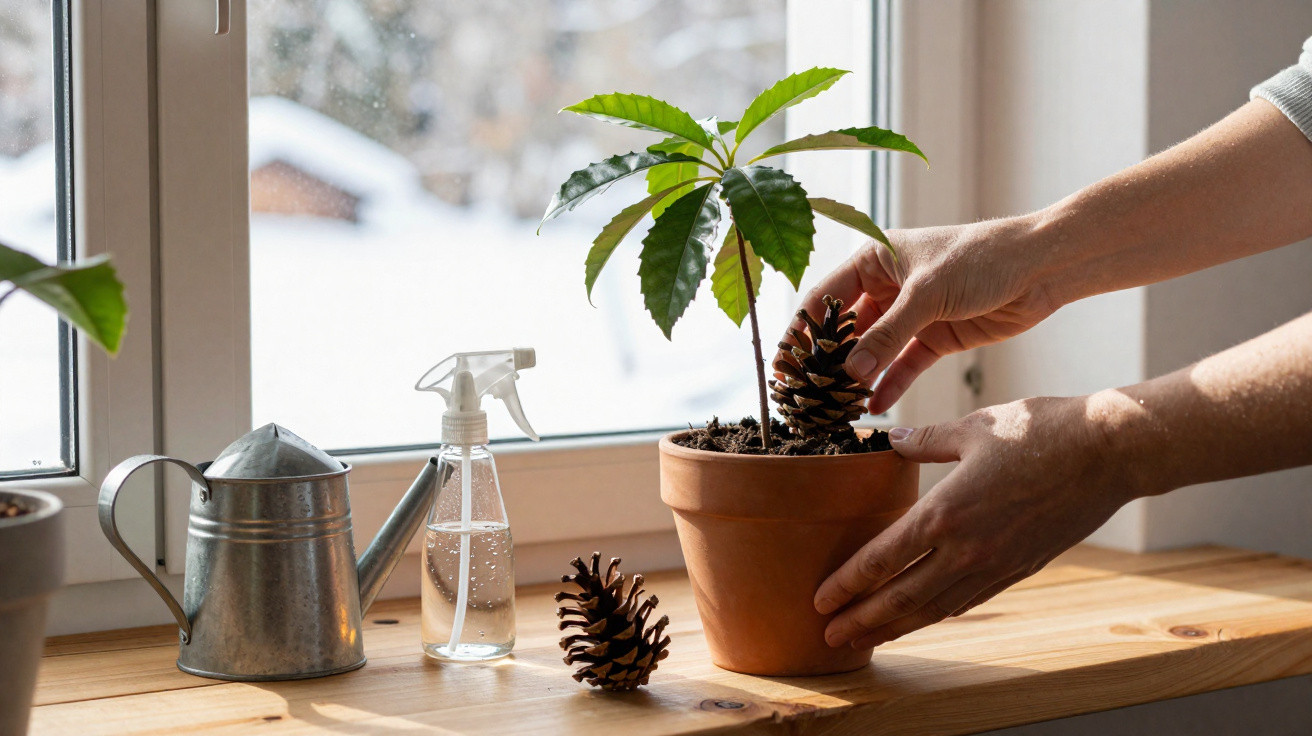
In many homes, the conditions for indoor greenery turn against plants at exactly the time we make ourselves comfortable indoors. The heating goes on, the air dries out, and the top of the compost looks dust-dry - yet roots can be dying out of sight. A long-standing gardening tip relies on something you can find all over the forest floor: a fir cone placed on the potting soil. It is not just decoration; it can act as a surprisingly effective mini tool against waterlogging and rot.
Heating air and winter cold: why houseplants struggle right now
During winter, houseplants face an unnatural mix of short days, low light and little fresh air - alongside warm, dry air from radiators. The surface of the pot dries quickly, so many people read it as a sign the plant is thirsty and reach for the watering can more often.
That is where the trouble starts. Even if the top layer looks dry, moisture can build up deeper in the pot. Roots then sit in constantly damp compost with too little oxygen. This can easily lead to:
- Root rot caused by waterlogging
- A mouldy film on the soil
- Spongy, musty-smelling substrate
- Limp, yellow leaves despite “plenty of water”
At the same time, windows often stay shut in winter. Without air movement, the surface does not dry evenly, and moisture gathers in the exact zone where fungi and bacteria thrive. This is how the classic winter decline of many houseplants develops - quietly and gradually around the root area.
“The real risk in winter is rarely too little water, but almost always too much - in the wrong place.”
The hidden helper: what a fir cone actually does in the soil
A dry fir cone may look like a simple ornament. In practice, it behaves like a small natural component: its woody structure and many air gaps are hygroscopic, meaning the cone draws in moisture and absorbs it.
Placed on top of the potting soil, it can do several jobs at once:
- Surface drainage: it takes up excess moisture from the upper layer of compost.
- Protection against mould: with a drier surface, fungi have a harder time establishing.
- Root protection: less wetness around the plant crown, where stem and roots meet.
- Gentle regulation: not a harsh chemical intervention, but a natural buffer against over-wet conditions.
In effect, the fir cone works like a kind of “lid” that catches moisture and lets it escape in a controlled way, instead of allowing it to linger at the top of the pot. The plant crown gets more air, and the pot dries out more evenly.
The cone as a moisture indicator: how to read this natural “measuring device”
The most interesting benefit may be that a fir cone also signals how damp the pot is. Its wood reacts physically to humidity and changes shape.
Open scales: everything is fine
If the cone is resting loosely on the soil and its scales are clearly open, conditions in the pot are usually on the dry-to-pleasant side. Air circulates well, the surface is not tacky, and the moisture level inside the pot is generally within a safe range.
“Open cone = the plant is breathing well, the watering can can wait.”
This is exactly when many plant owners would water on impulse because the top looks dry. The open cone suggests there is usually no reason to panic - the root environment is often still fine.
Fully closed cone: a warning sign of too much water
If the cone pulls itself into a near-spherical shape and looks smoother, treat it as a clear alert. The humidity right above the soil and the moisture in the compost are then significantly higher.
In practical terms:
- Stop watering immediately.
- Do not let the pot sit in water inside an outer pot.
- Let the compost dry until the cone opens again.
Many hobby gardeners still use the finger test to check moisture. The cone is based on the same principle, but it reacts more subtly - and you do not end up with dirty hands.
Step by step: how to use fir cones with houseplants
If you live near woodland or a park, you can pick up this helper for free. A walk usually turns up plenty. Before putting one in a plant pot, it is worth choosing carefully.
Choosing the right cone
- Dry and clearly open
- No sticky resin residue
- Free of visible insects or larvae
- As intact as possible, not crumbly
At home, shake the cone thoroughly, brush it briefly, and leave it for a few days in a warm, dry room. This removes remaining dampness and encourages any hidden “passengers” to move on.
Correct placement in the plant pot
Ideally, place the cone on bare soil near the plant’s stem. Do not bury it and do not wedge it between decorative stones - it needs contact with the air to react properly.
For larger containers holding several plants, two or three cones help cover the whole surface. That gives a more accurate reading and also absorbs moisture around the edges.
Protection from fungi and rot: why the trick fits sustainable gardening
Anyone who has had to reach for copper-based products, fungicides or other chemical aids knows how frustrating fungal problems around roots can be. They cost money, and in the end the plant is often thrown away anyway because it cannot be saved.
“A dry fir cone does not replace proper care, but it significantly reduces the risk of root rot and mould.”
Less moisture at the surface means mould spores have less chance to take hold. Harmful fungi that spread quickly in cool, damp compost are slowed down. Combined with lighter watering, this creates a steadier, lower-stress winter environment for plants.
The benefit tends to show in spring: plants whose roots have not spent months in clammy substrate usually put on stronger growth, push out new leaves sooner, and show fewer brown tips or drooping shoots.
How often should you water? How the fir cone supports a watering strategy
Many houseplants are cared for in winter as if it were midsummer. In reality, most species slow their growth in the darker months. They use less water, transpire less through their leaves, and need longer dry spells.
A practical approach using a cone:
- Check the cone’s shape: open or closed?
- Push a wooden stick briefly into the compost in one spot.
- Cone open + stick slightly damp = do not water yet.
- Cone open + stick dry = water moderately.
- Cone closed, regardless of what the stick shows = take a watering break.
This combination of visual and touch checks reduces overreactions and helps you settle into a rhythm that suits the season. More sensitive types such as Ficus, Calathea or orchids often do particularly well with this more restrained watering.
Further practical tips and possible pitfalls
A few points are worth keeping in mind so the trick genuinely helps:
- Not a substitute for a drainage hole: standing water in an outer pot is still harmful, even with a cone.
- Regular checks: if the cone becomes coated with soil or fertiliser residue, it responds less reliably.
- Do not expect it to rescue waterlogged plants: with active root rot, repotting into fresh, drier compost is often the only option.
- Keep pets in mind: dogs and cats sometimes nibble cones - usually harmless, but keep an eye on them.
For very small pots, a large cone can look oversized. Smaller cones or half cones work better. If you like, you can arrange several small cones decoratively and combine the function with a wintry look.
Why this trick feels right for the moment
Many people want to avoid chemical treatments and prefer using what nature already provides. A collected fir cone does exactly that: free, reusable and biodegradable. And it gives houseplants an extra layer of security during the most delicate part of the year.
Next time you are walking through a park, it is worth looking down. A few dry cones in your coat pocket can equip several pots at home - a small action with a surprisingly big impact for your living-room plants.

Comments
No comments yet. Be the first to comment!
Leave a Comment