
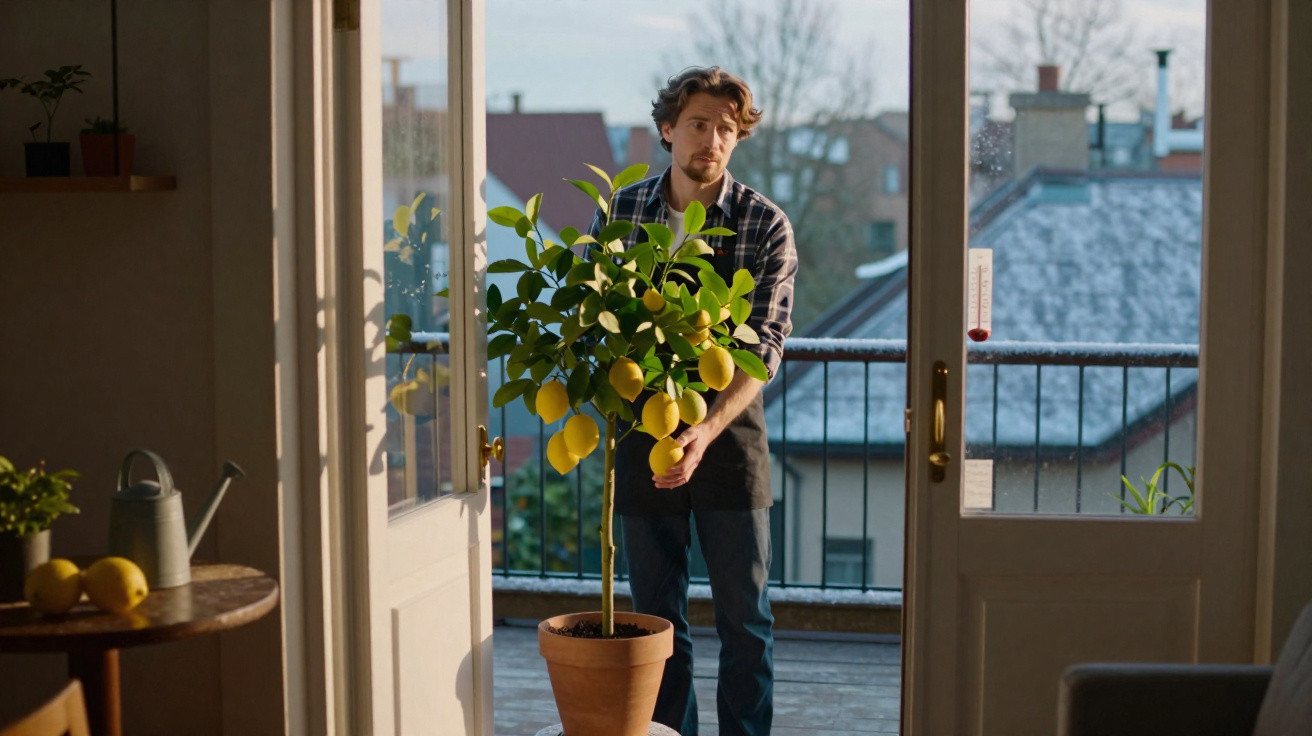
The sun can already feel pleasantly warm during the day, your potted lemon tree is pushing out fresh buds, and the urge to get out into the garden or onto the balcony is huge. It’s also exactly when the same missteps happen every year-blossoms get frosted, roots are damaged, and spring ends up delivering few lemons, if any, to ripen.
False spring: why March is so tricky for lemon trees
March often feels like the true beginning of the warmer season. That’s why many people move overwintered container plants back outside as soon as a mild spell arrives. For lemon trees, that assumption can be risky.
Across much of Central Europe, March is a month in-between: daytime temperatures can be mild, while nights often drop into single figures, and ground frost can still occur. These sharp swings put potted citrus plants under intense stress.
"18°C by day, just above 0°C at night-barely chilly for us, but for a lemon tree’s buds and blossoms it can mean the end of the harvest."
In sunshine and warmth, the tree ramps up sap flow, produces new tissue, and the buds begin to swell. If temperatures plunge again overnight, those delicate cells can effectively freeze. The damage often becomes obvious only days later: limp flowers, brown tips, and buds and leaves dropping off.
The most common March blunder: putting it out too early-and leaving it there
The usual pattern is almost always the same: a bright March weekend arrives, the lemon tree comes out of its winter shelter-and from that moment on, it stays outdoors day and night.
Older woody growth can tolerate a brief dip below freezing, but the soft blossoms and buds cannot. Damage can start around freezing point. Even if the plant survives, the planned spring crop is often lost.
- Wood on older shoots: briefly stable down to around -2 to -3°C
- Flowers and young buds: can freeze at around 0°C
- Developing fruitlets: react extremely sensitively to cold shocks
Even a balcony that seems protected right next to the house rarely changes the underlying problem. Night-time air still cools sharply, and container plants respond to fluctuations far faster than trees rooted in the ground.
Second cardinal mistake: watering as if it were midsummer
As soon as the plant is moved outside, many people instinctively reach for the watering can-often in full summer mode: lots of water, sometimes with the saucer left filled. That’s precisely what puts the roots under pressure.
In spring, the potting mix is often still cold. Cold, wet compost means low oxygen, sluggish metabolism, and ideal conditions for root diseases. The plant then struggles to take up nutrients; leaves may yellow or fall, even though it has been “watered plenty”.
"The most important rule in March: it’s better to water once less than once too often-especially while the compost is still cold."
A simple check is enough: push a finger about 5 cm into the compost. If it still feels damp at that depth, don’t water. In cooler conditions, moderate watering every one to two weeks is usually sufficient, depending on position. Water must never be left standing permanently in the saucer.
What happens inside the tree when it freezes
The damage caused by a “false spring” is easy to understand. In sunshine, the plant kicks photosynthesis into gear, and sap surges into young shoots, buds, and blossoms. These fresh cells are soft and full of water.
When temperatures drop sharply overnight, the water inside the cells expands, ice crystals form, and cell walls rupture. From the outside, blossoms may at first look merely a little limp; later they turn brown, dry out, or fall. Those are exactly the flowers that would have become the lemons in the coming weeks.
The root zone can be just as vulnerable. If the pot sits on a cold stone slab, very little warmth reaches the roots. Water heavily at that point and cold water accumulates in the container. Oxygen becomes scarce, and fungal pathogens thrive. The outcome is root rot, yellowing leaves, and stalled growth.
"One simple trick helps immediately: stand the pot on wooden battens or bricks. Just a few centimetres of clearance from the cold ground can mean 2–3°C more warmth around the roots."
When a lemon tree can genuinely stay outside for good
If you want to protect your crop, March is the time to watch the forecast more closely. What matters most isn’t the daytime high-it’s the night-time low.
A reliable rule of thumb is:
- Night-time temperatures consistently above 5°C
- At least ten consecutive days without a sudden dip colder
- No late-frost warnings in the forecast
In many areas, that window doesn’t arrive until April-or even May. A well-known marker in the gardening calendar is the “Ice Saints” in mid-May, when many gardeners wait until after that period before leaving sensitive container plants outside for good.
How to acclimatise gently
Rather than an “all or nothing” move, a gradual approach works better:
- In the first week, put the lemon tree outside during the day and return it to its winter shelter at night.
- Choose a bright, wind-sheltered spot-not straight into harsh midday sun.
- Increase the outdoor time slightly each day.
- After several consistently mild nights, the tree can remain outside permanently.
This short “cure” helps prevent leaf scorch, reduces stress, and strengthens the plant ahead of the main growth period.
Watering, feeding, pruning: a care plan from March to May
Alongside the slow acclimatisation, it’s worth adjusting your care routine. With a structured approach, you can get noticeably more fruit from your lemon tree.
| Month | Watering | Feeding | Pruning |
|---|---|---|---|
| March | sparingly, only when the compost is dry | only begin once the tree is clearly growing | remove dead and frost-damaged wood |
| April | increase gradually; avoid waterlogging | every 14 days with a dedicated citrus fertiliser | light shaping cut for an airy crown |
| May | in warm weather, water regularly but in measured amounts | continue as in April | only corrective pruning; no hard cuts |
Common signs your lemon tree is suffering from cold stress
Not all damage shows up immediately. Keeping a close eye on the plant pays off. Typical warning signs include:
- blossoms turn brown or dry out without setting fruit
- young leaves curl or drop soon after they emerge
- older leaves develop yellow patches and detach
- entire shoot tips look blackened or glassy
If this happens, move the tree somewhere warmer again, avoid draughts, and reduce watering for a few days. Damage at shoot tips can be corrected later with a targeted cutback.
Why patience in spring produces more lemons
The desire to put winter behind you is strong-both for people and for plant lovers. Lemon trees, however, only tolerate so much. Expose them too early to significant cold and too much water, and they can remain weakened for a long time.
A cautious start-switching between indoors and outdoors, watering carefully, and only committing to an outdoor position once it’s truly warm-is the far safer strategy. The harvest may come a few weeks later, but you’ll have more reliable fruit and fewer losses.
With container plants, small siting details matter: a bright house wall that stores warmth during the day, decking or wooden boards instead of ice-cold tiles, and a spot out of direct draughts. Each of these improves the microclimate around the pot and helps the plant recover from winter.
When you understand how citrus plants behave, it becomes clear why that “Mediterranean feel” on a balcony in a German-speaking climate takes a bit of planning. A handful of simple rules in March can make all the difference: a healthy lemon tree that reliably produces fragrant blossoms and glowing yellow fruit in late spring and summer.



Comments
No comments yet. Be the first to comment!
Leave a Comment