
The most important part happens well before the first watering can is even filled.
Tomatoes have a reputation for being thirsty, but simply grabbing the hosepipe and watering without a plan can do more harm than good. The biggest issue is rarely the volume of water; it is how the soil and roots respond to it. One straightforward task, done ahead of the main watering season, helps tomatoes grow with more vigour, set firmer fruit and fall ill far less often.
Why tomatoes can still wilt even when you water a lot
Plenty of gardeners have seen the same pattern: leaves turn yellow, tomatoes split, and fungal problems appear after the first summer downpour - even though watering has been regular. The culprit is often wide swings in soil moisture.
One week the plants get a heavy soaking, then the ground is left dry for days. For tomatoes, that stop–start cycle is pure stress. Fruit responds by cracking, the surface of the soil can bake hard, and the roots are forced to operate at their limit.
"Tomatoes love one thing above all: steady moisture around the roots, with neither waterlogging nor drought stress."
Garden specialists therefore suggest a simple principle: water less often, but water deeply - and aim at the root zone rather than spraying over the foliage. This allows moisture to reach lower layers, encourages roots to grow downwards, and makes the plants tougher overall.
The most common watering mistakes with tomatoes
Once you know what tomatoes dislike, it becomes much easier to adjust your own routine. These everyday missteps are especially common:
- daily ‘dampening’ that only wets the surface
- watering over the leaves with a spray head or sprinkler
- long dry spells followed by a large amount of water in one go
- constant wetness around the roots, particularly in pots with no drainage
These habits can lead to split fruit, soft stems, scorched leaf edges and foliage that is more prone to fungal infection. But there is a step you can take before you even start watering properly that cushions against all of these issues.
The crucial step: mulch tomatoes before the main watering season
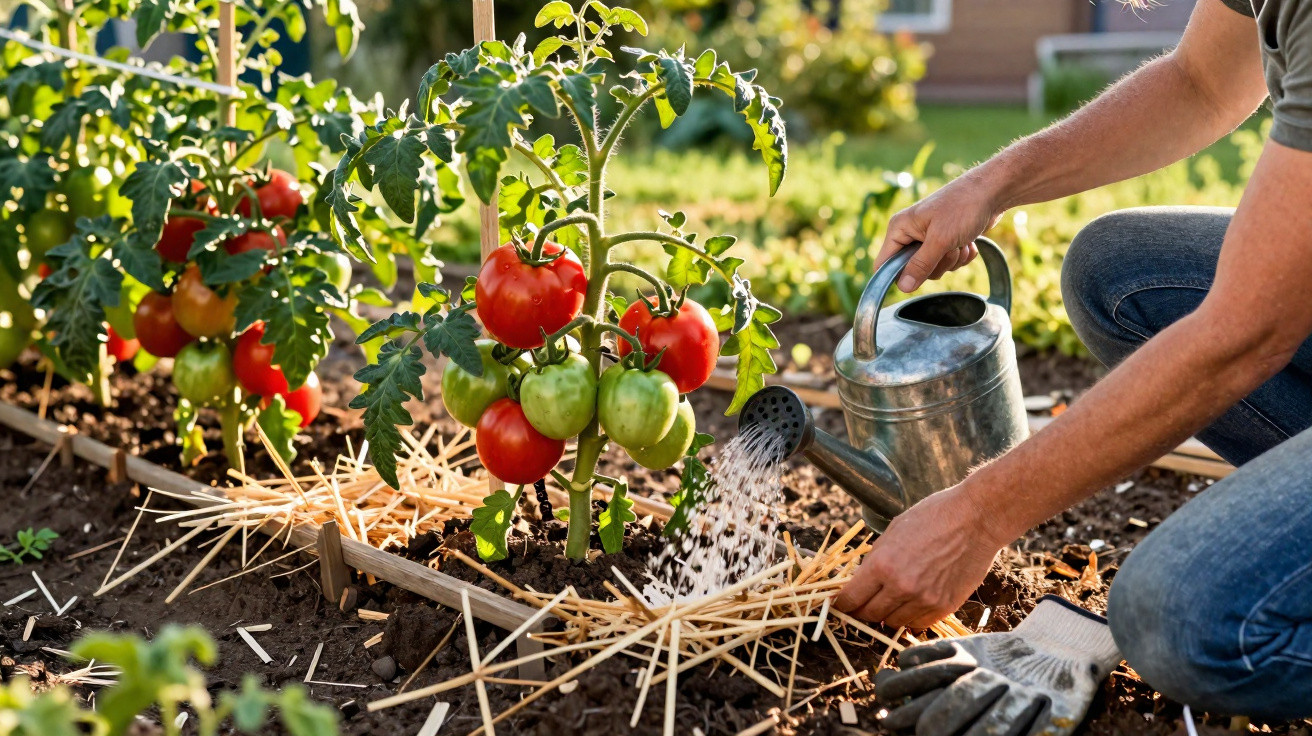
The key job that makes tomatoes stronger and healthier over the long term is to mulch in good time. In practice, that means laying a protective layer on the soil around the stem - this is the mulch.
Without mulch, the top layer of soil dries out extremely quickly in summer. Sun and wind pull moisture away, roots stay closer to the surface, and stress builds. The plants then gulp water when they finally receive a bigger watering, which increases the risk of fruit splitting and weak, uneven growth.
"A 5–10 centimetre-thick mulch layer keeps the soil moist, cools it on hot days and protects roots from extreme fluctuations."
Suitable materials for tomato mulch
Several materials work well for tomatoes, and most gardens already have them to hand:
- straw or hay (ideally not treated)
- shredded leaves saved from last year
- half-rotted compost
- lawn clippings applied in thin, well-dried layers
Important: do not let mulch sit directly against the stem. Leaving roughly five centimetres of space around the plant helps prevent rotting at the base.
The right time to apply the first mulch
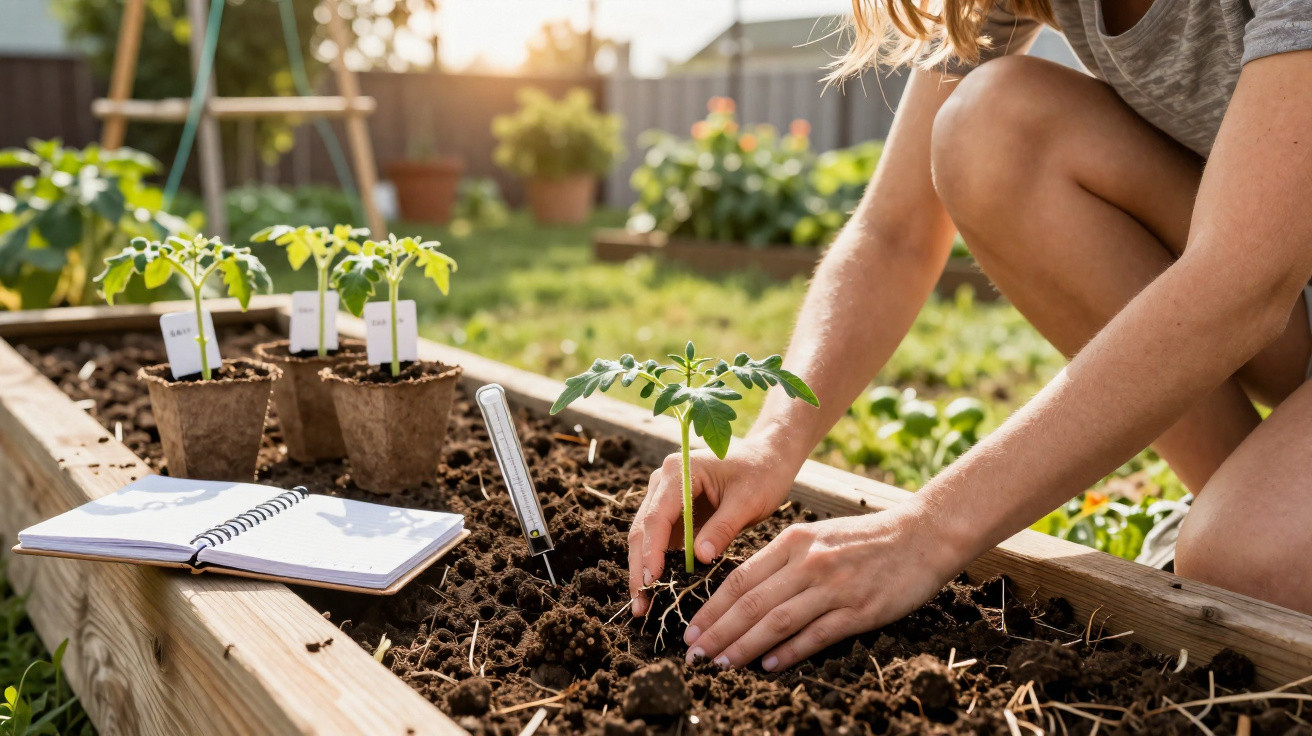
Garden specialists advise starting mulching once the soil has clearly warmed up in spring - around March or April for plants in the ground. If you plant young tomatoes out in May, add the mulch layer once they have settled in.
If the soil is bone-dry at that point, give it a thorough watering first. Only then should you spread the mulch. This way, the layer traps existing moisture in the ground rather than simply covering a dry crust.
How mulch acts like a protective shield for tomatoes
A mulch layer delivers several benefits that directly support tomato plants:
| Function | Effect on the tomatoes |
|---|---|
| Retains moisture | fewer watering sessions needed, shorter dry periods |
| Balances temperature | roots stay steadier, less heat stress |
| Suppresses weeds | less competition for water and nutrients |
| Improves soil structure | better aeration, a finer, crumbly humus |
Over the season, natural mulches gradually break down. Soil organisms convert them into humus, leaving the soil looser and more fertile. Tomato roots can push deeper, take up water and nutrients more effectively, and cope far better when conditions turn dry.
Water properly: under the mulch, not over the leaves
Once the bed is mulched, your watering routine should change too. Rather than watering by habit or by the calendar, it helps to check the soil first.
A quick test works well: gently pull the mulch aside and push a finger 2–3 centimetres into the soil. If it still feels cool and slightly moist at that depth, you can leave the watering can where it is. Only when the soil is clearly dry deeper down is it worth giving a proper soak.
"With mulch, water less often, but keep watering until the moisture genuinely reaches the root zone."
In practical terms, water slowly right at the base so the water can run beneath the mulch. If you use a drip hose, place it directly under the mulch layer; that way, almost every drop goes exactly where it is needed.
Why watering from above harms tomatoes
For convenience, many gardeners use a sprinkler or spray from above with a watering wand. The downsides are severe:
- leaves stay wet for a long time, creating ideal conditions for fungal spores
- some water evaporates before it ever reaches the soil
- splashes can throw soil onto the stem, making it easier for pathogens to spread upwards
If you consistently water at soil level, you greatly reduce the risk of common tomato diseases such as blight (brown blight). Combined with mulch, you create a drier, airier microclimate around the leaves - exactly the conditions tomatoes prefer.
How much water tomatoes really need
True water demand depends on position, variety and soil type. As a broad guide in open ground, water deeply once or twice a week, provided there has not been heavy rainfall. In containers or on a balcony, plants may need more because the compost dries out faster.
One point matters most: it is better to water tomatoes thoroughly but infrequently than to offer constant small sips. That approach prompts roots to grow down into the soil. Plants with deeper roots handle hot spells much more comfortably.
Additional tips for sturdy, healthy tomato plants
Even the best watering routine helps only so much if other basics are off. A few extra measures can strengthen plants further:
- add rain protection, for example a simple tomato roof made from polythene sheeting or corrugated panels
- remove lower leaves so they do not touch the soil
- tie tomatoes regularly to canes or strings so shoots do not snap
- feed sparingly but at consistent intervals to avoid sudden growth spurts
Well-supported plants with a protected root area react far more calmly to changeable weather. In years with frequent summer thunderstorms, a sensible combination of mulch, targeted watering and rain cover is particularly valuable.
Why this single job visibly changes your harvest
Many hobby gardeners underestimate how strongly a stable soil moisture balance affects tomato fruit quality. Consistent moisture produces firmer flesh, fewer splits and better keeping quality. Plants stay vigorous for longer, crop more persistently, and set new flowers sooner after heatwaves.
Anyone who has compared two adjacent beds - one mulched, one left bare - quickly sees the difference and rarely skips the extra step again. The springtime effort is only a few minutes of work, yet the benefit lasts through the whole season.
The result is not only a bigger harvest, but also a calmer gardener: less watering pressure, fewer disease issues, and robust plants that can cope with a short holiday without drama. That is why the one small action before the first serious watering is so worthwhile.
Comments
No comments yet. Be the first to comment!
Leave a Comment