
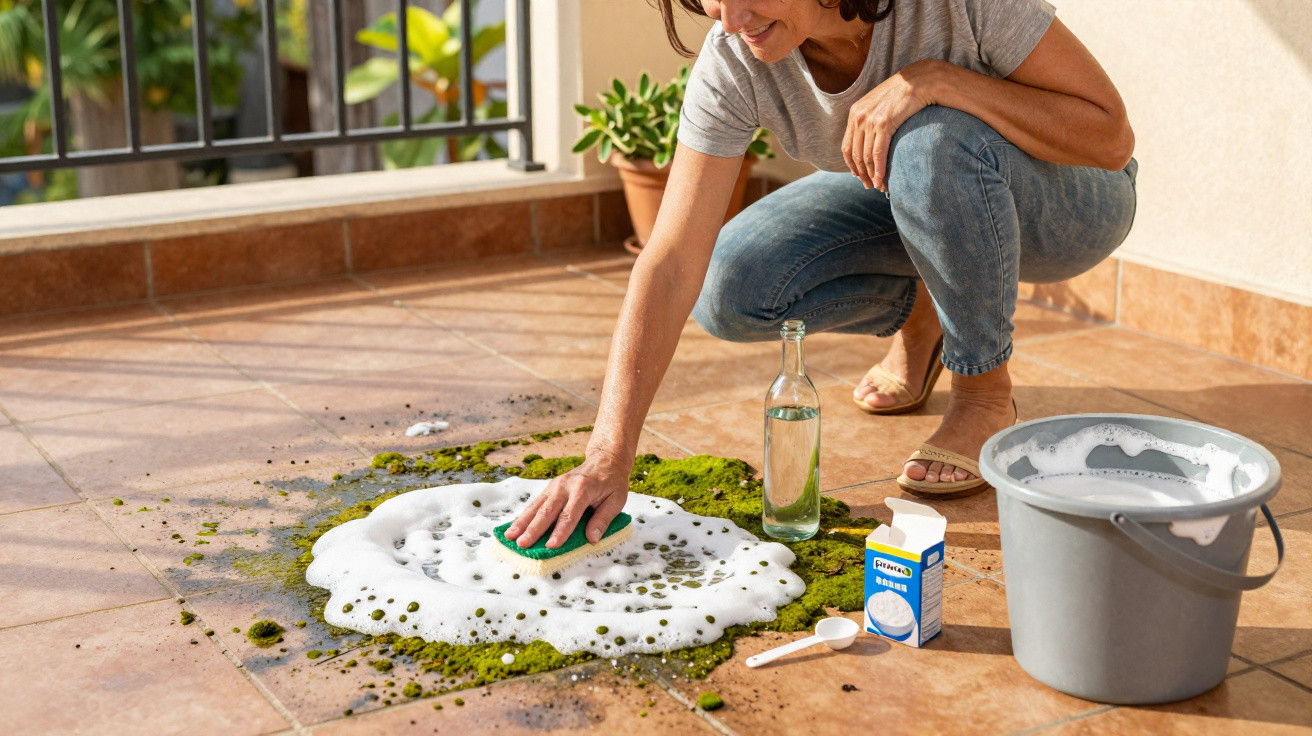
Many people scrub for hours until they’re exhausted, only to find the moss creeping back a few days later. The fix, however, is quite literally sitting in the kitchen cupboard: it costs next to nothing, is kinder to your garden, and can keep stone surfaces moss-free for the long haul.
Why moss spreads so quickly on patios and driveways
Moss thrives wherever it stays damp and shaded. That’s exactly what patio slabs, block paving, driveways, garden paths, walls and even roofs often provide. After winter, water frequently lingers in the joints, sunlight struggles to reach the surface, and the conditions quickly become perfect for a green film to take hold.
Most people respond with a stiff brush or a pressure washer. It may look clean at first, but the underlying cause usually remains.
"If you only scrub, the green carpets disappear, but the tiny spores and anchoring ‘roots’ are still lodged deep in the cracks."
Those rhizoids are precisely why moss can re-sprout so soon. If you tackle only what you can see, you’re typically buying yourself just a few weeks.
Chemical moss killers can be effective, but many contain harsh ingredients that may harm borders, lawns or even contaminate groundwater. If you care about maintaining a healthy garden, it’s understandable to avoid spreading those products across large areas.
The secret weapon from the kitchen cupboard: vinegar and bicarbonate of soda
The good news is that two everyday staples are often enough to remove moss far more thoroughly-without any specialist cleaner.
"The combination of household vinegar and bicarbonate of soda works like a double strike against moss: visibly on top and deep down."
Household vinegar contains acetic acid, which penetrates plant tissue and breaks down the moss’s cell structure. Bicarbonate of soda is mildly alkaline and helps draw moisture out of the growth, particularly around the ‘root’ area. That makes re-growth much harder.
A small squirt of washing-up liquid improves the results: it acts as a wetting agent, helping the solution cling to moss cushions instead of running straight off.
What you’ll need
- Household vinegar (clear/white, undiluted or slightly diluted)
- Bicarbonate of soda powder
- Washing-up liquid (a small squirt is enough)
- Hot water
- Bucket or tub
- A stiff scrubbing brush or a yard broom with strong bristles
The ideal moment to do this is on a dry, overcast day. Rain will dilute the mixture and wash it into borders, while strong sun can make it evaporate too quickly.
Step-by-step: how to remove moss from stone surfaces
1. Prepare the area properly
Before mixing anything, sweep the patio or driveway thoroughly. Remove leaves, soil, sand and loose debris so the solution can contact the moss directly.
2. Mix the cleaning solution
Fill a bucket with hot water. Add a generous splash of vinegar, stir in two to three tablespoons of bicarbonate of soda, then finish with a little washing-up liquid. Pause briefly until the fizzing calms down.
"The mixture doesn’t need laboratory-accurate measurements-what matters is that there’s a clearly noticeable amount of both vinegar and bicarbonate of soda."
3. Apply the solution generously
Pour the liquid straight onto the mossy patches or distribute it with a watering can. Make sure joints, edges and awkward corners are properly wetted too.
Then wait. Leave it to work for at least 15 to 30 minutes. During this time, the acetic acid gets to work inside the plant cells, while the bicarbonate helps dry the layer out.
4. Help it along mechanically
Once the waiting time is up, scrub in circular motions with a stiff brush. At this point, the moss will often lift off in thick flakes or whole sheets.
If you’re dealing with a larger area, a coarse yard broom can be quicker. The key is firm pressure so the remaining material is pulled out of the joints.
5. Rinse carefully-but in the right direction
Finally, rinse the entire surface with clean water, ideally using a garden hose. This removes vinegar residue, bicarbonate and the loosened moss.
Make sure the runoff flows away from borders, vegetable beds and delicate ornamentals. Acetic acid can damage leaves and roots there, particularly on young plants.
Keeping moss away: how to keep the patio clean long term
If you only reach for the bucket once a year, you’ll keep seeing that green coating return. The real trick is to change the conditions that allow moss to form in the first place.
"Moss loves standing moisture, shade and tight joints-change those, and you’re already halfway there."
More light, less moisture
- Improve drainage: deal with puddles on patio slabs where possible, for example by creating a slight fall or clearing drainage channels.
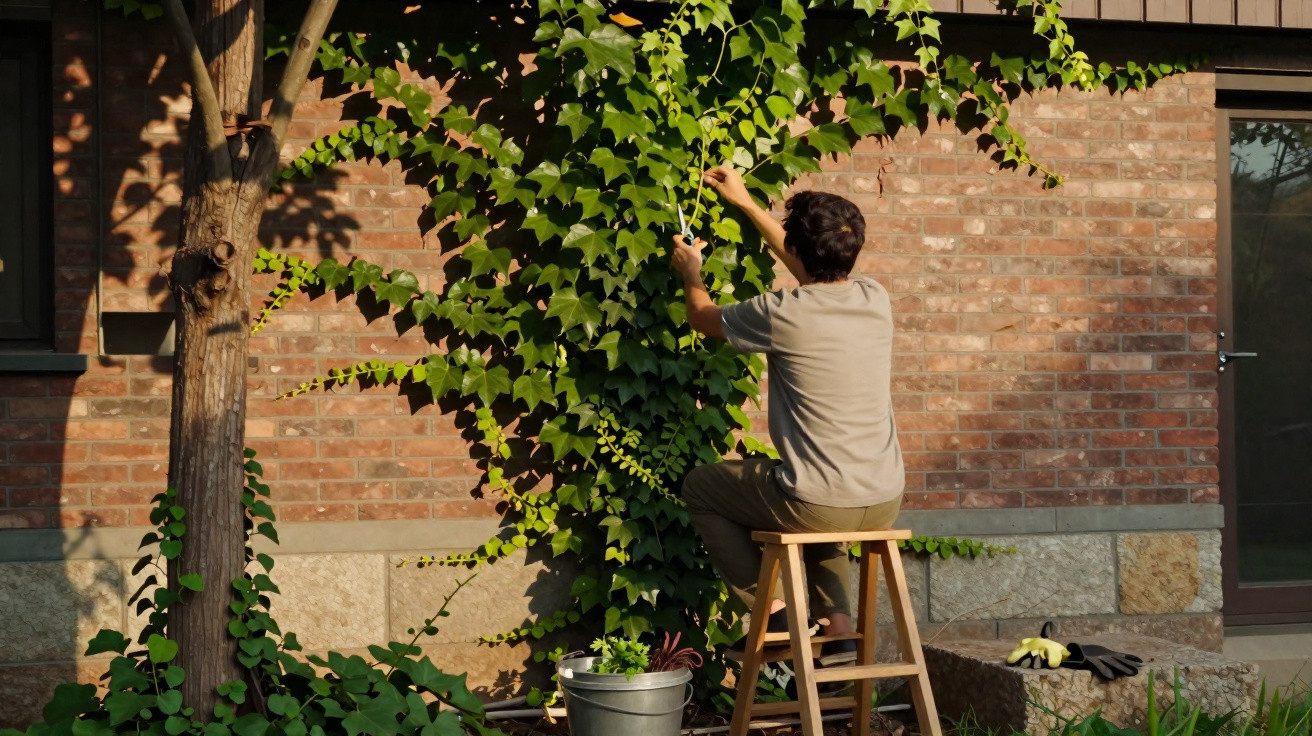
- Reduce shade: prune shrubs and trees regularly so more light reaches the stone surfaces.
- Maintain the joints: refill washed-out or very deep joints so less moisture can collect.
Planting around the patio also makes a difference. Dense ground cover can hold moisture for a long time, while gravel areas tend to dry out faster. If you’re planning new beds, keep that effect in mind.
Prevention with vinegar and bicarbonate of soda
You can also use the homemade solution as a preventative measure. A lighter, less concentrated mix applied every two to three months keeps many areas visibly cleaner before thick mats can form again.
It’s inexpensive, quick to do, and saves you a big, back-breaking clean at the start of the season.
When to be cautious
As handy as this kitchen-cupboard trick is, it still needs sensible care.
| Area | What to watch out for |
|---|---|
| Lawns & borders | Don’t pour the solution directly onto grass or flowers-vinegar can harm plants. |
| Joints with plants | Helpful joint plants such as thyme or cushion perennials will be affected as well. |
| Metals | Don’t leave vinegar sitting on metal edging or railings for long, as there’s a risk of corrosion. |
| Sensitive stone | Test natural stone slabs in an inconspicuous spot first in case discolouration occurs. |
What people often mistake for moss-and how to respond correctly
Not every green coating is classic moss. It’s often algae or lichen instead. They tend to react similarly to vinegar and bicarbonate of soda, but sometimes need extra time and a bit more scrubbing.
If you’re seeing black, slimy-looking patches on north-facing areas or walls, it’s frequently algae. The same method usually works, occasionally helped by a second treatment a few days later.
Practical tips for less work next year
If you time the clean-up well, you can cut the workload later. A good plan is one session in early spring before you start using the patio regularly, followed by a second pass in late summer.
If you’re already doing garden jobs-such as pruning shrubs or reorganising borders-build the moss treatment into that schedule. It becomes routine, and the surfaces are far less likely to reach the stage where they need a drastic overhaul.
There’s another benefit too: avoiding aggressive chemicals helps protect not only plants and soil, but also pets and children playing outdoors. Used sensibly, vinegar, bicarbonate of soda and a small squirt of washing-up liquid are generally much gentler options and can be applied more responsibly.




Comments
No comments yet. Be the first to comment!
Leave a Comment