
In countless neighbourhoods, the pattern is the same: spring arrives, the garden bursts into colour, everyone takes photos, posts them, and soaks up the compliments.
Then, three months later, the picture shifts. Petals drop, the soil looks bare, pots seem tired, and that little corner that looked magazine-worthy turns into a slightly dull patch of the back garden. You look around and think, “What did I do wrong?”
In most homes, a garden is treated like an event rather than an ongoing process. People buy a pile of young plants in one go, without considering whether they bloom at the same time, which season they flower in, or how long they last. The result is a short-lived show, followed by months of green emptiness. It doesn’t have to be that way. With a bit of planning, your garden can become a sequence of scenes rather than a 15‑minute film.
There’s a quiet trick-almost boring in how simple it is-that separates ordinary gardens from the ones that always look like they’re in peak season. And it starts on paper, not at the garden centre.
The secret hidden in the flowers’ calendar
People who have a garden in bloom all year round almost always share one habit: they think about seasons before they think about colour. It sounds like a small detail, but it changes everything. Instead of choosing “pretty flowers”, they choose summer flowers, autumn flowers, winter flowers, spring flowers-as if they’re building a diary. They create an invisible timeline in the garden.
In practice, that means this: rather than filling a flower bed with species that only peak in spring, you combine plants with different flowering highs. Some take centre stage in January, others shine in May, others hold on in July. The garden is never at one single, absolute peak-yet it’s also never completely switched off. It’s a relay, almost like a home-and-away season where different plants take turns carrying the show.
In Campinas, in the countryside of São Paulo, Dona Helena, 67, became “the flower lady” on her street thanks to an old notebook with a blue cover. In it, she’s recorded for years the month each plant in her garden produces its first bud. In March, the lilies step in. In June, the azaleas take over. In August, grafted roses make their appearance. The notebook has become a reference for neighbours-and even for her grandson, who uses his grandmother’s dates to plan a small garden in a compact flat.
Data from Embrapa backs up what many people learn the hard way: gardens planned by season spend less on replacing young plants across the year. Fewer plants die because they were put in at the wrong time, and there are fewer impulse buys. In housing developments, property managers report up to 30% annual savings when they follow a basic flowering calendar. It’s the kind of information you almost never see on a plant label, yet it’s what decides whether your garden will be fleeting or consistent.
Garden planning can sound technical, but it’s far more about logic than advanced botany. Every plant has a rhythm: it grows, it flowers, it rests. If you choose only species that “take holidays” at the same time, the whole garden goes quiet in one go. If you alternate cycles, there’s always something “on duty”. It’s obvious when you put it like that-yet in the rush of a trip to the garden centre, most people buy with their eyes and ignore the calendar. Let’s be honest: almost nobody walks into a plant nursery with flowering months memorised.
Once you switch that mindset, things start to fall into place. Plants stop being random pieces and become a cast. And any good cast works best with a well-spread rota.
A simple plan that fits on an A4 sheet
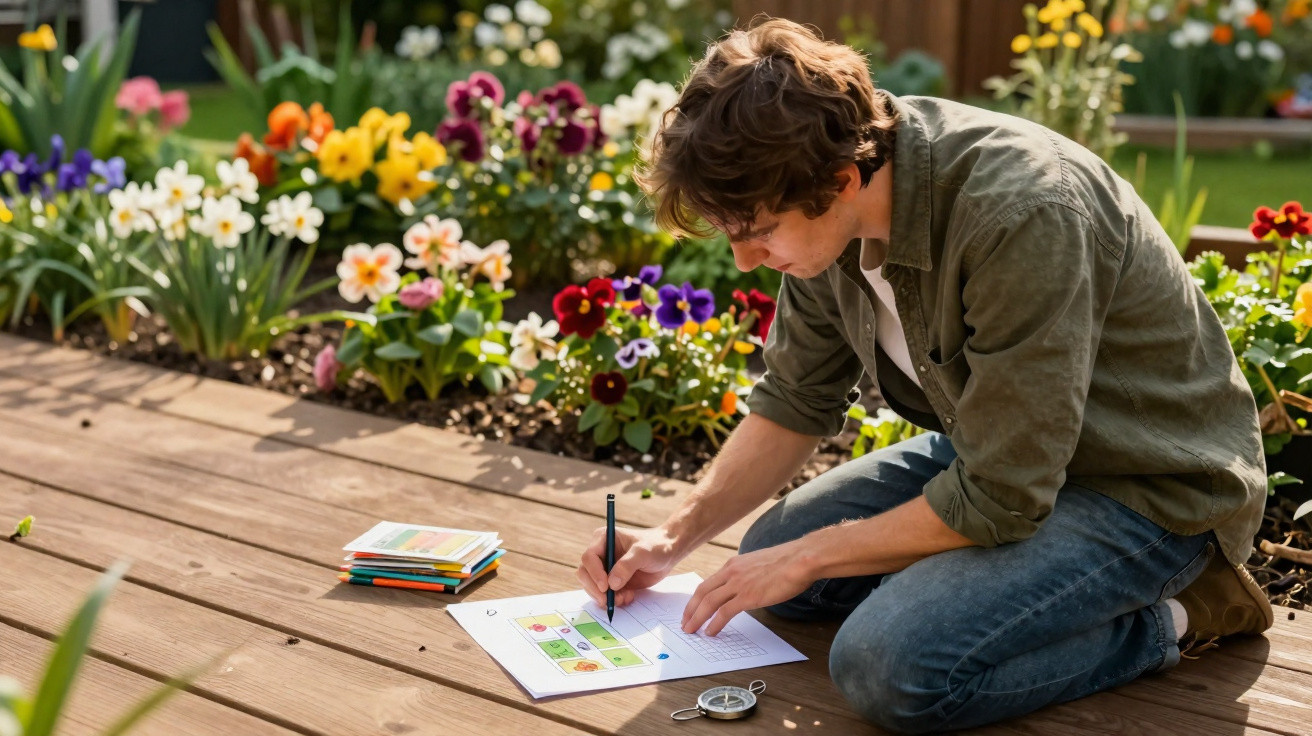
The practical method fits on one page. Take a sheet of paper, draw a line with the months of the year, and split it into four big blocks: summer, autumn, winter, and spring. Then list, from memory or with help from Google, three or four flowers typical of each season that suit your area. It doesn’t need to be perfect-it just needs to exist.
Now for the enjoyable part. Use a coloured pen to mark what you already have in your garden and roughly when those plants tend to flower. A pattern will show up. In many homes, summer and spring look packed, while autumn and winter resemble deserts. This simple visual makes the gaps obvious. In cities in Brazil’s south, for instance, you can lean on pansies and snapdragons through the colder months, while in the north-east, ixoras and hibiscus can keep the garden looking good for much of the year.
With that map in hand, your next trip to the garden centre stops being a random treasure hunt. You start looking for “winter flowers” or “partial-shade flowers for autumn”, rather than simply “something nice for today”. It’s like organising a wardrobe: if you only buy summer clothes, you’ll be cold. A garden works the same way-we just take longer to admit it.
Many people lose heart because they assume a garden needs daily attention to look its best all the time. There’s often a quiet sense of guilt: “I don’t look after it enough, that’s why nothing thrives.” In a lot of cases, it isn’t effort-it’s mismatched plant choices. Cold-climate plants struggling in harsh sun, shade flowers scorching on a concrete terrace, annuals treated as if they’re long-lived shrubs.
One common mistake is to cram a flower bed with short-lived plants-like petunias and marigolds-expecting them to hold the look all year. When they finish, the empty space feels stark. Another slip is forgetting about height and overall size. If everything is low-growing, the garden can look charming for two months and then flat and repetitive. It lacks layers, depth, and that interplay of heights that keeps a bed visually interesting even when some flowers have faded.
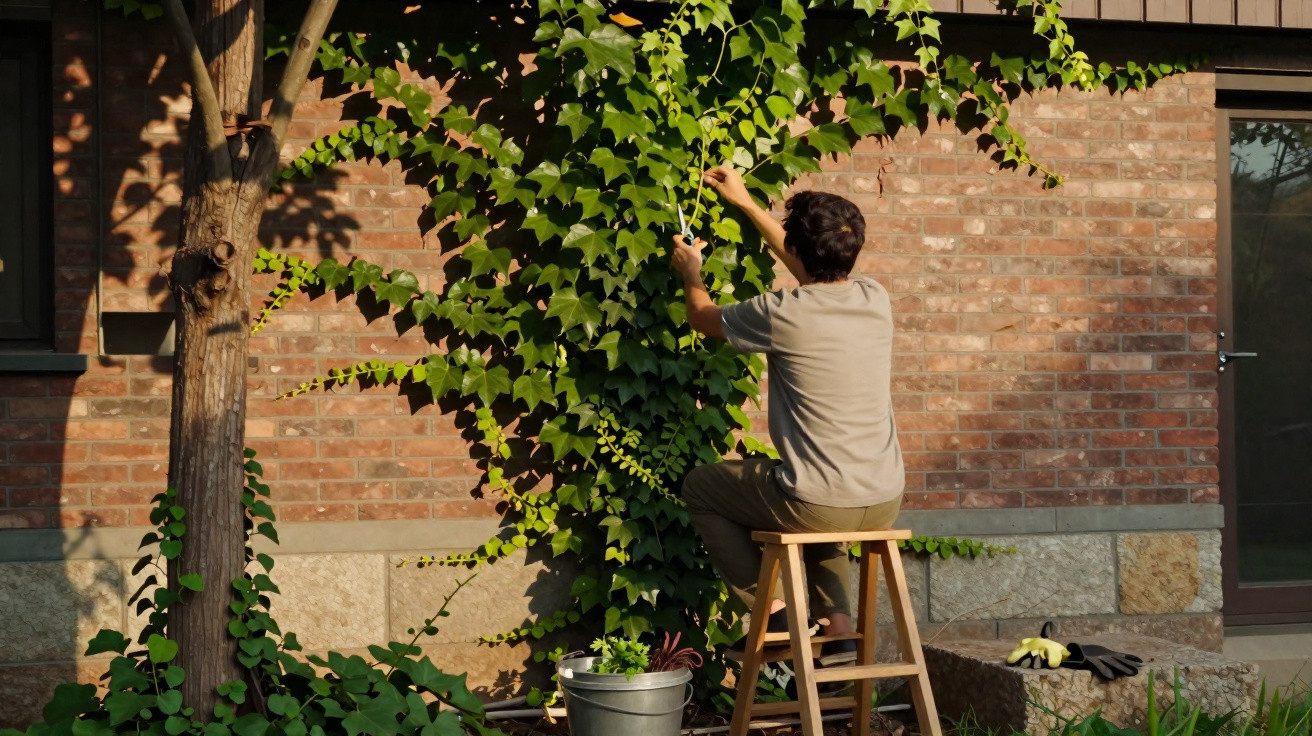
There’s also a myth about perfect watering-as if the secret is timing the hose and the sprayer to the minute. The truth is that a well-planned garden can cope with the odd lapse. You include tougher species for hectic weeks, shade plants for tricky spots, climbers that keep a wall looking alive when the bed is resting. Care becomes a light routine rather than a heavy obligation.
“A garden that lasts all year is less about having time and more about making good choices right at the beginning”, sums up the fictional landscape designer Marcelo Antunes, who for two decades has designed back gardens in cities with very different climates, from Curitiba to Fortaleza.
He often points beginners towards a straightforward set of priorities:
- Choose at least one robust species for each season
- Mix short-cycle plants with shrubs that flower several times a year
- Ensure at least one point of colour in the area of the home with the most footfall
- Use strategically placed pots to cover “gaps” when an area is resting
- Prefer species suited to the local climate rather than social-media trends
This kind of checklist isn’t a rigid rulebook-it’s a compass. It helps cut frustration, unnecessary spending, and that feeling that gardening “just isn’t for you”. Planning, in the end, is about creating the conditions for nature to do its part with less drama.
A garden that shifts mood with the year
Having flowers all year doesn’t mean freezing the garden into one perfect photo. The outdoor space will change in look, texture, and intensity. Some months will bring a colour explosion; others will be quieter, with beauty in foliage, in fresh shoots, or in a single stubborn bloom opening in an unlikely corner. That movement is exactly what makes a garden feel alive.
When you begin to see the outside space as a 12‑chapter story rather than a fixed poster, the “trick” stops being technical and becomes almost philosophical. You accept that some species will vanish for a while so others can take focus. You learn to enjoy the transitions. A bed that in January is overflowing with zinnias can, in July, let a simple rosemary in flower take the spotlight-and still pull out a quiet smile in the first hour of the morning.
This style of simple planning works at any scale: from a huge back garden behind an old house to a single pot on the balcony of a studio flat. In every case, thinking in seasons helps you dodge the disappointment of “peak gardens” that look incredible briefly and then fade. And perhaps that’s the most interesting part: when the homeowner understands that a garden is a process, the anxiety for instant results eases. They buy less, observe more, get something wrong, get the next thing right, chat with a neighbour, swap cuttings, try another species. The garden stops being mere scenery and becomes a character in daily life.
| Key point | Detail | Value for the reader |
|---|---|---|
| Plan by season | Map flowers for summer, autumn, winter and spring | Keeps colour continuous without relying on impulse buys |
| Combine different cycles | Blend annuals, perennials and flowering shrubs | Reduces garden “blackouts” across the year |
| Choose plants suited to the local climate | Prioritise species adapted to your region and available light | Fewer losses, less upkeep and less frustration |
FAQ:
Question 1
Which flowers are good for starting a garden that blooms for almost the whole year?
Start with hardy classics such as hibiscus, ixora, lantana and miniature roses, which often flower for long stretches. Add a few easy annuals, such as marigolds and zinnias, to create bursts of colour at specific times.Question 2
My back garden gets very little sun. Can I still have flowers all year?
Yes, but you’ll need a different selection. Choose partial-shade plants such as bromeliads, impatiens, begonias and some orchids. They won’t produce continuous “carpets” of colour, but they do provide steady points of interest.Question 3
Do I need to fertilise every month to keep the garden flowering?
No. In many cases, 3 to 4 well-timed feeds per year are enough, alongside healthy soil and sensible watering. Overdoing fertiliser can mean lots of leaves and fewer flowers.Question 4
How can I quickly cover an empty space in a flower bed?
Use large pots as temporary “gap fillers”. Put peak-flowering plants in them and slot them between your permanent plants. When the bed recovers, move the pot elsewhere.Question 5
Is it better to buy larger or smaller young plants?
Smaller young plants often adapt better to your garden’s soil and climate, even though they take a little longer to fill out. Larger ones give instant impact, but they’re more stressed by transplanting and cost more.


Comments
No comments yet. Be the first to comment!
Leave a Comment