
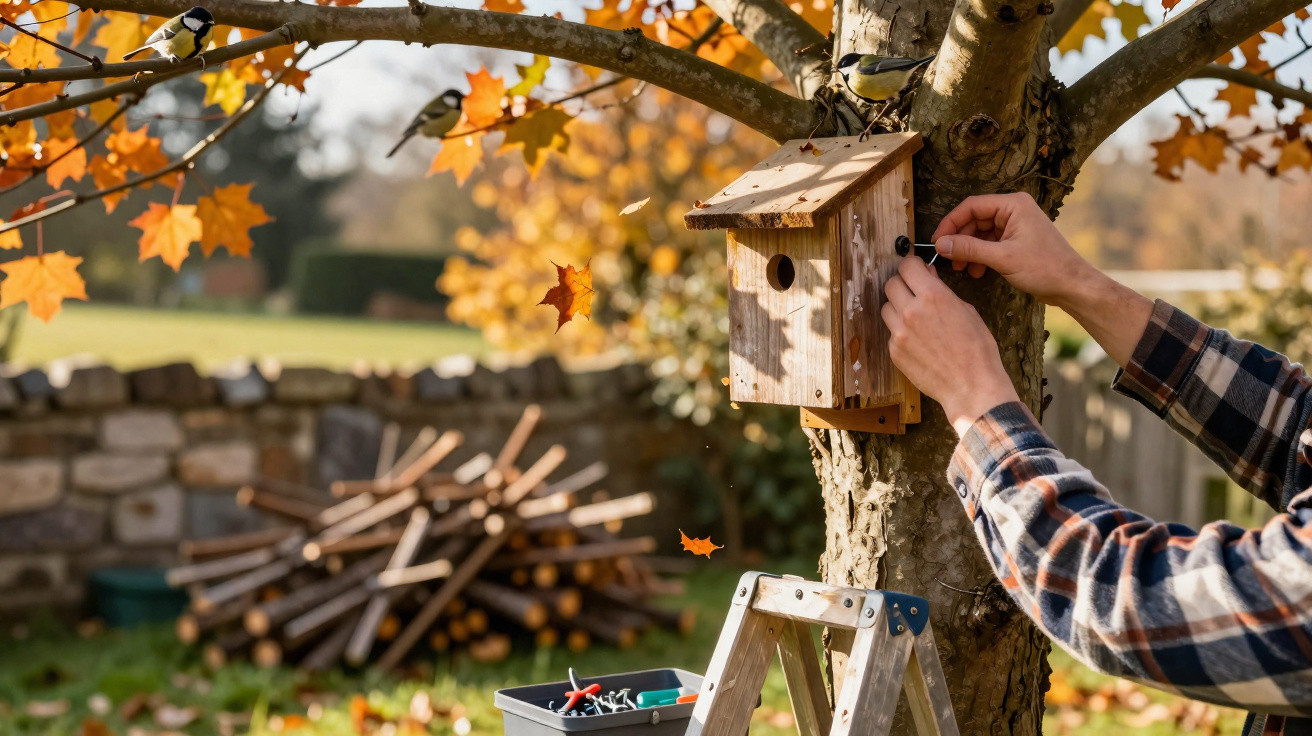
That new nest box looks smart and well made, the spot seems ideal - yet it stays unused. Surprisingly often, the issue isn’t the design or your garden at all, but one simple, decisive factor: timing. If you put it up after the first warm days of spring, you’re very likely backing the wrong horse.
Why spring is the worst time to put up a nest box
For many people, the first mild days signal the start of the gardening year: fresh decorations, a tidy-up and a list of new jobs. A nest box gets treated like outdoor furniture - it goes up when the weather improves. Birds, however, run to a very different timetable.
By the time we start, the birds have already made their choices
Once fruit trees are flowering and buds are bursting, many species have already claimed their territories. Males such as the great tit or the robin will often have spent weeks marking out their patch, singing, driving off rivals and checking suitable cavities.
"If you only put up your nest box in March or April, you’re often simply too late - the ‘house-hunting’ has already happened."
A box that appears suddenly in the middle of this sensitive period doesn’t feel like an attractive new option - it can come across as an intruder. Birds are busy with finding a mate and defending a territory, and they tend to react far more stressfully to change.
Spring garden tidy-ups disrupt breeding plans
A common pattern is doing everything at once: raking leaves, pruning shrubs, bringing out the furniture, then fixing up the nest box. Convenient for us - but awkward for birds.
- Sudden, frequent activity right where the box is mounted
- Noise from sawing, raking, climbing up and down ladders
- A brand-new object appearing in the territory at the most delicate moment
Smaller songbirds in particular can be wary. They often avoid anything that looks “new” and obviously human-made - especially when work is happening regularly right next to it.
The ideal time: when leaves are falling, not when they’re unfolding
If you genuinely want to help birds - and maximise the chance the box will be taken - it’s worth resetting your calendar. The best window starts when many people have mentally written the garden off for the year.
Golden rule: October to December is nest box season
Ornithologists recommend putting up nest boxes from early autumn through to the start of winter - roughly October to the end of December.
"Put up in autumn, occupied in spring: a nest box needs lead time to slot into the natural rhythm."
The advantages of installing in autumn:
- The box has time to “weather in” visually and blend into its surroundings.
- Birds can get used to seeing it over several months.
- Winter visitors may use it as a roost - and remember where it is.
- There is less disturbance because far less work happens in the garden.
Even if a box fitted very late in winter isn’t chosen until the second year, it will still be far better prepared by then.
Make smart use of autumn tree and shrub pruning
Autumn brings a practical bonus: many people are already cutting back trees and shrubs. With the leaves gone, you can see the branch structure clearly and judge stability much more easily.
How to get the installation right:
- Choose a solid trunk or strong branch, not thin twigs.
- Use tree-friendly fixings if you use wire (for example, plastic-coated wire).
- Don’t let the wire bite in - check regularly and loosen when needed.
A box firmly installed in autumn is more likely to come through winter storms unscathed than one hurriedly hung in spring on a poor branch.
Birds assess their “property” long before moving in
From a bird’s perspective, nest boxes aren’t cute ornaments - they’re potential nurseries. That’s why they’re inspected so carefully.
Weeks of safety checks instead of a snap decision
Before a bird breeds in a box, it will often evaluate the spot repeatedly:
- Does the box sit firmly, or does it swing heavily in the wind?
- Is the entrance hole the right size for the species and its sense of security?
- How deep is the nesting chamber, and how well hidden does it feel?
- Are cats, magpies or people frequently present nearby?
"A box that’s been hanging for months signals reliability. A newly put-up one looks suspicious."
This settling-in phase can take several weeks. That’s why a box mounted in autumn has already been “tested” by spring - and is far more appealing than one that has only been up for a few days.
A familiar sight, not an obvious intruder
In nature, anything that stands out too strongly can be dangerous. A brand-new, pale, clean-looking box right before breeding season can therefore read as a warning rather than an invitation.
If it has spent the whole winter on the tree, birds tend to accept it as part of the background. They’ll pass it during foraging, perch on it as a trial, look inside - and gradually lose their hesitation.
Nest box as a winter roost: a life-saver on cold nights
One point is often overlooked: a nest box doesn’t only protect chicks in spring - it can help adult birds survive cold nights in winter.
Shelter from cold and predators during winter nights
Small species such as the wren or tits lose huge amounts of energy on frosty nights. Bare branches offer little protection. A closed cavity helps retain warmth and keeps predators at a safer distance.
"An empty box in January can become a dormitory for several birds - and a form of insurance against cold and wind."
By putting the box up in autumn, you’re offering shelter as soon as the first hard frosts arrive. Many birds that roost there in winter later like to use the same place as a breeding site.
From winter shelter to family nest
A bird that has had months of good experiences with a box is more likely to rate it as safe. It learns the area, the flight paths and the potential threats. That familiarity lowers the barrier to choosing the same place for breeding.
This creates a natural progression: winter roosters can turn into spring breeders, and the box is much more likely to end up housing a family.
Smells and patina: why the box should look “old”
What smells pleasant to people is often a red flag to birds. Fresh timber scent, oils or stains can put them off.
New scents can signal danger
A box fitted straight after purchase or painting often gives off strong smells: workshop, warehouse, human hands, care products. To us that reads as “clean” or “high quality”; to wild animals it can feel threatening.
"Smells can take weeks to months to fade - another reason to install early."
Hanging the box in autumn gives wind and rain time to wash those odours away. Even untreated wood benefits from weathering, which helps neutralise that “new timber” smell.
Weathered grey beats fresh timber
Rain, frost and sun create a natural patina over winter. The wood darkens, turns grey-brown and may pick up moss or lichen. That worn-in appearance is exactly what helps it disappear into the tree’s surroundings.
Birds respond to visuals as well as scent. A box that resembles bark looks far more trustworthy than a bright, smooth object that stands out.
Correct installation: position, height and details matter
Even perfect timing won’t help much if the box is badly placed or poorly designed. A few basics can greatly improve the chances it will be used year after year.
The right direction for the entrance
In north-west Europe, damp, chilly winds often come from westerly directions. If the entrance faces that way, rain can blow straight in, the brood can chill, and mould becomes a risk.
- Aim the entrance towards the east or south-east where possible
- Don’t point the front into the main wind direction
- Morning sun is helpful, but avoid relentless midday heat
With this orientation, the inside stays drier and the temperature remains steadier - both crucial for chick survival.
Height, spacing and protection from predators
As a rule of thumb, mount the box between 1.5 and 4 metres high, depending on the species and your garden. Cats, martens and other predators shouldn’t be able to reach it easily, and it shouldn’t be somewhere people constantly knock into it.
The position within the tree also matters:
- Prefer a sturdy trunk rather than a thin, wobbling branch
- Don’t place it totally exposed in the open; some cover from branches or leaves helps
- Avoid spots close to bright lights or heavily used patios
Not a dripping cave: moisture must escape
A good nest box needs small drainage holes in the base and ventilation slots under the roof. Damp inside leads to mould, parasites and dangerous cold for chicks.
"If you install in autumn, you can check the box calmly beforehand and, if needed, improve it with a drill and saw."
If you buy a budget box from a DIY shop, specifically check for drainage and ventilation. If they’re missing, a quick bit of basic DIY is worth doing.
Once a year: empty it properly
At the latest in January or February, open the box and remove the old nest. Parasites and droppings build up and can harm future broods.
- Dispose of all old nesting material
- Sweep out the inside roughly while wearing gloves
- Don’t use harsh cleaners; plain water is enough, if anything
Ideally, do this on a dry, cool day. Birds usually return to use the box as a roost the same evening or the next.
More life in the garden: what a nest box can really do
A well-planned, properly mounted nest box is more than a nice extra on a tree - it can noticeably shift the balance in your garden.
A few examples:
- A family of tits can consume thousands of caterpillars and other insects while raising chicks.
- Fewer aphids and pests means less need for sprays.
- Bird activity brings movement and opportunities for watching wildlife - especially captivating for children.
If you place a nest box at the right time - in other words, in autumn - and pay attention to sensible details such as location, odour and construction, you don’t just improve the odds of feathered tenants. You help create a stable, nature-friendly mini ecosystem right outside your door.
In practice, it’s easy to combine this with other steps: plant native shrubs, avoid toxic products, and leave some spent perennials standing through winter. Together with an early-installed, well-set-up nest box, this makes a garden where birds don’t just pass through - they genuinely settle.



Comments
No comments yet. Be the first to comment!
Leave a Comment