
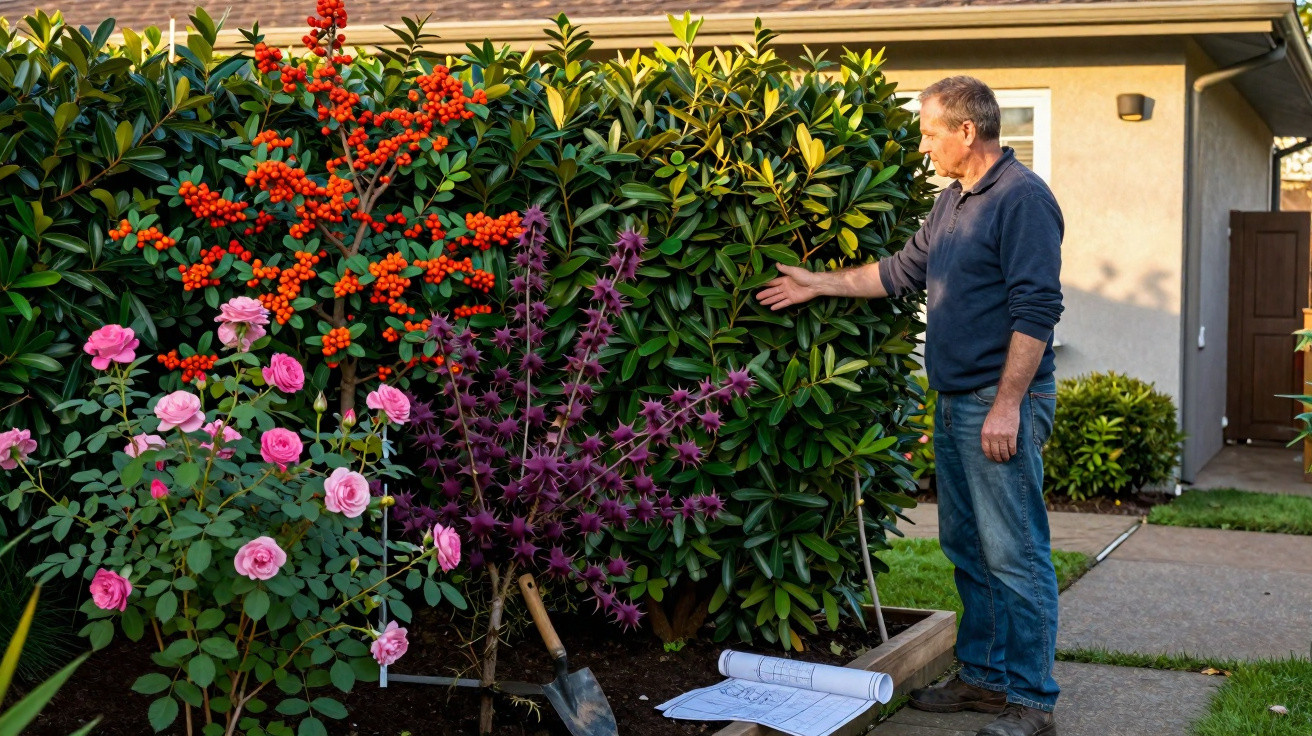
Summer holidays, bank holidays and long weekends: when a house sits empty for longer, worries about unwanted visitors rise. Police statistics repeatedly show how tempting unprotected properties are for offenders. Alongside cameras, smart-home systems and a secure front door, the planting around your home can form a surprisingly effective barrier – and can quite literally put burglars off trying their luck.
How a garden genuinely deters criminals
A burglar usually chooses the simplest route: minimal risk of injury, as little noise as possible, and a quick way out. That is exactly where “defensive” planting comes in. Dense, heavily thorned shrubs force intruders either to take long detours or accept painful scratches – while also creating clearly audible rustling and snapping.
“A dense, spiky hedge combined with crunching gravel turns a quick grab into a risky obstacle course.”
Studies from different countries suggest that where a deliberately planned, hard-to-penetrate hedge surrounds a plot, the risk of break-ins drops noticeably. Offenders tend to avoid homes where they might get hurt, make noise, or simply take longer.
Plants are not a replacement for an alarm system; they work as an extra layer. Letting the garden become overgrown can even backfire: tall, neglected shrubs create perfect hiding places for someone to creep along the house unseen. What matters is a clear, tidy layout – entrances that are easy to spot, no dark corners, and no planting that allows a person to hide comfortably.
Four plants that can become a natural defensive hedge
For effective plant-based burglary deterrence, four types are particularly useful. They are easy to grow in typical UK gardens and also act as a practical deterrent.
Pyracantha – the extremely defensive firethorn
Firethorn (Pyracantha) is a classic among defensive plants. It forms dense, strongly branched bushes and carries countless sharp thorns.
- Ideal for an impenetrable hedge along fences
- Especially effective beneath low windows or balcony access points
- Provides valuable food for birds thanks to its berries
Plant firethorn at roughly 50–70 cm spacing; it will quickly knit into a closed hedge that is difficult to get through. Anyone trying to climb across is very likely to end up with scratched hands, forearms and clothing – exactly the kind of risk many offenders avoid.
Barberry (Berberis) – a compact thorn barrier for side access
Barberry (Berberis, often sold as barberry) stays a little lower than some options, but it grows extremely densely and has strong spines. That makes it particularly suitable for blocking tucked-away routes.
- Perfect for narrow side paths beside the house
- Well suited to screening off back doors or cellar steps
- Many varieties also offer attractive autumn colour
Used alongside firethorn, it creates a kind of “thorn fence” along the boundary: far more welcoming in appearance than metal railings, yet even more unpleasant for a burglar to force their way through.
Rosa rugosa – the deceptively tough security rose strip
The rugosa rose (Rosa rugosa) looks harmless, but it is very thorny and quickly forms a closed, heavy thicket. That is precisely why it works well beneath windows that are easy to reach.
Typical locations include:
- Under ground-floor windows facing the street
- In front of patio doors or ground-floor balcony doors
- In beds that provide direct access up to window sills
If someone tries to climb in through a window but has to push through a wide rose strip first, it is very hard to do discreetly. Thorns snag clothing, leave visible scratches and, above all, cost time.
Cherry laurel – privacy screening with a security bonus
Cherry laurel (Prunus laurocerasus, commonly called cherry laurel) is not as spiky as the other plants listed, but it still plays an important role: it creates an evergreen, opaque screen.
Used correctly, it serves two purposes at once:
- Shields your garden from prying eyes from the street
- Also signals clearly that the plot is firmly defined
Placed in front of large glazed areas – such as floor-to-ceiling windows or patio doors – cherry laurel creates a green “curtain”. A burglar cannot tell at a glance whether anyone is home or what valuables are visible in the living room, which makes the target less appealing.
How to plan your thorny protective belt around the house
If you want plants to provide meaningful burglary deterrence, it helps to avoid random planting and instead follow a simple layout.
- Facing the street: a row of cherry laurel as a privacy screen, ideally with a layer of gravel underneath that crunches loudly when stepped on.
- Side boundaries: a dense hedge of firethorn and barberry, planted in alternating sections.
- Under vulnerable windows: a wide strip of Rosa rugosa.
- Main route to the front door: no shrubs; instead, a clearly visible path finished with gravel.
This mix ensures intruders encounter barriers, while residents and visitors can still use the entrance comfortably and safely. Important: avoid planting thorny shrubs right next to children’s play areas or at the edge of a pool to reduce the risk of accidents.
Legal distances, maintenance and lighting
In many areas, there are clear rules on hedges: if you plant higher than 2 m, you usually have to keep a minimum distance from the boundary. A practical rule of thumb is to leave at least 2 m between tall hedges and the boundary to avoid disputes with neighbours or the local council.
Maintenance is essential. At least once a year, prune, remove dead branches and make sure no dense, unlit “black spots” develop. In particular, paths must remain wide enough for family, visitors and, in an emergency, the emergency services to pass through without difficulty.
“The best security hedge is maintained, easy to see through and intelligently combined with lighting – not a neglected jungle.”
A highly effective add-on is lighting with motion sensors. If the thorny zone is brightly lit the moment someone steps into the garden, it often discourages offenders immediately. Together with gravel areas that make noise underfoot, you get a combined effect of visibility, sound and injury risk.
What these plants can do – and what they cannot
Thorn hedges will never prevent a break-in 100%. Skilled offenders who have specifically targeted your home can still find a way past thorns and gravel. The main benefit is elsewhere: your property drops well down the list of “easy targets”. Someone quickly scanning a street is more likely to choose the neighbouring plot with fewer obstacles.
Many gardeners also appreciate the visual benefits. Firethorn and barberry bring colourful berries and foliage, rugosa roses add summer scent, and cherry laurel provides a calm, green backdrop. That way, you can combine security and design without turning the plot into a fortress.
Practical tips to get started
If you are only just beginning, start with one area – often beneath the easiest-to-reach windows. A few concrete pointers for getting going:
- Younger plants are cheaper, but they take longer to grow into a dense barrier.
- Plant thorny shrubs in two staggered rows to avoid gaps.
- Use gardening gloves and protective clothing – the thorns are unforgiving.
- Consider the eventual mature height at planting time so windows do not become completely overgrown.
If you have children or pets, mark routes clearly so nobody accidentally runs through the “thorn zone”. A small decorative fence or a line of stepping stones helps make the safe paths obvious.
Combined with physical measures such as security-rated windows and doors, a simple timer for lights indoors, and attentive neighbours, this becomes a layered security strategy. The plants form the quiet, green outer line – but one that often triggers a retreat straight away.



Comments
No comments yet. Be the first to comment!
Leave a Comment