
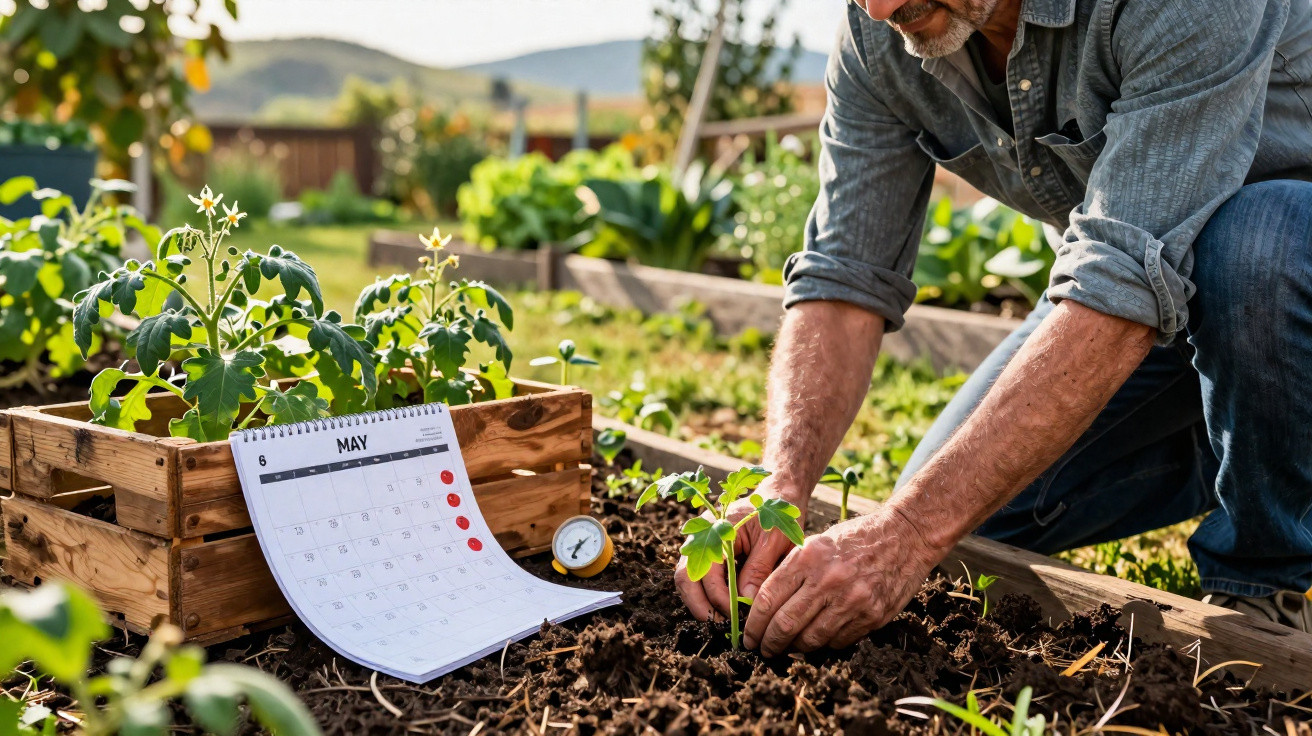
Home-grown tomatoes taste of sunshine, summer and a quiet sense of achievement. They’re worlds apart from the often bland fruits you pick up in the supermarket. Yet the biggest factor behind a generous crop is decided much earlier in the year: choosing the right moment to plant out young plants into the garden bed or raised bed. Get the timing wrong and you can pay later with disease, weak growth and tiny yields.
Why timing is so crucial for tomatoes
Tomatoes thrive on warmth. Originally from much hotter climates, they react very poorly to cold conditions. Even temperatures below 10°C can slow growth dramatically. A proper frost - or even a ground frost - can wipe plants out overnight.
That’s why many hobby gardeners fall into the same trap: impatience. As soon as the first mild days arrive, plants are moved outdoors in April, even though that early warmth can be deceptive. It often looks fine for a day or two - until the nights turn cold again.
"If you plant tomatoes out too early, you often end up with compact, stressed plants that later produce less and are more prone to disease."
Planting out too soon can cause tomatoes to stall. Growth barely progresses, leaves may take on a bluish or yellowish tinge, and the plant remains under constant stress. Leave it too late, however, and the harvest window shortens noticeably - the first ripe fruits arrive later, sometimes only when the peak summer warmth is already fading.
Why experienced gardeners watch the “Ice Saints”
In German-speaking countries, gardeners often use a traditional benchmark similar to one known in France: the famous “Ice Saints” in mid-May. Meteorologists may raise an eyebrow at times, but gardeners still rely on this long-standing rule of thumb - and it proves surprisingly accurate.
The guideline is simple: late night frosts can still occur until around mid-May. In many areas, the “Ice Saints” mark the end of the risky period. After that, the chances of night temperatures dropping below 5°C are much lower.
"Tomatoes only really feel comfortable once night-time temperatures stay around 12°C - below that they may survive, but they develop poorly."
For this reason, many seasoned gardeners don’t plant tomatoes outdoors until mid-May at the earliest. If you want to be especially cautious, wait for a run of warm nights, check the forecast consistently, and be alert to clear, cold evenings.
Region matters: south, central areas, north and higher ground
A calendar date on its own isn’t enough. Local climate makes the real difference. A tomato plant in a sheltered courtyard in Freiburg experiences very different conditions from one in an exposed garden at 800 metres in the Alps.
Rough guidance by region
- Warm southern locations and the Rhine Valley: planting out is often possible from late April to early May, provided no frost is forecast.
- Mild, maritime regions (e.g. North Sea coast, Lake Constance area): early to mid-May is usually suitable.
- Temperate areas in central Germany: mid-May to late May is the classic window.
- Cooler regions and mountainous areas: more like late May to early June - and it’s worth choosing the warmest site you can.
If you’re unsure, watch for a simple sign: when the lawn stays dry in the morning and you no longer see any frost, the worst of the cold risk has generally passed.
How to tell whether your tomatoes are ready for outdoor planting
It’s not only the weather that needs to cooperate - the plant itself must be ready too. Young plants from DIY stores or discount supermarkets are often soft, leggy and not properly hardened.
Strong starter plants for the bed typically have:
- robust, slightly compact growth
- a thick, sturdy stem
- healthy, deep green leaves with no spotting
- visible white roots in the pot, but not a tightly circling, fully root-bound mass
Before the final move outdoors, harden off your tomatoes over several days: put them outside during the day in a bright, sheltered spot, then bring them back in at night or place them in an unheated greenhouse. This helps plants adjust to UV light, wind and temperature swings.
Planting tomatoes out properly: step by step
Even perfect timing won’t help if the plant ends up in unsuitable soil. A straightforward routine can significantly boost your chances of success.
How planting out works in practice
- Prepare the soil: loosen the ground deeply and remove stones and old root debris. Work in mature compost or well-rotted farmyard manure. Avoid waterlogging.
- Keep adequate spacing: leave 60–70 cm between plants. This improves airflow and helps prevent fungal diseases.
- Plant deeply: tomatoes can go deeper into the ground than they sat in the pot. Bury the stem up to just below the first leaves. The buried section will form additional roots, making the plant sturdier and more vigorous.
- Water thoroughly: give a generous watering immediately after planting so soil and roots settle together and no air pockets remain.
- Mulch straight away: a layer of straw, (partially dried) grass clippings, leaves or bark mulch holds moisture, suppresses weeds and buffers temperature fluctuations.
"If you plant tomatoes deeper and mulch immediately, you create a kind of ‘comfort zone’ in the soil for the plants - and that pays off in heat as well as cold."
Which tomatoes suit which garden
Not every variety suits every location. If you garden in a cool valley or upland area, you’ll need different types from someone with a sunny, sheltered urban courtyard.
| Situation | Suitable varieties | Advantage |
|---|---|---|
| Short, cool summers | Early varieties such as ‘Stupice’, ‘Glacier’ | Early ripening, even at lower temperatures |
| Sunny southern position, greenhouse | ‘Oxheart’-type tomatoes, dark varieties, beefsteak tomatoes | Large, flavourful fruits, long harvest season |
| Balcony, small raised bed | Bush and balcony tomatoes, cocktail and cherry tomatoes | Compact growth, lots of fruit in a small space |
Growing a mix of varieties lowers the risk of total losses. Some lines cope better with wet weather, while others handle heat and drought more easily. Planting several types spreads your harvest risk.
What if you’re running late?
A common scenario: May is hectic and the tomatoes are still sitting in their pots. There’s no need to write the season off. In many areas, you can still plant out up to early June - especially if you start with well-developed plants.
What matters then:
- choose strong young plants with a solid root system
- pick the warmest, sunniest spot possible
- favour early-ripening varieties so they finish before autumn
From mid-June onwards it becomes risky. Plants then have limited time to build strong roots before the first heatwave arrives. The result: they suffer from drought stress sooner, stay smaller and produce only a thin late crop.
Typical timing mistakes with tomatoes - and how to avoid them
Many tomato problems can be traced back to a poor start. Common pitfalls include:
- Putting plants out at the first warm weekend - and overlooking the cold night that follows.
- Moving seedlings straight from a warm living room into the bed - without hardening off.
- Sinking tomatoes into cold, wet clay soil - roots rot instead of growing.
- Planting far too close together - foliage stays wet for longer and fungal diseases spread quickly.
Stick to a few basics and you can greatly reduce these risks: monitor night temperatures, harden plants off, improve the soil and allow generous spacing.
What “heat requirement” really means for tomatoes
The term appears in many guides, but it’s often left vague. For tomatoes, it translates into practical temperature ranges:
- below 10°C: stress zone, barely any growth
- 12–18°C: slow, steady growth; ideal for settling in outdoors
- 20–28°C: optimum range for leaf growth and fruit formation
- above 32°C: plants may partly stop growing; flowers can drop
This also explains why a later but reliable start in May often produces better results than a wobbly early start in April with cold snaps in between.
Practical extras for a safer tomato season
With a little support, you can edge the start date forwards without taking on too much risk. Options include:
- small polytunnels or tomato cloches for the first few weeks
- shelter from a house wall or masonry that stores warmth
- tall, dark plant pots that heat up faster
None of these measures change one key point: plants still need time to develop roots and establish themselves. If you give them that time - rather than reacting to the first mild spring weekend - you’ll be picking far more richly flavoured tomatoes in summer.




Comments
No comments yet. Be the first to comment!
Leave a Comment