
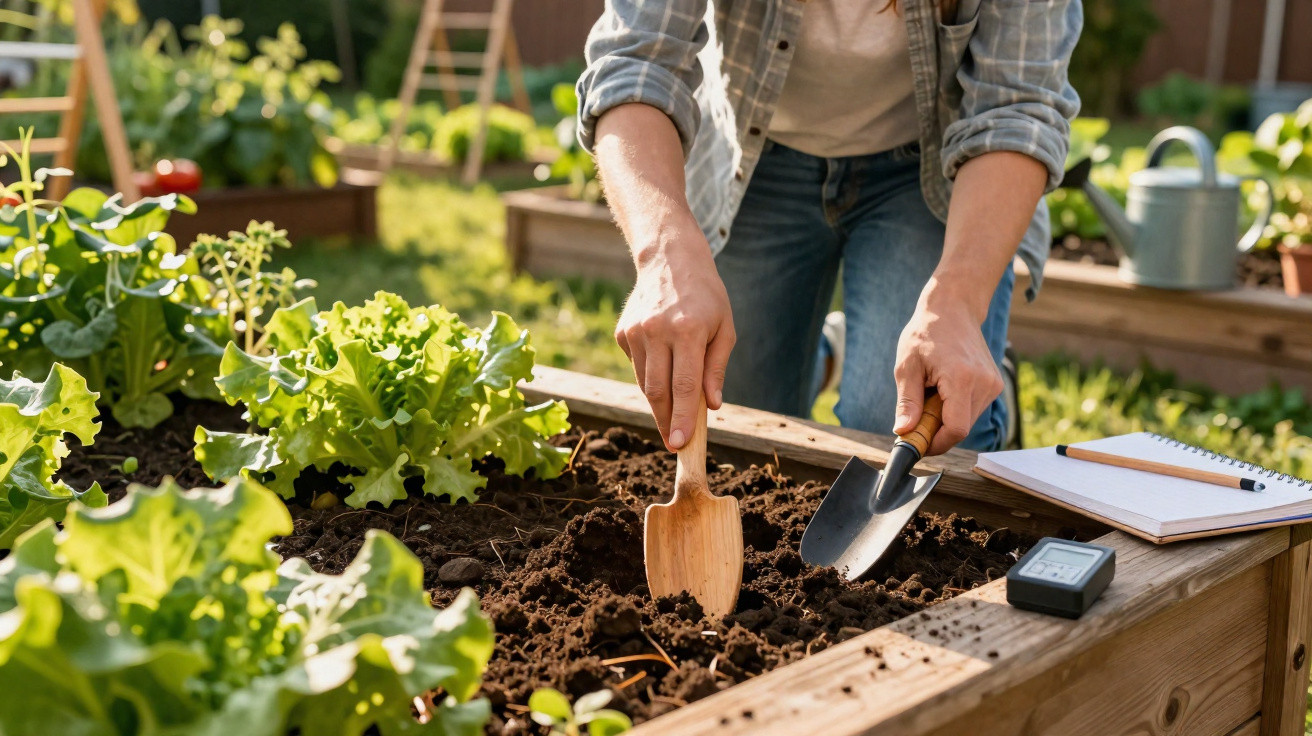
What looks like a quirky tip from garden forums has a very down-to-earth purpose: gardeners use an ordinary wooden spoon to check how alive their soil really is and whether they are watering properly. It costs next to nothing, yet it can give frank answers-even in situations where expensive measuring devices might otherwise be used.
Why a wooden spoon can tell you so much in a bed
The principle comes from soil science: wood is organic matter. Bacteria, fungi and earthworms readily break down materials like this. If you push an untreated wooden spoon into the ground, its condition after a while reveals how actively this “soil organism” is working.
"A spoon that is damaged, soft and partly eaten away usually points to living, fertile soil-whereas a spoon that is almost untouched tends to suggest tired, stressed earth."
Gardeners typically use the spoon in two ways:
- as a check on biological activity in the soil
- as a straightforward moisture indicator in the root zone
It won’t replace a laboratory test, but it can still paint a surprisingly clear picture of whether your vegetables are enjoying ideal conditions-or merely scraping by.
Test 1: Wooden spoon as an indicator of soil life
For the “biology check”, the spoon needs to go deeper. You are aiming for the layers where most roots grow and where microorganisms are most active.
How the soil test works
- Choose an untreated wooden spoon (no varnish, no paint, no oil coating).
- Dig a hole about 15 to 20 centimetres deep.
- Push the spoon in fully, then firm the soil back around it.
- Mark the spot so you can find it easily later.
- Leave the spoon in the ground for 30 to 60 days.
After that, the interesting part begins: dig the spoon back up and inspect it carefully. Every detail matters here-cracks, discolouration, soft patches, and fibres that have lifted away.
| Spoon condition | What it says about the soil |
|---|---|
| heavily damaged, fibrous, partly falling apart | very active soil life, lots of microorganisms, good humus formation |
| slightly softened, a few bite/feeding marks | decent, lively soil with room to improve |
| almost like new, hard, barely any marks | little life, soil is rather poor, compacted or worked too often |
A spoon that comes out completely intact is especially worth taking seriously. It often indicates a lack of organic matter and a shortage of fine habitats where microorganisms thrive. Very often, these soils have been regularly dug over deeply, heavily walked on, or fed for years with mineral fertiliser only.
Test 2: Wooden spoon as a moisture indicator for roots
The second use is closer to the surface. Here, the spoon acts like a simple “wood sensor”, showing whether your watering routine matches what is actually happening in the soil.
How to do the moisture test
- Use an untreated wooden spoon again-no varnish or paint.
- Push the spoon in only about 5 centimetres deep near the roots, for example between tomato or lettuce plants.
- Leave it in the soil for a week and continue watering as normal.
- Pull the spoon out and check the surface, colour and smell.
From this, you can usually tell fairly easily whether the roots are genuinely getting enough water or are effectively sitting in dry soil.
- Spoon stays pale, dry, almost clean: the soil is too dry or water is draining away too quickly. This often points to small waterings, very sandy soil, or strong sun exposure.
- Spoon turns very dark, feels heavy and damp: more likely too much water, prolonged waterlogging, and a risk of root rot-especially with sensitive crops such as tomatoes.
- Spoon shows mould: persistently wet conditions, possibly a compacted layer and too few air pores.
"A single wooden spoon can show whether you are consistently under-watering or over-watering-and right where the roots actually are."
How to choose the right spot for the test
If you simply stick the spoon at the edge of the bed in a dry corner, you will get a distorted result. The location should reflect the typical conditions in that bed.
Good places include, for example:
- the middle of a tomato or pepper bed, where watering is frequent
- between rows of lettuce, which reacts quickly to dryness
- a heavily used bed with “hungry” crops such as cabbage
Less helpful are spots right by a path, under roof overhangs, or in hollows where water collects. In those places, the spoon is more likely to show an extreme rather than everyday conditions.
What you can take from the results in practical terms
If the spoon is heavily decomposed
A clearly degraded wooden spoon is good news. The soil is active, breaking down organic material and making nutrients available. You can maintain that fertility by:
- applying mature compost regularly
- using grass clippings or leaf mulch to keep the surface covered
- avoiding deep digging and loosening the soil more gently with a hoe instead
This helps the soil stay stable, improves water retention, and keeps heavy-feeding crops reliably supplied for many years.
If the spoon stays hard and almost untouched
If the spoon comes out looking virtually new, it is worth looking more closely:
- Intact and dry: very little soil life plus a lack of water. More organic matter, mulch layers and adjusted watering will help. Green manures with deep-rooting plants can also loosen the ground.
- Intact but damp or slightly mouldy: wet, poorly aerated soil with few organisms-typical of heavy, compacted ground. Repeated applications of compost, a gentler approach with the spade, and-if necessary-improving drainage can help.
If you take these results seriously, you can refine your routine step by step: instead of watering heavily and often, water less frequently but thoroughly; and rather than clearing away organic material, incorporate it deliberately or leave it in place as mulch.
What the spoon test doesn’t control-and what you need to keep in mind
The wooden spoon can give a clear signal, but it is strongly influenced by external conditions. Cold spells, very dry summers or long wet periods can all change soil activity noticeably. A spoon buried in a cool April will break down more slowly than one buried in warm July.
That is why many gardeners run the test several times a year, or use several spoons at once in different beds. This makes it easier to see which areas need the most attention and where the system is already working well.
Practical examples from everyday gardening
In sandy soils, the spoon often dries out quickly again and remains light-coloured. In that case, building up a thick mulch layer and adding compost regularly is worthwhile so moisture stays in the ground longer. In heavy clay soils, by contrast, the spoon often comes out sticky and dark-an indication that water is not draining well and there is not enough air.
If you also watch for other clues, you get a more complete picture: a crumbly structure, dark soil, plenty of earthworms and bits of old roots point to active ground. Pale, flattened clods, puddles after rain and hardly any animal life suggest stress-even if the plants above ground still look reasonably healthy.
Why this simple test pays off over the long term
Using a wooden spoon forces you to take soil life seriously. If you bury one regularly, you can see very clearly how your choices are affecting the ground: after years of compost and mulch, is more wood being broken down than before? Has the soil become looser and does it hold water better?
At the same time, the test helps correct watering mistakes. Many hobby gardeners water by feel or by the calendar. The spoon shows whether the water is actually reaching the root zone. That can help you avoid both dried-out rows of lettuce and soggy tomato roots.
In the end, the lesson is straightforward: if you are willing to sacrifice a simple kitchen spoon in the bed, you gain valuable insight into your garden soil-and create a better basis for steadier harvests, tougher plants and fewer frustrations in dry or wet years.


Comments
No comments yet. Be the first to comment!
Leave a Comment