
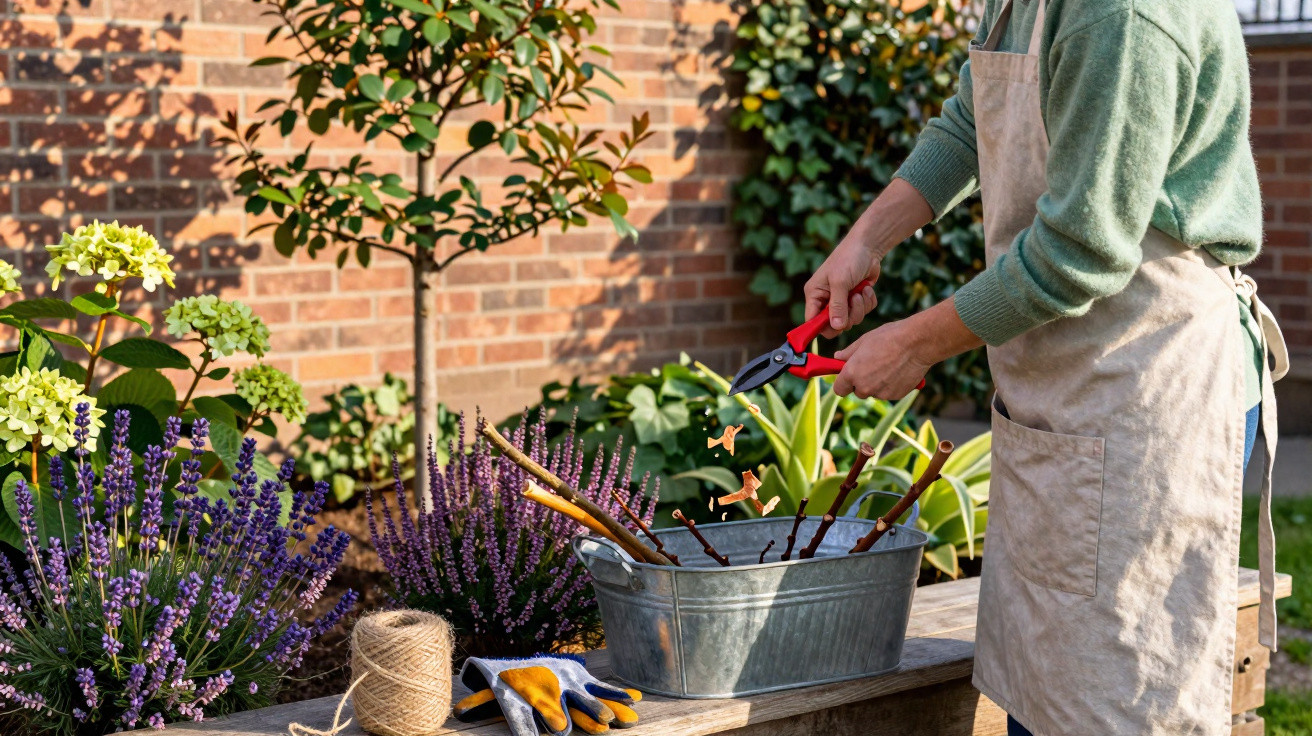
If you prune wisely in March, you’ll be rewarded in summer with an explosion of flowers and fragrance.
Between the first mild days and the last overnight frosts sits one of the most important weeks of the year for amateur gardeners. What you do in March largely determines whether roses, hydrangeas, lavender and more will be bursting with energy in a few months’ time - or look weak and underwhelming. With a bit of know-how and a sharp pair of secateurs, you can get far more from your garden.
Why March is so crucial for pruning
By March, many woody plants are coming to the end of their winter dormancy, yet they haven’t produced soft new growth. That timing makes it ideal for removing old wood and shaping plants. Cuts close quickly, and fresh buds break strongly.
"If you prune correctly in March, you control shape, flowering and plant health for the entire season."
There are pitfalls, though: prune too early and late frosts can damage fresh cuts; cut too hard and some species will lose their flowers completely. The plants below cope particularly well with March pruning - as long as you follow the right approach.
Shaping feature plants and espalier trees
Whether you’re framing a patio or creating a living screen, espalier limes, espalier plane trees and evergreen espalier cherry laurel trees benefit from a clean, tidy shaping cut in March.
Tying in young espalier trees properly
With newly planted or still-young trees, the priority is guidance rather than heavy shortening:
- Remove only shoots that are excessively long or growing across the framework.
- Secure the remaining branches firmly to the support using ties (for example, soft tree-tie tubing).
- Don’t cut away structural branches that are needed to fill the future canopy area.
If you’re too ruthless at this stage, you can end up with a patchy, gappy framework later on instead of an evenly green screen.
Two pruning options for established espalier trees
For trees that have been trained on their frame for several years, you generally have two workable methods:
- Cutting back to old wood: Reduce all young growth back to the older side branches. Result: a clear framework with fewer, but stronger, new shoots.
- Block hedge-style trimming: Particularly with espalier plane trees or evergreen laurel, prune as you would a hedge - trim all protruding growth into a uniform rectangular outline.
A more “block-like” shape is especially useful when the espalier is primarily serving as a green privacy screen.
Roses: hard pruning for abundant flowers
Roses may seem delicate, but in March they can handle a firm cutback - and they repay it with noticeably more flowers.
Cutting back bed roses and standard roses
Older brown, tired-looking stems should be removed. You should be left with just a few strong main canes, which are then:
- cut back to just a few buds above ground level,
- ideally pruned to an outward-facing bud,
- cut on a slight angle so rainwater runs off.
Afterwards the shrub can look almost pitiful - and that’s precisely what encourages strong fresh growth and lots of buds in summer.
Climbing roses: train rather than hack back
Climbing roses don’t respond well to the same radical approach. Instead:
- select three to four strong main canes,
- tie them in horizontally or in a fan shape on their supports,
- shorten side shoots above the second bud,
- remove dead or dried-out growth entirely.
When canes are trained horizontally, flowers form at almost every bud - giving you a wall of bloom rather than a few blossoms only at the very top.
Lavender and heather: neat cushions instead of woody clumps
Cut lavender back hard every year
To stop lavender going bare at the base over time, it needs a decisive March trim. A reliable rule of thumb is:
"Cut lavender back each year to about 15 centimetres above the ground - but don’t cut into completely old, bare wood."
That guidance applies to both common lavender and French lavender. If you skip the cut, it tends to produce long, thin shoots with fewer flowers and a woody, sparse lower section.
Know which type of heather you have
Heather is easy-going, but it stays dense and free-flowering only if you prune it regularly. The key is to distinguish between types:
| Heather type | Pruning time | Cutting height |
|---|---|---|
| Summer heather (Calluna) | March | 8–12 cm above the ground |
| Winter heather (Erica) | Summer | likewise just above the old wood |
Always cut just above the woody zone. If you leave only old, bare stems, the plant will struggle to shoot again.
Hydrangeas: pruning without sacrificing flowers
With hydrangeas, the right cut depends heavily on the variety. If you shorten everything indiscriminately, you can end up with very few blooms.
Mophead and lacecap hydrangeas
These types flower on buds formed the previous year. In March, it’s usually enough to:
- remove only some of the old, thick stems (around one fifth) right down near the base,
- snip off spent flower heads just above the first strong pair of buds,
- avoid cutting lower than this, or you’ll remove the next flowers.
This way you rejuvenate the plant gradually while still protecting a generous display.
Panicle hydrangeas and smooth hydrangeas
Popular panicle hydrangeas set buds on new growth, so you can be bolder:
- cut panicle hydrangeas back to about 40 centimetres,
- reduce the smooth variety ‘Annabelle’ to around 10 centimetres.
From these short stubs, vigorous new shoots develop in summer, topped with large flower heads.
Special cases: oakleaf hydrangea and climbing hydrangea
Oakleaf hydrangeas can be shortened slightly at the base, around 10 to 20 centimetres above the ground. If the plant is growing as a specimen, thinning a few older stems is often enough.
Climbing hydrangea is different: it sets its buds early and flowers from spring into early summer. Prune it only after flowering - otherwise you remove all the buds in one go.
Butterfly bush: more pruning, more flowers
Butterfly bush (Buddleja) copes with very hard pruning. Without it, it becomes woody and overgrown, producing plenty of stems but fewer flowers.
"Large varieties of butterfly bush can be cut back in March to 30 to 50 centimetres; dwarf varieties can be reduced to around 15 centimetres."
Make cuts just above small buds or side shoots. These are the points that will push new, flower-bearing canes in spring.
Keeping climbers and shrubs under control
Keep ivy within bounds
Ivy grows for much of the year - more slowly in autumn and winter, but steadily. March is a good time to rein it in:
- cut off any loose, dangling growth,
- remove stems creeping into gutters, timber cladding or gaps in masonry,
- shorten ground runners - ivy can creep well over a metre per year.
Regular pruning helps prevent damage to walls and keeps the area neatly contained.
Keep St John’s wort compact
Shrubby St John’s wort (ornamental forms with yellow flowers) is fast and dense, but without pruning it often becomes bare in the middle. Cutting it back to about 20 centimetres above the ground in March encourages fresh, bushy regrowth.
Mediterranean plants: pruning olive trees and oleander
Shape an olive tree in March
Olive trees are common in front gardens and in containers on patios, yet they’re often pruned too timidly. March is the moment to set the basic structure:
- remove dead wood and branches growing inwards,
- thin the crown slightly so light reaches the centre,
- shorten overly long shoots until the silhouette looks right.
Olives regrow well. Being a little braver with the cut produces a clearer form and healthier, sturdier branches.
Oleander: cut back firmly, but carefully
Oleander is tougher than many people assume and can tolerate a March reduction of up to half the length of its shoots. Remove frost damage, brown tips and thin, weak growth completely.
"Important: oleander is poisonous in all parts - wear gloves when pruning and keep sap away from children and pets."
After pruning, place the pot somewhere bright and warm and water generously. Sun and consistent watering support strong regrowth and a generous flush of flowers.
Practical tips for safe, clean pruning
So your March pruning doesn’t turn into a shock for plants, stick to a few basics:
- Sharp tools: blunt blades crush stems, and open wounds are more likely to rot.
- Clean blades: disinfect briefly before you start, especially after cutting diseased plants.
- Don’t prune in hard frost: choose dry, frost-free days.
- Mind the cut: always cut at a slight angle, a few millimetres above a bud.
- Old and diseased first: dead, damaged or fungus-affected growth should always be removed entirely.
With larger shrubs, it’s worth following a simple annual plan: prune the types listed here in March, then handle varieties that flower on old wood in summer. That keeps the garden tidy year-round without having to guess each time where to cut.
If you stay on top of the March jobs, you’ll see a very real difference in summer: denser screens, more generous roses, full hydrangea heads, and Mediterranean container plants that don’t just survive - they thrive. Pruning takes a few hours; the payoff lasts the whole season.

Comments
No comments yet. Be the first to comment!
Leave a Comment