
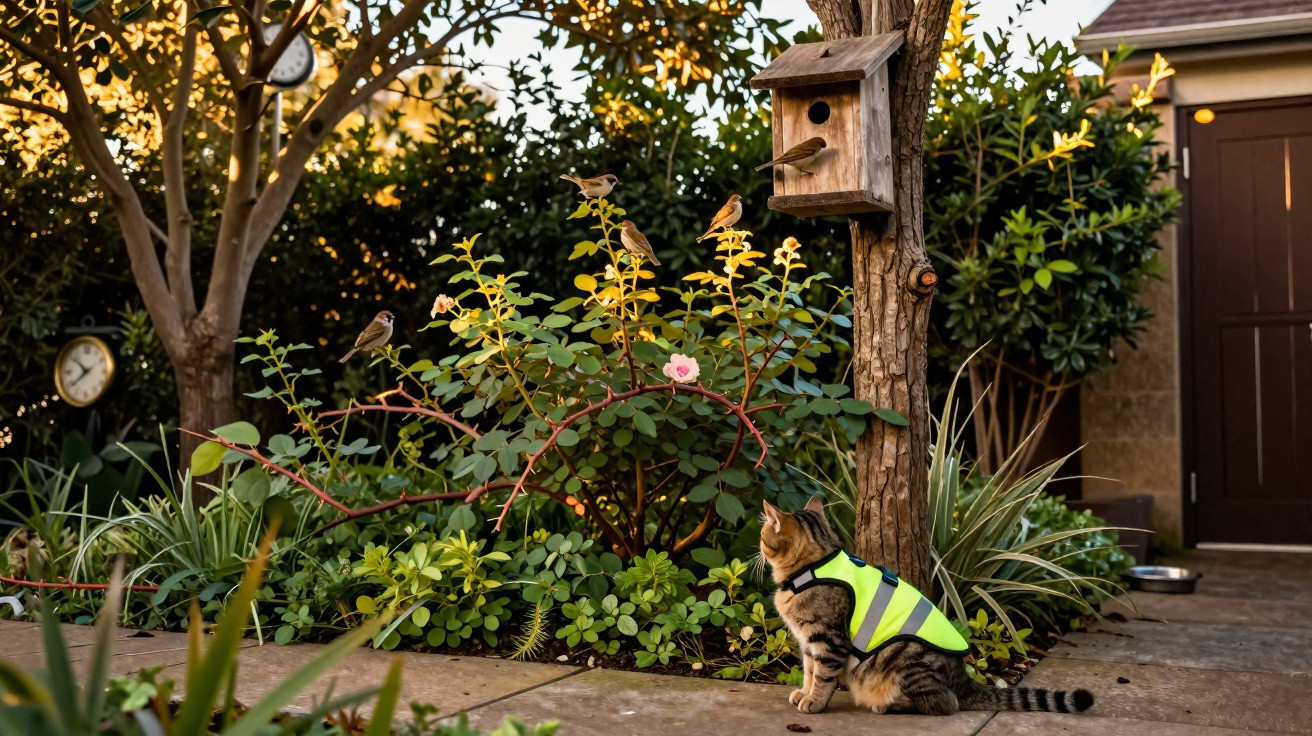
No one wants to choose between a cat and the birds in the garden - and with a few smart tweaks, you don’t have to.
Plenty of owners know the sinking feeling when their beloved feline pads in through the patio door with a bird in its mouth. You adore your house cat, but you also don’t want to stand by as the garden turns into a bird-free zone. The good news is that there’s no need to pick sides. With a well-planned garden set-up, it’s possible to balance both.
Cats as pets - and hunters at heart
Indoors, domestic cats can seem calm and harmless; outside, their instincts take over. Research from several European countries shows that free-roaming cats catch millions of birds every year. The figures vary by area, but the overall picture is clear: the impact on bird populations is significant.
"Even well-fed cats keep hunting - not out of hunger, but because of instinct and play drive."
The period from March to July is especially sensitive. At that time, many nests sit in hedges, among mixed groundcover, or in low shrubs. Young birds practise their first flights and often end up on the ground or just above the grass. For cats, it can feel like an easy buffet.
It’s a common misconception that keeping the garden “tidy” and ultra-neat will solve the problem. In practice it often makes things worse. Close-cropped lawns, bare borders and cleared corners remove hiding places and safe nesting sites. Birds then end up exposed and easy to spot - ideal conditions for a hunting cat.
The 3-2-1 rule: turning the garden into a refuge, not a hunting ground
A bird-friendly garden doesn’t have to look messy or out of control, but it does need layers, structure and places to hide. A useful approach is the so-called 3-2-1 rule, which helps you create a kind of “green fortress” for songbirds.
Dense groundcover as a safe foundation
The lowest layer matters most. Birds need cover here to forage on the ground and to shelter their young. Sturdy, thick-growing plants work best, such as:
- various sedges (Carex)
- cranesbill (Geranium, especially perennial varieties)
- mat-forming perennials such as lamb’s ear or periwinkle
- taller grasses that you don’t cut back completely
These plants form a leafy canopy just above the soil. Birds can dart beneath it, while cats find it much harder to follow them - or even notice them in the first place.
Thorny shrubs as a natural защит barrier
The second layer is made up of shrubs - ideally thorny ones. What irritates cats is exactly what helps birds. Good options include:
- hawthorn
- blackthorn (sloe)
- wild rose such as dog rose
- barberry
- hazel, mixed with thorny species within a hedge
Among the branches, blackbirds, sparrows and finches can rest and nest. Cats struggle far more to get in, and if they try, they’re more likely to get scratched up or give up in frustration.
Trees as the upper storey and visual cover
In the third layer, trees come into play - including smaller ornamental trees or standard-form shrubs. They provide:
- high perches where birds can check the area from above
- “broken sightlines” so a cat can’t see every square metre at once
- places for higher nests or for nest boxes
When you combine all three layers, the garden doesn’t become off-limits to cats - but it does become more complex, harder to hunt in, and much safer for birds.
Secure nest boxes: build, hang and position them correctly
Another key element is nest boxes that don’t turn into an easy snack bar for cats. Many shop-bought designs look attractive but are poorly thought through.
"A good nest box protects from the weather - and from paws that try to reach through the entrance hole."
Here’s what gardeners should pay attention to:
- Height: around 3 metres above the ground, and not right next to a balcony, shelving, or a thick, horizontal fork in a branch.
- Orientation: the entrance hole should ideally face east or south-east so it isn’t constantly exposed to rain or overheats in the midday sun.
- No perch: the decorative “landing stick” under the hole mainly helps predators get access.
- Internal depth: there should be 15 to 20 centimetres between the entrance hole and the floor so a cat can’t reach the nest with its paw.
It’s also worth checking what’s nearby. Are there ivy runners, a dense fence or outdoor furniture next to it that a cat could jump up from? If so, choose a different spot.
Time restrictions for outdoor cats: a small limitation with a big effect
One factor that’s often underestimated is timing. Most cats are most active at dawn and dusk - exactly when many birds are on the ground or feeding chicks.
If you keep an outdoor cat indoors during the critical hours in spring and early summer, you can save the lives of many fledglings. In practical terms, that means:
- not letting them out at first light
- bringing them back in from late afternoon, or at the latest by sunset
- shifting the most intense hunting times into the birds’ “night-time rest”
Of course, this isn’t effortless with every cat. Some will complain loudly. What helps is a bit of training, indoor enrichment (puzzle toys, hiding food, clicker training) and consistent routines.
Bright warning “vests” for cats: what special collars can do
Another approach is brightly coloured collars with wide fabric ruffs. Some products are specifically designed to warn birds. Their vivid colours and patterns stand out strongly against garden greenery, so birds spot movement earlier and fly off in time.
"The more noticeable a cat is to birds, the lower the chance of a surprise attack."
With any collar, the cat’s safety comes first. A breakaway clasp is essential so it releases if the cat gets caught. Bells are less effective than many people assume and can also annoy a lot of cats.
Gentle deterrents: scents, plants and barriers
If you want to make certain areas - for example directly under a nest box - less appealing to cats, you can use smells and physical obstacles. Popular options include:
- coffee grounds in borders, under hedges or around feeding spots
- bowls of citrus peel in sensitive locations
- scented plants such as the so-called “pee-off plant” (Coleus canina), which many cats avoid
- metal guards or mesh around tree trunks to make climbing more difficult
These measures should always be used sensibly. The aim isn’t to drive the cat out of the entire garden, but to discourage access to particularly sensitive spots.
Long-term responsibility: care, neutering and the wider community
Behind the debate about hunting domestic cats sits a bigger question: how responsibly do owners manage their animals? It involves more than good food and affection.
- Neutering: reduces stray populations and therefore lowers the overall number of hunting cats in the area.
- Identification: microchipping or tattooing helps prevent cats ending up “unowned” and breeding unchecked.
- Talking to neighbours: where several cats live in the same neighbourhood, shared agreements can help - for instance on outdoor times or on garden corners that need particular protection.
Many local authorities now support biodiversity measures, from wildlife-friendly front gardens and wildflower strips to information campaigns about free-roaming cats. Adjusting your own garden sends an important signal - and shows that caring for pets and protecting nature do not have to conflict.
Practical examples for a peaceful garden routine
What might this look like day to day? Here’s a typical scenario: a family with two outdoor cats plants a mixed hedge along the fence line using hawthorn, blackthorn and hazel, with dense perennials underneath. In the middle of the garden, they keep a wilder corner with leaves, dead wood and long grass. Nest boxes are mounted high in an apple tree. The cats wear bright collars, and there’s also a restriction first thing in the morning. After a year, the results are clear: more birdsong and fewer “gifts” on the doorstep.
Examples like this are encouraging. You don’t need to rebuild the entire garden in one go; you can make changes step by step: start with a few groundcovers, add a thorny shrub, then fit a securely placed nest box later. Each measure reduces the risk to birds a little, without taking away the cats’ enjoyment of fresh air and exercise.
A realistic perspective still matters: a free-roaming cat is unlikely to live without catching anything at all. But with some planning, creativity and goodwill, the garden can shift from a quiet arena into a lively refuge - for curious paws and for everything that sings, flutters and rustles in the undergrowth.





Comments
No comments yet. Be the first to comment!
Leave a Comment