
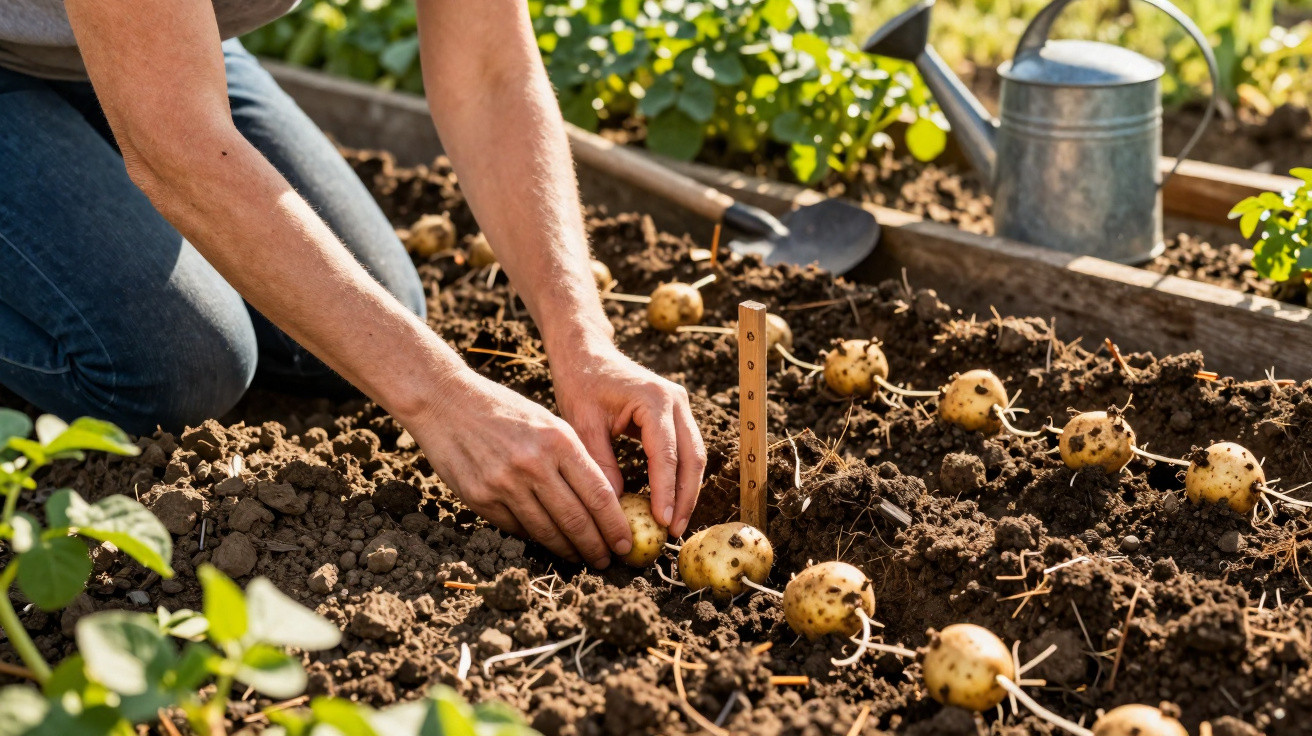
If you put potatoes in the ground in spring, you’ll probably think about the variety, where they’ll grow best, and maybe what feed to add. The key point - how deep the tubers should go - often gets pushed to the side. Yet this seemingly small detail influences how quickly they get going, how healthy the plants stay, and ultimately how many potatoes you lift at harvest. A few centimetres either way can be the difference between a handful of runts and a properly generous crop.
The optimal planting depth: the core figure for strong potato plants
When you grow potatoes, what you’re burying is essentially a compact energy store. From that one tuber the plant has to produce roots, stems and a fresh set of potatoes. It needs to be shielded from light and late frosts, but the new shoots also shouldn’t have to struggle through darkness for too long.
As a rule of thumb, potatoes should be planted 10 to 15 centimetres deep - measured from the top of the tuber to the soil surface.
At this depth, protection and speed of emergence are well balanced:
- the soil temperature is more stable than right at the surface
- frost is less likely to reach the tuber
- the shoots still get up to the light reasonably quickly
- the zone has better aeration, which lowers the risk of rot and disease
Before planting, loosen the ground to around 15 to 20 centimetres deep. That way the tuber sits in a friable bed and roots can spread with little resistance. One detail that’s often overlooked: position the potato so its “eyes” face upwards, giving the shoots the shortest route to the surface.
Planting much deeper can lead to slow or uneven emergence, especially in cold springs. The plant uses up part of its stored reserves simply to cover the extra distance. Set tubers too close to the surface and you invite light exposure, drying out, and green skins.
Why a few centimetres makes such a difference
Planting depth determines the micro-zone where the potato begins its growth. If the tuber sits in soil that is too loose or too wet, oxygen availability suffers. If it’s in an overly dry layer, the plant becomes stressed and tends to form fewer, smaller potatoes.
In most gardens, the 10 to 15 centimetre layer typically offers:
- enough moisture without waterlogging
- sufficient air in the soil for healthy roots
- buffering against sudden temperature drops
- steady conditions that support even growth
If you understand your own soil, you can fine-tune within that range - and that’s often where experienced gardeners squeeze out the extra yield.
Adjust planting depth to soil and climate
Heavy, clay-rich soil: avoid planting too deep
Where the ground is heavy and clayey, water can sit in the soil for longer. In those beds, the middle of the range is usually enough - about 12 centimetres. Loosen the soil thoroughly beforehand, break up large clods, and, if needed, work in some coarse sand or well-rotted compost to improve drainage.
Go too deep in these conditions and you increase the likelihood of rot. The tubers end up in a cool, wet layer where fungi can thrive.
Light, sandy soil: aim nearer the upper limit
On sandy ground, water drains away quickly and nutrients are more easily washed out. In that situation, it often makes sense to plant nearer 15 centimetres. The tubers then sit slightly deeper in a moister layer. Adding a generous amount of compost also boosts the soil’s ability to hold water.
Immediately after planting, the benchmark remains 10 to 15 centimetres. Later on, you can use earthing up to build more soil over the developing potatoes.
Late frosts and drought: how the weather influences depth
In areas where late frosts are common, it can help to set tubers a little deeper and then promptly draw soil up after the shoots appear. This creates an extra insulating ridge above the young growth.
In drier regions, planting closely spaced by date alone won’t solve much. More useful is a moderate planting depth combined with:
- thorough watering after planting
- a layer of mulch once shoots are up (e.g. straw or grass clippings)
- regular, but not excessive, watering during tuber set and tuber growth
The key is to pair the right depth with well-prepared, open soil and surface protection, rather than trying to control everything through planting depth alone.
Spacing, rows and earthing up: depth won’t help without these
Even perfect planting depth won’t deliver much if the plants end up competing with each other. For a strong harvest, these spacings have proved reliable:
| Parameter | Recommendation |
|---|---|
| Spacing from tuber to tuber within the row | 30–40 cm |
| Spacing between rows | 60–75 cm |
| Initial planting depth | 10–15 cm |
With these distances, each plant gets enough light, airflow and nutrients. The potatoes can expand freely without being crowded by neighbours.
Earthing up: the hidden boost for more tubers
Once the young potato plants reach around 15 to 20 centimetres tall, there’s another lever for improving yield: earthing up. This involves pulling soil from between the rows towards the stems to form a low ridge.
Earthed-up potatoes often produce more and better-looking tubers because they grow in a larger volume of soil.
Earthing up brings several benefits at once:
- newly forming tubers stay safely in the dark
- the ridge prevents greening and the associated toxins in the skin
- plants gain more loose soil, encouraging additional tuber formation
- weeds between rows are suppressed
Most gardeners earth up two to three times a season, each time the plants have put on a few more centimetres. As a result, the original planting depth gradually turns into a much higher soil ridge - without having to bury the tubers too deep at the start.
Common planting-depth mistakes - and how to avoid them
A lot of potato-bed issues come down to a few familiar errors:
- Planted too deep: slow start, weak shoots, often a delayed or smaller harvest.
- Set too shallow: green tubers, sun scorch on shoots, and a greater need to water.
- Working in wet soil: the ground compacts, and rot and disease become more likely later.
- Ignoring soil type: using the same depth in heavy clay and in sand causes opposite problems.
If you’re unsure, plant one or two rows at slightly different depths and watch which plants perform best. This simple trial helps you adapt the textbook range to your own garden.
Practical tips for getting the potato season started
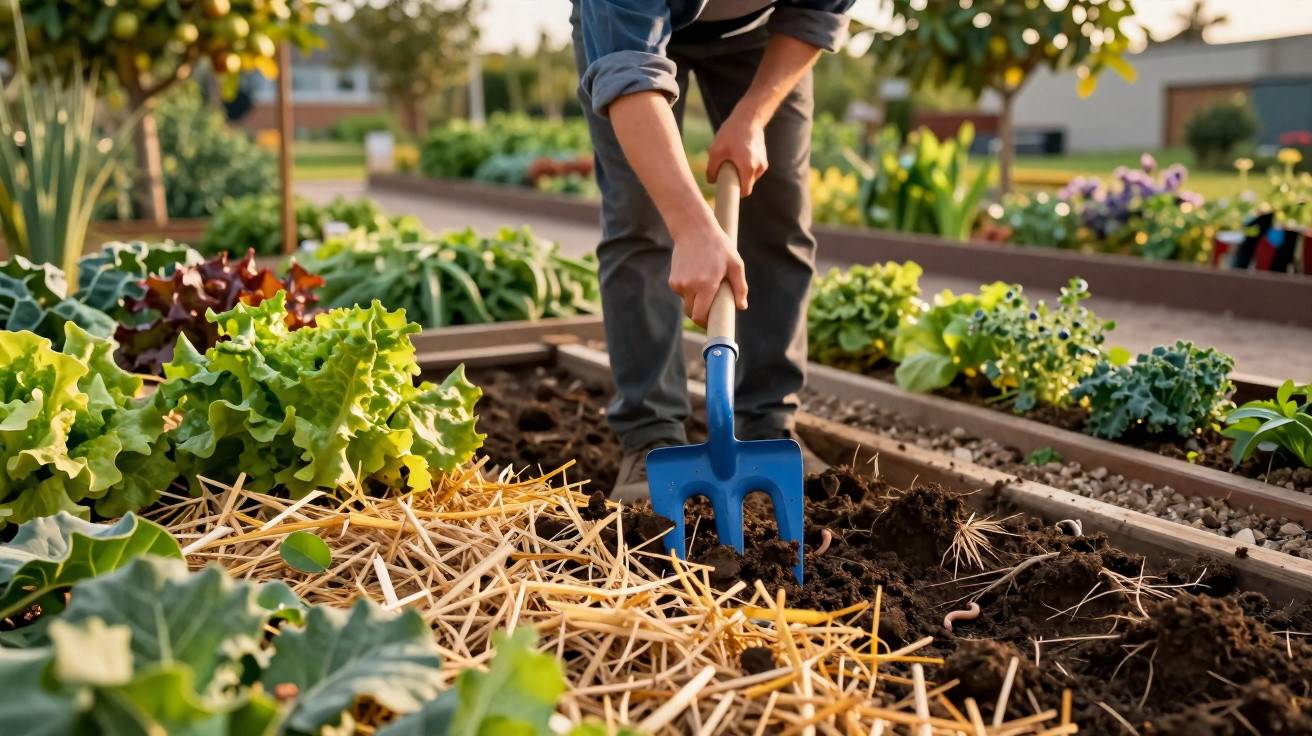
Before planting, check the soil closely: you want a crumbly structure that isn’t sticky, lightly moist but not wet - that’s the ideal seedbed. If soil clings to the spade, it’s better to wait until it dries a little. Working it when it’s too wet creates compaction that slows root growth.
Pre-sprouted seed potatoes will already have short, sturdy shoots formed indoors. Those shoots shouldn’t be snapped off, otherwise you lose some of the tuber’s starting energy. Place these tubers gently into the prepared furrows and orient them so the shoots face upwards.
If you garden with children, you can set up a small test plot: one row at 8 centimetres, one at 12, and one at 18 centimetres. The differences in growth are striking and make it clear just how sensitively potatoes respond to a few centimetres.
Why the right depth also affects flavour and storage life
Potatoes that grow well in a consistently supplied soil zone tend to develop thicker, well-set skins. These tubers store for much longer in cool, dark conditions without shrivelling quickly or rotting. Less stressed growth can also have a positive effect on texture and flavour.
When you match planting depth to your soil, your local weather, and how you plan to earth up, you create stable conditions from the first roots to harvest-ready tubers. A handful of carefully chosen centimetres can translate into crates full of potatoes - and a season where working the potato patch is genuinely satisfying.
Comments
No comments yet. Be the first to comment!
Leave a Comment