
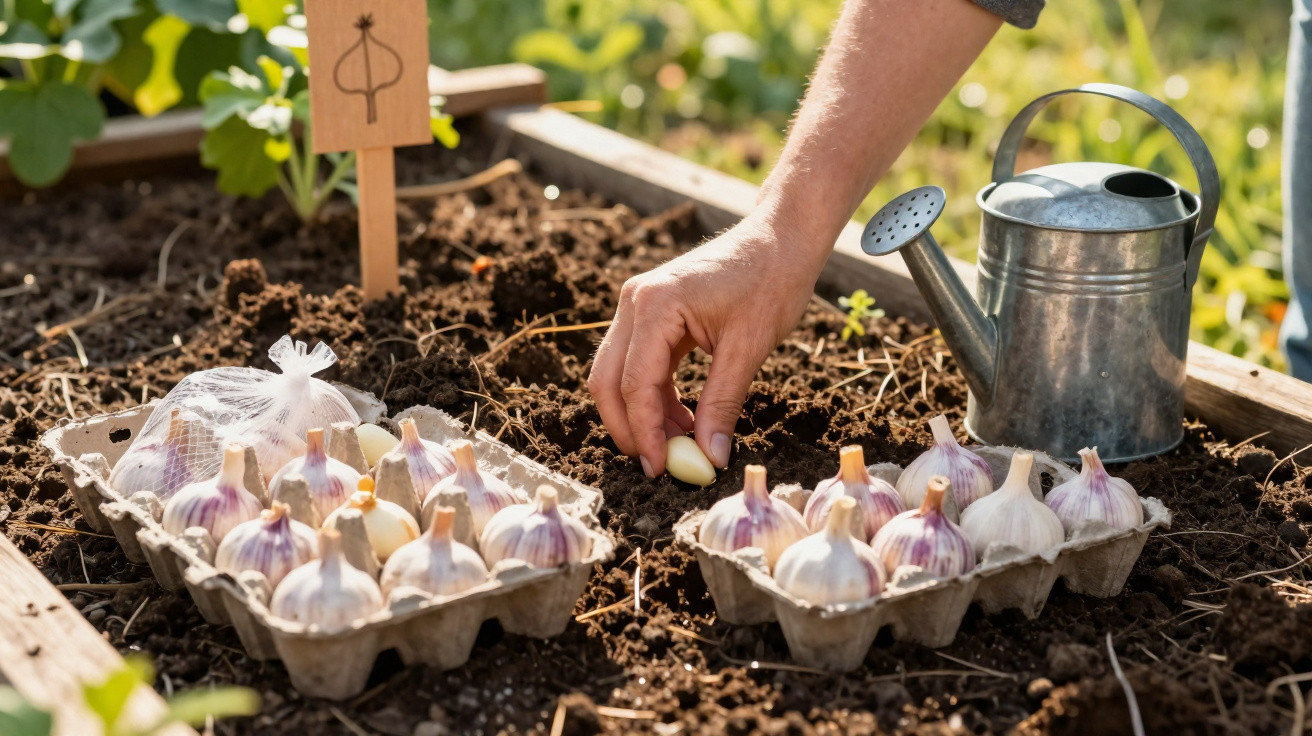
Anyone who enjoys cooking nearly always has it in the cupboard. In the garden, though, garlic is often overlooked-even though, with very little effort, it can produce a surprisingly generous crop of your own bulbs. What matters is a small supermarket trick, plus avoiding a common mistake that can wipe out entire beds.
Why supermarket garlic deserves a place in your bed
In the kitchen, garlic lifts everything from Sunday soup to a barbecue spread. Yet in the veg patch, many people immediately reach for pricey planting stock from specialist suppliers. Meanwhile, that familiar net bag from the supermarket ends up in the bin or on the compost heap-wasted potential.
In reality, some supermarket garlic is perfectly suitable for growing at home. The benefits are obvious:
- very cheap, sometimes virtually free if it’s already looking a bit shrivelled
- ideal for experimenting without risking expensive planting material
- an undemanding crop that even beginners can grow successfully
Garlic is not fussy: it will cope with relatively poor soil provided it drains well and you give it a sunny spot. Once it’s in the ground, it develops slowly but usually reliably.
"The most important point: only use healthy, vigorous cloves-and avoid waterlogging at all costs."
That’s exactly where the catch lies: some commercially sold garlic is treated to delay sprouting. The aim is to extend shelf life in the shop-but for gardeners it can mean cloves that either don’t sprout at all or only grow weakly. For that reason, supermarket garlic is best used for small trial beds, while certified planting stock still makes more sense for larger areas.
How to spot suitable garlic cloves
That slightly shrivelled bag in the kitchen basket might be uninspiring for the frying pan, but it can be worth its weight in gold for the garden. If you want to plant cloves, it pays to be selective.
The key buying criteria
- ideally choose garlic with an organic certification
- firm cloves that don’t squash when pressed
- no signs of mould or dark patches around the base
- white or pink varieties are both fine; each can work well
At home, split the bulbs into individual cloves, but leave the papery skins intact. Each single clove can later form a whole new bulb-if conditions are right.
"A simple rule: put the biggest cloves in the ground and the smaller ones in the pan-your later bulbs will turn out noticeably larger."
How to plant garlic properly
The method is straightforward, but small details still decide whether it thrives or fails:
- Separate the cloves carefully; do not peel them.
- Plant with the pointed end facing up and the flat end down.
- Set them 3–5 cm deep, leaving 10–15 cm between cloves.
- Loosen the soil well; prevent waterlogging, and aim for soil that’s slightly sandy rather than heavy.
- In wetter regions, form small ridges or mini-mounds about 10 cm high.
Garlic doesn’t need much water. A little moisture while it establishes is enough; afterwards it copes remarkably well with dry spells.
The professional trick: cold treatment before planting
If you want to improve your chances further, borrow a simple technique from professional growers: a short cold spell in the fridge. This mimics winter and encourages strong sprouting.
Here’s how to do it:
- place the garlic cloves in the vegetable drawer of the fridge for 1–2 weeks
- keep them in a paper bag or an open bowl; don’t seal them airtight
- check the cloves: where you can see a small white or greenish shoot, there’s plenty of energy inside
"Cloves with a visible sprout are the quiet stars of the bed-the rest can go into the cooking pot without a second thought."
Used this way, you separate genuinely vigorous cloves from the tired ones and get the best out of supermarket garlic.
The one deadly sin that destroys any garlic harvest
Garlic may look tough, but one mistake can ruin whole beds: soil that stays too wet. It’s especially risky to plant an entire area with supermarket garlic without testing the site first.
These situations are particularly problematic:
- beds where water sits for a long time after rain
- heavy, clay-rich soils with no sand content
- parts of the garden next to rainwater outlets or roof drip lines
In conditions like these, cloves rot, fungal diseases spread, and the soil can be affected for the longer term. A much safer approach is to start with a small test bed and watch how the plants respond.
Care, protection and harvesting your own garlic
Once garlic has rooted, it’s an easy crop for garden growers. The workload stays low, and a few clear habits help keep plants healthy.
As little water as possible
Garlic hates wet feet. In an average year, rainfall is usually enough. Only water during extended dry periods. A few weeks before you plan to harvest, stop watering entirely. This helps the skins toughen up and noticeably improves storage life.
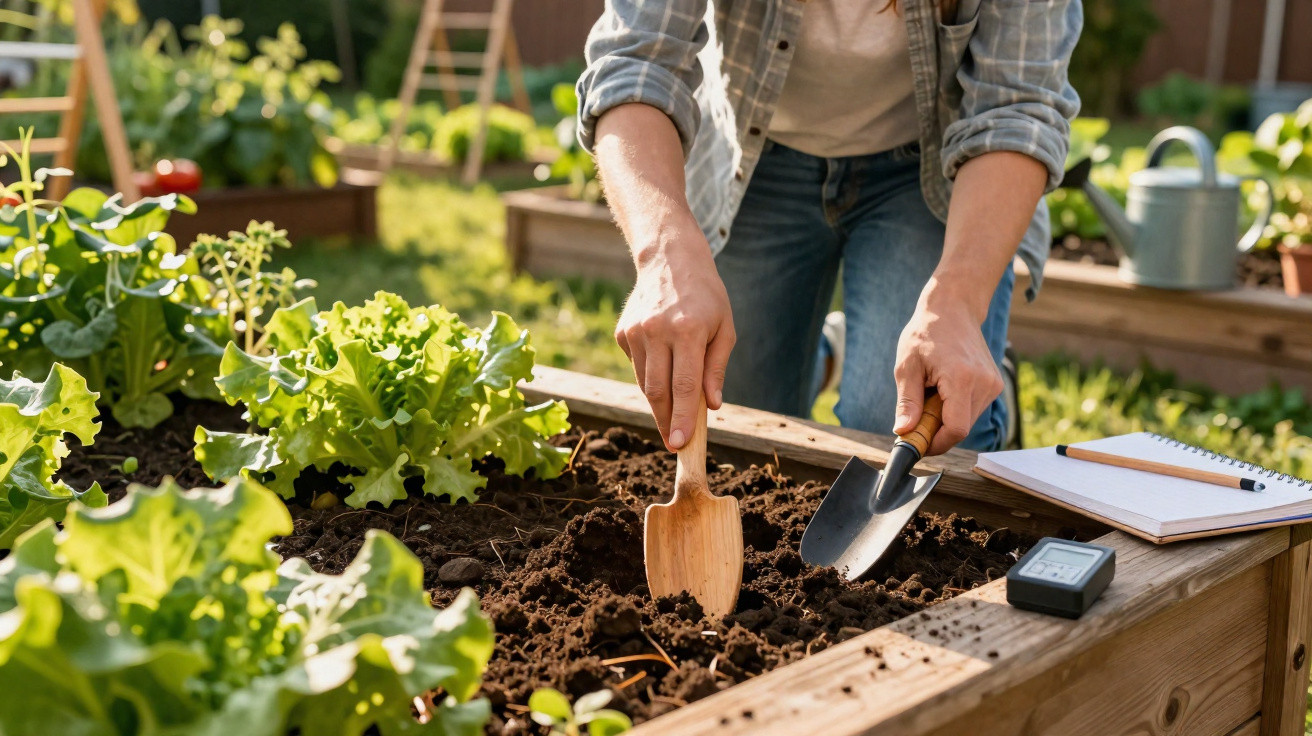
Because the roots sit fairly close to the surface, it’s enough to gently loosen the top layer of soil now and then. This reduces weeds without damaging the plants.
The right time to harvest
The leaves tell you when to lift your garlic. Harvesting too early or too late costs you flavour and keeping quality.
| Leaf condition | What to do? |
|---|---|
| Leaves mostly green | leave it to grow on; the bulb is not yet fully mature |
| about two-thirds yellow and dry | ideal harvest time; the bulb is well formed |
| almost all leaves dried out | harvest immediately; storage quality is declining |
Harvest on a dry day. Loosen the bulbs with a garden fork, pull them out carefully, and let them dry for a few hours somewhere airy. Then store them best either hanging up or laid on racks in a shaded, well-ventilated room.
Garlic as a companion plant-and where it causes problems
Growing your own garlic doesn’t just give you aromatic cloves for cooking. The plants also affect their neighbours in the bed, and used wisely this can reduce certain pests.
You’ll often see benefits close to:
- carrots-garlic effectively tells carrot flies: "Find another field"
- strawberries-the scent can disrupt some fungal spores
- roses-a classic pairing that often brings fewer aphids
Garlic is less compatible with:
- peas
- beans
In those cases, it’s better to keep some distance. Crop rotation also pays off: after onions or leeks, don’t plant garlic straight back into the same spot, otherwise you increase disease pressure and pest problems.
What’s inside the bulb-and why garlic is so resilient
Each clove is, in effect, a complete little storehouse. It contains everything the new plant needs to get started: nutrients, growth regulators and genetic information. If it hasn’t been chemically prevented from sprouting and you place it in loose, well-drained soil, it can perform much like professional planting stock.
Many gardeners underestimate how well adapted garlic is to dry conditions. Its original regions are often relatively harsh, with cold winters and hot summers. That’s why it manages with little water and minimal feeding-a real advantage when water bills rise or summer watering becomes a chore.
If you treat supermarket garlic not only as an ingredient but as a ready-made planting kit, you save money, cut food waste and-almost incidentally-stock your pantry and storage with homegrown bulbs. The essentials are dry soil, careful clove selection and a minimum of attention; then that unremarkable net bag from the shelf turns into a genuinely worthwhile veg project.

Comments
No comments yet. Be the first to comment!
Leave a Comment