
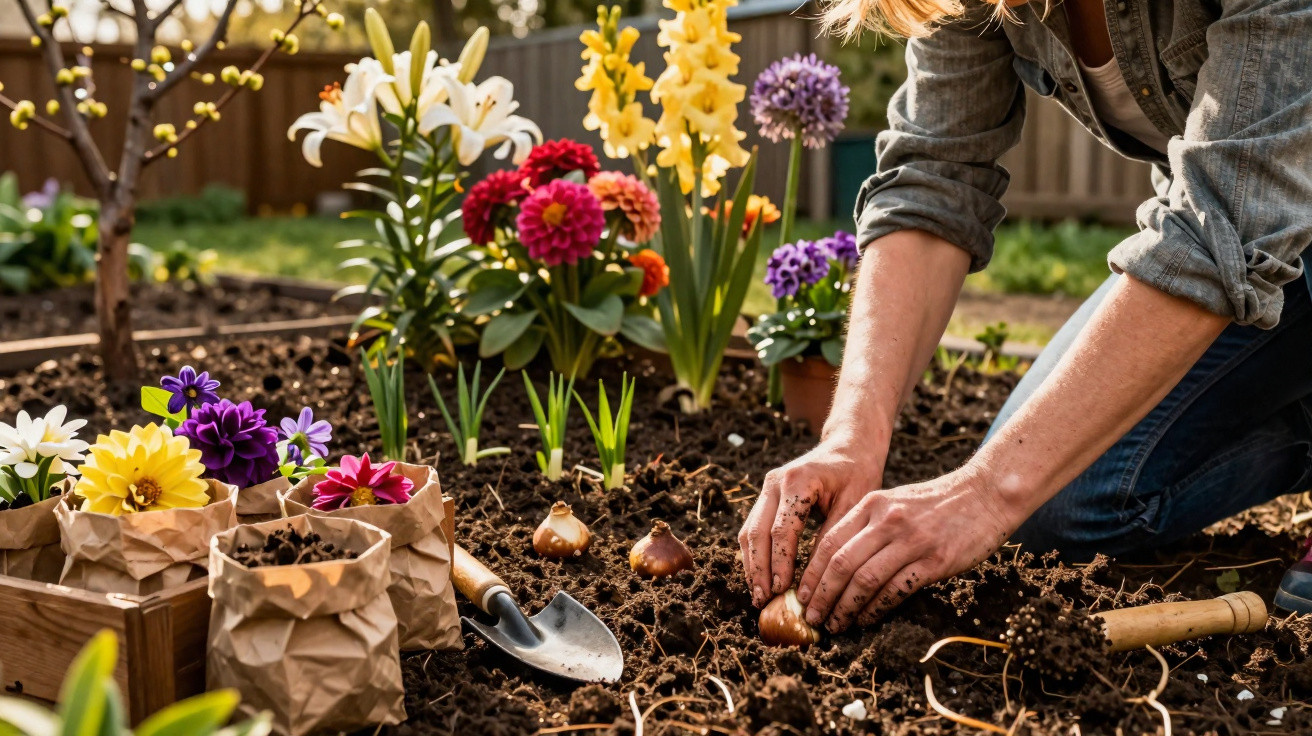
If you don’t get planting done in March, you can end up staring at a blank stretch of green for weeks.
In many gardens there’s a surprisingly dreary gap between the last daffodils and the first roses. The fix is, quite literally, only a spade’s depth away: plant four specific bulb and tuber types in March and you can keep a continuous carpet of colour from early summer right through to autumn.
Why March determines your summer display
Early spring favourites such as tulips and daffodils provide the first big burst of colour each year. Once they finish, plenty of gardens slip into a colourless lull. That’s exactly when the key window opens: planting time for summer-flowering bulbs and tubers.
Across much of central Europe, this period runs broadly from the start of March to mid-May. But if you only get going towards the end of April, the first wave of summer flowers often doesn’t arrive until July. The result is weeks of nothing but foliage, even though the weather is already begging for the patio and a deckchair.
"If you plant in March, you don’t push the flowers back - you bring them forward."
At this point in the year the ground is usually free of frost, yet nights can still be sharply cold. Many summer tubers thrive on this contrast: they put energy into strong roots first, then leaf growth, and as temperatures climb they launch into a real firework display of blooms.
Four planting stars for uninterrupted colour in the border
Gardeners in the know tend to focus on four groups in March because they complement one another perfectly:
- Dahlias for a long season and bold flowers
- Begonias for part-shade and shade
- Lilies for scented, upright structure
- Peonies as a long-term investment for future springs
Dahlias: a colour explosion from June to October
Dahlias are among the most dependable summer bloomers you can grow. In March, it’s best to start the tubers in pots, safely out of reach of late frosts. If you have a cold frame, a bright stairwell, or an unheated greenhouse, you’re at a clear advantage.
How to get them going:
- Fill a shallow pot or container with loose, humus-rich compost.
- Lay the tuber horizontally with the shoots facing upwards, then cover lightly with compost.
- Water in, place somewhere bright, and avoid icy draughts.
- Plant out into the bed only once night frosts are no longer a risk.
The payoff: depending on the variety, dahlias flower from June right into October. They also cover almost any colour preference - from white and pastels through to near-black shades.
"Dahlias are like a flexible colour tool: they fill exactly the gap where otherwise nothing is in bloom."
Begonias: the answer for shady corners and north-facing balconies
Not every patio is sun-soaked, and not every border gets light from morning to evening. This is where begonias really shine. They cope well with part shade and will even tolerate north-facing positions, as long as the soil stays open and evenly moist.
In March, place the tubers in trays or pots with the slightly indented side facing upwards. The compost should be:
- loose and free-draining
- kept consistently lightly moist, but never waterlogged
- held frost-free, yet in a bright position
From May, the pre-sprouted plants can move outdoors - into window boxes, pots, or straight into shady beds. If you water regularly and remove spent growth, you’ll keep getting fresh flowers continuously into autumn.
Lilies and peonies: structure and scent for your beds
Lilies: upright columns of fragrance in summer
Lilies add more than colour: they bring height and perfume to the garden. Plant the bulbs in March at around two to three times their own height. Good drainage is essential - waterlogging can cause lily bulbs to rot quickly.
Suitable positions include:
- full sun with a little shelter from strong winds
- light part shade at the edge of shrubs
- border edges where tall stems are less likely to flop
Early varieties can start as soon as May, while later ones carry flowers through to August. With smart mixing, lilies bridge the period when many perennials pause between flushes.
Peonies: plant now, benefit for years
Peonies aren’t for the impatient, but for anyone thinking long term they’re close to essential. Planting in March lays the groundwork for a generous display in two to three years. Once settled, these perennials are happy to stay put for decades.
Key points to get right:
| Aspect | Recommendation |
|---|---|
| Position | sunny to lightly shaded, sheltered from wind |
| Planting depth | emerging buds only 3–5 cm below the surface |
| Soil | deep, humus-rich, not waterlogged |
| Patience | full flowering often only after 2–3 years |
"You pay for peonies with patience - and are rewarded with legendary abundance of blooms for many years."
How to plan a garden without a flowering gap
To stop your garden dropping into a colour void, one simple question helps: what flowers when? If you deliberately mix spring, summer and autumn bloomers, you avoid bare weeks.
One possible sequence for bulbs and tubers:
- March to April: crocuses, daffodils, early tulips
- May to June: late tulips, early lilies, first peonies
- June to August: dahlias, begonias, many lilies
- September to October: late-flowering dahlias, some begonias
If you include the four groups above in your March planting, you noticeably bring summer flowering forward and almost completely close the gap between spring bulbs and the main perennial season.
Common mistakes - and how to avoid them in March
Especially for beginners, a few pitfalls crop up again and again:
- putting bulbs and tubers into cold, wet clay soil
- ignoring planting depth - too deep or too shallow puts plants under stress
- failing to protect tender new shoots from late frost
- planting too close together, so later on plants compete for light
A straightforward rule of thumb: if you’re unsure, plant a little later in March rather than forcing things into icy, saturated ground. And when frost is forecast, cover young shoots with horticultural fleece, buckets, or upturned crates.
Practical additions for balconies and small gardens
Even without a large garden, March can still be put to good use. Dahlias and begonias, in particular, look excellent in containers. If you’re working with a balcony, it helps to plan in tiers: taller varieties at the back, trailing or compact plants towards the front edge.
Combinations that work particularly well include:
- a dahlia in a tall pot, with low begonias planted in front
- a scented lily in the centre, surrounded by smaller summer flowers
- a peony in a large, permanently positioned pot as a long-term project
Many retailers offer spring value packs of mixed summer bulbs. If you choose deliberately rather than buying at random, a handful of pots and beds can create an impressively dense sequence of flowers - provided the key tubers and bulbs go into the soil in good time in March.

Comments
No comments yet. Be the first to comment!
Leave a Comment